Rarotonga · Cook Islands
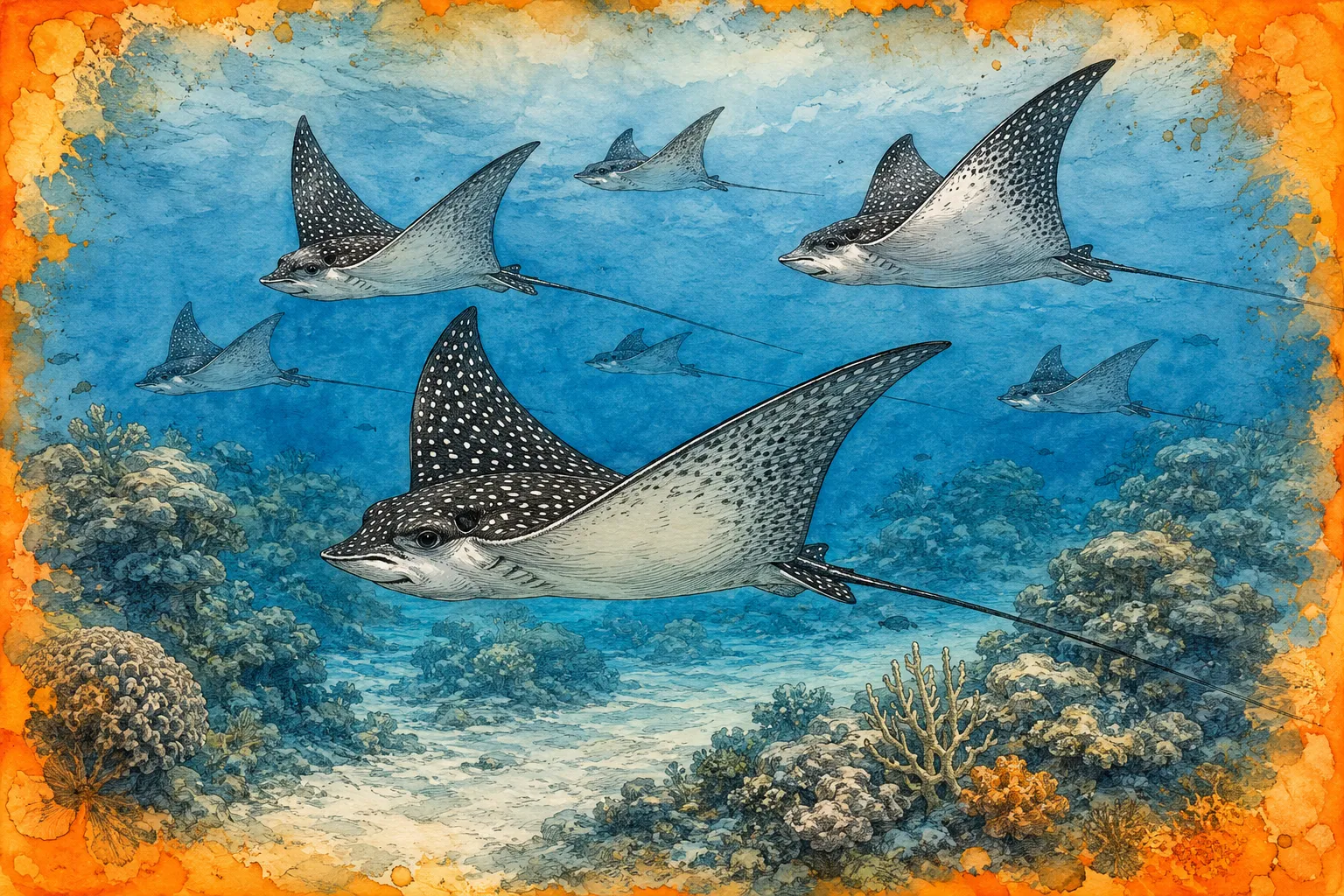
School of Spotted Eagle Rays
October 2006
Rarotonga is a mountainous volcanic island encircled by a narrow lagoon and fringing coral reef. Diving takes place mainly beyond the reef crest, where the seaward slope descends through coral gardens, steep drop-offs, canyons, caverns, and swim-throughs into deep Pacific water. Conditions vary around the island: sheltered reef plateaus provide relatively gentle dives, while passages through the reef can produce stronger currents and concentrated fish activity. Surveys have documented substantial live-coral cover around Rarotonga, although reef condition varies by site and has been affected by cyclones, warming events, and local environmental pressures. Clear oceanic water, compact geography, and access to several distinct underwater terrains allow operators to select sites according to wind, swell, and diver experience.
Large aggregations of spotted eagle rays (Aetobatus ocellatus) are regularly documented at Avaavaroa Passage off southern Rarotonga. The rays are present throughout the year and are commonly recorded in groups of 40–80 individuals, with an aggregation exceeding 87 reported in August 2024. This predictable occurrence contributed to the passage being identified as an Important Shark and Ray Area. The biological purpose of the gatherings has not yet been determined, so they are formally described as undefined aggregations. The species is classified as Endangered on the IUCN Red List and is vulnerable to fishing pressure because of its slow growth and late maturity.
Fun Fact: The southern Cook Islands have been identified by the IUCN Marine Mammal Protected Areas Task Force as an Important Marine Mammal Area. Research records humpback-whale mothers and calves, singing males, and competitive groups there during the austral winter, supporting its identification as a calving and breeding habitat.