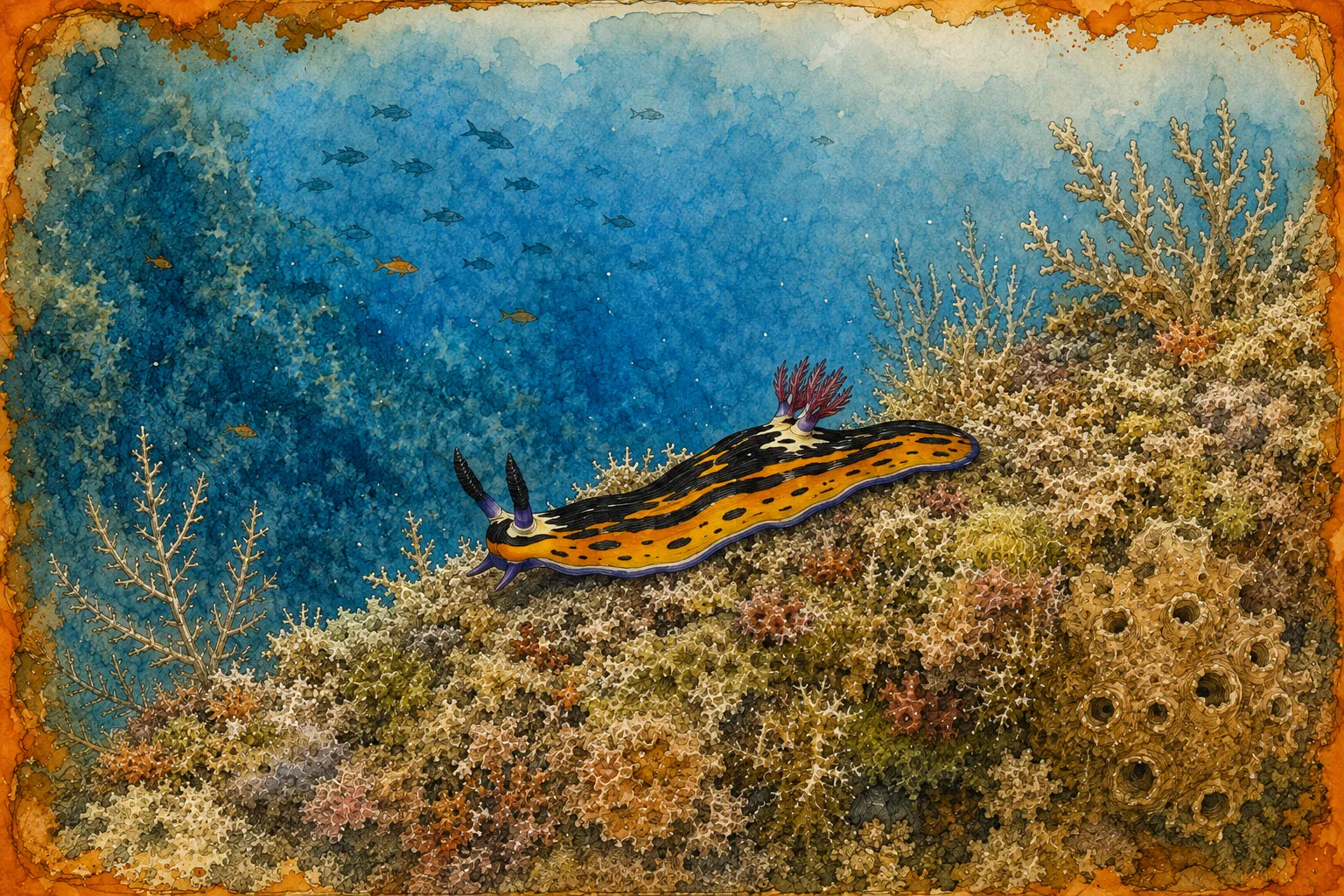
The Red Sea · Egypt
Nembrotha megalocera
November 2019
The Egyptian Red Sea supports extensive fringing reefs along a deep tectonic basin formed as the African and Arabian plates continue to separate. Warm, saline water, limited river runoff, and generally low sediment input help create clear diving conditions and support coral walls, offshore reef systems, wrecks, and diverse marine life. Commonly documented animals include reef fishes, moray eels, rays, sea turtles, dolphins, and several shark species. The region also holds major historical importance as a maritime corridor linking the Indian Ocean and Mediterranean, particularly since the Suez Canal opened in 1869. Although Red Sea reefs face increasing pressures from coastal development, tourism, pollution, and ocean warming, their biodiversity and unusual environmental tolerances remain internationally important subjects of marine research.
Fun Fact: The Red Sea has unusually high endemism. Approximately 14.7% of its fish species, 17% of its echinoderms, 15% of its crustaceans, and 10% of its hard corals are reported as endemic, meaning they occur naturally nowhere else.