Iceland
Dettifoss and Selfoss: Waterfalls of Jökulsá á Fjöllum
July 2011
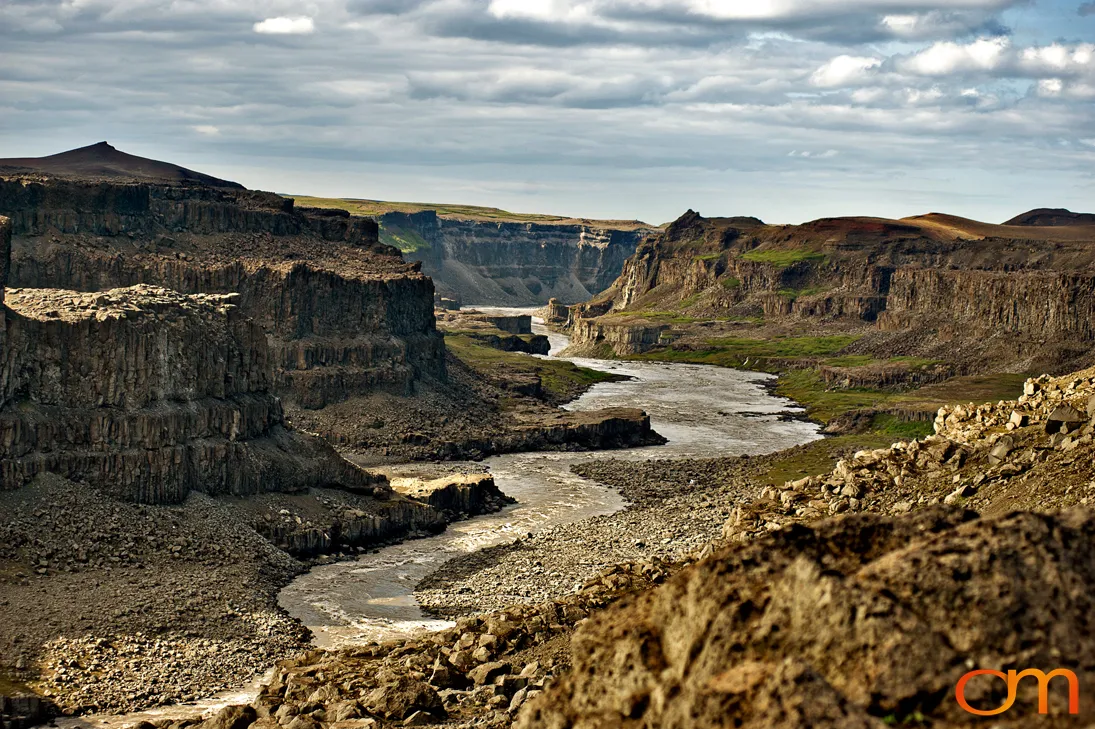
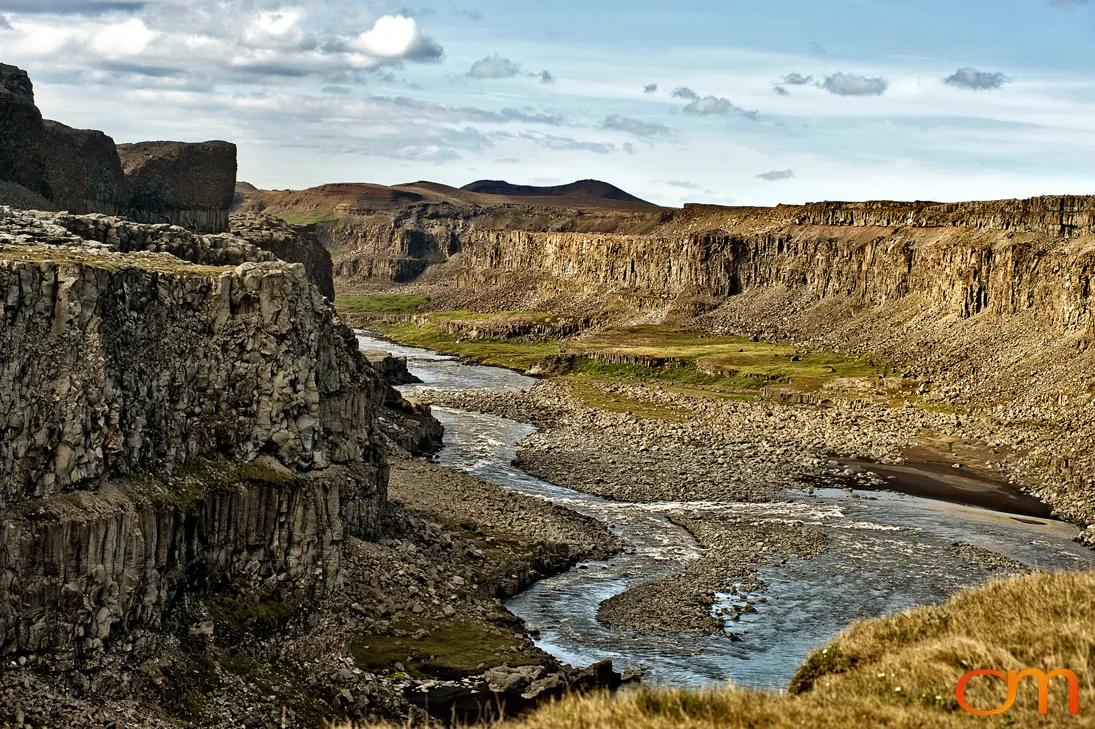
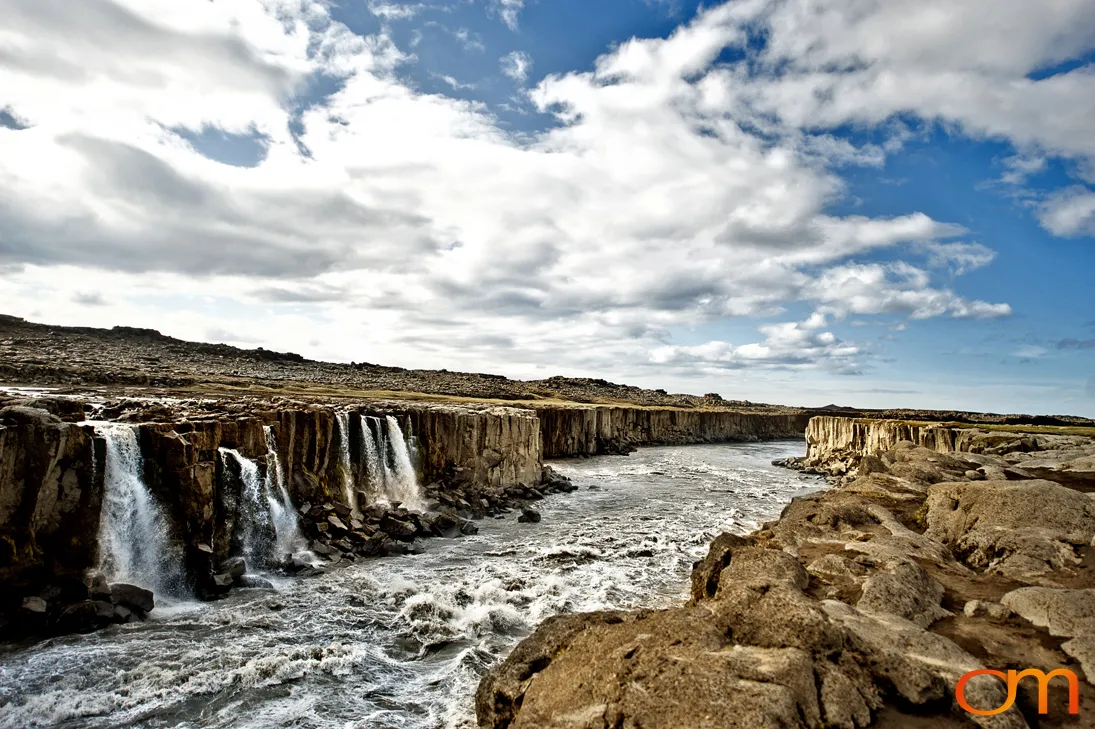
In northeastern Iceland, the glacial river Jökulsá á Fjöllum descends through Jökulsárgljúfur within Vatnajökull National Park. Sediment carried by the river gives the water its characteristic gray appearance.
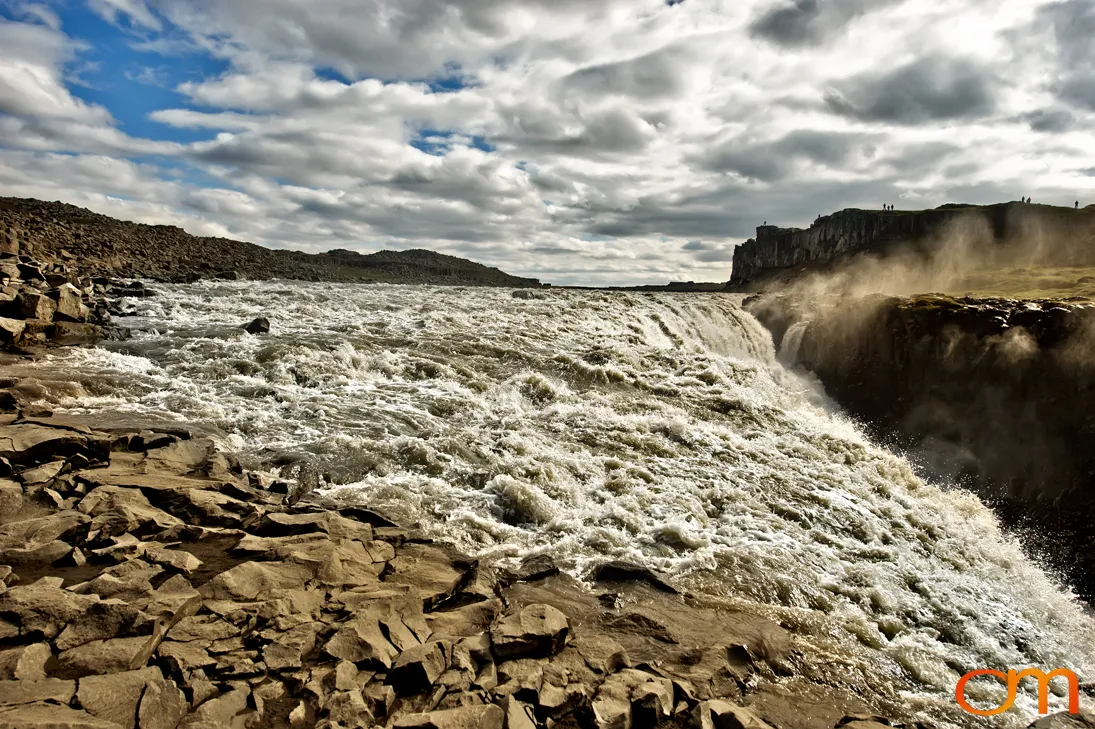
Dettifoss drops approximately 144–148 feet (44–45 meters) across a crest about 328 feet (100 meters) wide. Roughly 7,100 cubic feet of water per second, about 200 cubic meters, passes over the falls, although the discharge varies with precipitation, snowmelt, and glacial melt. The combination of its substantial flow and vertical drop makes Dettifoss one of Europe’s most powerful waterfalls.
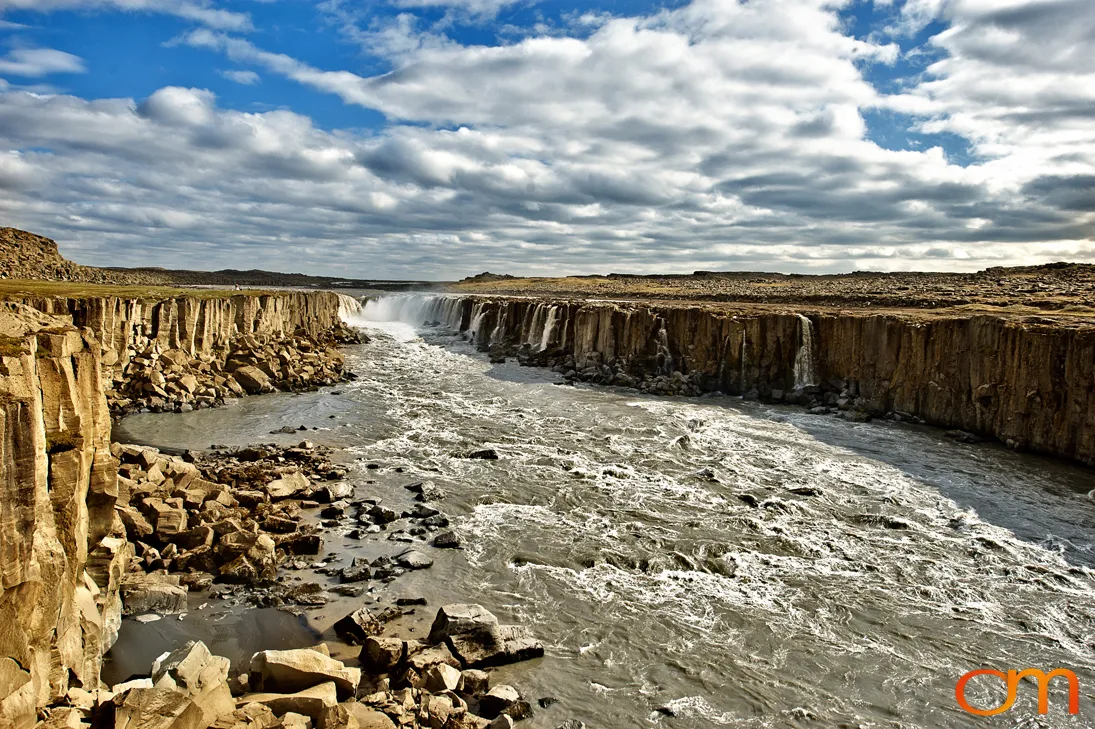
Selfoss lies several hundred meters upstream, south of Dettifoss. Approximately 33 feet (10 meters) high, it spreads across a broad series of basalt ledges, where the river divides into multiple parallel cascades before continuing toward Dettifoss.
The surrounding canyon records the combined effects of volcanism, glacial rivers, and extreme flooding. Massive glacial outburst floods originating beneath Vatnajökull, most recently about 2,000 years ago, helped carve Jökulsárgljúfur through layers of basalt. The river continues to erode and reshape the canyon and its waterfalls.