Sessa Aurunca
Roman Theater of Sessa Aurunca
September 2015
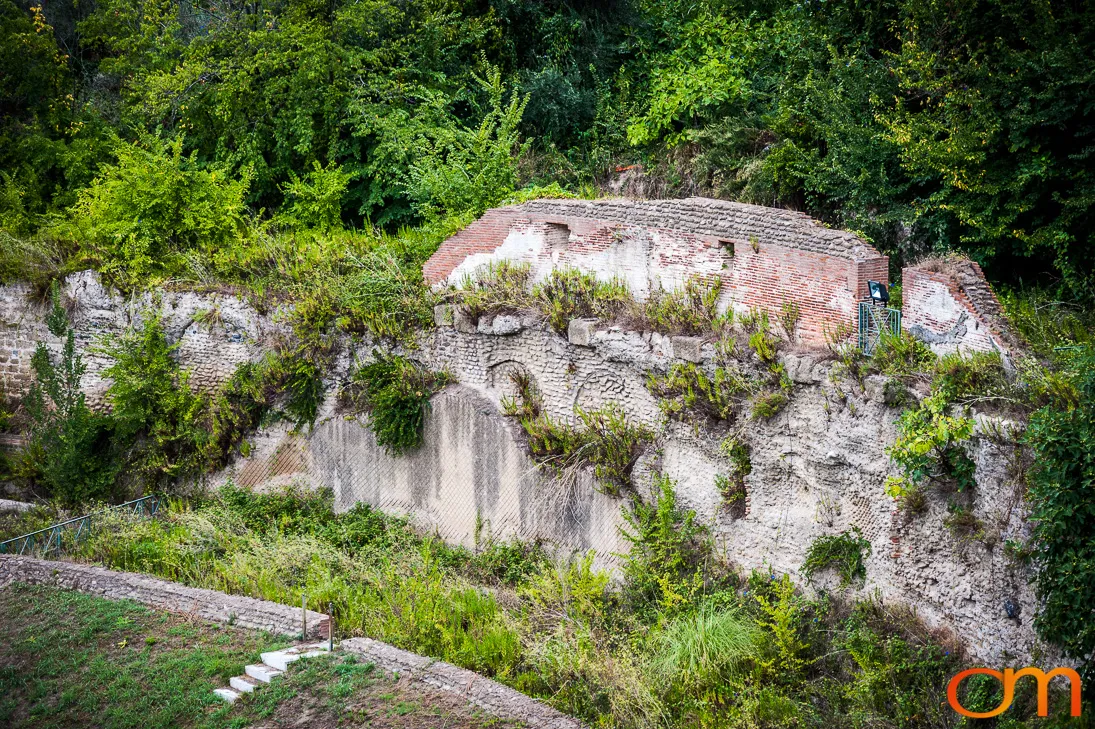
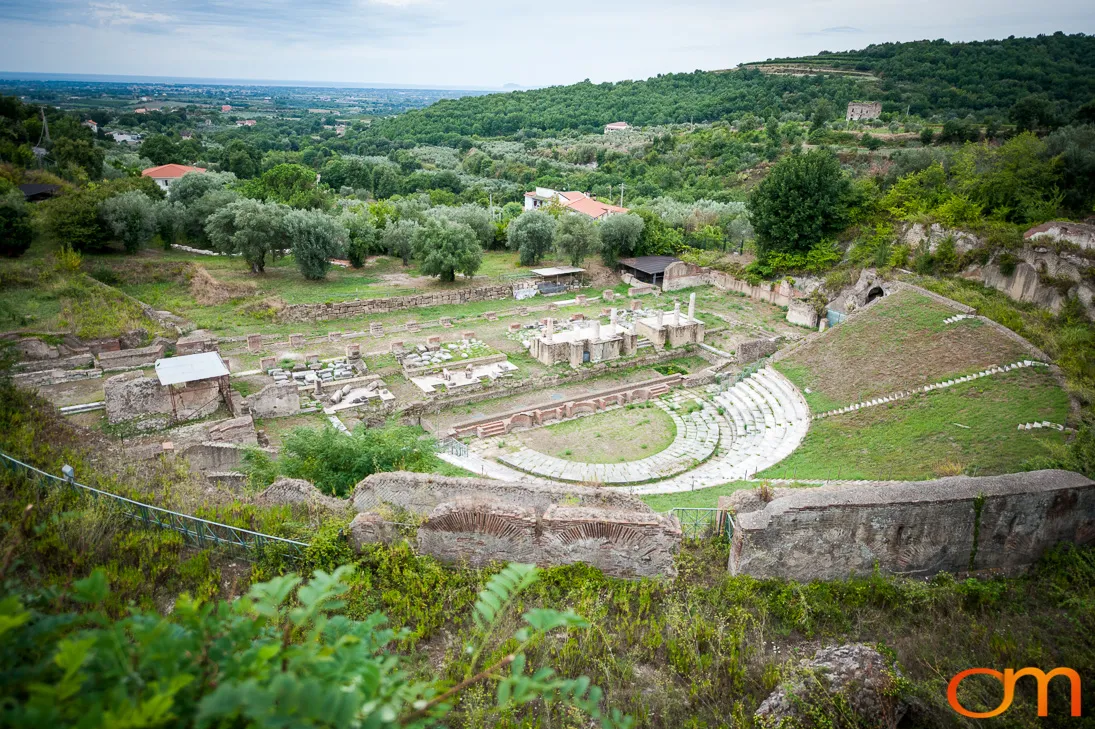
The Roman theater at Sessa Aurunca belonged to ancient Suessa Aurunca, a Latin colony established following Rome’s conquest of the Aurunci in 313 BCE. The theater was built during the reign of Augustus in the first century CE and enlarged and refurbished under Antoninus Pius in the second century.
Its semicircular cavea, partly cut into the hillside, measures approximately 110 meters (361 feet) across. Three tiers of limestone seating could accommodate an estimated 7,000–10,000 spectators. The seating faced a monumental stage building originally about 40 meters (131 feet) long and 24 meters (79 feet) high.
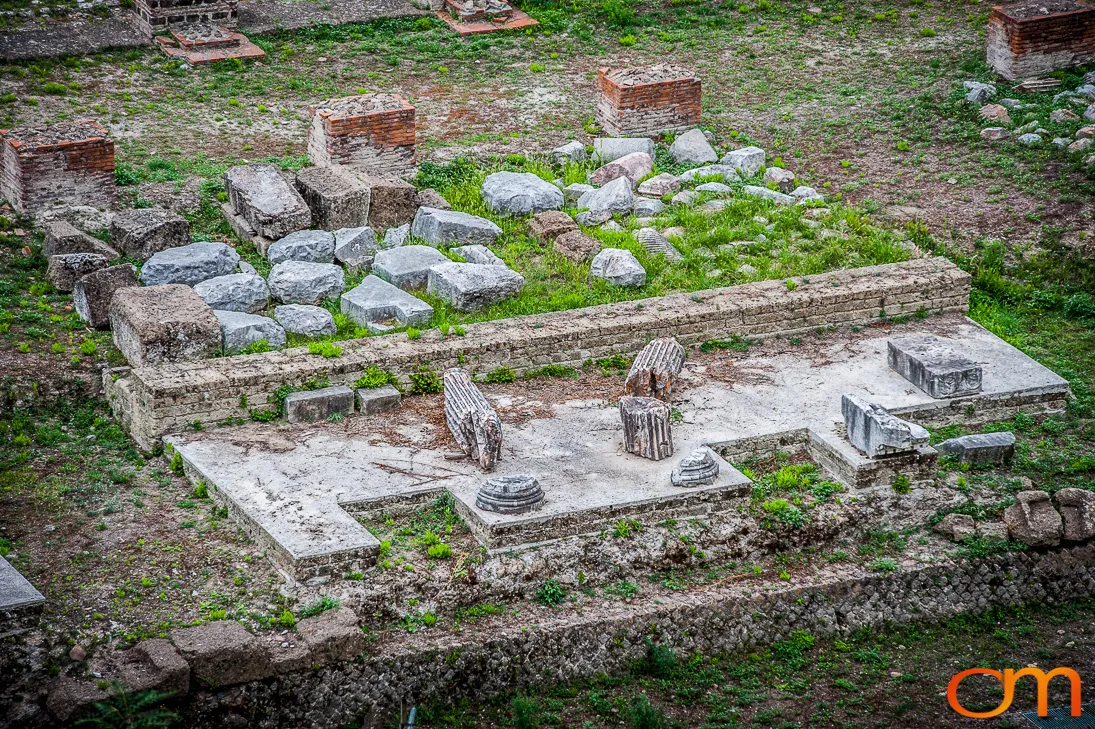
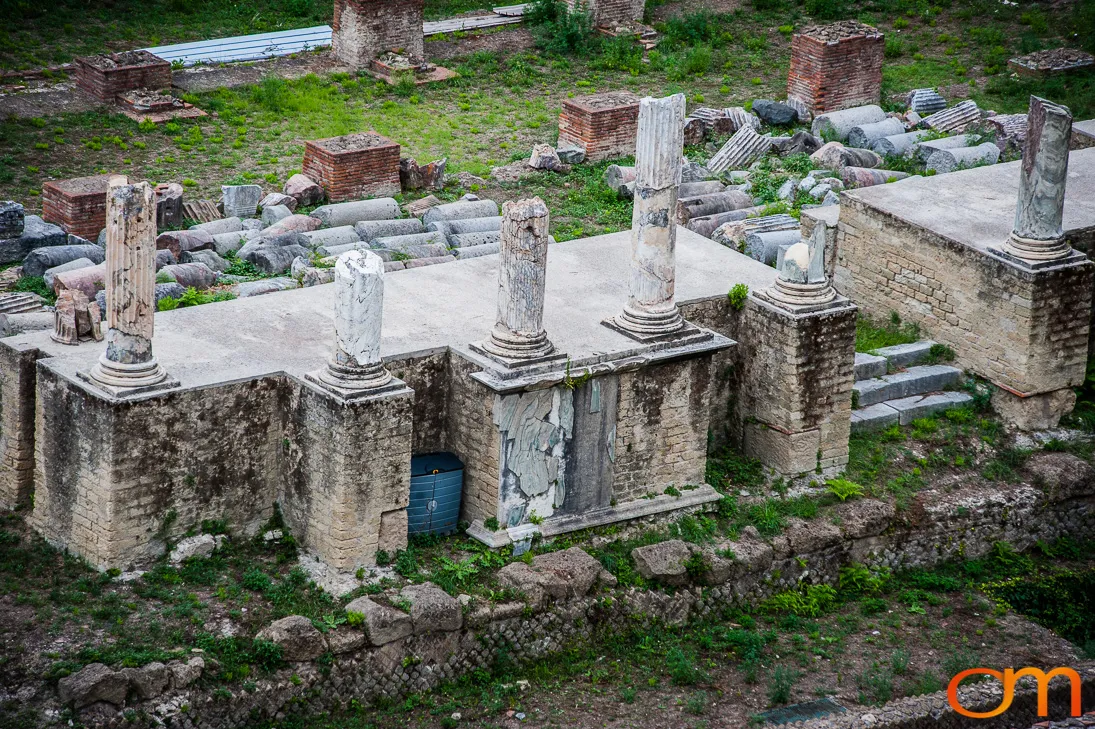
The stage façade had three superimposed orders of 84 columns made from five varieties of colored marble imported from the Greek islands, Numidia, and Egypt. Remains of the structure that supported the velarium, an awning used to shade spectators, also survive.
Excavation and restoration between 1999 and 2003 revealed architectural decoration, inscriptions, and sculptures representing members of the Roman imperial family. These finds make the theater one of the most substantial Roman public buildings excavated in Campania. Objects recovered from the site are displayed in the National Archaeological Museum of Sessa Aurunca.