Turville
Turville, Buckinghamshire
April 2009
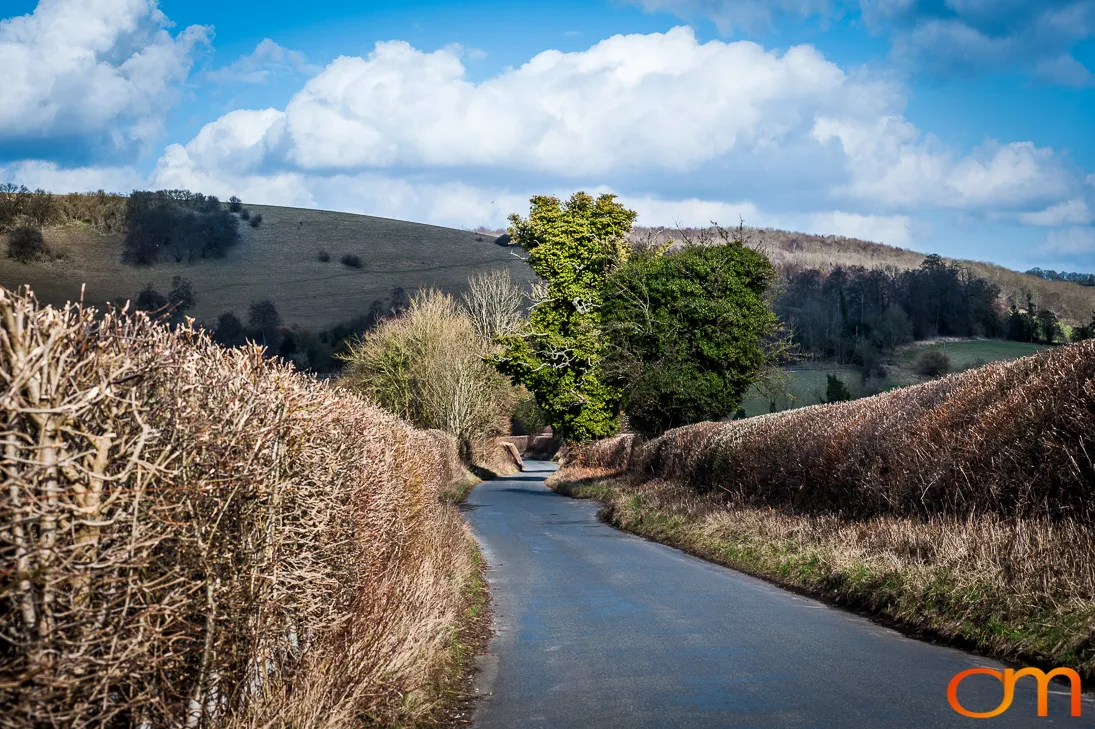
Turville is a small village at the head of the Hambleden Valley in Buckinghamshire. It lies within the Chilterns National Landscape, the protected area legally designated as the Chilterns Area of Outstanding Natural Beauty. The settlement developed around a small green and the medieval Church of St Mary the Virgin, with chalk hills, hedgerows, and woodland enclosing the valley.
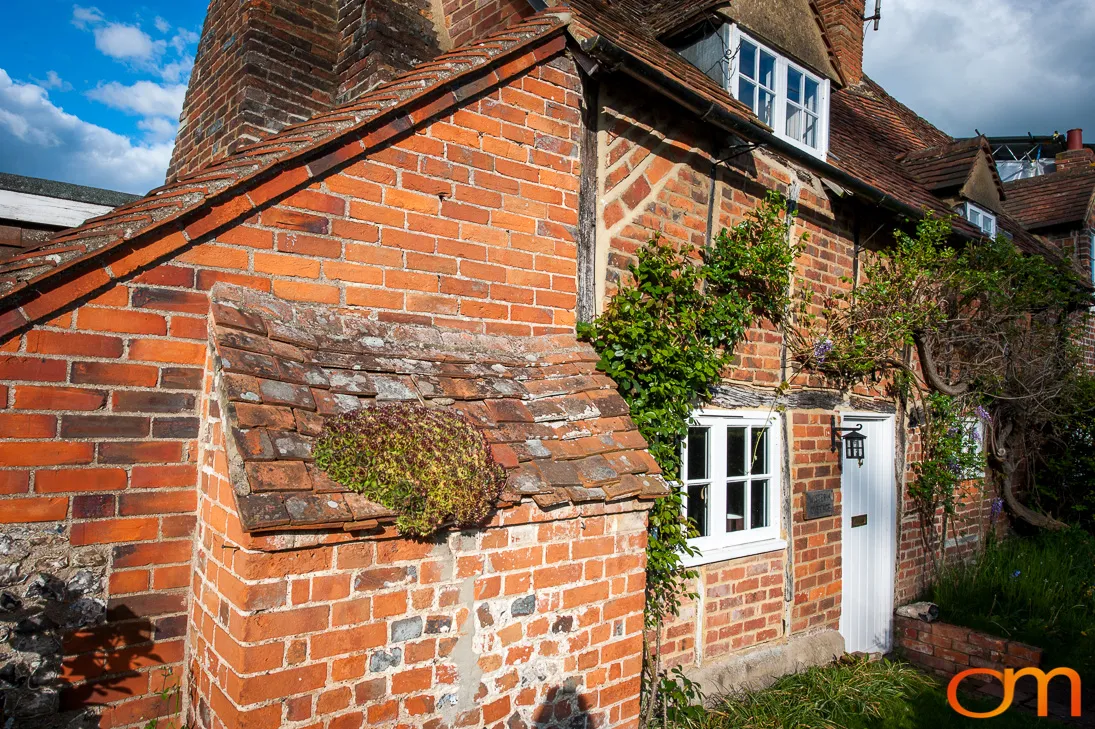
Turville’s conservation area, designated in 1970, contains a high concentration of historic buildings. Cottages around the green date mainly from the 16th to the 19th centuries and use materials characteristic of the Chilterns, including flint, red brick, timber framing, and clay tiles. The Grade II-listed Bull and Butcher is a 17th-century public house with surviving timber framing and brick infill.
The preserved village center has made Turville a recurring screen location. It represented the fictional village of Dibley in The Vicar of Dibley and appeared in the wartime film Went the Day Well? (1942). Cobstone Windmill, on the ridge above the village, was used in Chitty Chitty Bang Bang (1968).
Turville is also associated with Ellen Sadler, known in Victorian newspapers as the “Sleeping Girl of Turville.” Her family and physician reported that she remained in an unresponsive state from 1871 until 1880. The case attracted public and medical attention and was discussed in The Lancet, but no confirmed diagnosis or explanation was established. Describing the episode simply as nine years of ordinary sleep is therefore misleading.