Search 283 stories and 49 dives.

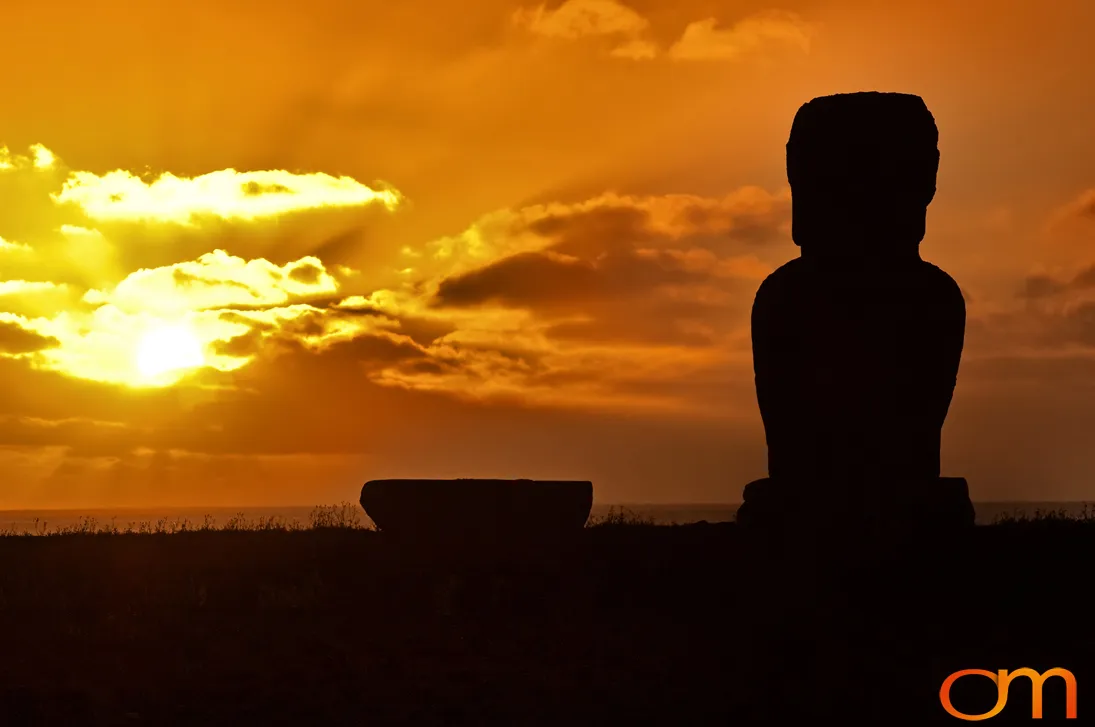
Single moai silhouetted against an orange sunset over the ocean

Rapa Nui

Moai of Rapa Nui

October 2006

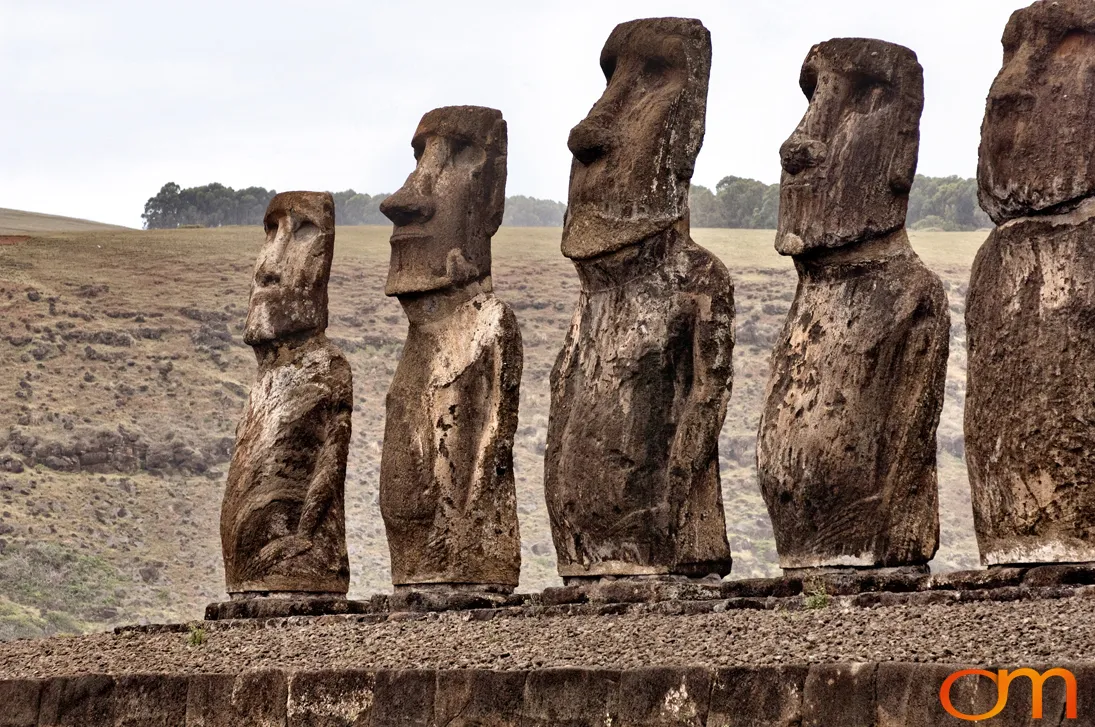
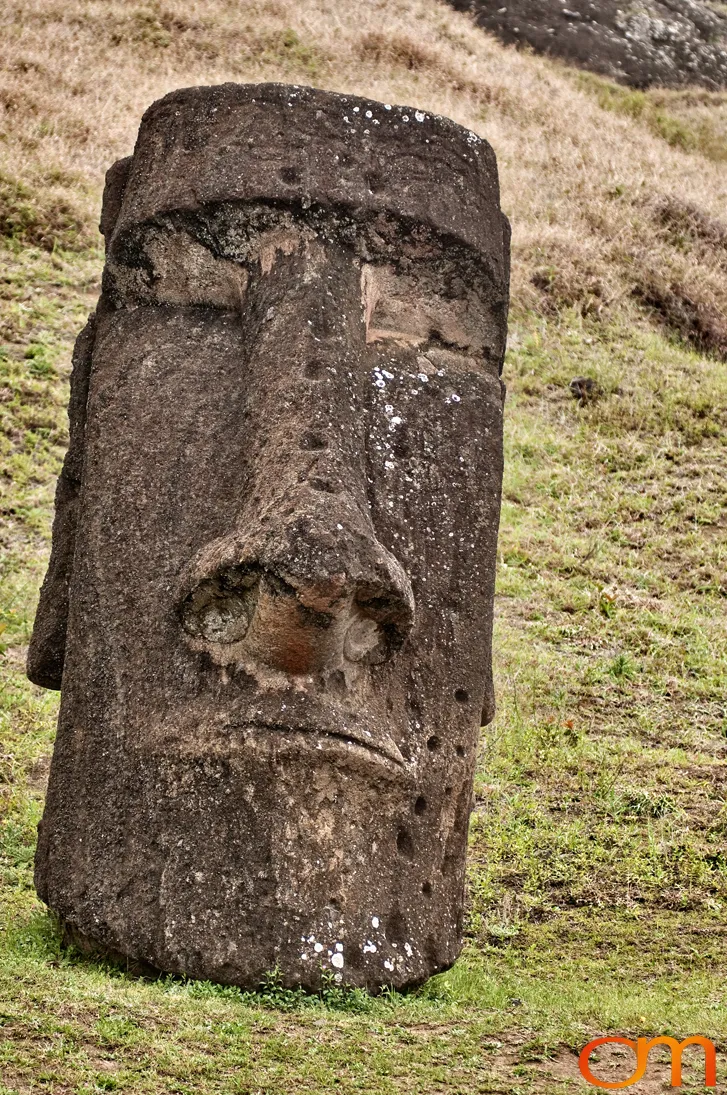
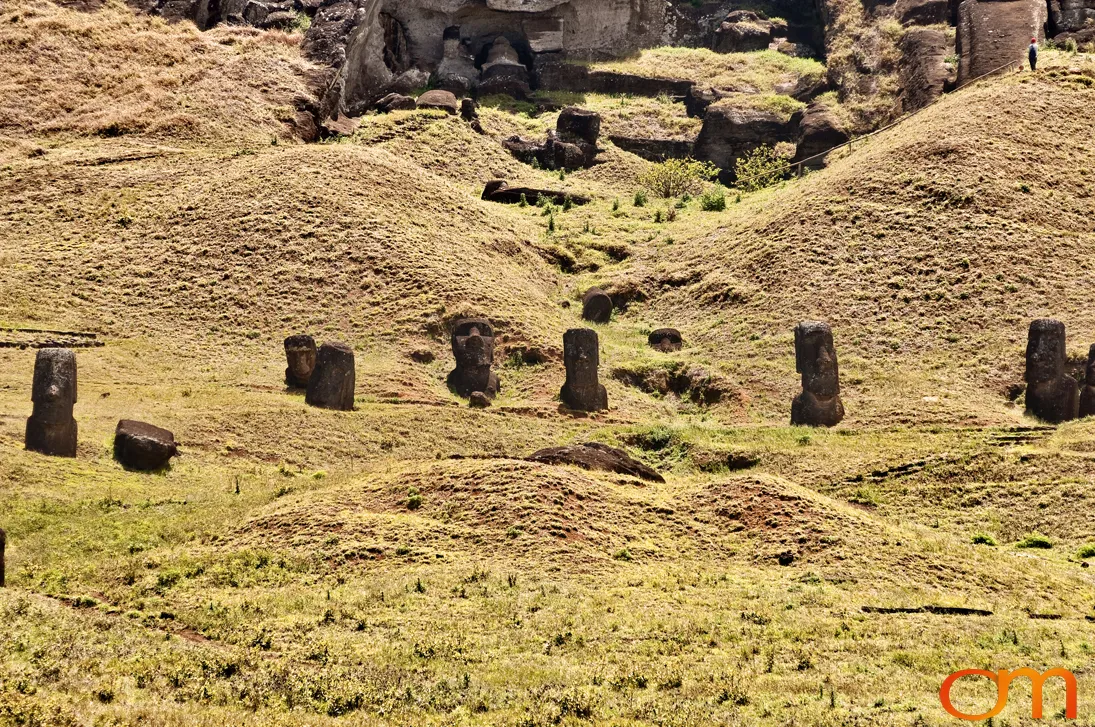
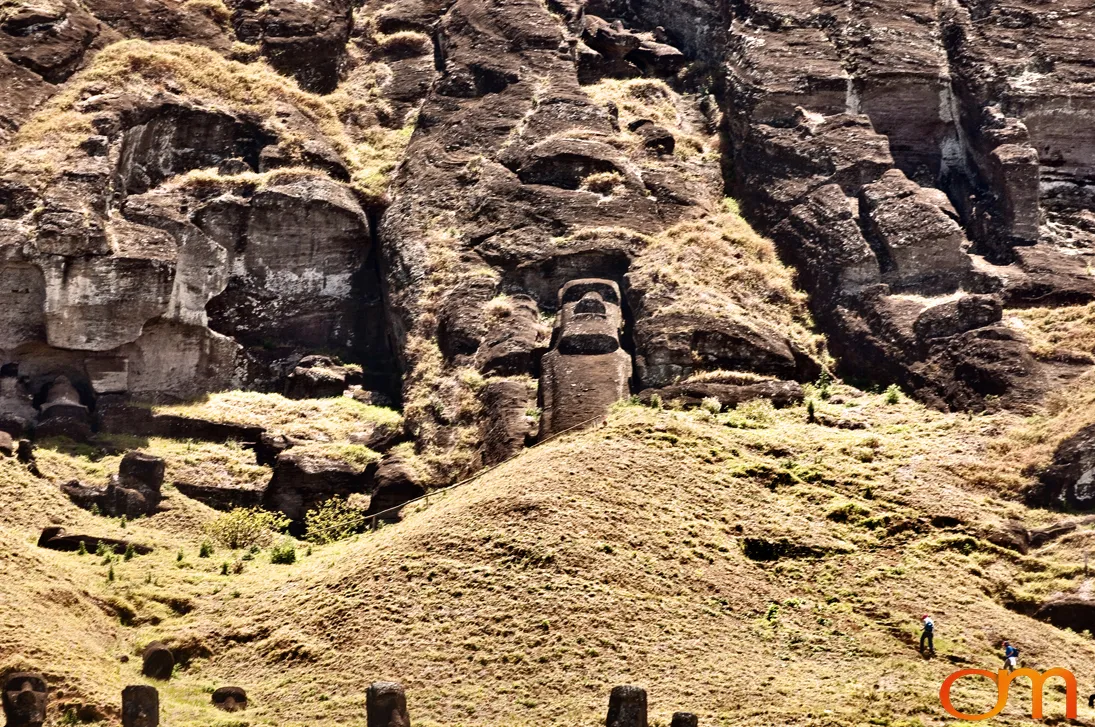
The moai are monumental human figures carved by the Rapa Nui people, principally between approximately 1100 and 1600 CE. More than 900 are known across the island. Most were carved from consolidated volcanic tuff at Rano Raraku, where unfinished figures remain attached to the bedrock or stand partly buried on the quarry slopes.

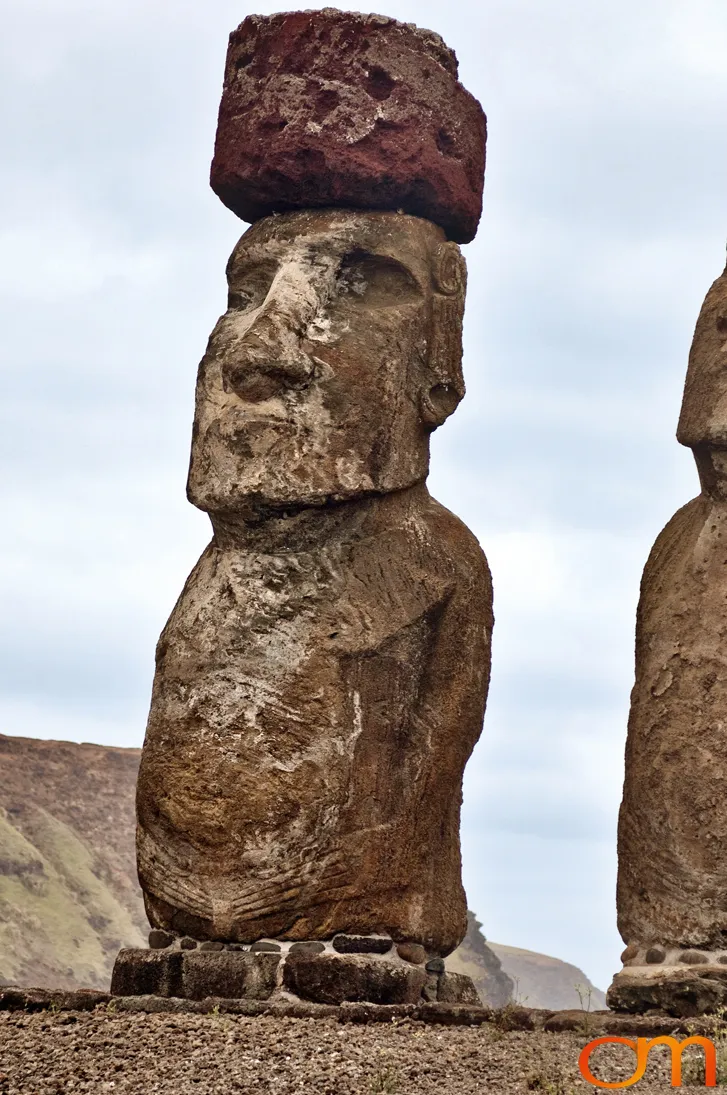
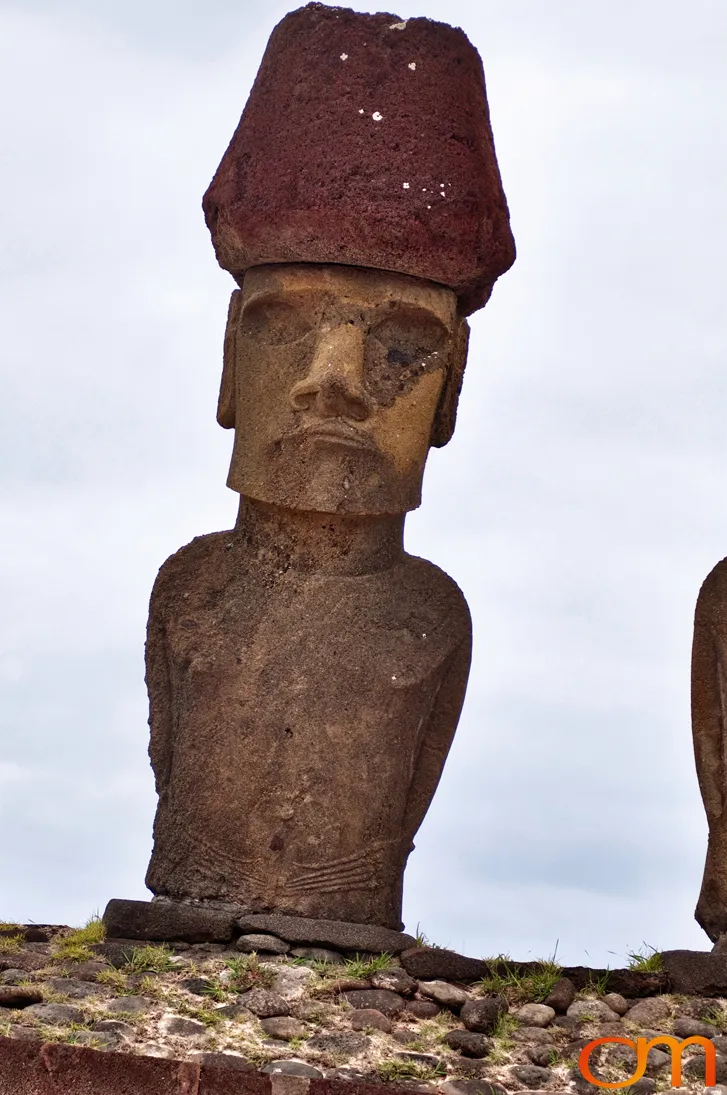
Using basalt picks called toki, sculptors shaped figures with elongated heads, prominent brows, long noses and arms held against the torso. Completed moai were transported to ceremonial platforms called ahu, often near settlements and burial areas. Some received cylindrical forms of red scoria called pukao, while fitted coral-and-stone eyes may have been added after a statue was erected.

Moai are generally understood as representations of important ancestors whose presence embodied authority, ancestry and protection. They were not necessarily individualized portraits, and the identity of most figures is unknown.

How the statues were transported has long been debated. Archaeological studies and full-scale experiments indicate that at least some moai could have been moved upright by teams using ropes to rock them from side to side—a process resembling “walking.” Although this method is supported by the form of transport-stage statues and surviving roads, the techniques used may have varied according to the size of the figure and the route.
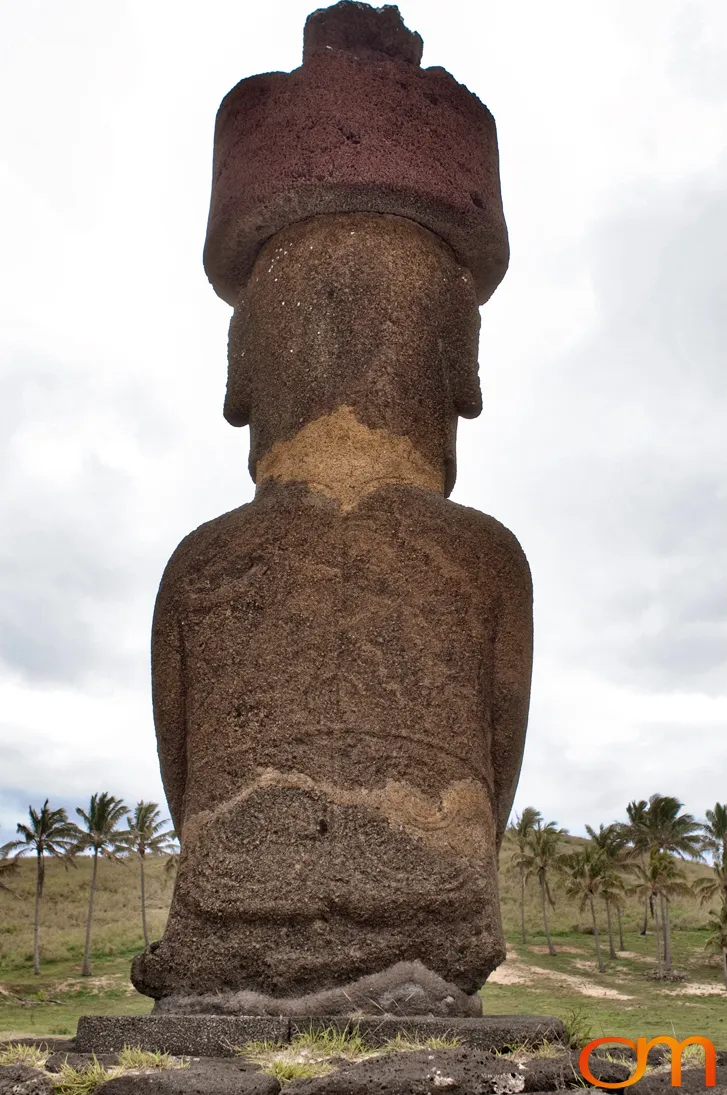
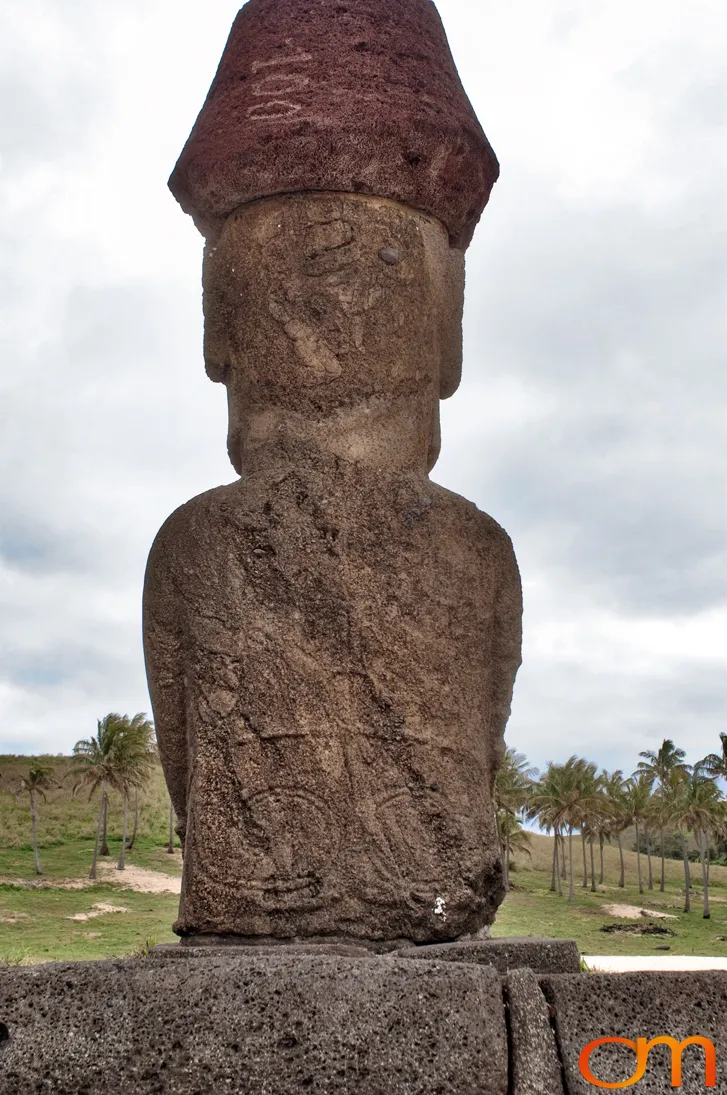
Back of a moai topped with a red scoria pukao, palm grove behind
Rear of a pukao-crowned moai, faint carved relief across its back
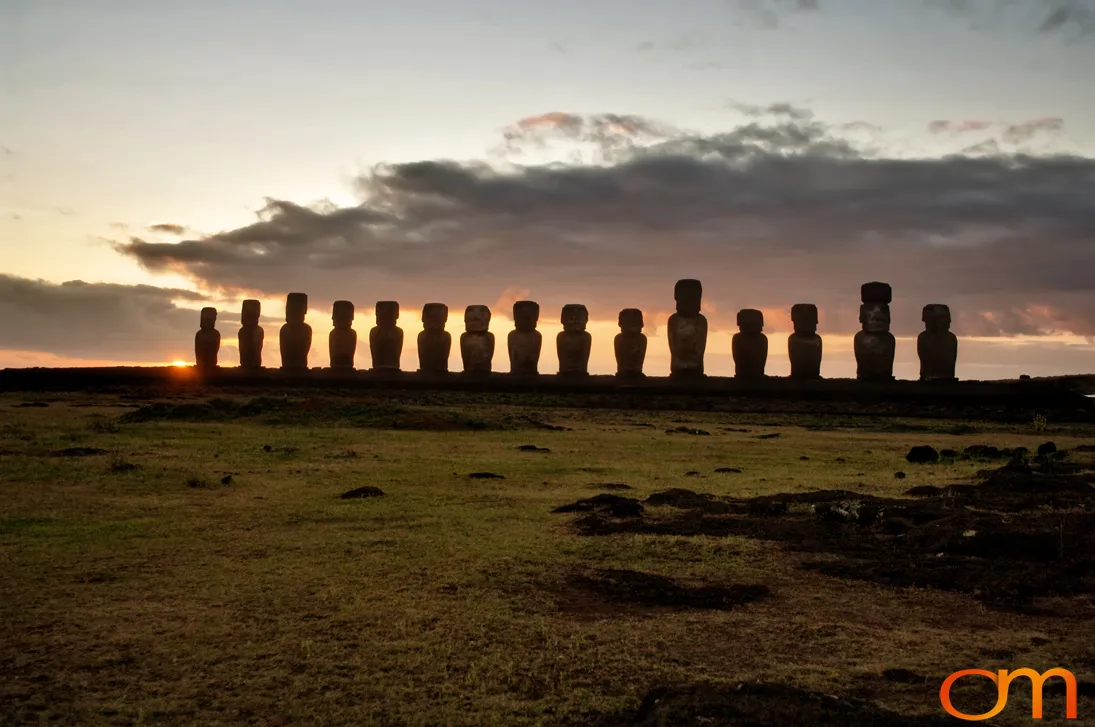
Row of fifteen moai silhouetted on their ahu as the sun breaks the horizon
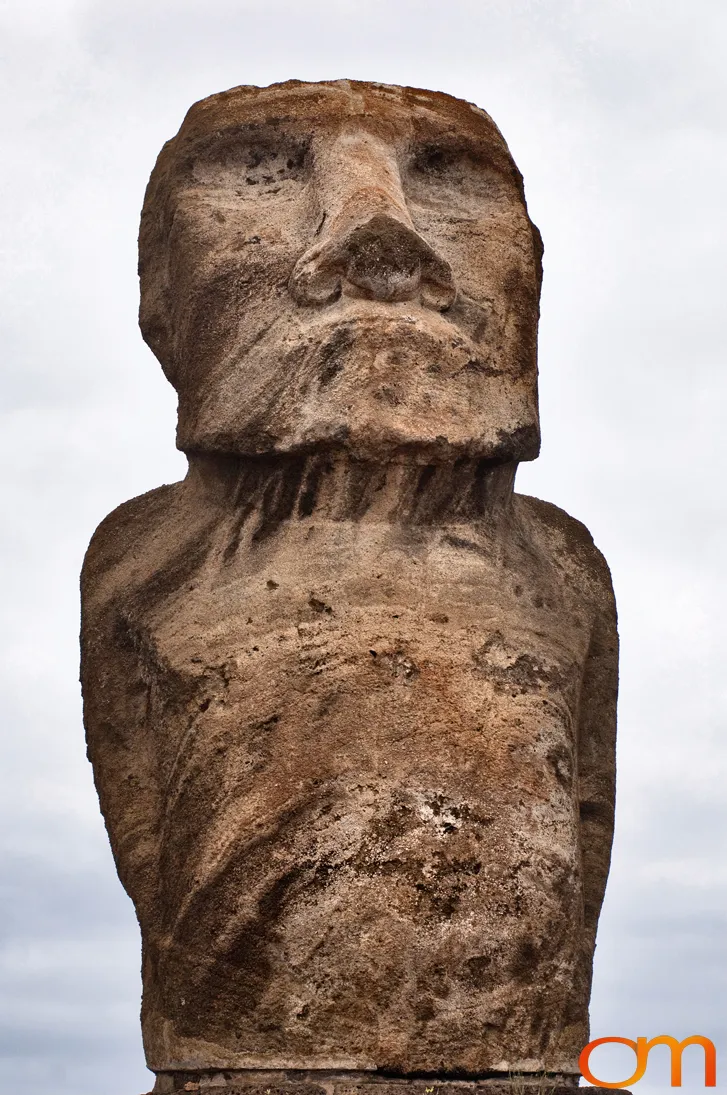
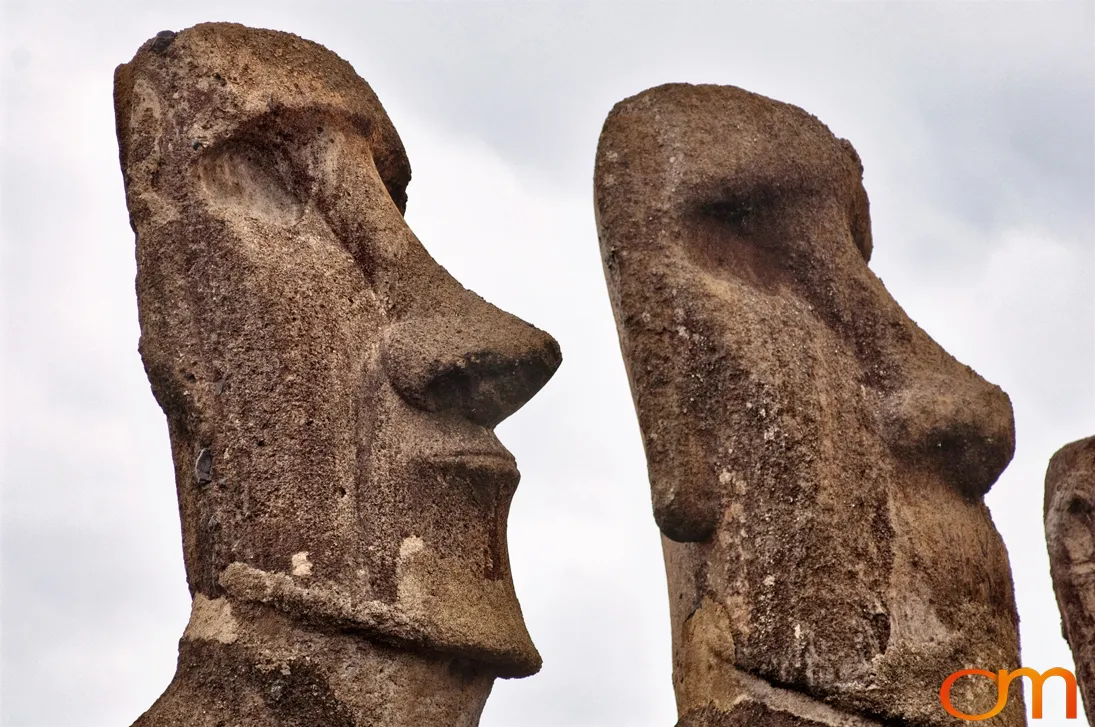
Weathered moai head and shoulders against an overcast sky
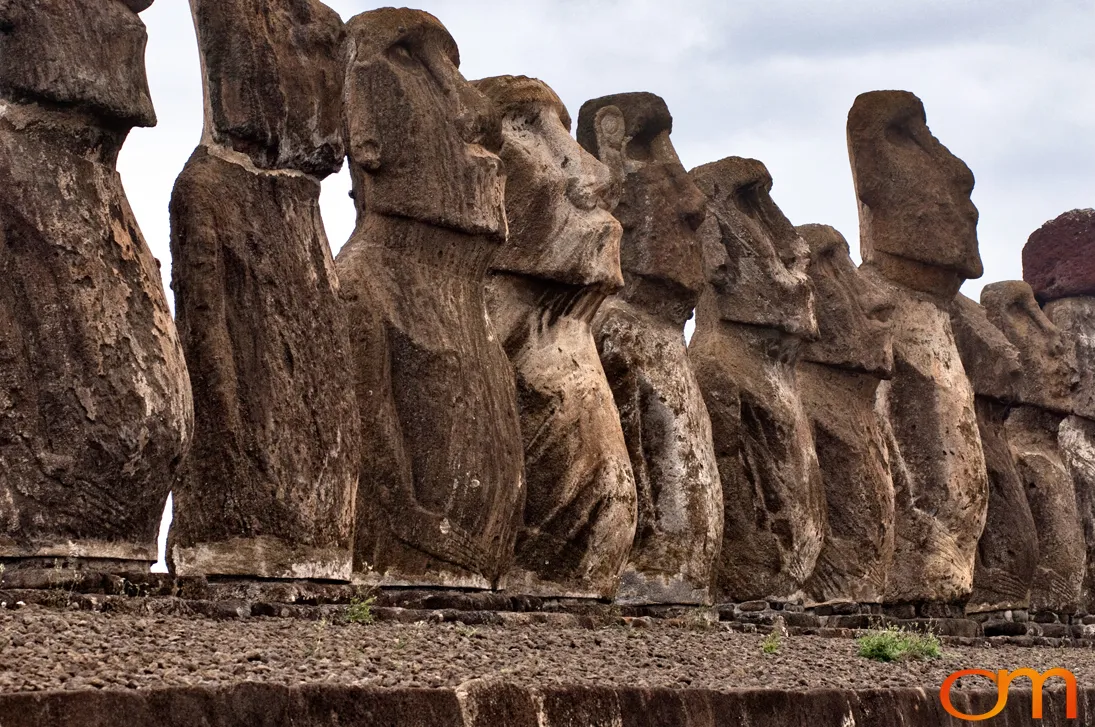
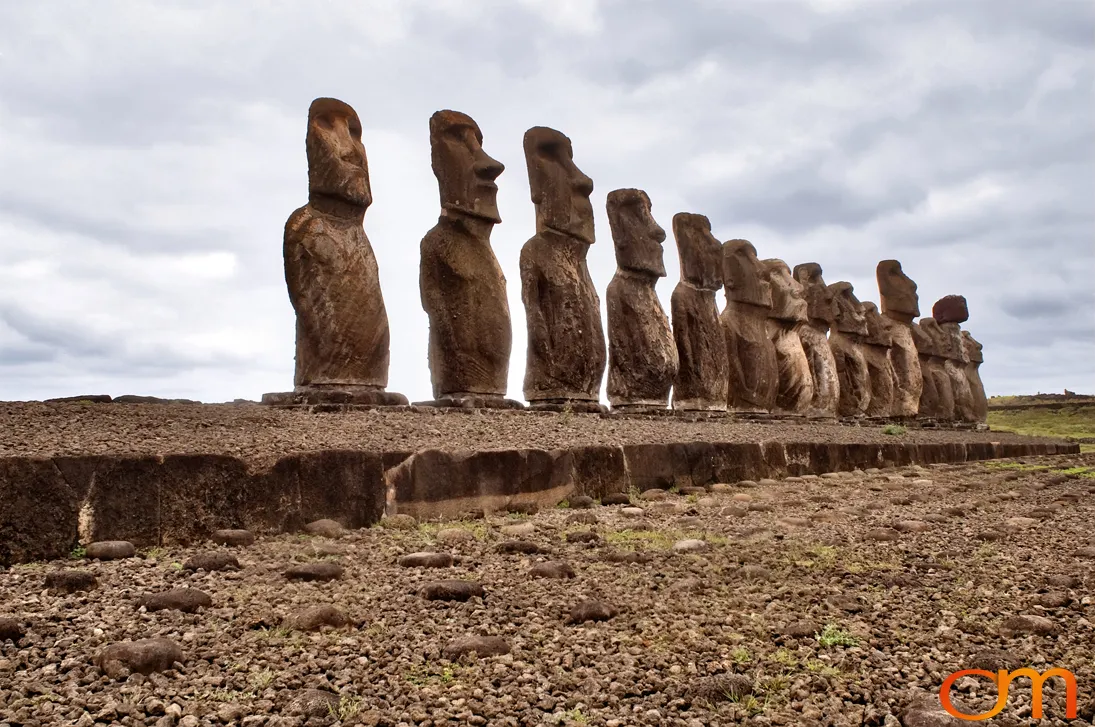
Line of moai in profile, seen low along the edge of their stone platform
Moai receding along a long ahu, one far figure still wearing a red pukao
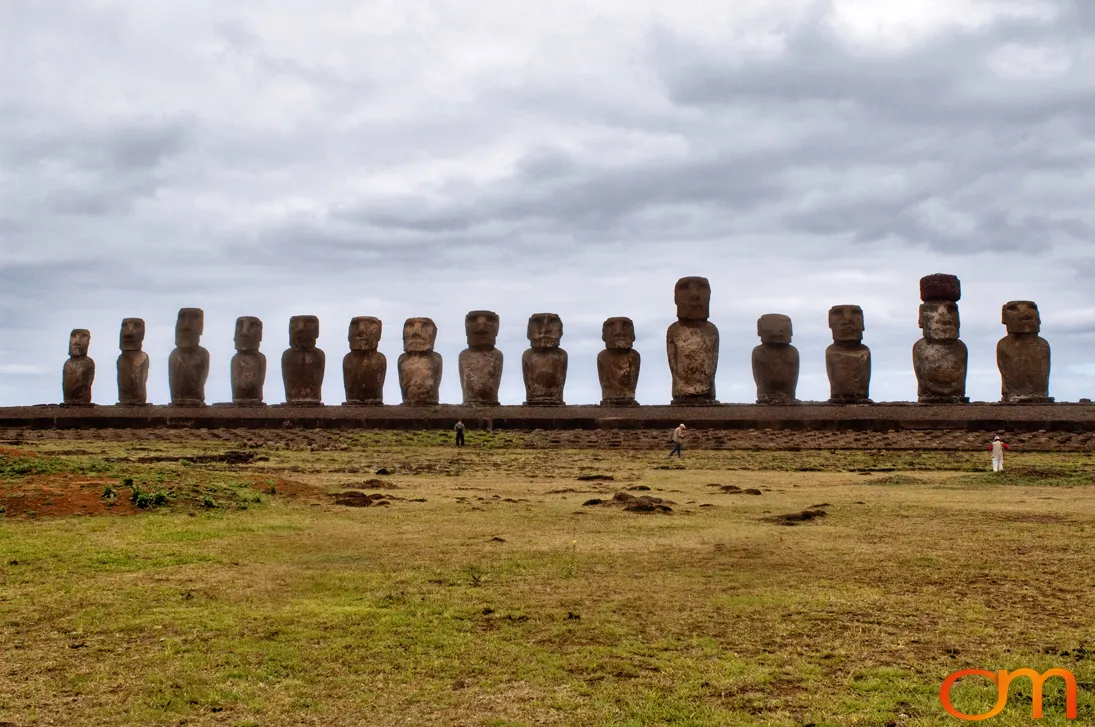
Fifteen moai across a grassy plain, three visitors tiny at the platform's base
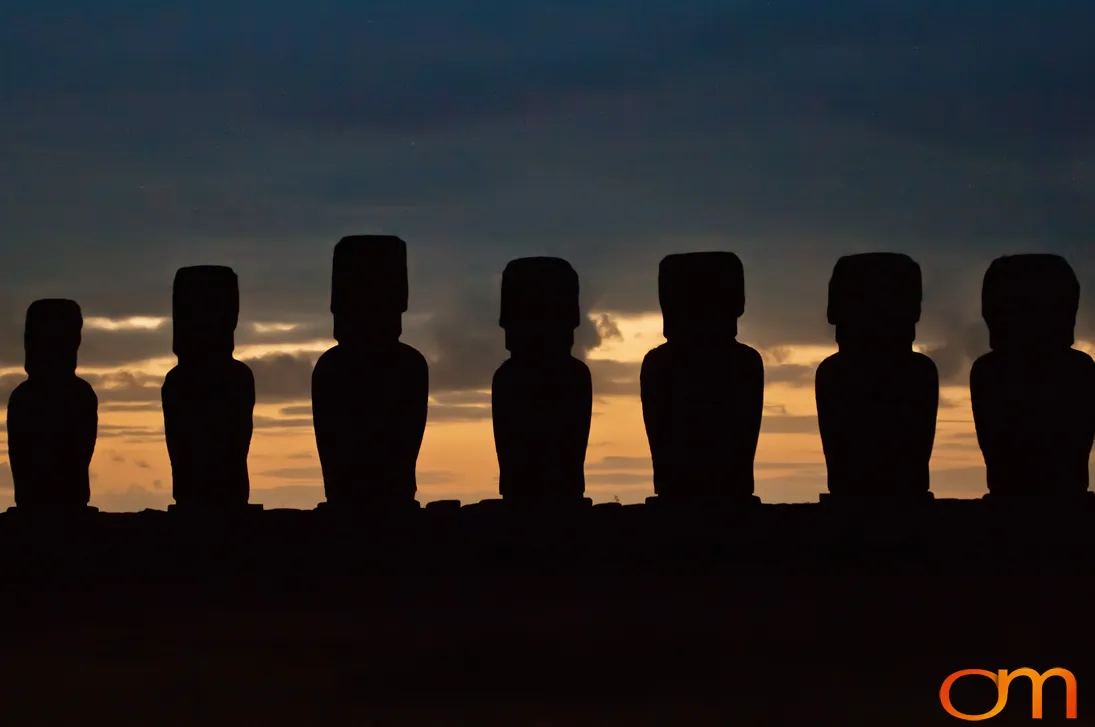
Moai heads silhouetted against an orange band of dawn cloud
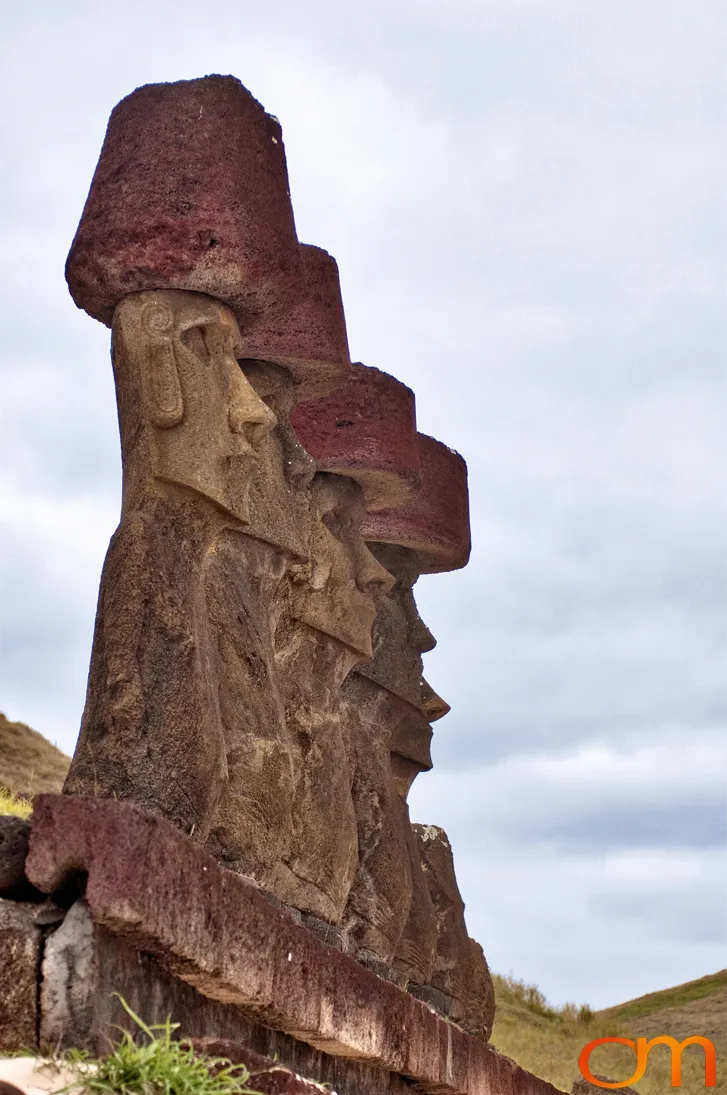
Four moai overlapping in profile, each carrying a red cylindrical pukao
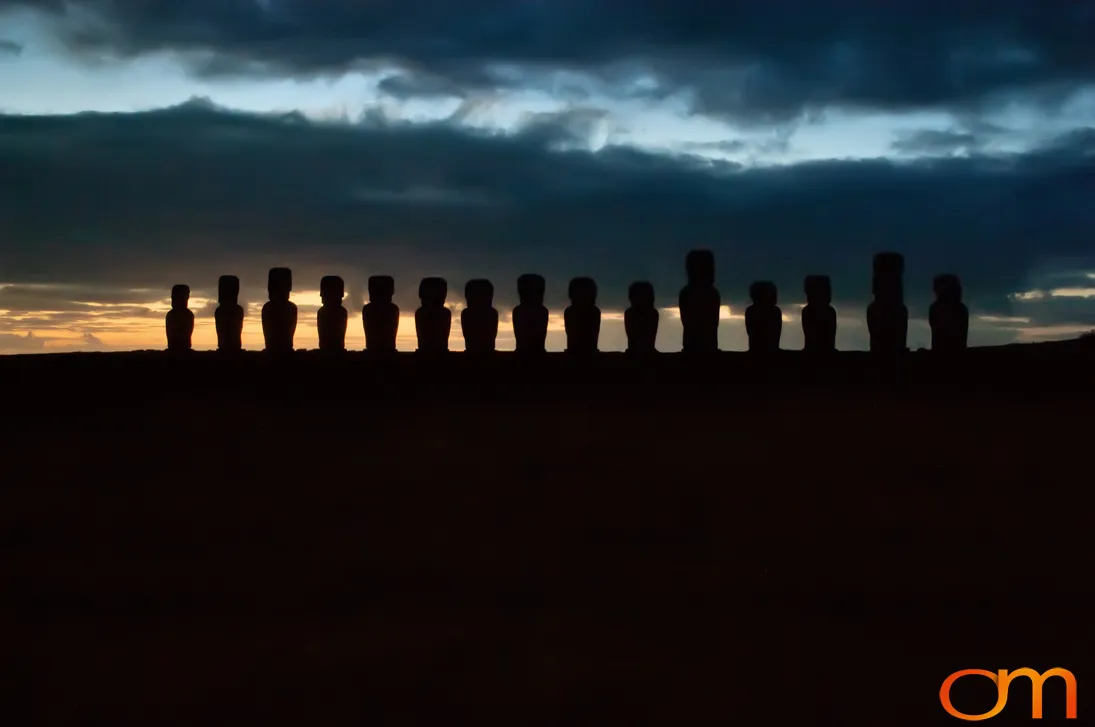
Dark row of moai on the skyline beneath heavy cloud at first light
Five moai standing on a stone ahu with dry grassland rising behind
Moai wearing a red pukao, coastal slopes falling away behind it
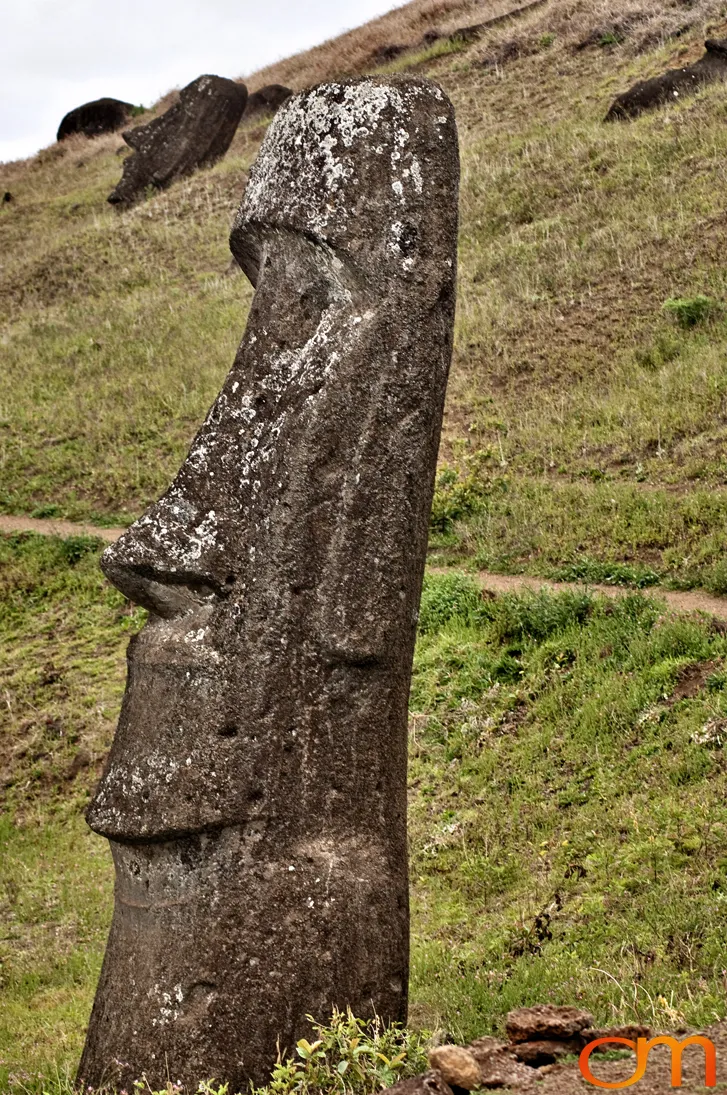
Moai buried to the shoulders on a grassy slope, face tilted upward
Moai crowned with a red scoria pukao, standing on its stone platform
Two moai in profile against a pale sky, heavy brows and long noses
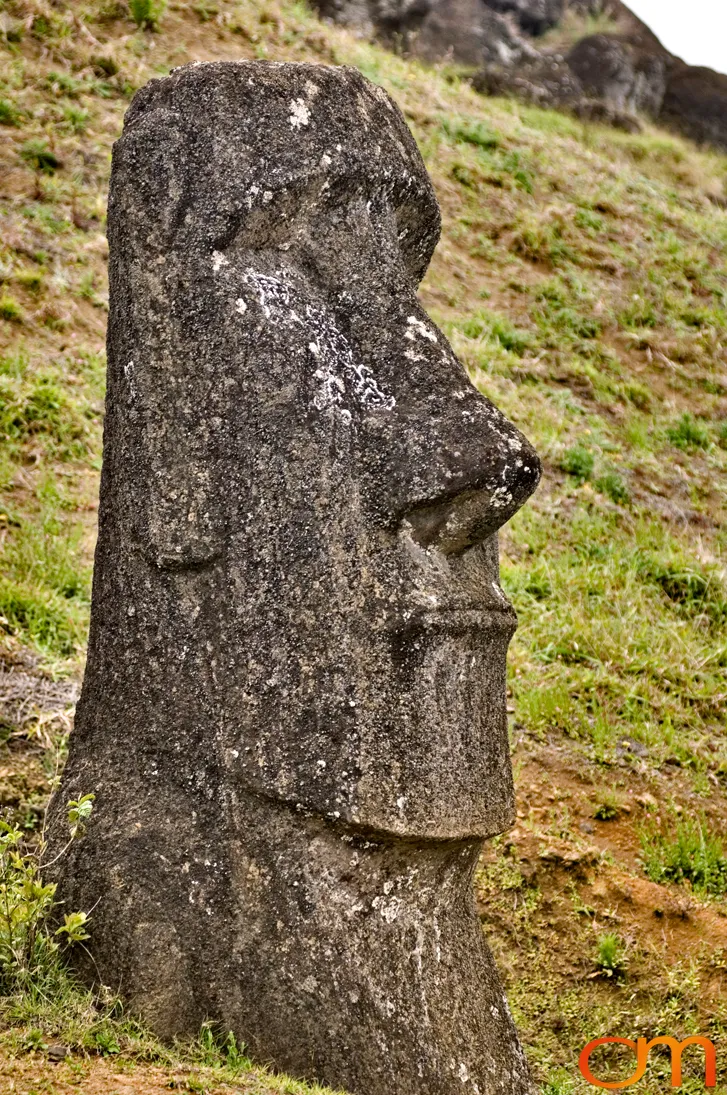
Partly buried moai on a grassy quarry slope, more figures lying above it
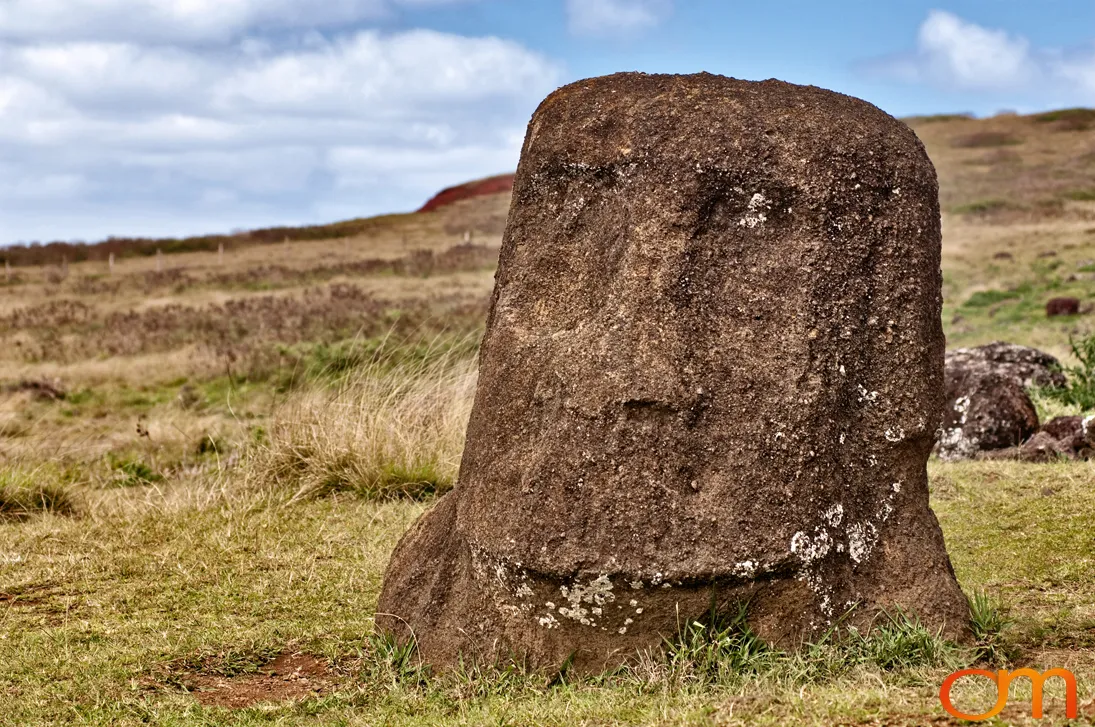
Heavily eroded block of carved stone standing alone in open grassland
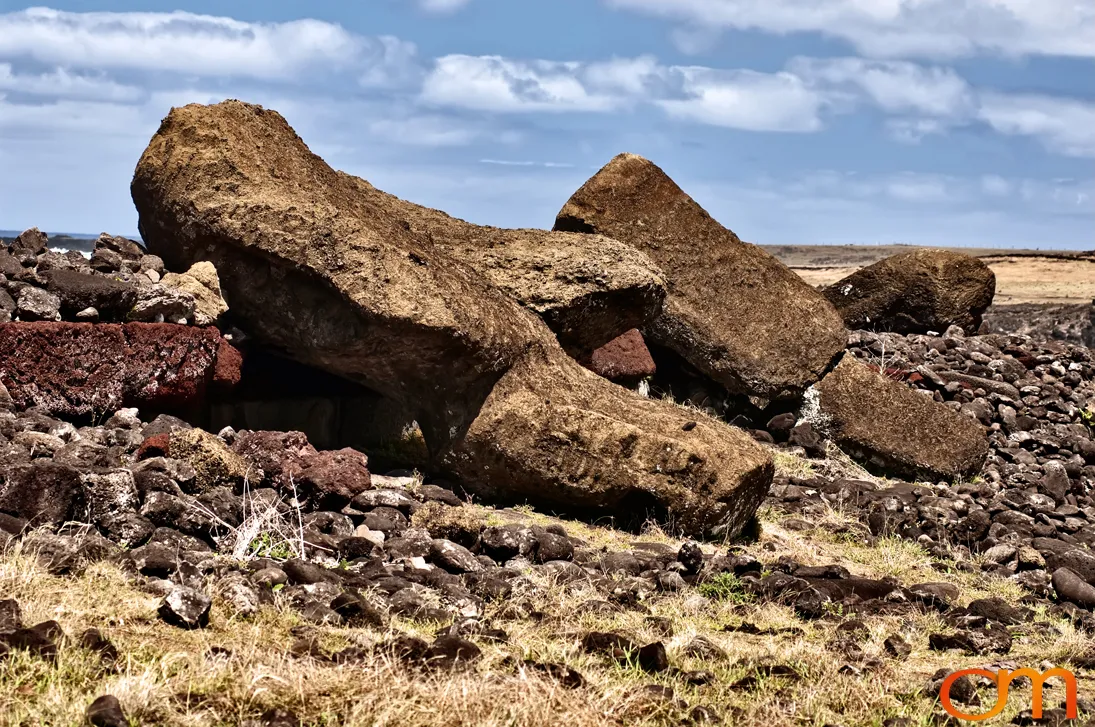
Broken moai lying face down in the rubble of a collapsed platform
Row of moai heads standing in grass below the quarry, a visitor small at the top
Unfinished moai still attached to the quarry rock face, two walkers on the slope below
Weathered moai on a hillside with a second figure behind and the sea beyond
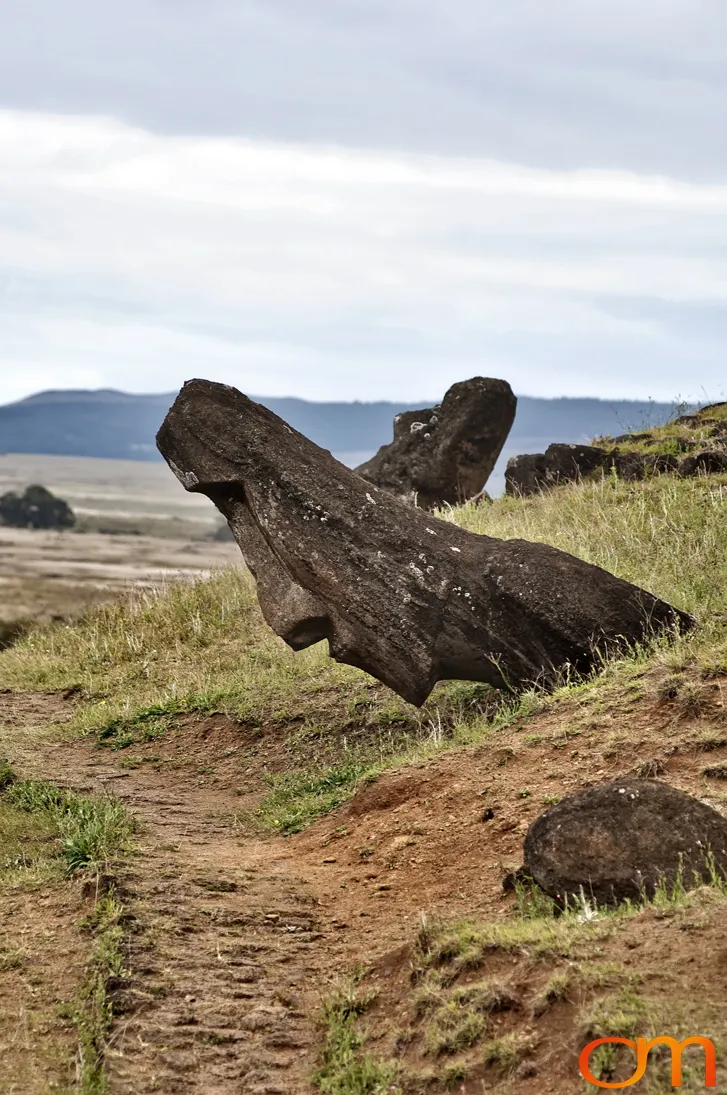
Fallen moai on a grassy slope beside a dirt path, plain and hills behind
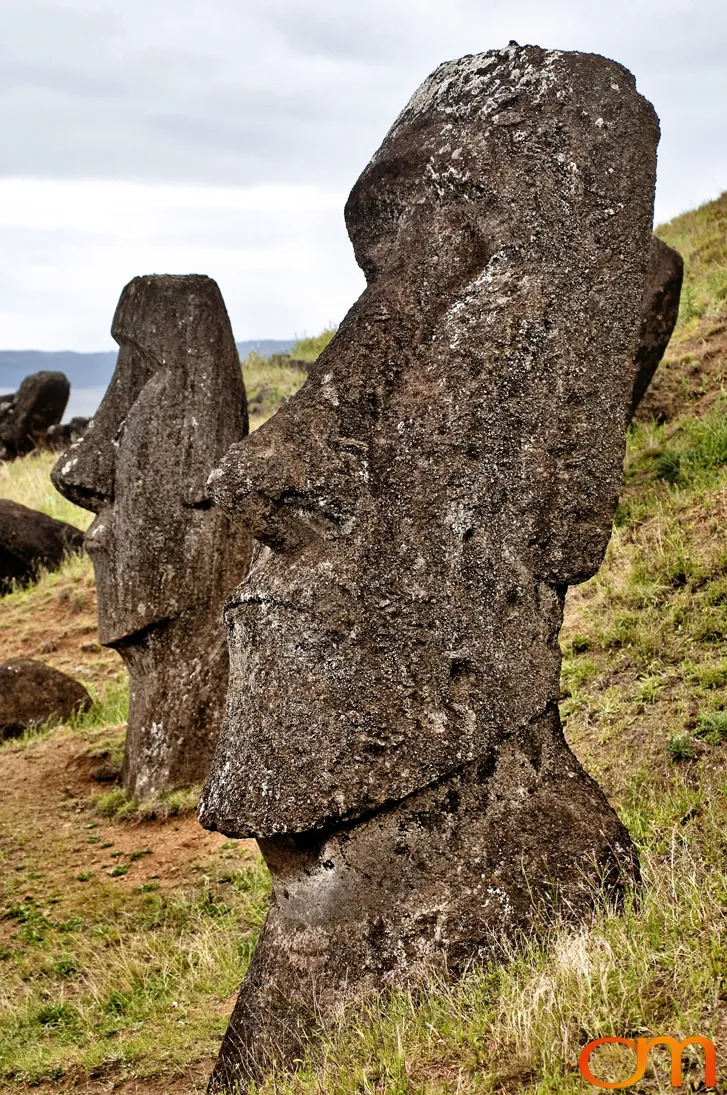
Lichen-mottled moai on a green slope, long ear and jutting chin in profile
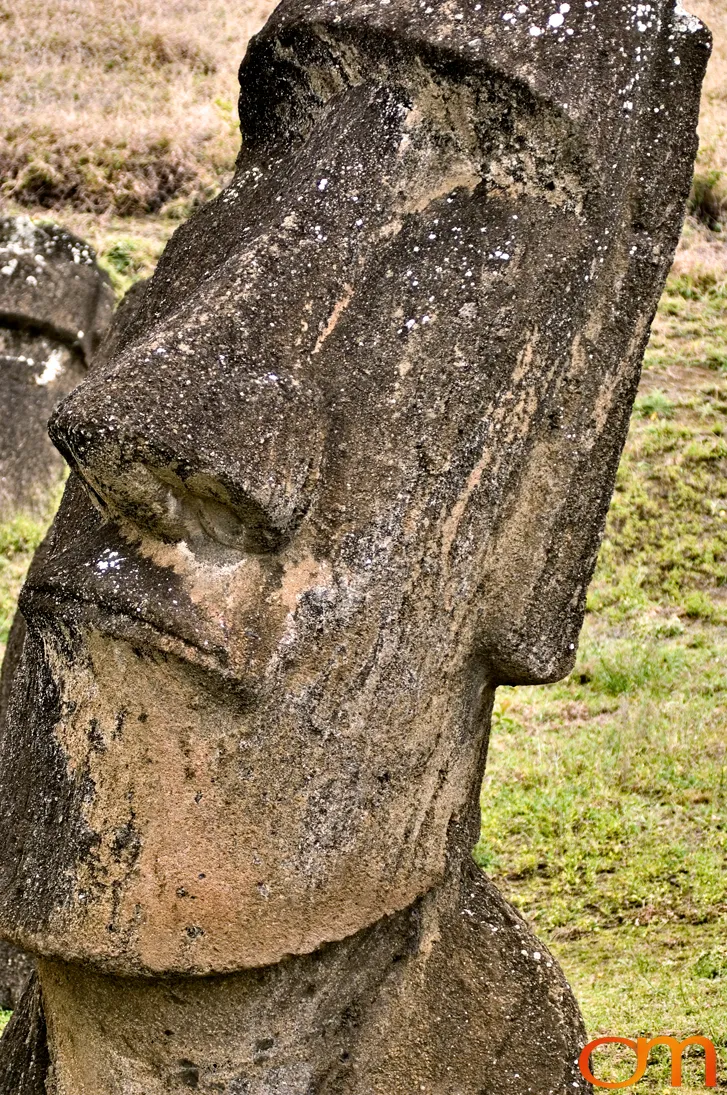
Moai face filling the frame, its deep eye socket in shadow, another head behind
Single moai silhouetted against an orange sunset over the ocean
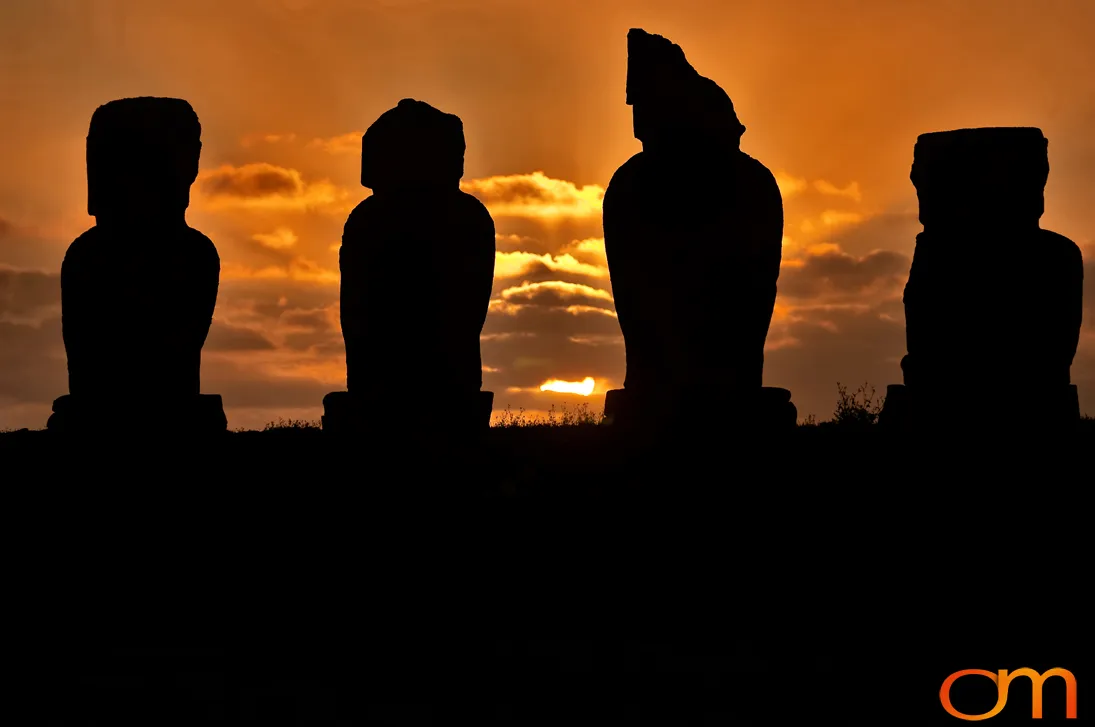
Four moai in silhouette on their platform as the sun sets behind cloud

All Stories →

Fact check: Accuracy matters. If something looks incorrect, please suggest a correction.