Connecticut
Bun Lai’s 2013 Periodical Cicada Dinner
October 2013
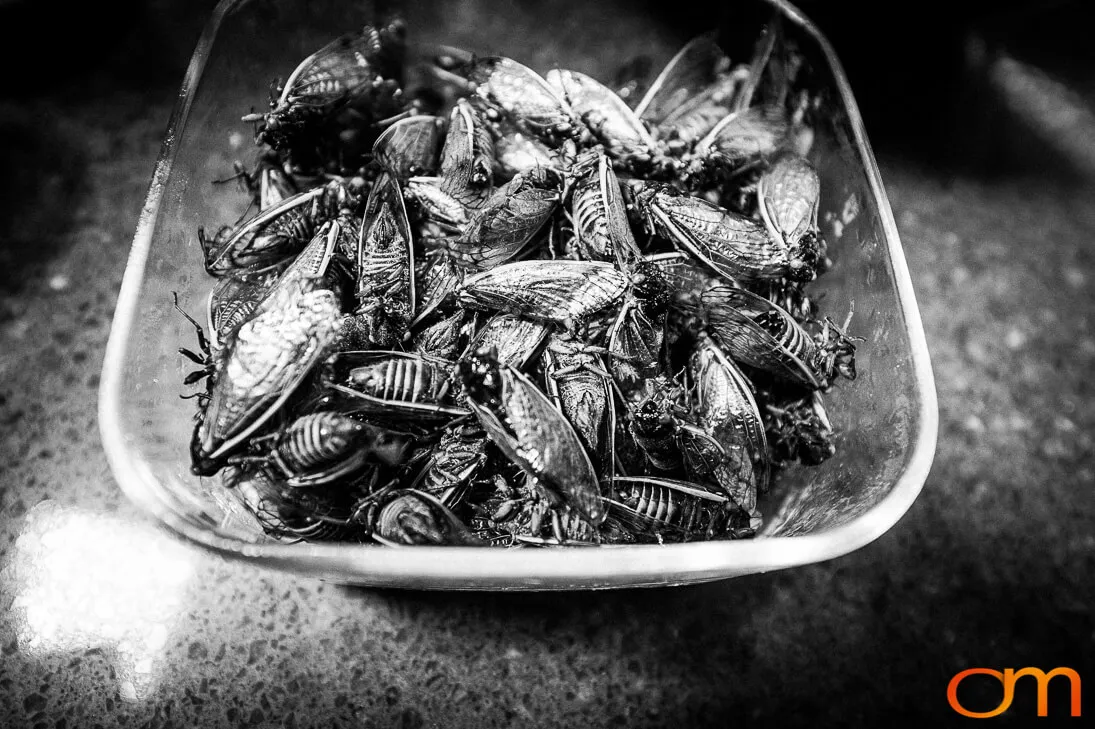
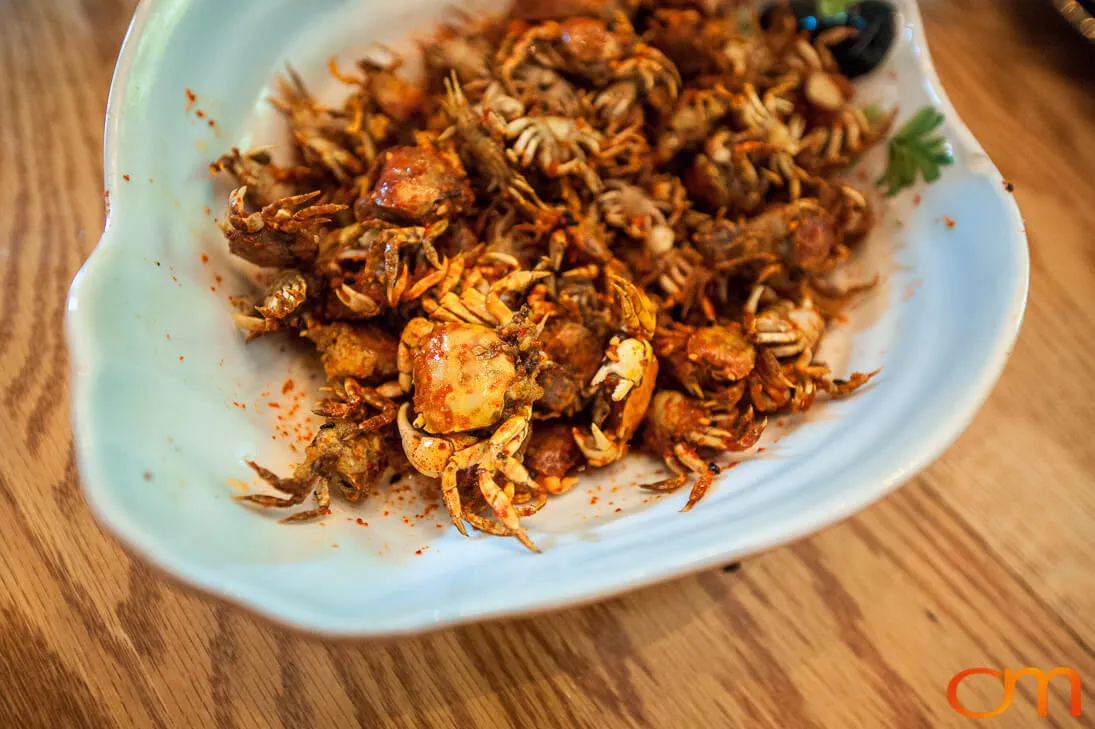
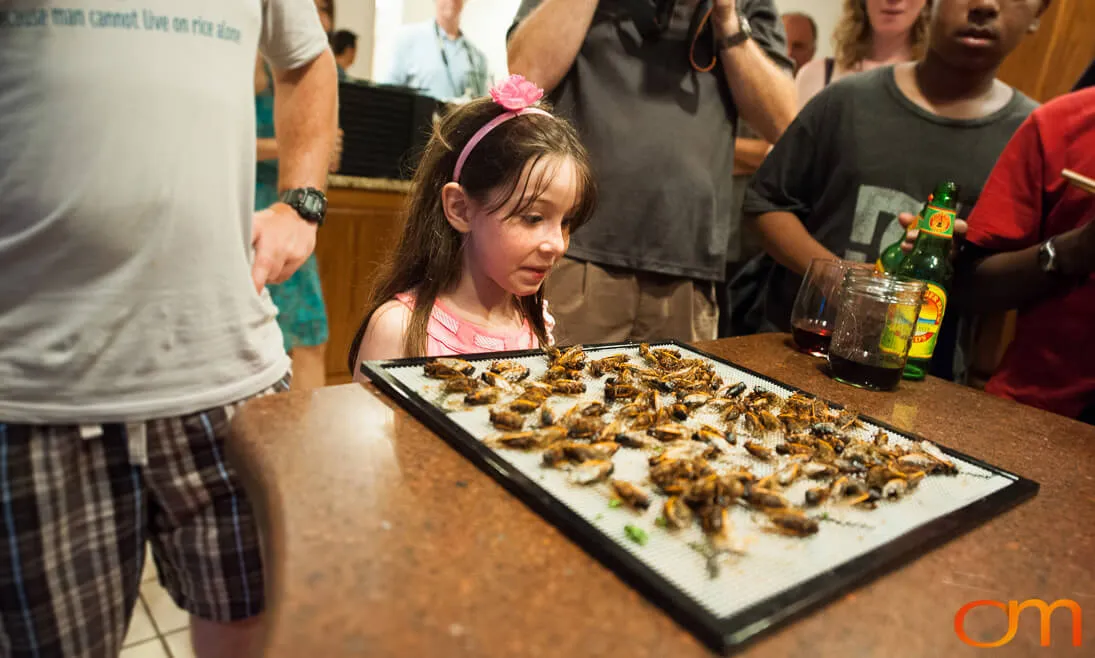
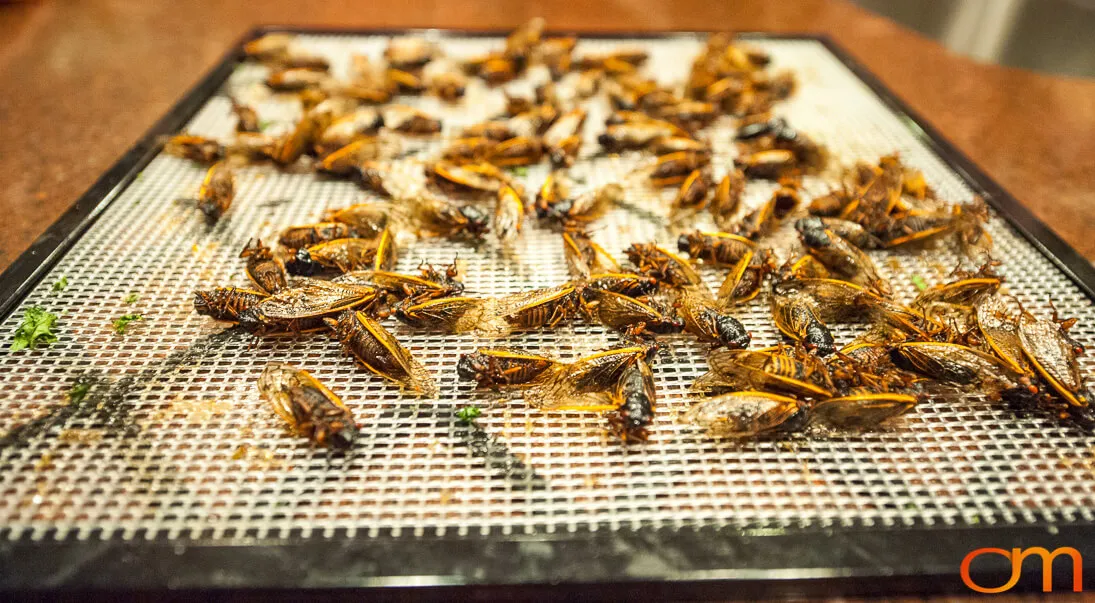
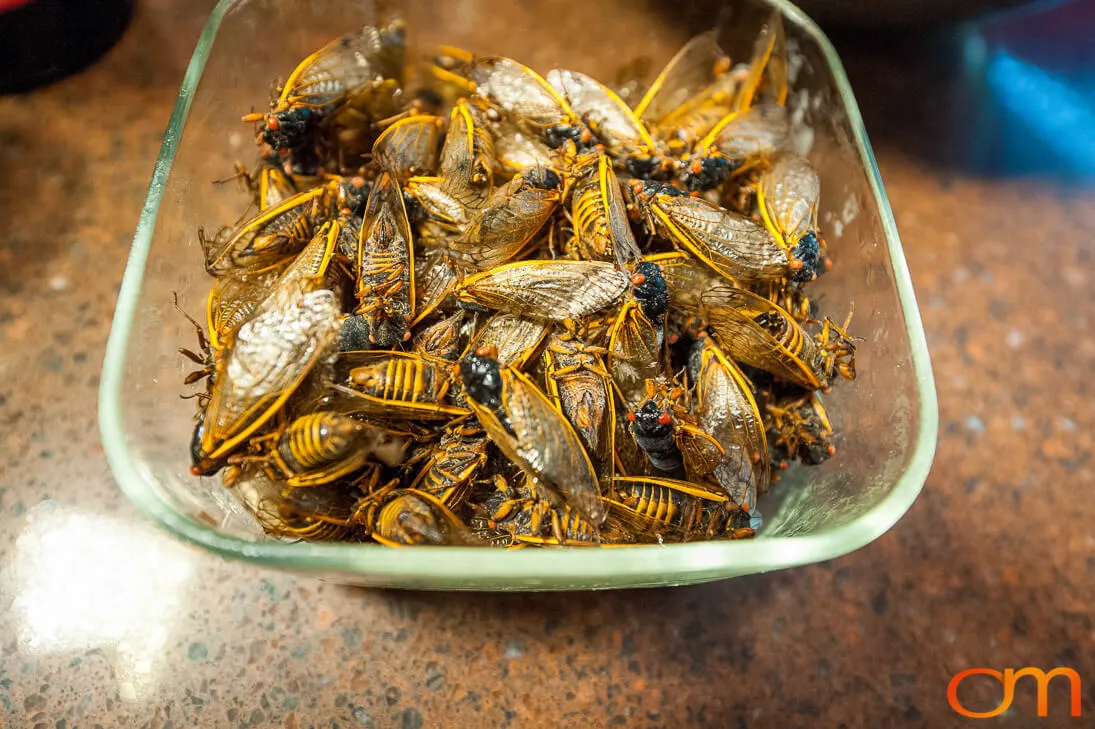
These photographs document one of the private dinners organized by chef Bun Lai during Connecticut’s 2013 emergence of Brood II periodical cicadas. Lai used the event to explore insects as food and to discuss alternatives to conventional animal protein.
The cicadas were collected in Cheshire, Connecticut, and seasoned with salt, lime juice, spices, seaweed juice and soy sauce. They were slow-smoked and then briefly dehydrated. Contemporary reporting described guests, including children, sampling the finished cicadas; one child compared their salty taste to popcorn.
New Haven health officials did not approve serving the wild-collected cicadas at Lai’s restaurant because the safety of the collection environment could not be verified. The cicadas were therefore presented at private dinners rather than as a restaurant menu item.
Edible insects can provide protein, fat, fiber and micronutrients, although their nutritional composition and environmental effects vary by species, feed, processing and production system. The dinner documented a wider discussion about food culture, sustainability and alternative protein sources rather than establishing insects as a universal dietary solution.
Cochineal in Food and Cosmetics
Some insect-derived ingredients are already used in conventional products. Cochineal extract and carmine are red color additives derived from cochineal scale insects and used in some foods and cosmetics. In the United States, products containing them must identify the ingredients by the names “cochineal extract” or “carmine.” E120 is the European food-additive designation.
Current Context
Periodical cicadas belong to the genus Magicicada. Connecticut’s Brood II follows a 17-year cycle. It last emerged in 2013 and is expected to emerge again in 2030. The insects spend most of their lives underground as nymphs before emerging in large numbers to reproduce.
Selected Sources
- New Haven Register: New Haven Chef Bun Lai Serves Up Cicadas for Dinner
- Yale Peabody Museum: Return of the 17-Year Cicadas
- FAO: Edible Insects—Future Prospects for Food and Feed Security
- FDA: Labeling Foods and Cosmetics Containing Cochineal Extract or Carmine
- Scientific American: Invasive Species Menu of a World-Class Chef