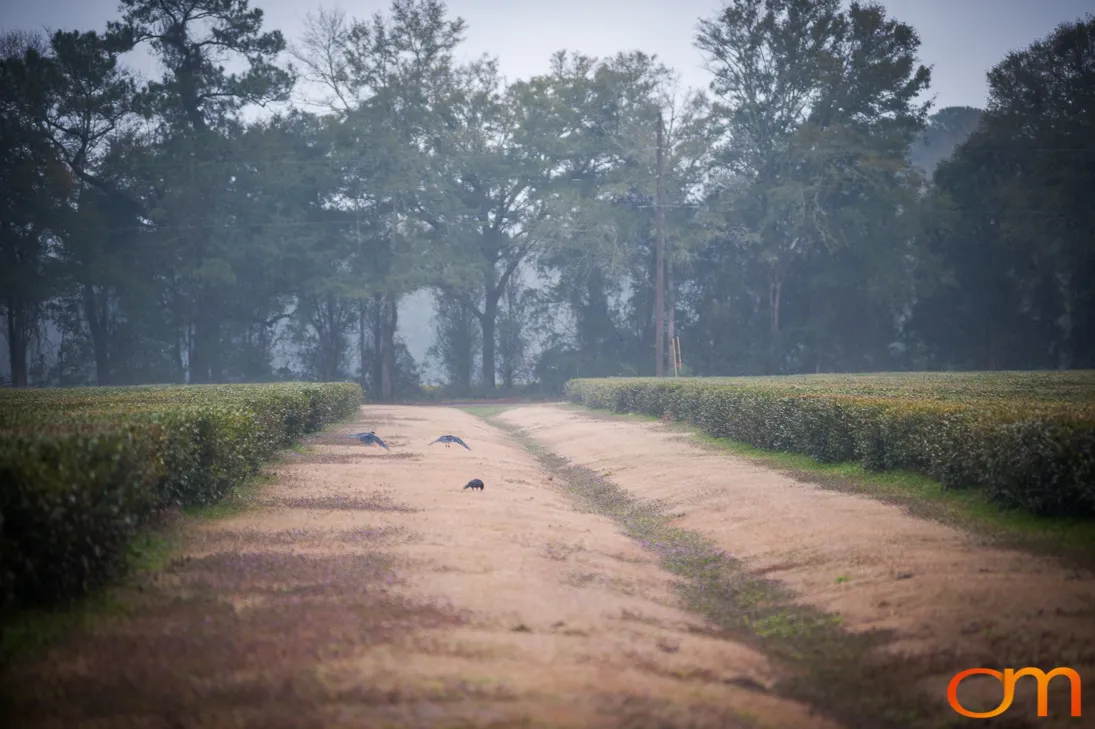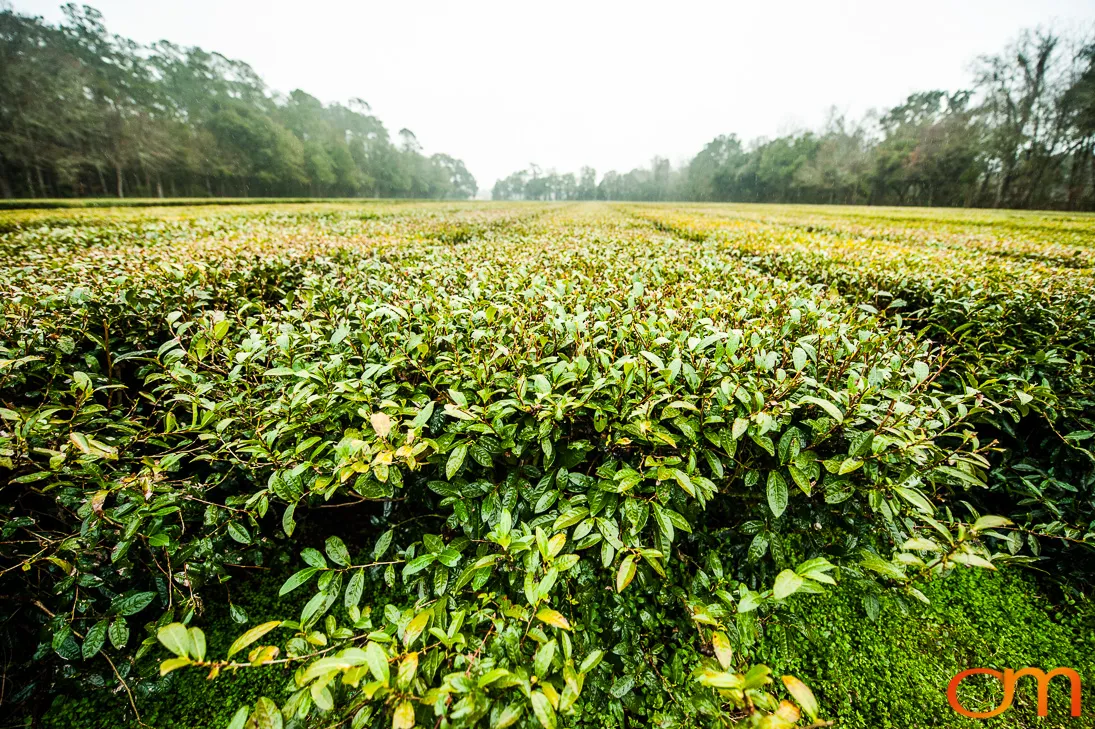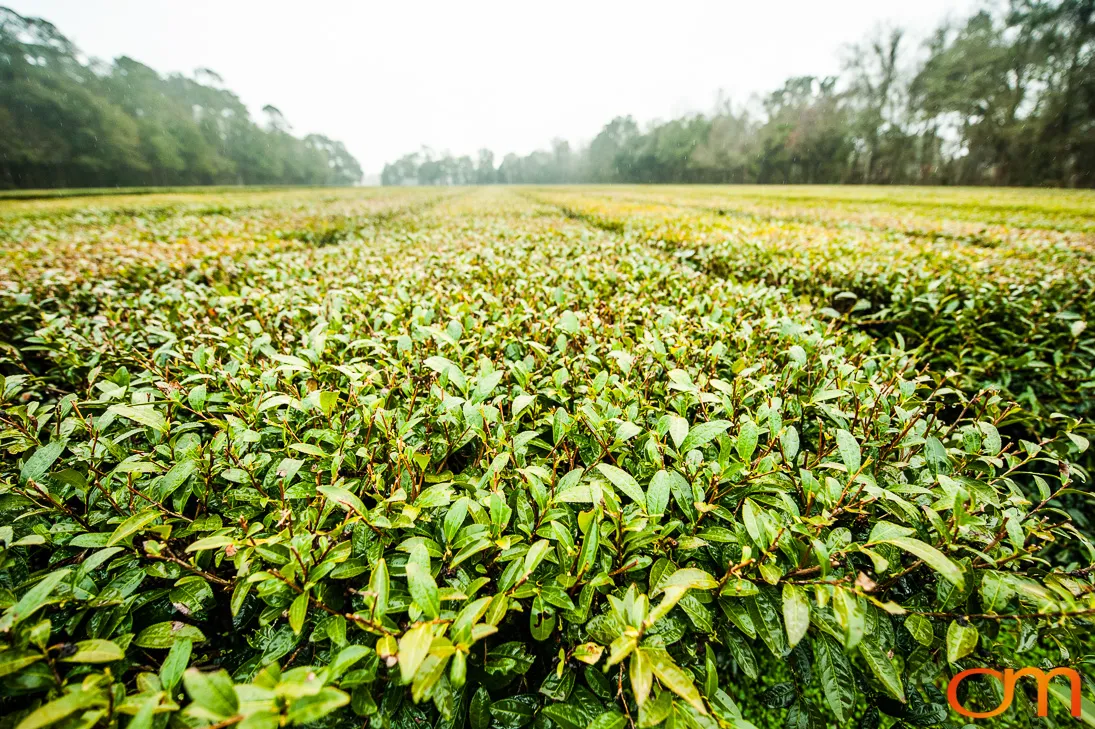
South Carolina
Charleston Tea Garden
February 2015
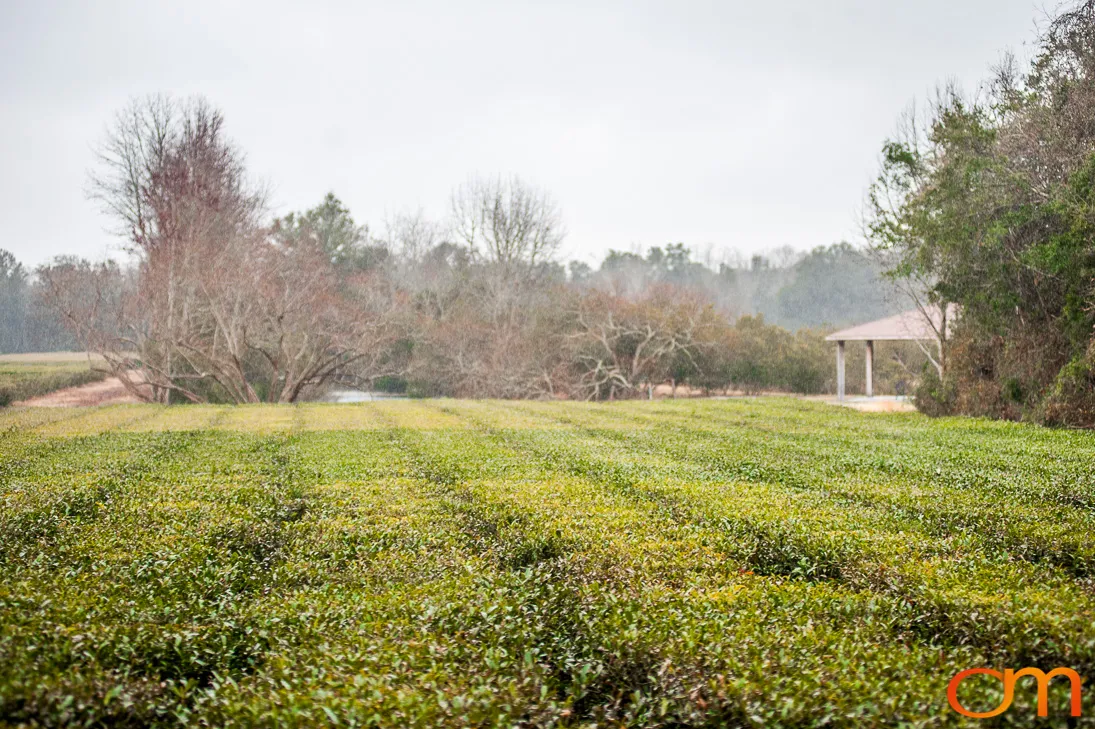
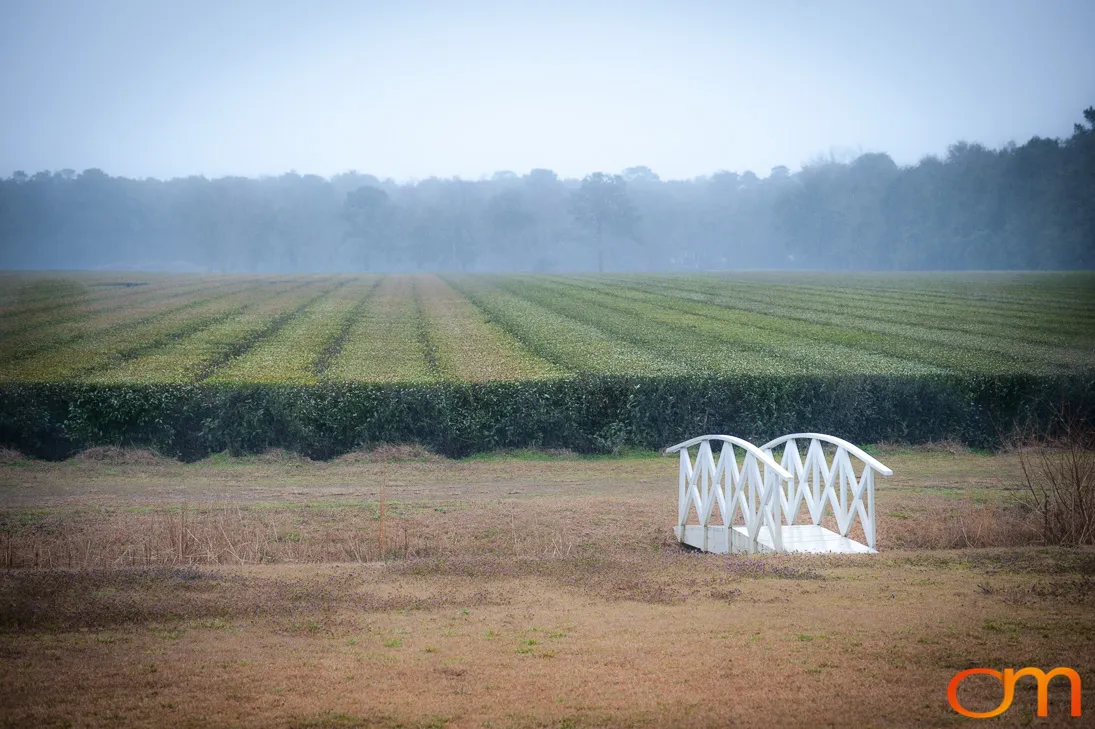
Photographed in 2015, this 127-acre property on Wadmalaw Island was then known as the Charleston Tea Plantation. In 2020, its name changed to Charleston Tea Garden to describe the agricultural site more accurately and acknowledge the historical weight of the word “plantation.”
The garden grows Camellia sinensis, the plant from which black, green, and oolong teas are produced. The differences among these teas result primarily from how the harvested leaves are processed.
Tea cultivation experiments in South Carolina date to the late eighteenth century. The modern Wadmalaw Island operation began in 1963, when Lipton established a research farm on a former potato farm using tea plants descended from Charles Shepard’s earlier Pinehurst operation near Summerville. Horticulturist Mack Fleming and tea specialist William Barclay Hall purchased the property in 1987 and developed commercial production, aided by Fleming’s mechanical harvester. The Bigelow family acquired the garden in 2003 and continues to operate it as a center for American-grown tea.