Daramshala
Dharamshala: Tea Fields
April 2016
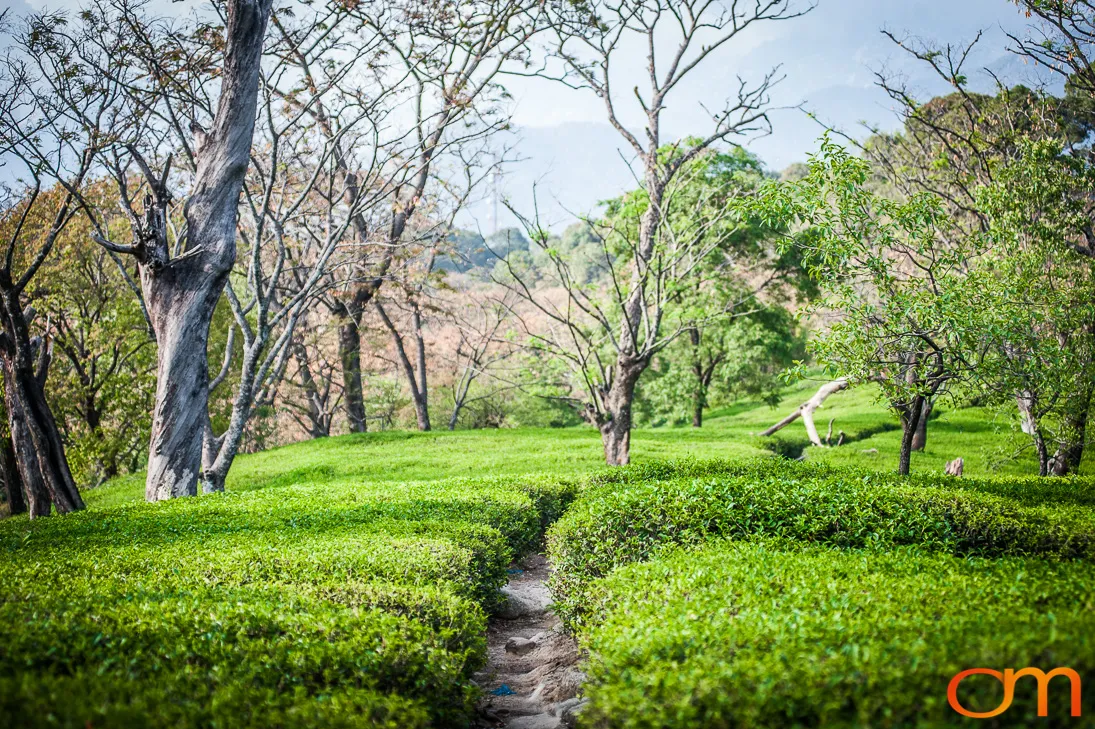
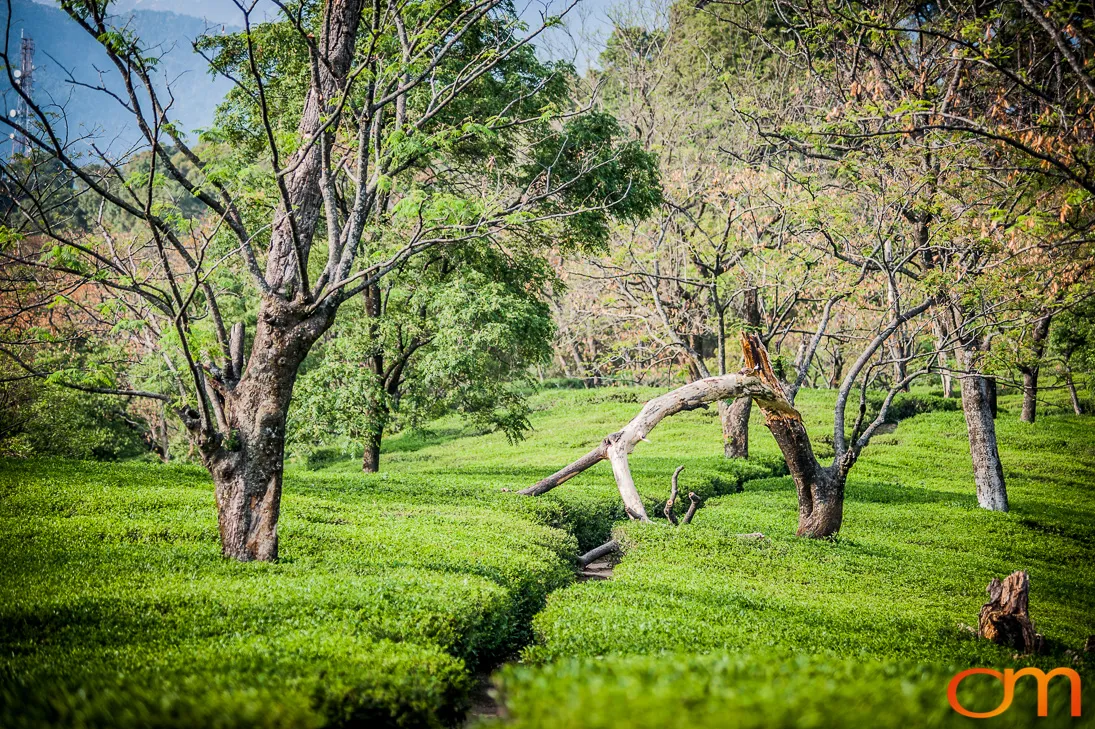
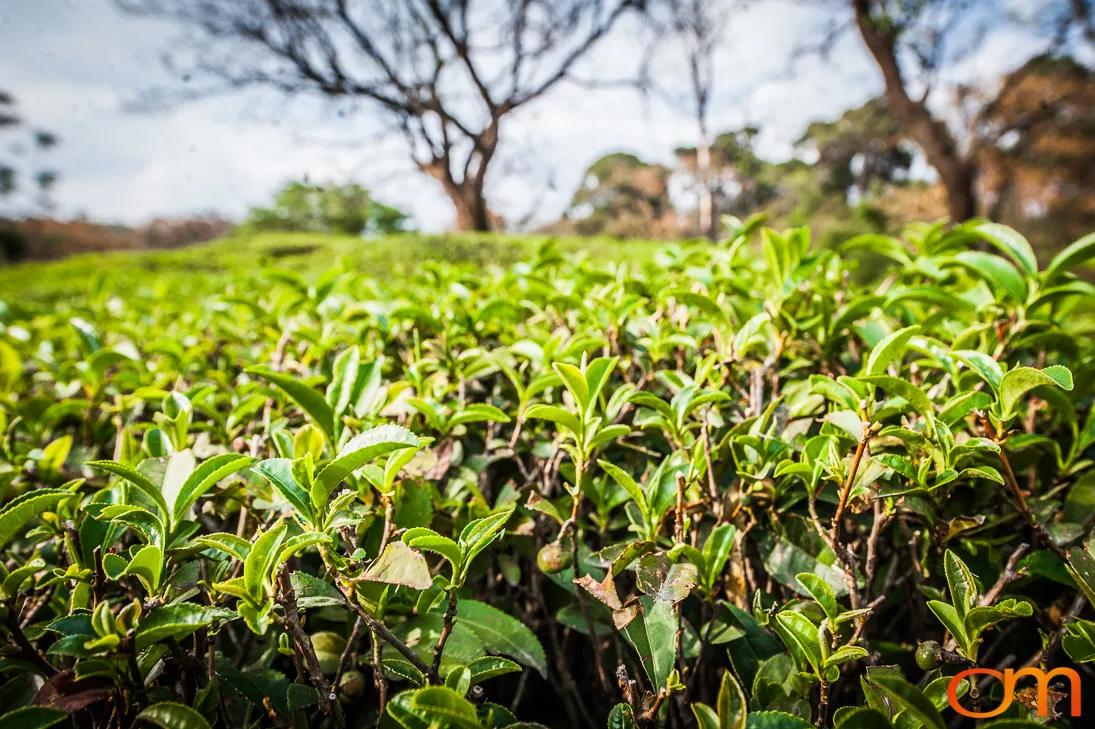
Kangra tea is cultivated along the lower slopes of the Dhauladhar Range in Himachal Pradesh, including parts of Kangra district near Dharamshala. Commercial tea cultivation developed in the region during the mid-nineteenth century, after Chinese tea plants (Camellia sinensis) were introduced around 1850.
Kangra tea gardens generally occupy elevations of approximately 2,950 to 4,590 feet (900 to 1,400 m). Cool mountain conditions, seasonal rainfall, sloping terrain, and well-drained soils help shape the character of the tea produced here.
Black and green Kangra teas are made from the same tea plant; differences in processing create their distinct colors, aromas, and flavors. Tea Board India describes the region’s first-flush tea as having a light fruity character. Kangra black tea is associated with a lingering sweetness, while its green tea may have a delicate woody aroma. Herbal infusions, which do not necessarily contain Camellia sinensis, are not botanical varieties of tea.
Kangra tea gained international recognition during the late nineteenth century, but the 1905 Kangra earthquake severely disrupted the industry. Cultivation later revived, although Kangra remains one of India’s smaller tea-producing regions. Kangra Tea is now protected in India as a registered Geographical Indication, linking the name to tea produced within its recognized geographic area.
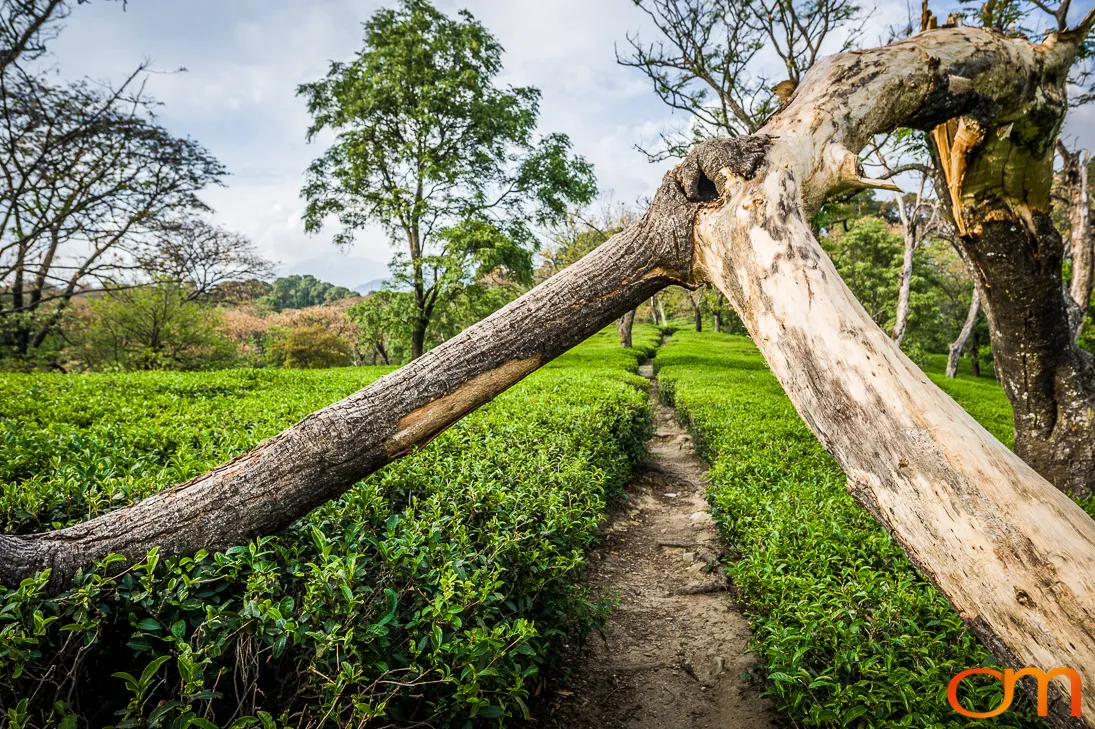
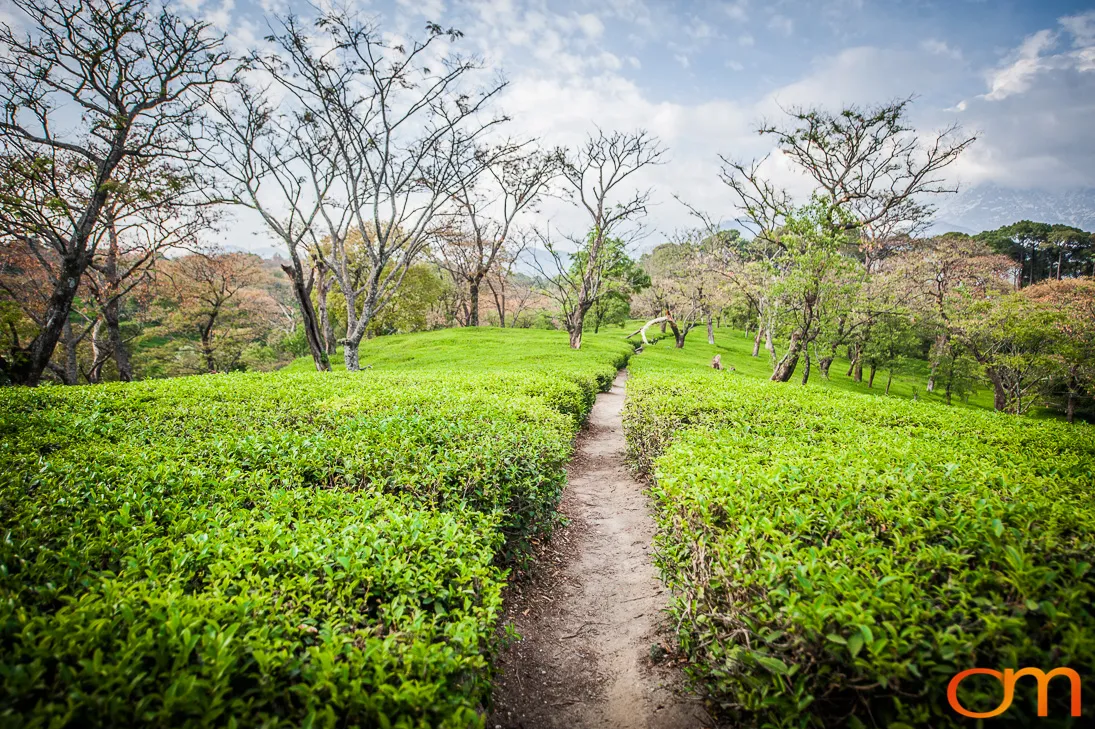
These photographs, taken in 2016, document the carefully pruned bushes, narrow walking paths, and mature trees of tea fields in the Dharamshala area.