Fez
Fez: Morocco’s Historic Imperial City
July 2015
Fez is the oldest of Morocco’s four imperial cities and one of the country’s principal historic and cultural centers. The city originated as two fortified Idrisid settlements established on opposite banks of the Oued Fez between 789 and 808. The Almoravids later united the settlements within a single defensive wall, creating the foundation of what is now Fes el-Bali, or Old Fez.
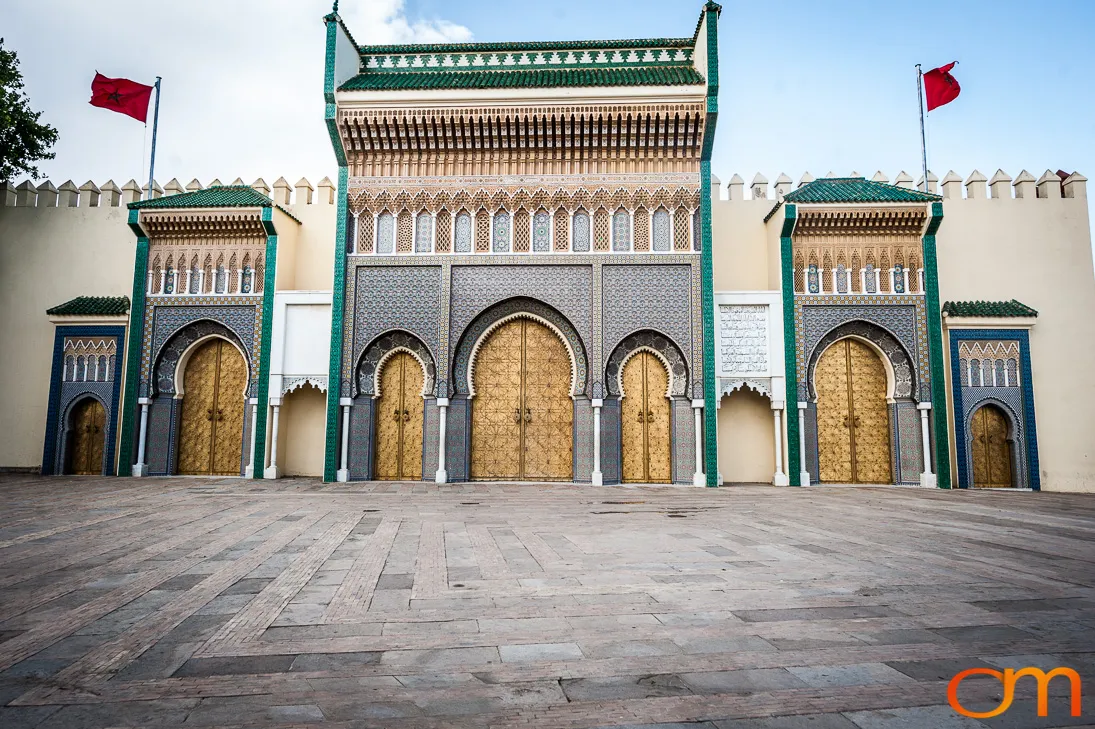
Fez reached the height of its political and architectural influence during the thirteenth and fourteenth centuries under the Marinid dynasty. Many of the medina’s madrasas, fondouks, residences, mosques, fountains, and other major structures developed during this period. In 1276, the Marinids established Fes el-Jdid, or New Fez, west of the older city. This district contains the Royal Palace, fortifications, residential quarters, and former administrative and military areas.
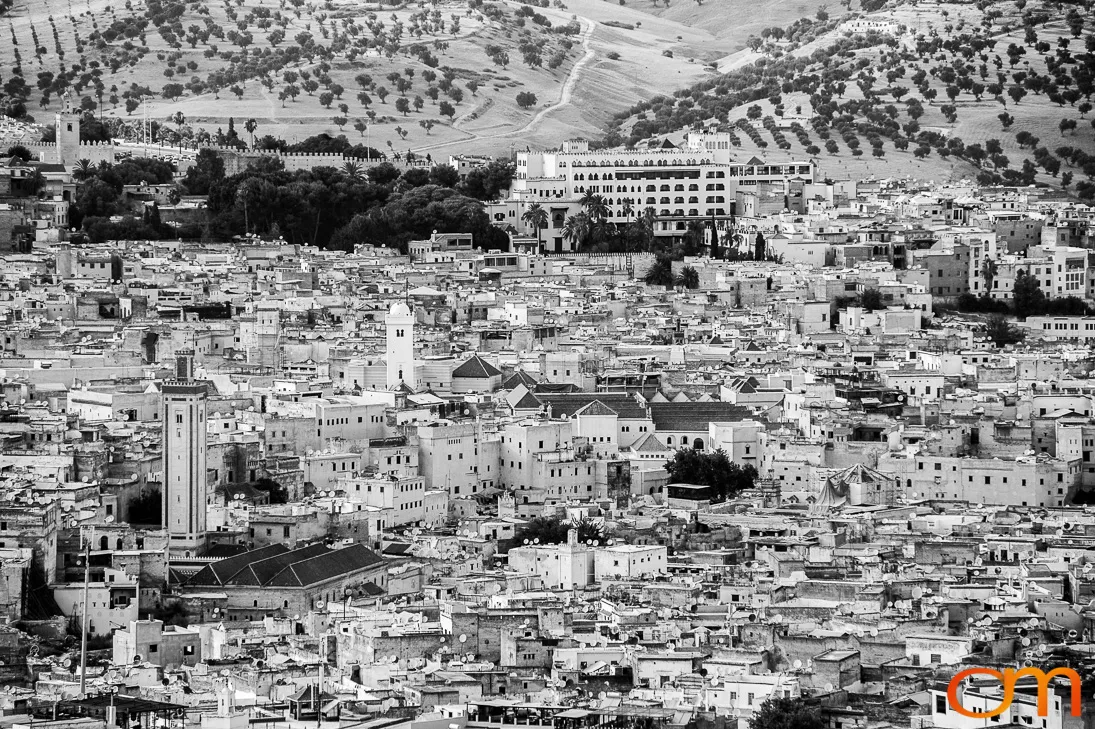
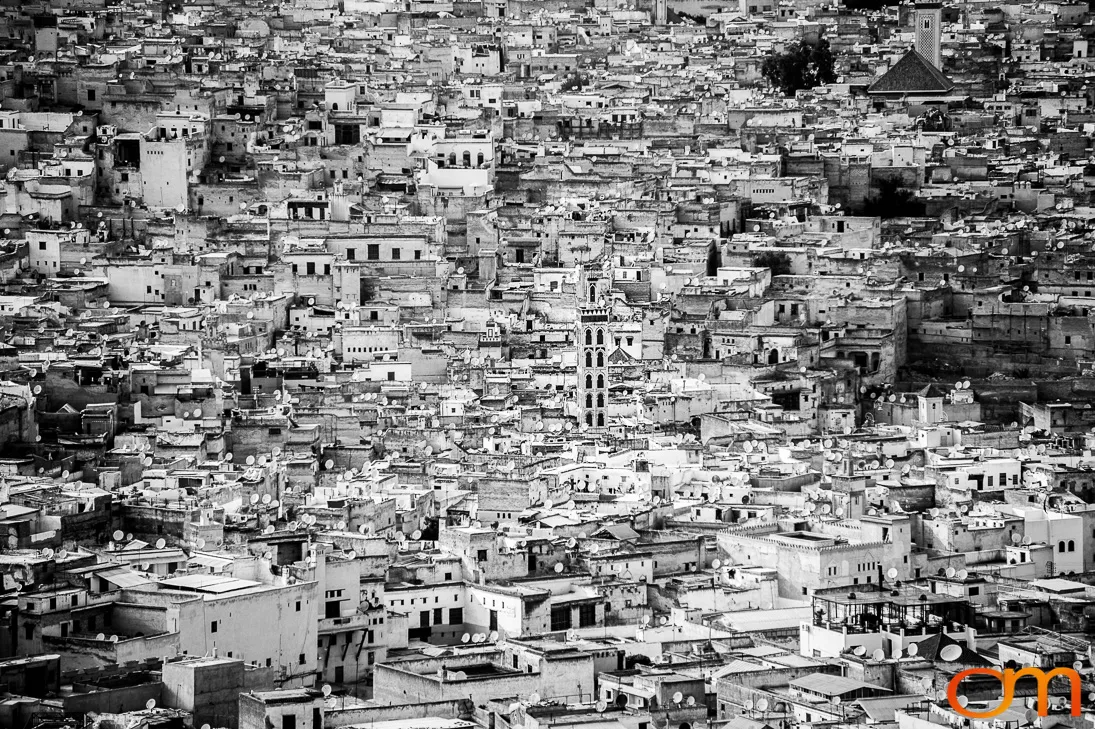
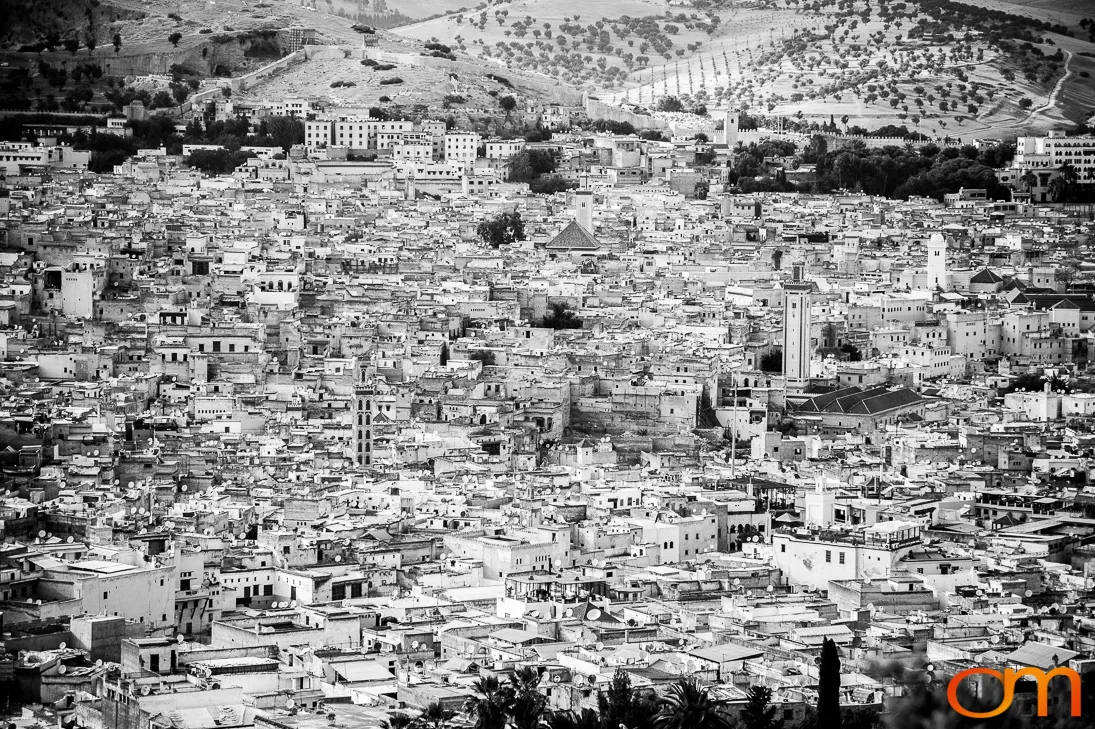
Together, Fes el-Bali and Fes el-Jdid form the UNESCO-listed Medina of Fez, inscribed as a World Heritage Site in 1981. Its dense urban fabric reflects more than ten centuries of local craftsmanship combined with Andalusian, North African, and broader Islamic influences.
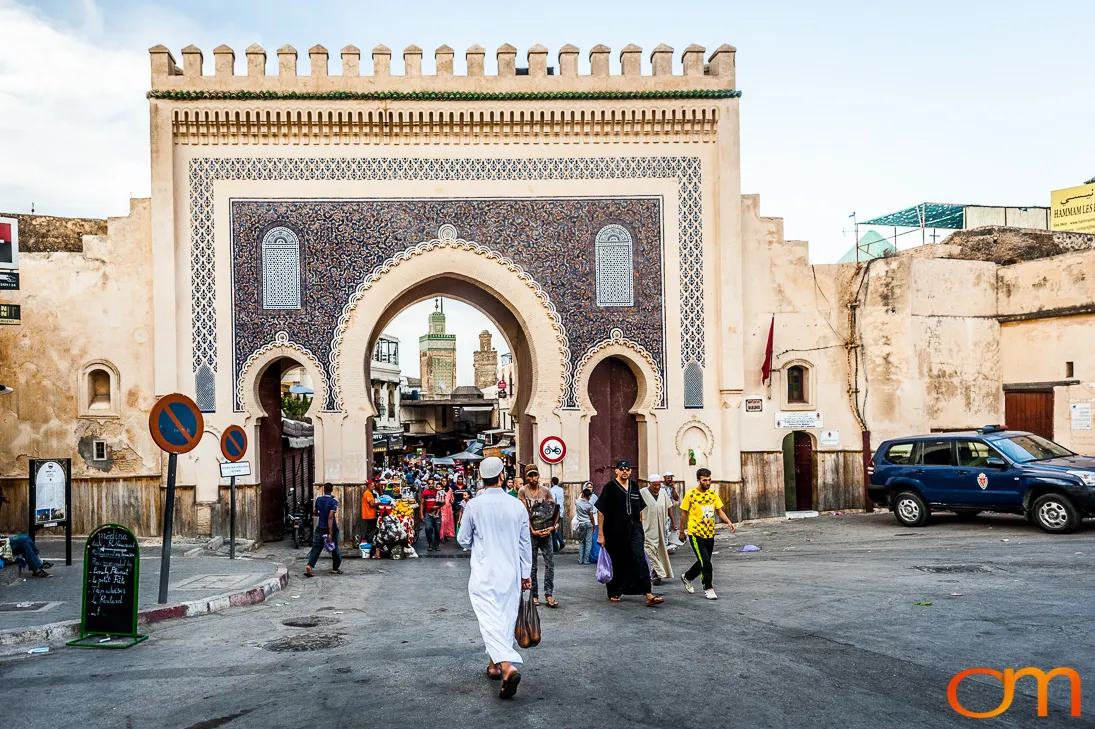
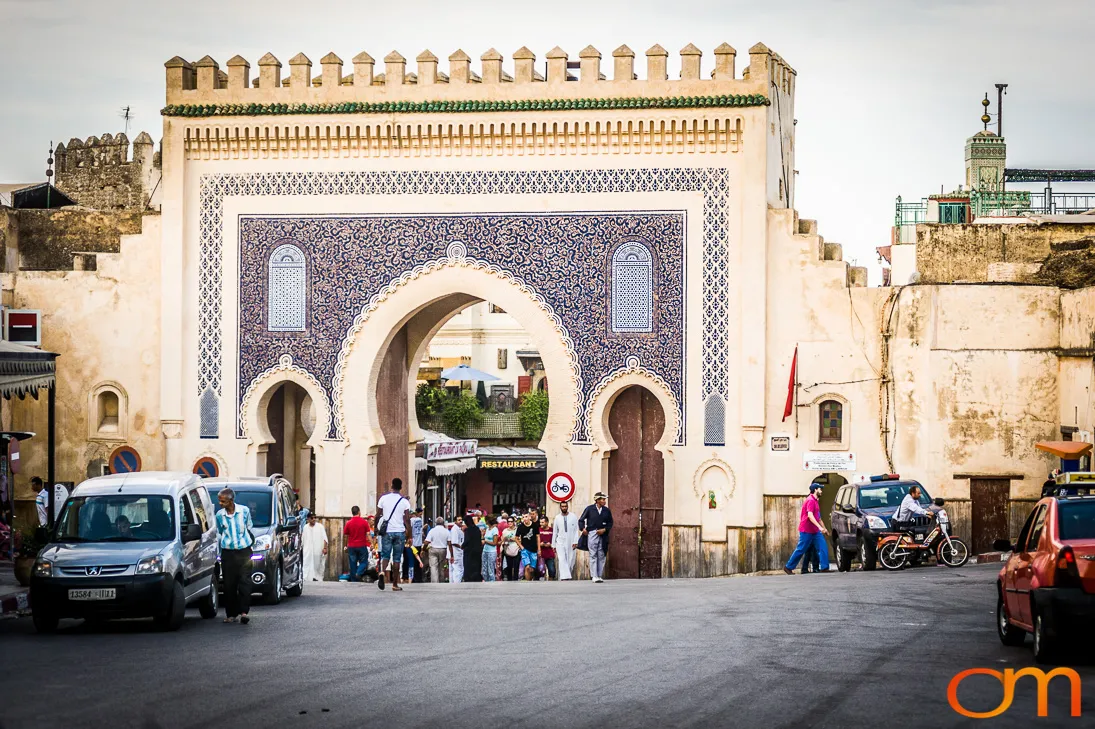
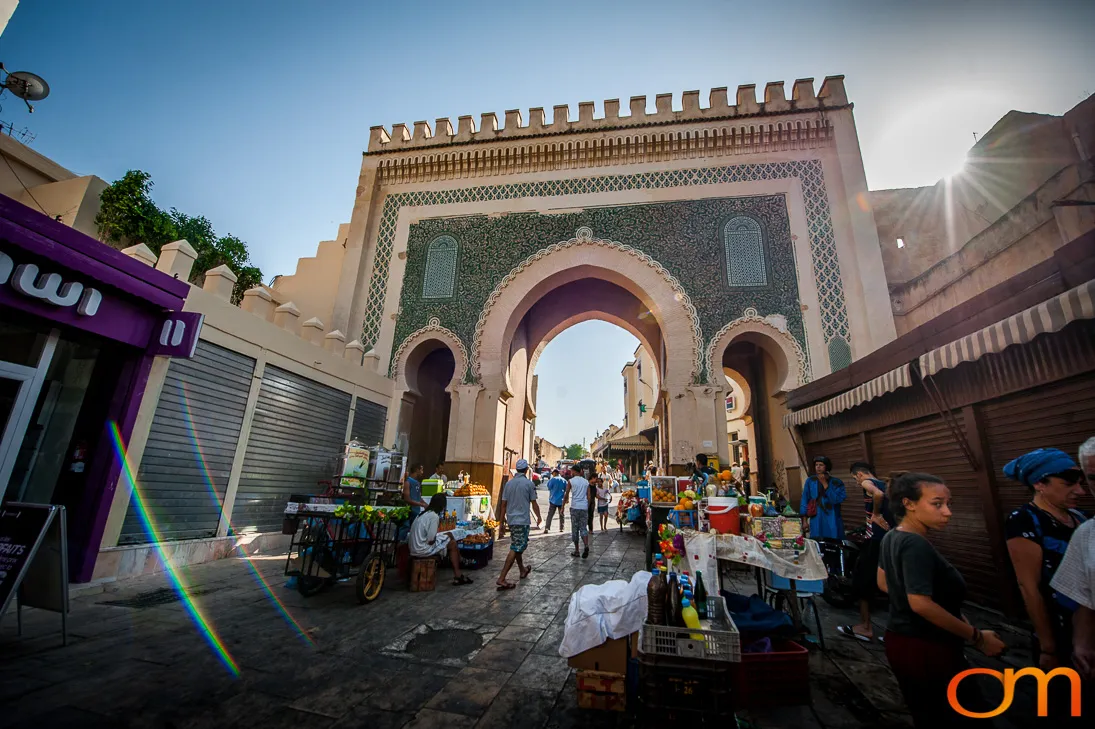
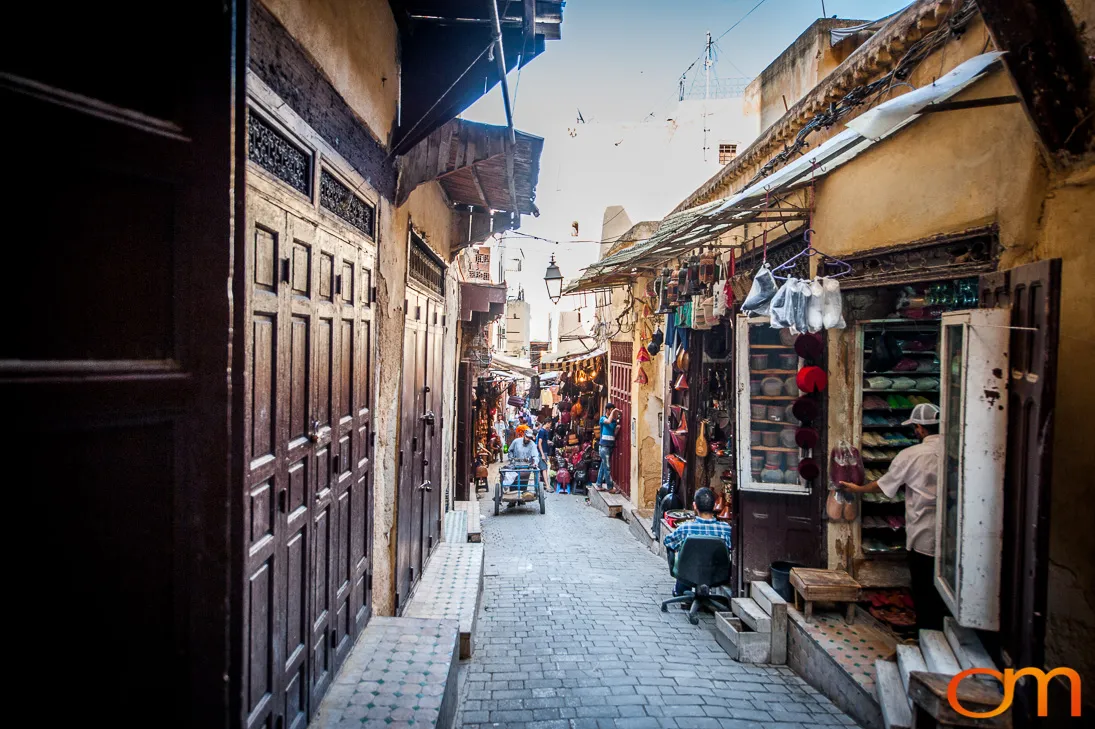
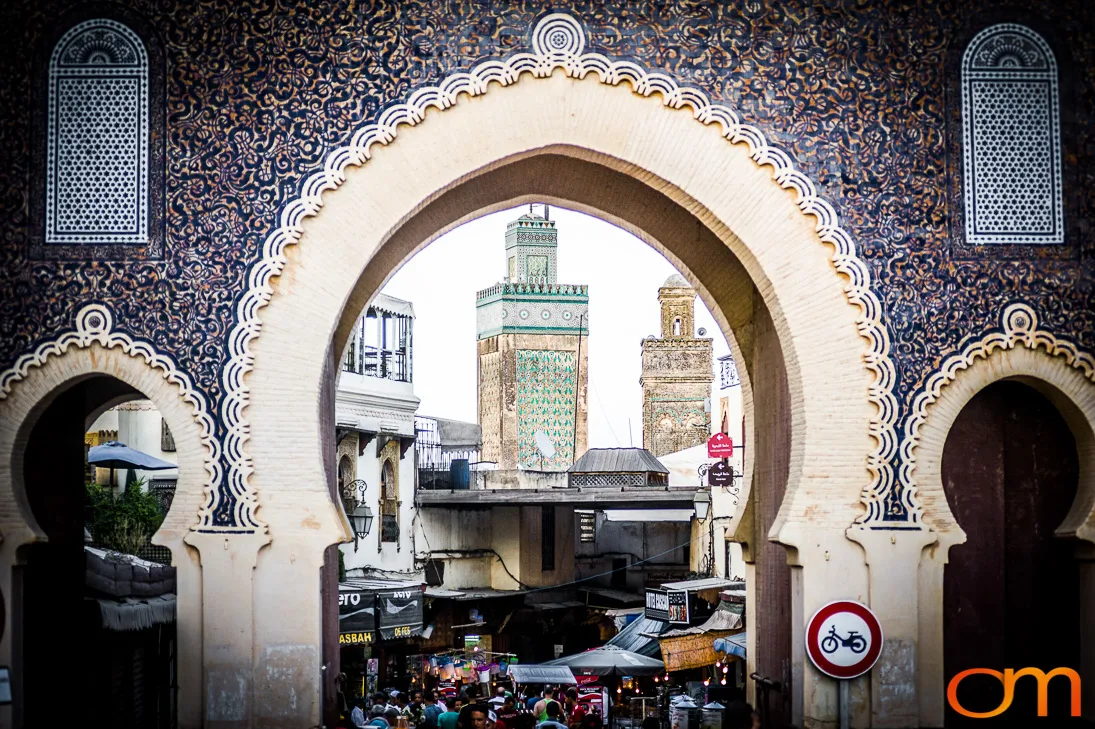
One of the best-known entrances to Fes el-Bali is Bab Bou Jeloud, commonly called the Blue Gate. Although its horseshoe arches and geometric tilework evoke older Moroccan architecture, the monumental gateway seen today dates to 1913. Beyond it, the streets known as Talaa Kebira and Talaa Seghira lead into a network of markets, workshops, religious buildings, homes, and narrow passageways.
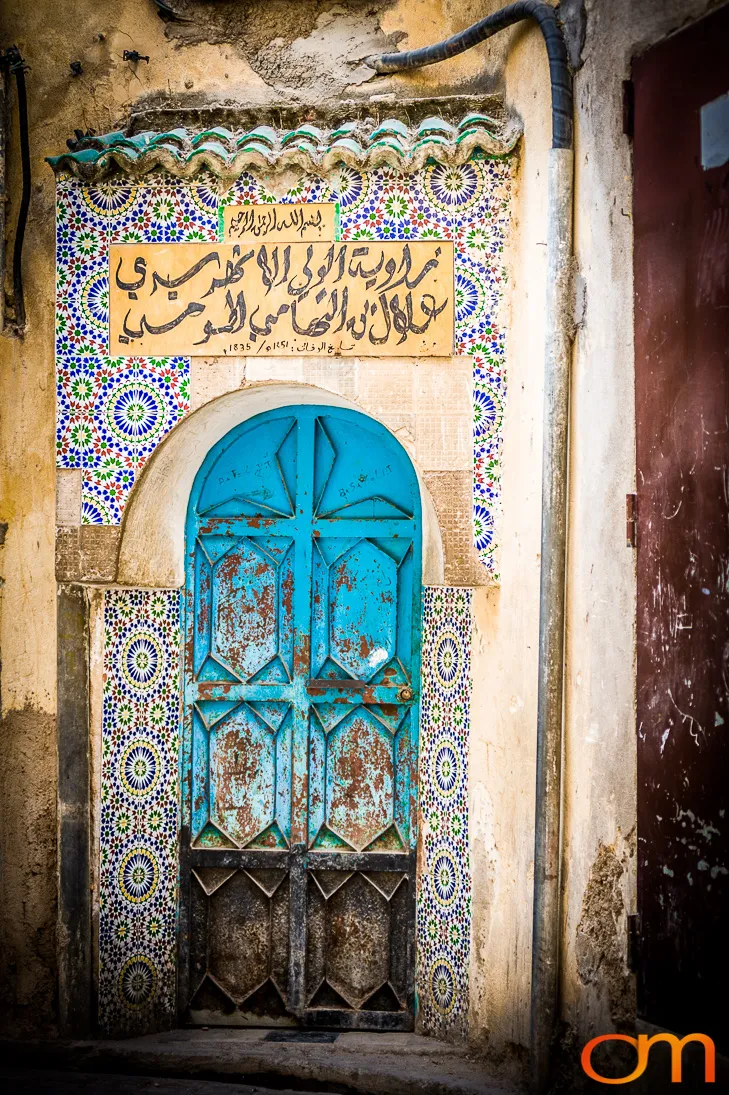
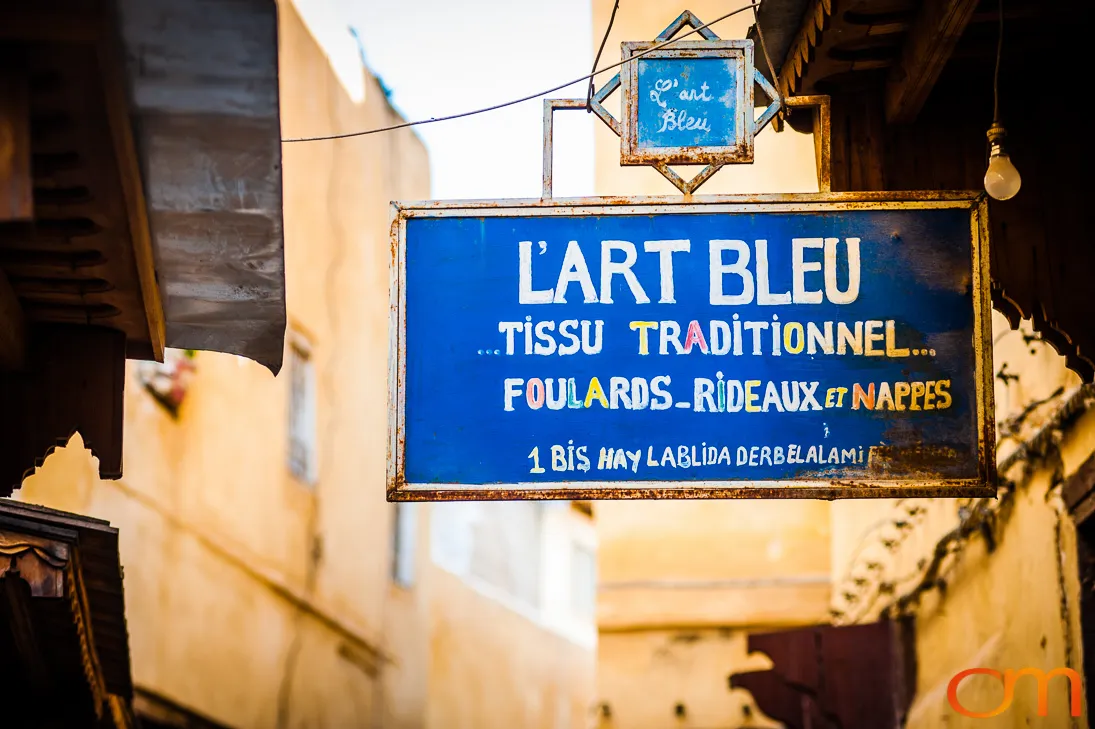
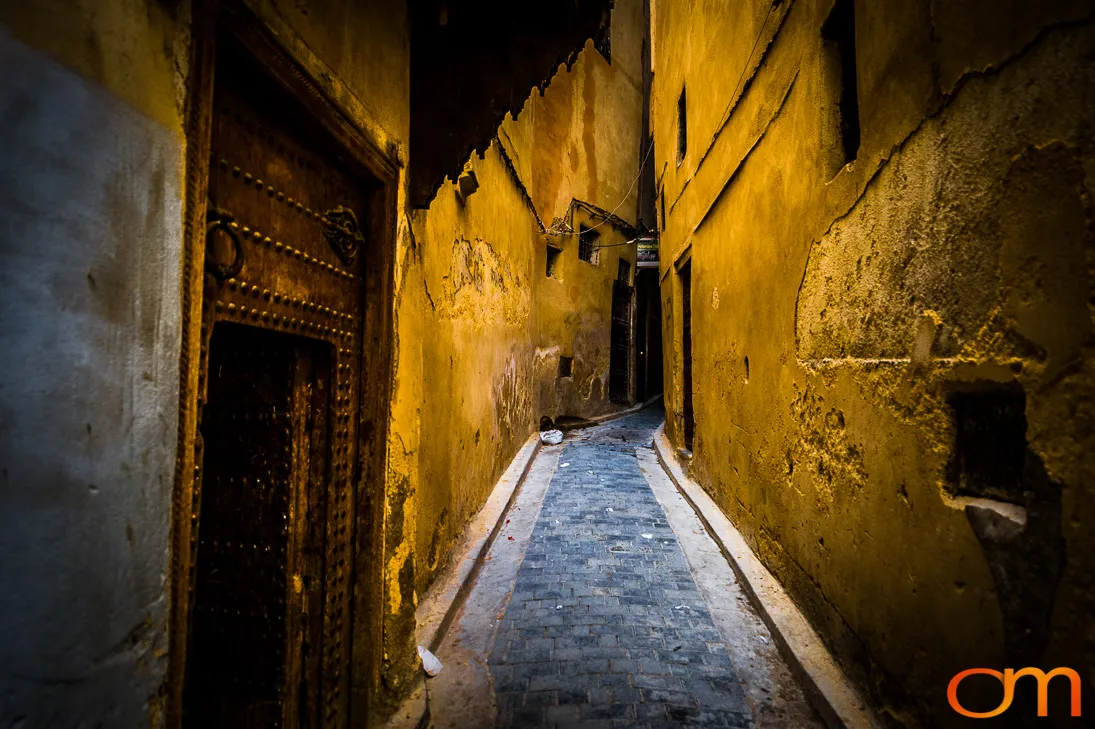
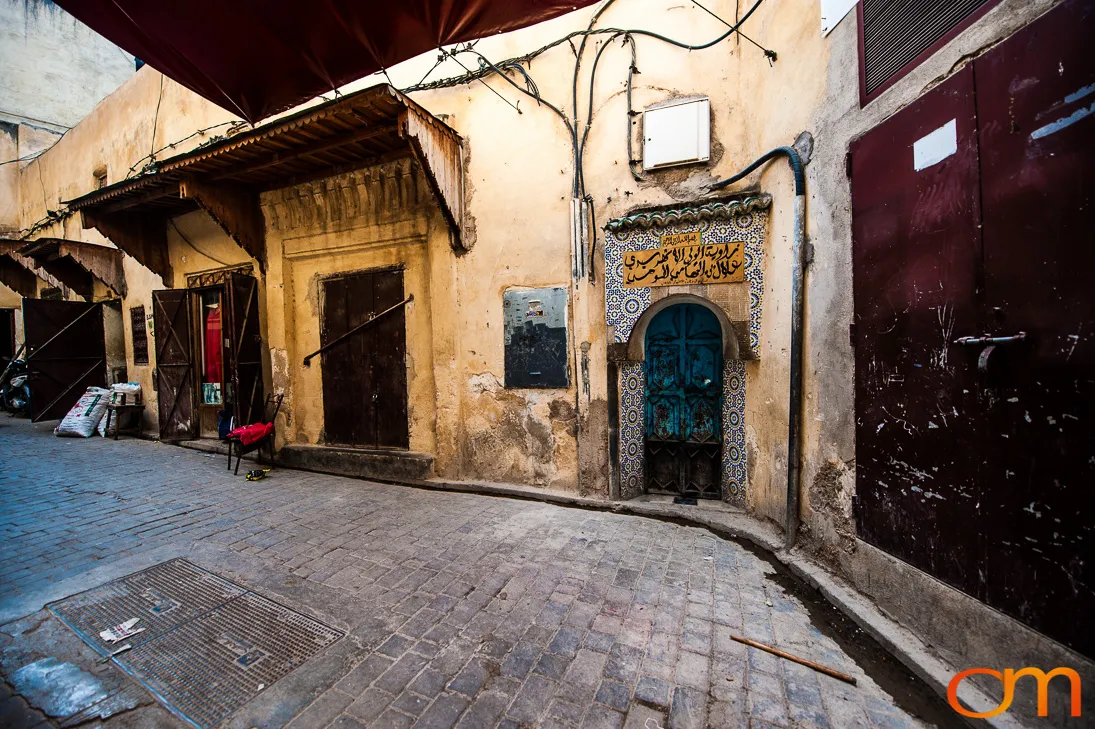
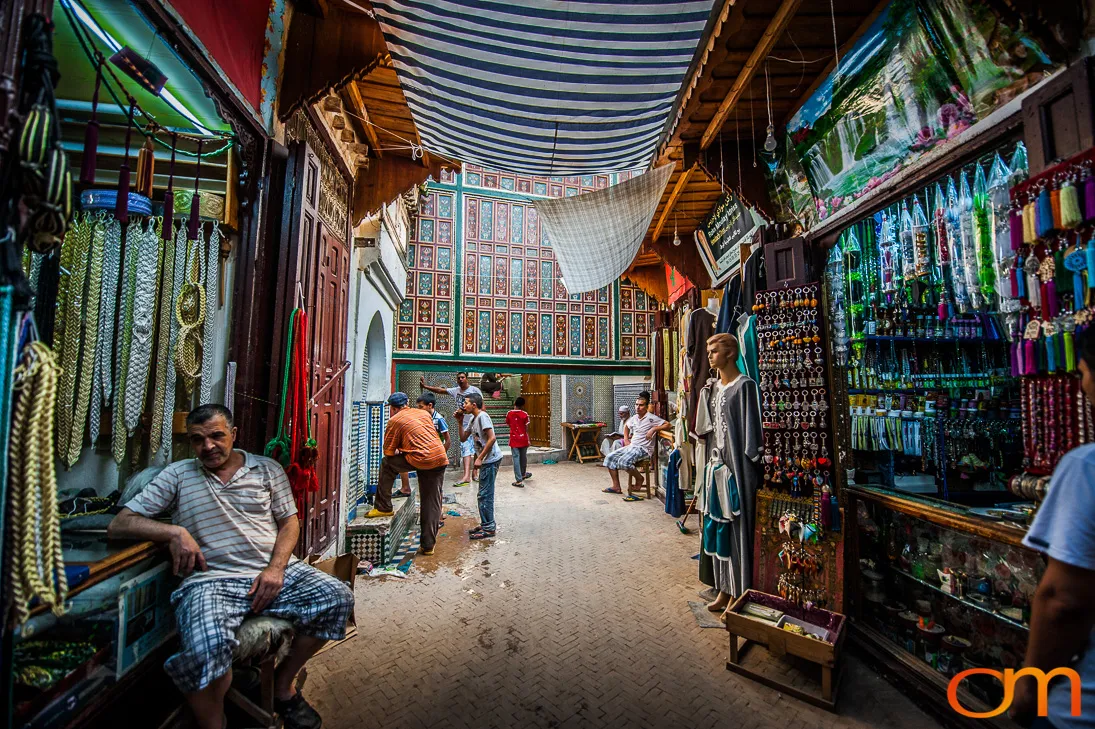
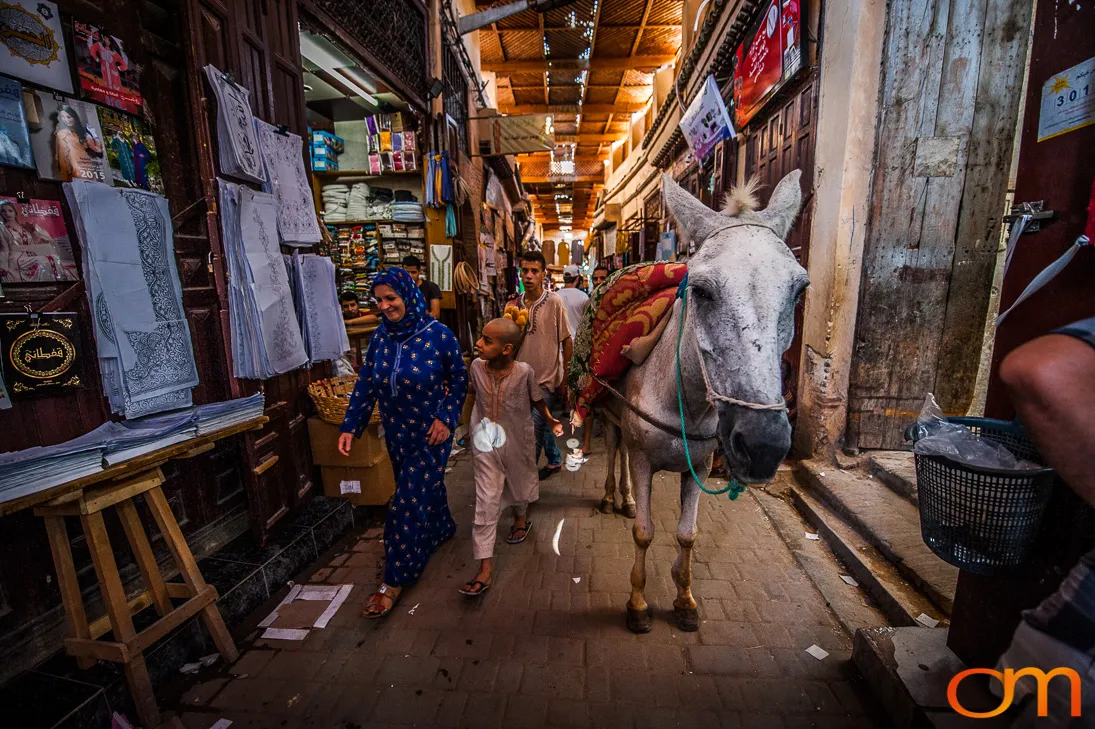
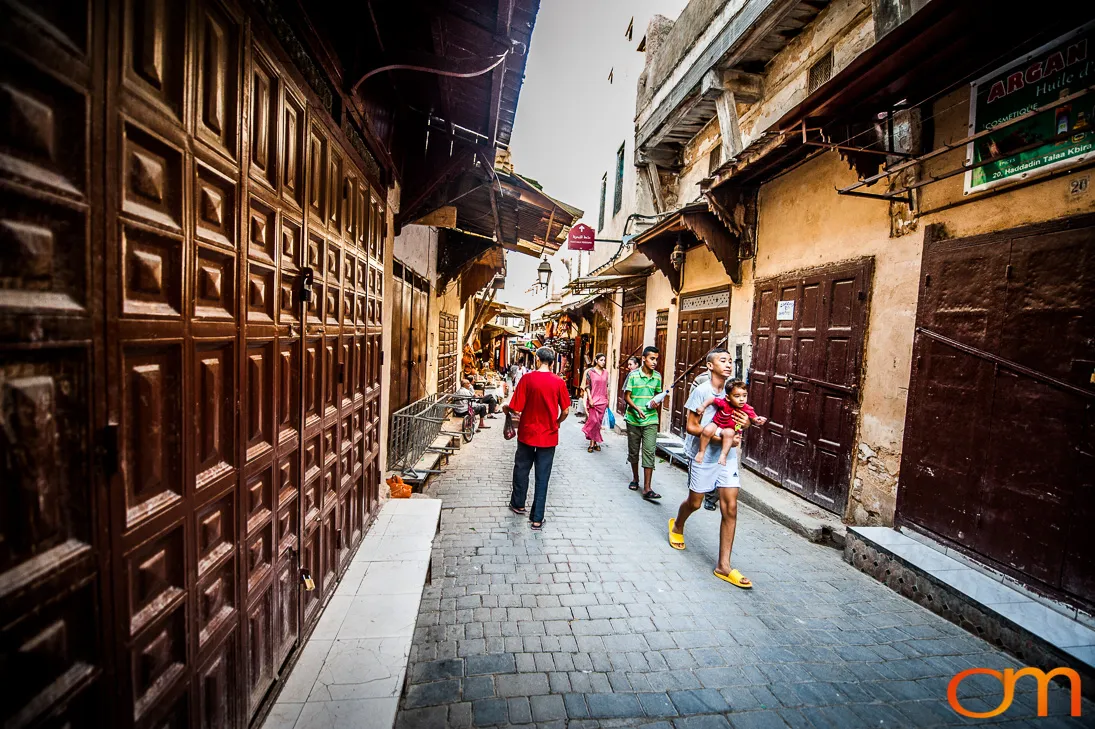
The medina remains an active urban community rather than a historic monument separated from daily life. Its streets accommodate residents, merchants, craftspeople, pedestrians, and pack animals, while its buildings continue to serve commercial, residential, and religious purposes. Monumental gateways and decorated façades stand alongside crowded souks, enclosed lanes, worn walls, workshops, and comparatively plain exterior doors.
Among Fez’s most important institutions is Al-Qarawiyyin, founded in 859. It is widely recognized as the world’s oldest continuously operating institution of higher learning, although describing it as the oldest university depends on how the term university is defined.