Okavango Delta
Hyenas: Okavango Delta
April 2009
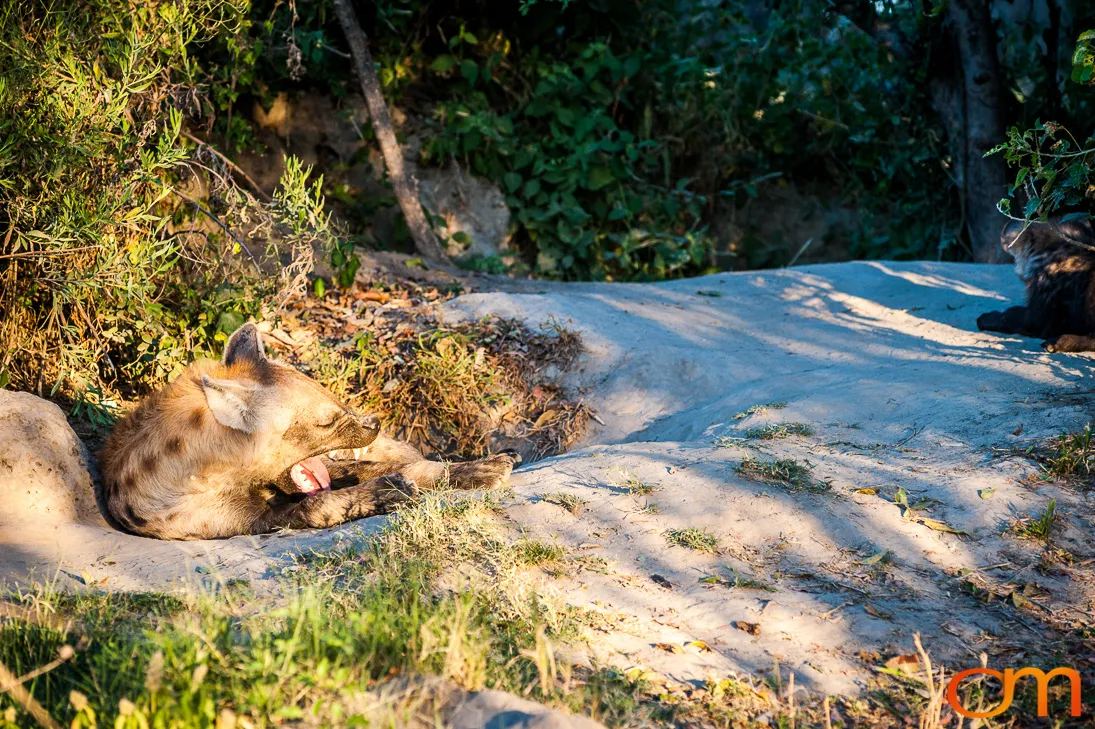
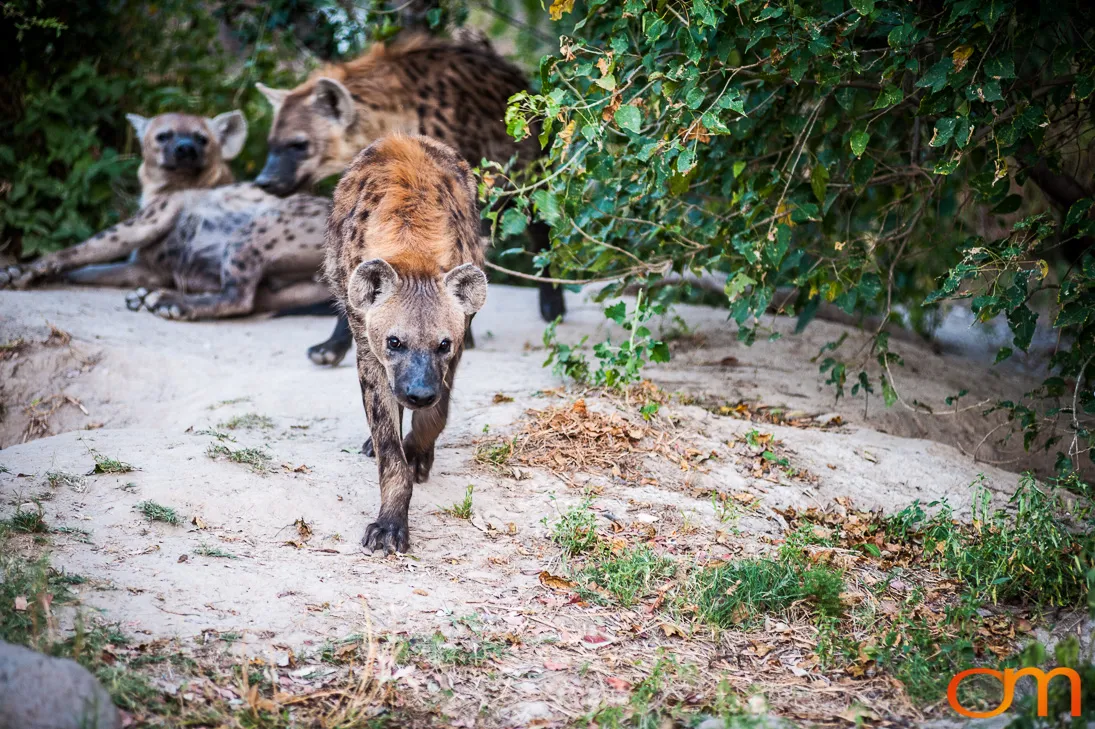
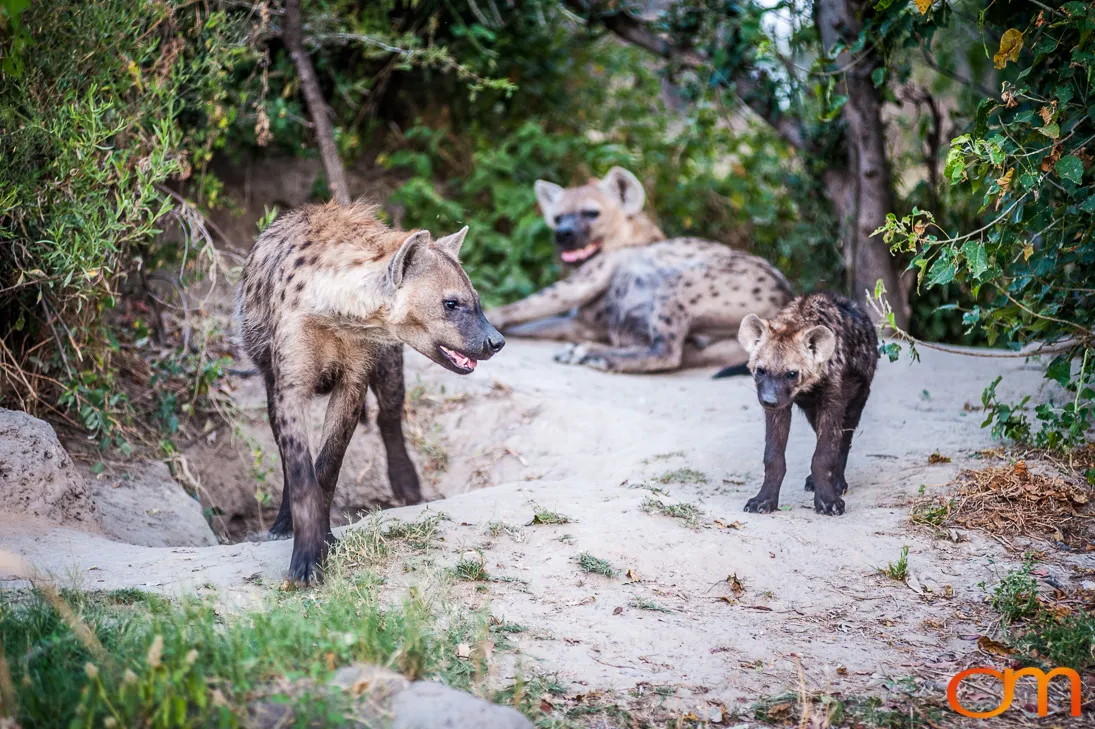
These photographs, taken in Botswana’s Okavango Delta in April 2009, show the spotted hyena, Crocuta crocuta. Although hyenas resemble dogs in general body shape, they belong to Feliformia, the cat-like branch of the order Carnivora.
Spotted hyenas are highly adaptable carnivores that both hunt and scavenge. They live in complex, female-dominated societies called clans, which can contain dozens of individuals. Adult females are generally larger and socially dominant over males. Social position is strongly influenced by maternal rank, and young hyenas learn their place within the hierarchy through interactions with their mothers and other clan members.
Female spotted hyenas have highly unusual reproductive anatomy, with external structures that closely resemble those of males. Cubs are commonly born in litters of one or two and are unusually developed at birth, with open eyes and erupted teeth. They may continue nursing for 12–18 months, an exceptionally long period for a large terrestrial carnivore.
The species’ famous “laugh” is not an expression of amusement. The giggling call can communicate information about an animal’s age, identity, and social rank. Spotted hyenas also produce long-distance whoops that help clan members recognize and locate one another.
Four living species belong to the hyena family: the spotted hyena, brown hyena, striped hyena, and aardwolf. The aardwolf is a specialized insect-eating member of the same family.