Mysuru
Kumkuma
September 2004
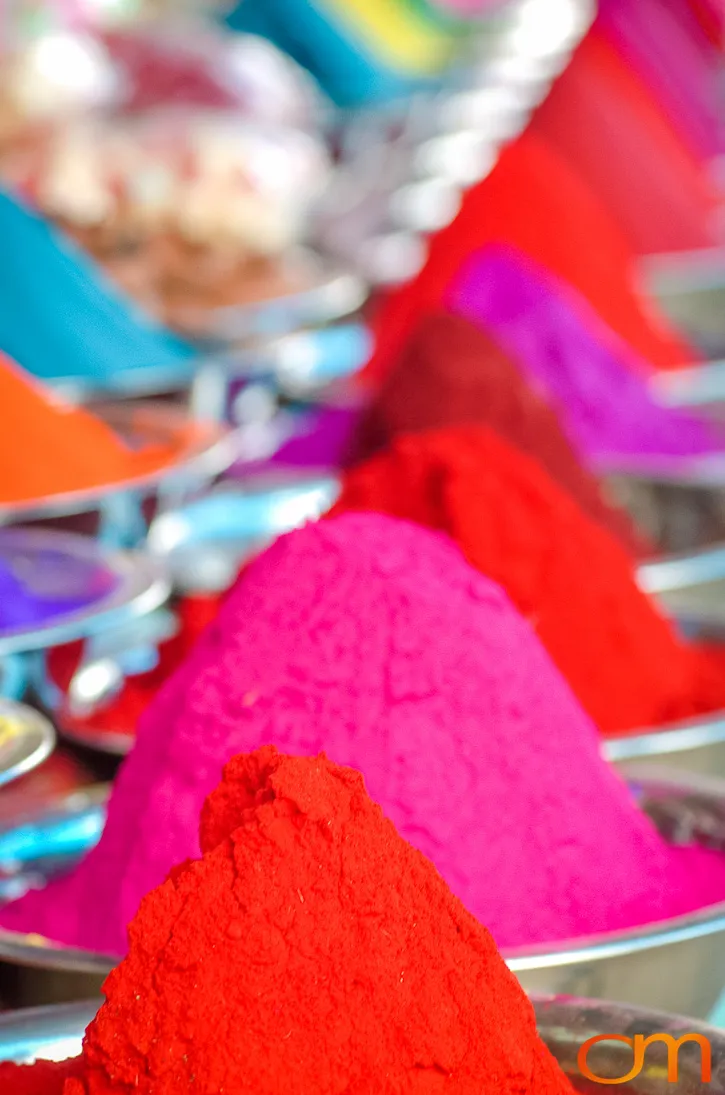
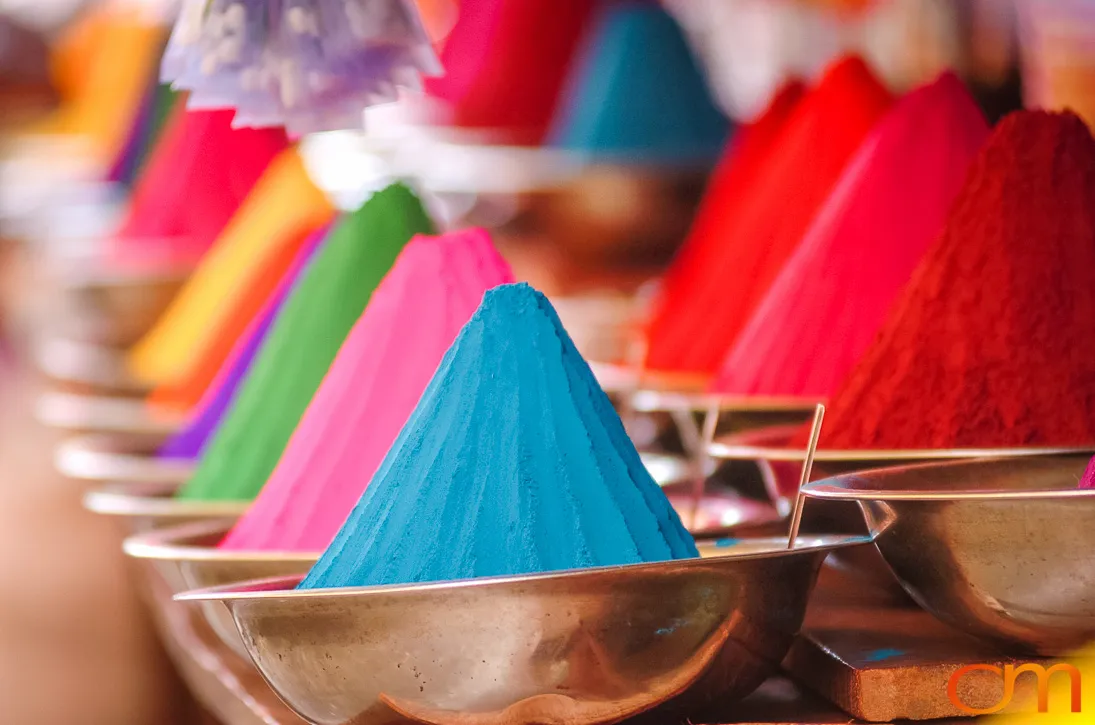
Kumkuma, also written as kumkum, is a colored powder used in Hindu worship, blessings, ceremonies, and personal adornment. It is most commonly associated with shades of red, although commercially sold kumkuma may appear in a wider range of colors.
Traditional kumkuma can be produced from turmeric that has been treated with an alkaline substance. Curcumin, the principal pigment in turmeric, changes from yellow toward red or red-orange under alkaline conditions. Modern kumkuma products may also contain mineral, plant-based, or synthetic pigments, and their ingredients vary among manufacturers and regions.
Kumkuma is frequently offered during puja, applied to sacred images, placed on religious objects, and distributed to worshippers as a blessing. It may also be applied to the forehead, often between the eyebrows, as an expression of devotion or participation in a religious ceremony. Both women and men may receive a kumkuma mark during worship.
Kumkuma is closely connected with several other Hindu cultural terms, but they are not interchangeable. A bindi is a dot or ornament worn on the forehead. A tilaka, or tilak, is a religious forehead mark that may be made with kumkuma, sandalwood paste, sacred ash, clay, or other materials. Sindoor generally refers to red powder placed along the parting of the hair by married women in some Hindu communities.
Red kumkuma is widely associated with auspiciousness, energy, fertility, protection, marriage, and the divine feminine, particularly Shakti, the sacred principle of feminine power. These interpretations vary among regions, communities, temples, and religious traditions. Kumkuma may therefore carry ceremonial, devotional, marital, or decorative meaning depending on how and where it is used.