Okavango Delta
Painted Dogs: Okavango Delta
April 2009
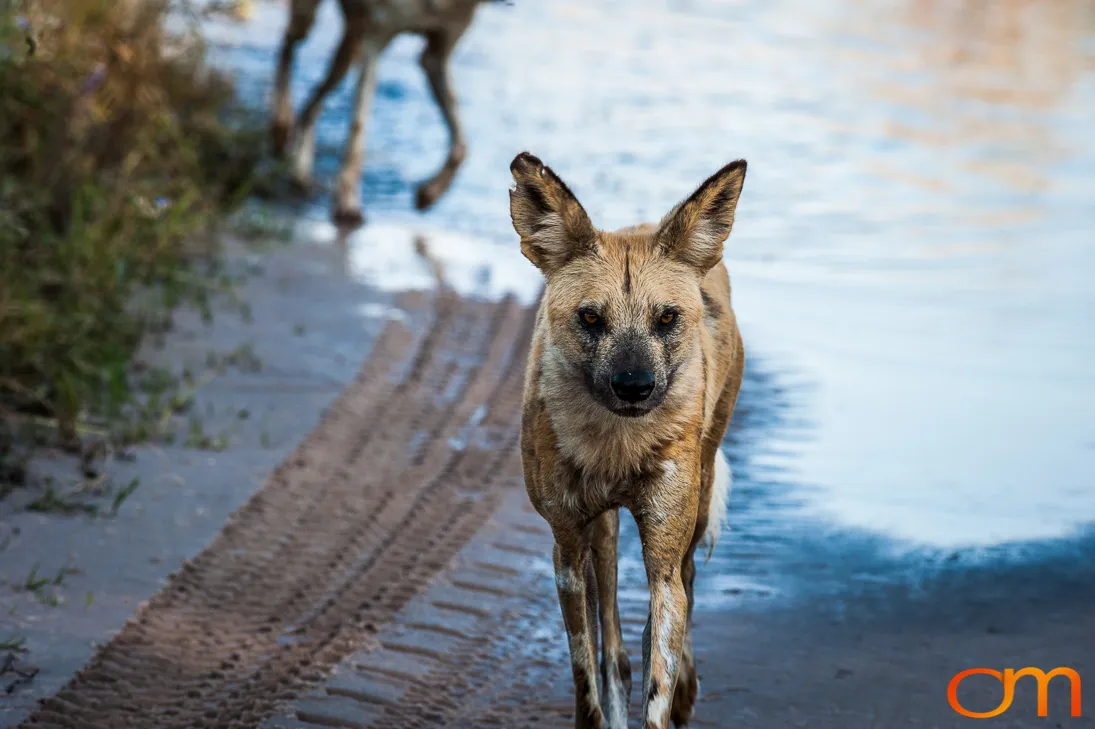
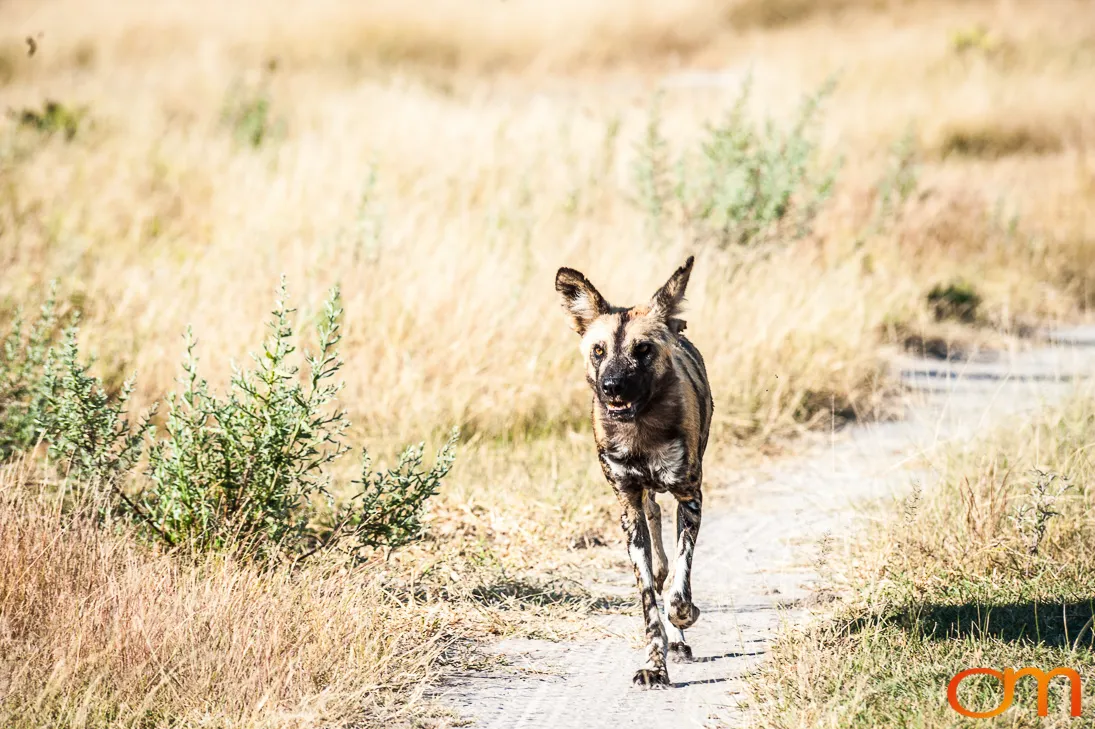
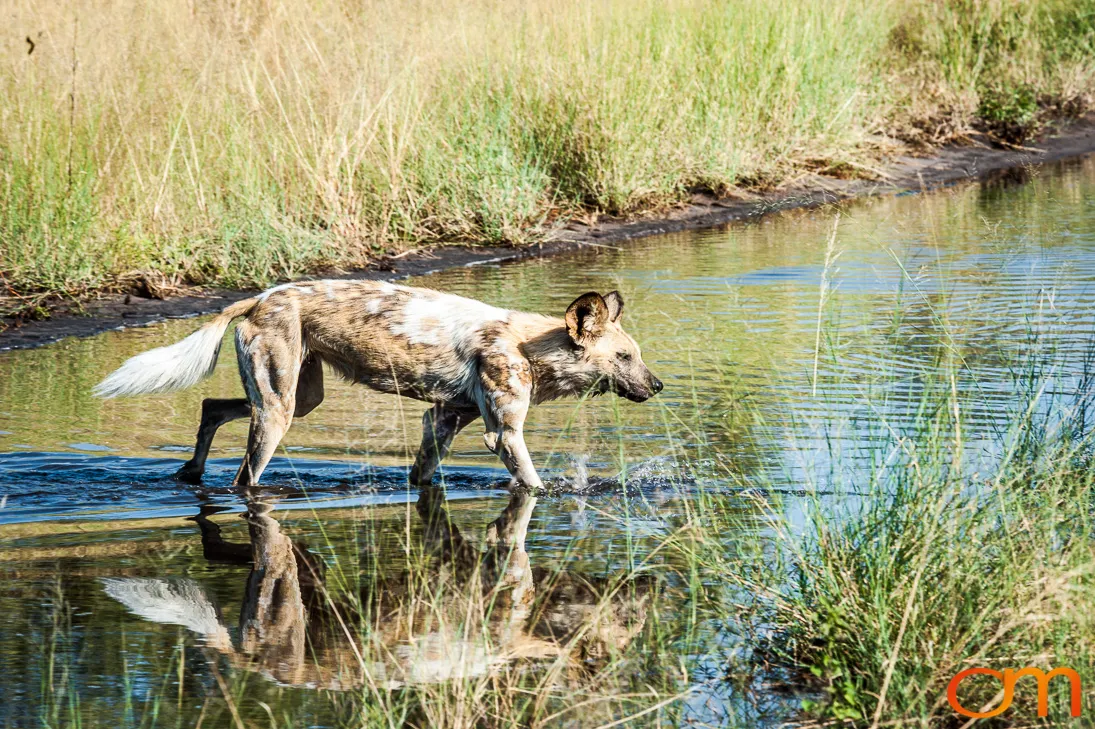
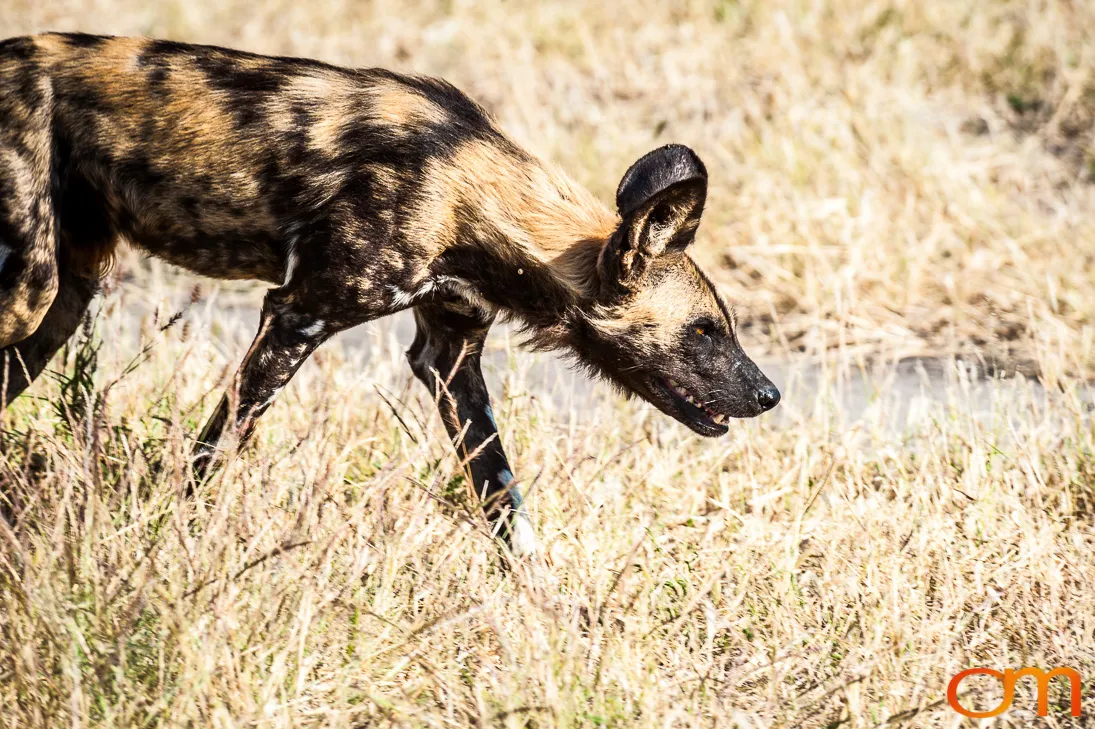
The African wild dog (Lycaon pictus), also known as the painted dog, is a highly social carnivore native to sub-Saharan Africa and the only living species in the genus Lycaon. Each animal has a distinctive coat of black, white, and yellow-brown markings. Researchers use these patterns, together with features such as ear notches and tail markings, to identify and follow individual dogs over many years.
African wild dogs have four toes on each foot, lacking the functional first digit or dewclaw found on the forefeet of most other canids. Their long legs and reduced feet are adaptations for efficient running. However, studies in northern Botswana found that wild dogs do not always pursue prey through a single prolonged endurance chase. In the wooded habitats surrounding the Okavango Delta, they may make several short, rapid hunting attempts, with different pack members independently pursuing opportunities to capture prey. Medium-sized antelopes, including impala, steenbok, and duiker, are important prey in this region.
Pack cooperation extends well beyond hunting. Most reproduction is concentrated in one breeding pair, while other adults and yearlings help guard and feed the pups. Returning hunters regurgitate meat for young dogs at the den, and younger pack members are generally given priority when feeding at a kill.
Research conducted in Botswana revealed an especially unusual form of group decision-making. Before travelling or hunting, a pack gathers in an energetic social rally. Sneezes produced during these rallies appear to function as a voting or quorum signal: the more dogs that sneeze, the more likely the pack is to depart. Dominant animals can influence the decision, but sufficient participation by other pack members may also initiate movement.
The latest published IUCN assessment, released in 2020, classified the African wild dog as Endangered. It estimated approximately 6,600 adults across 39 subpopulations, including only about 1,400 mature individuals. Populations continue to decline because of habitat fragmentation, conflict with human activities, and infectious diseases.
The Okavango Delta lies at the heart of a wider southern African conservation landscape supporting the largest contiguous remaining population of African wild dogs. Even within this stronghold, the species faces natural pressures. Lions are an important cause of wild-dog mortality, while spotted hyenas compete for prey and may take over kills.