Arizona
Powered Parachutes
September 2013
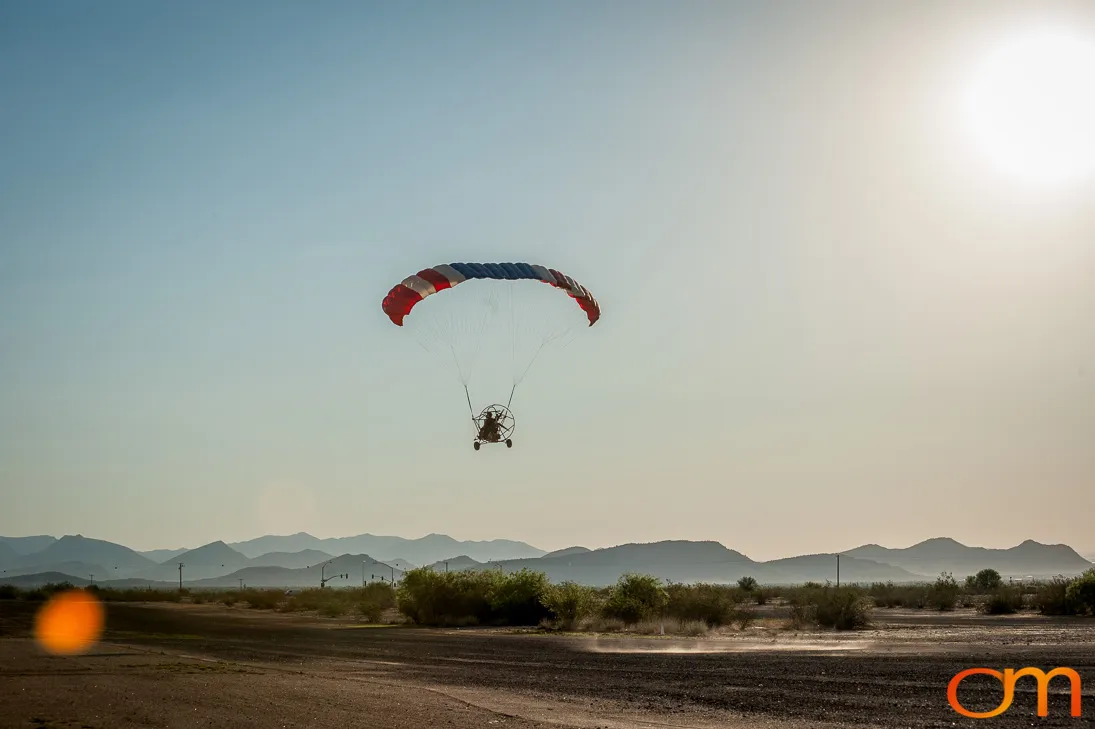
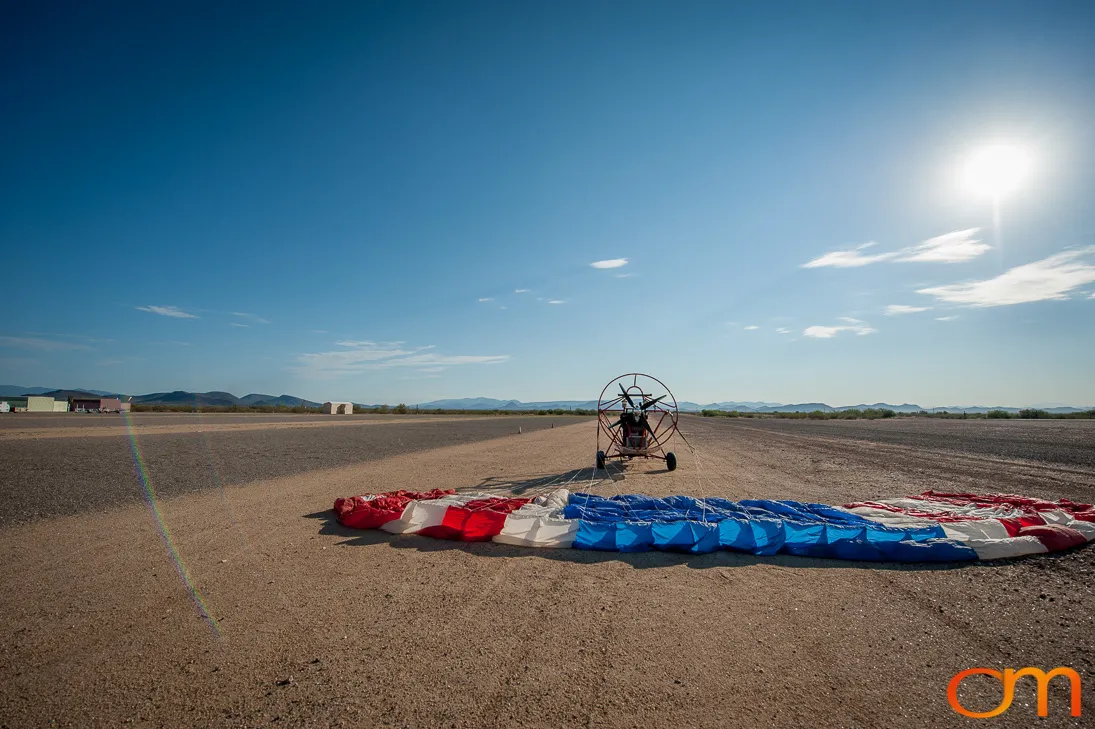
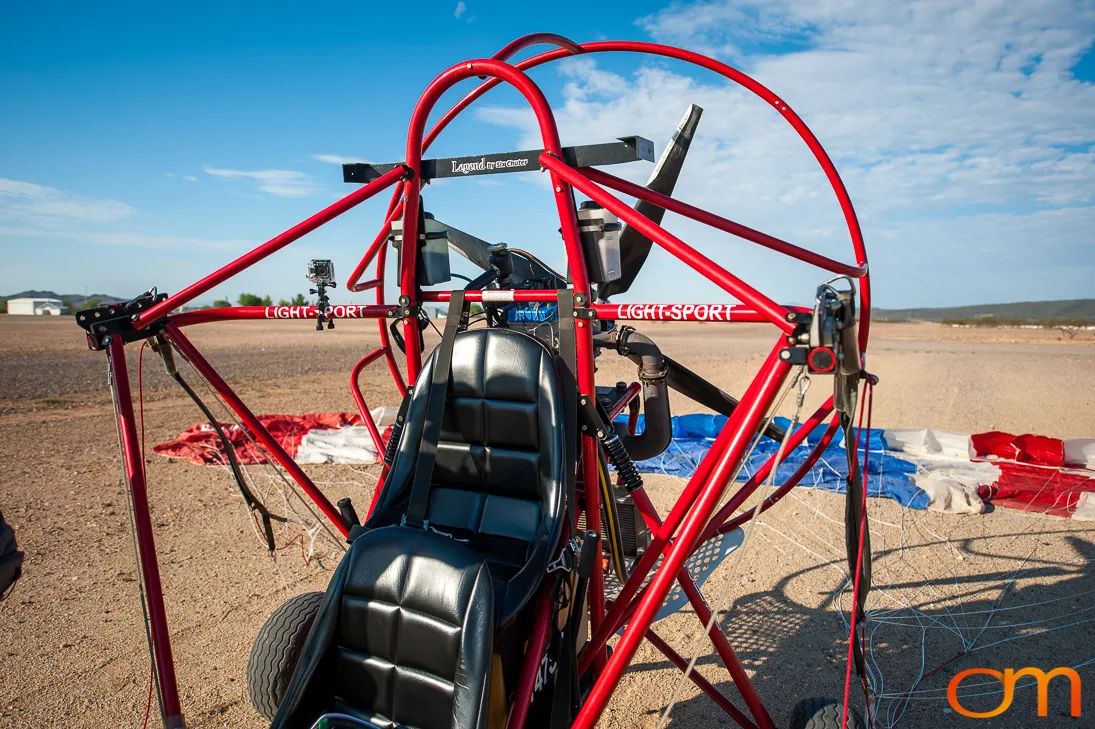
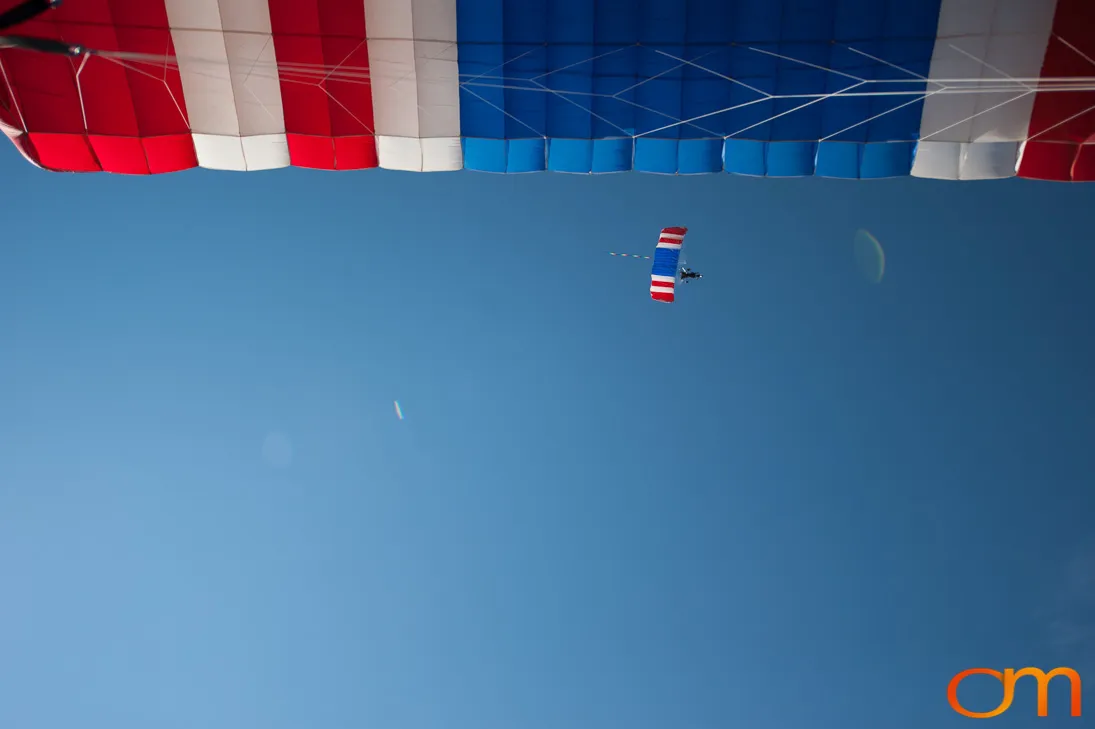
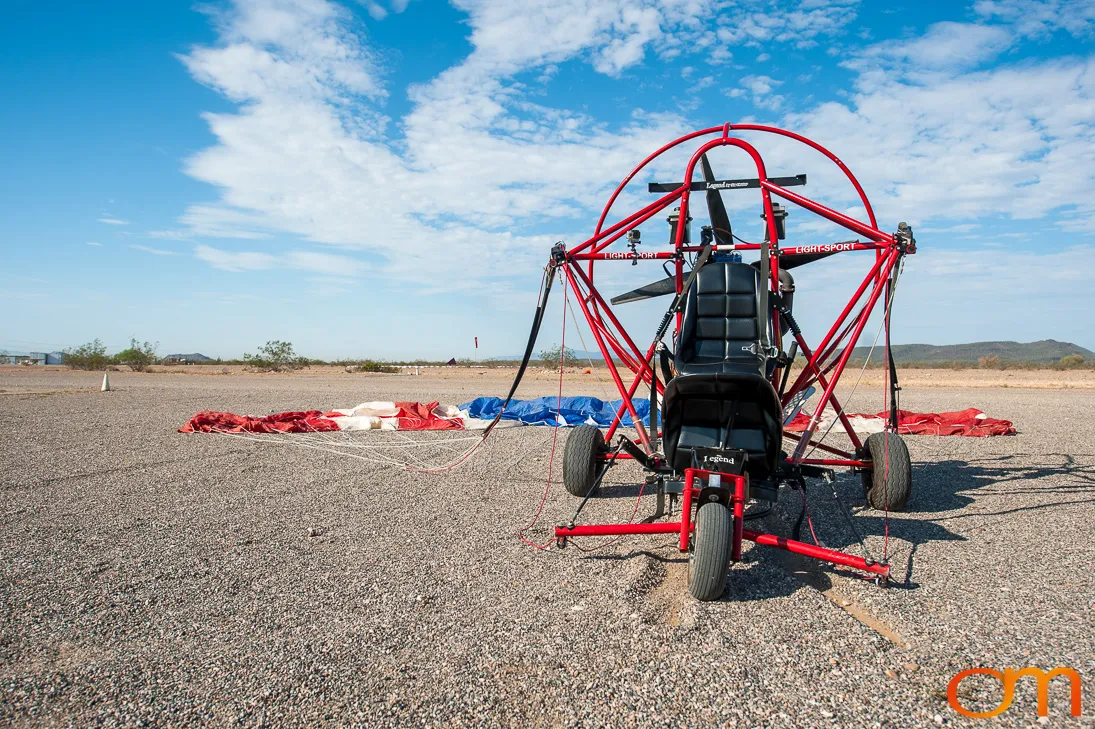
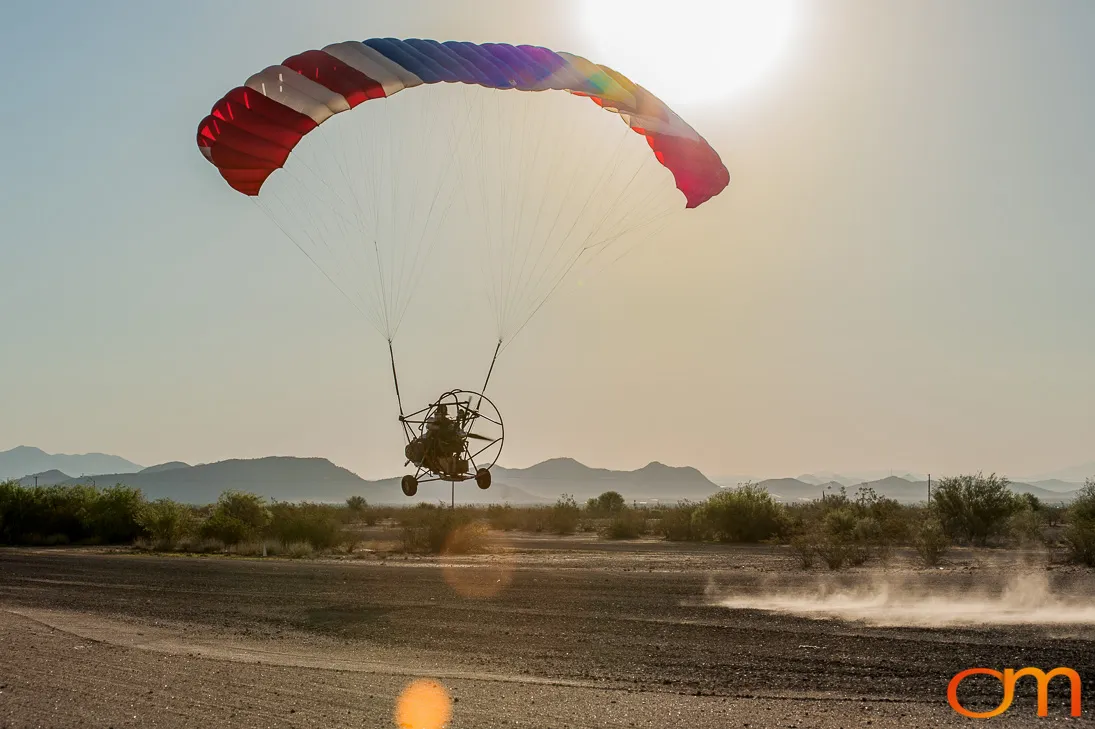
A powered parachute is an aircraft with a flexible or semi-rigid wing connected to a wheeled fuselage containing the engine, propeller, and seats. During takeoff, forward movement inflates the canopy and brings it into flying position. Once airborne, the cart hangs below the wing as a pendulum. The pilot steers by changing the trailing edge of the canopy, while engine power primarily controls climb and descent.
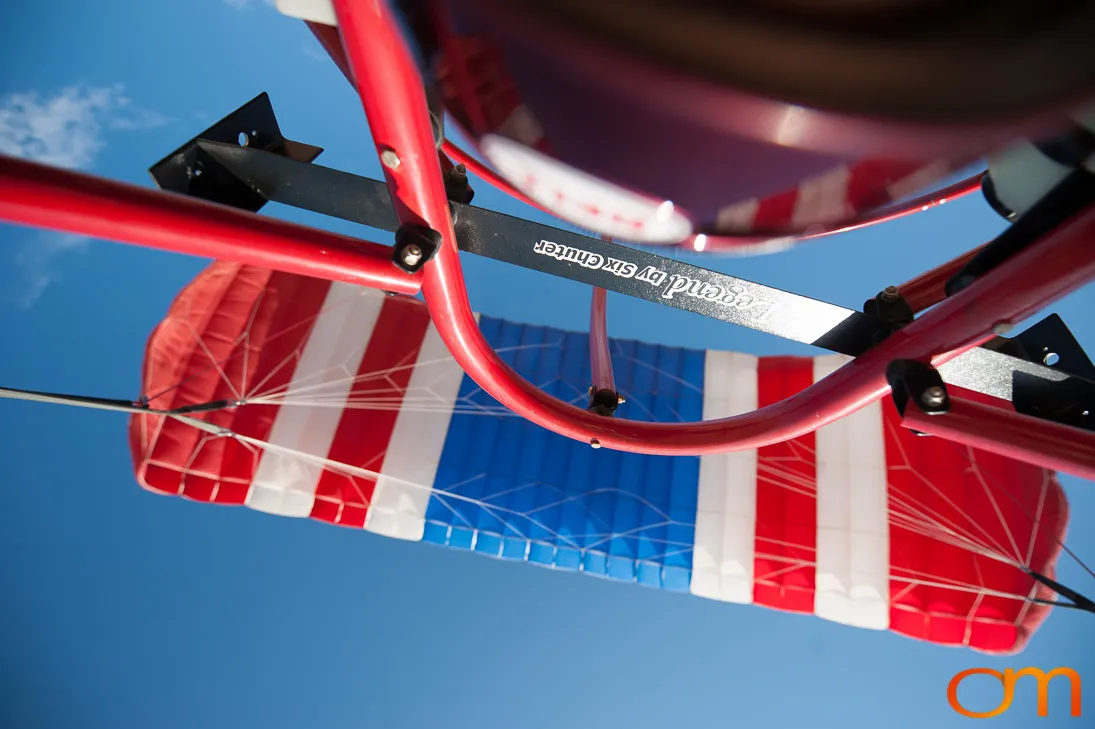
The design developed from the parafoil created by Domina C. Jalbert. He filed US Patent 3,285,546, “Multi-Cell Wing Type Aerial Device,” on October 1, 1964; it was granted on November 15, 1966. Air entering cells along the leading edge pressurizes the flexible canopy and gives it an airfoil shape.
In 1981, Steve Snyder, Dan Thompson, and Adrian vandenBurg flew the first powered parachute known to take off under its own power. Their P-1 prototype required two years of further development. The improved P-3 first flew in March 1983, and production aircraft were offered later that year, helping establish powered parachuting as a distinct form of recreational aviation.