Okavango Delta
South African Giraffes: Okavango Delta
April 2009
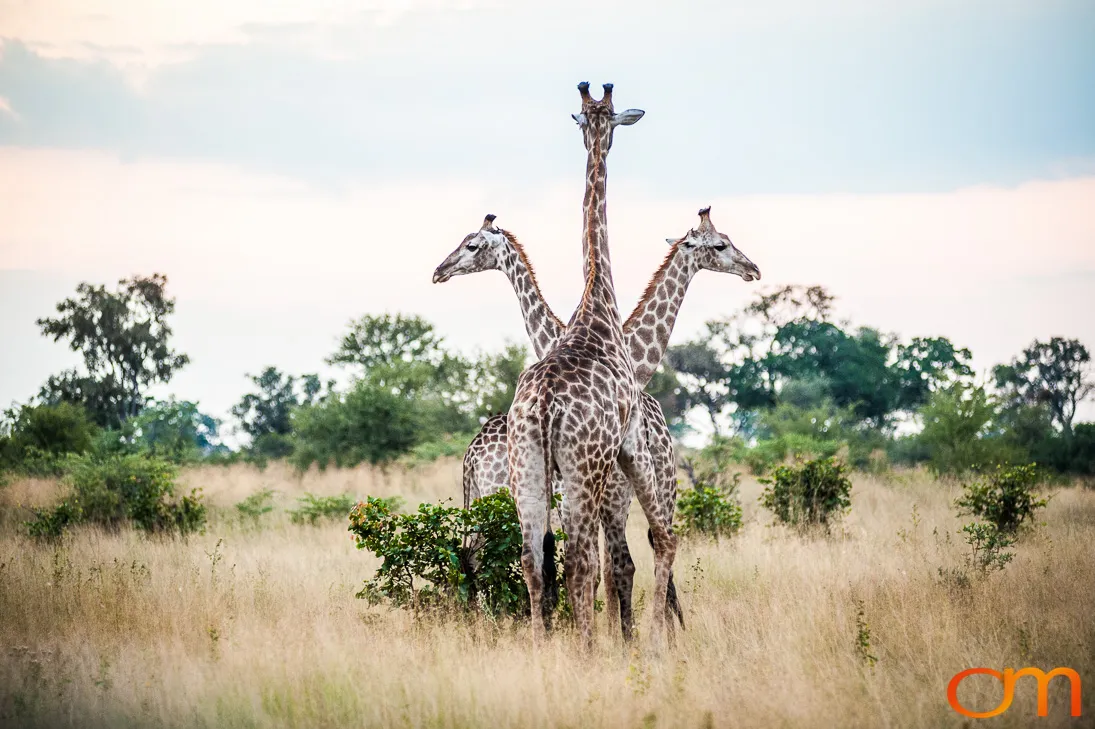
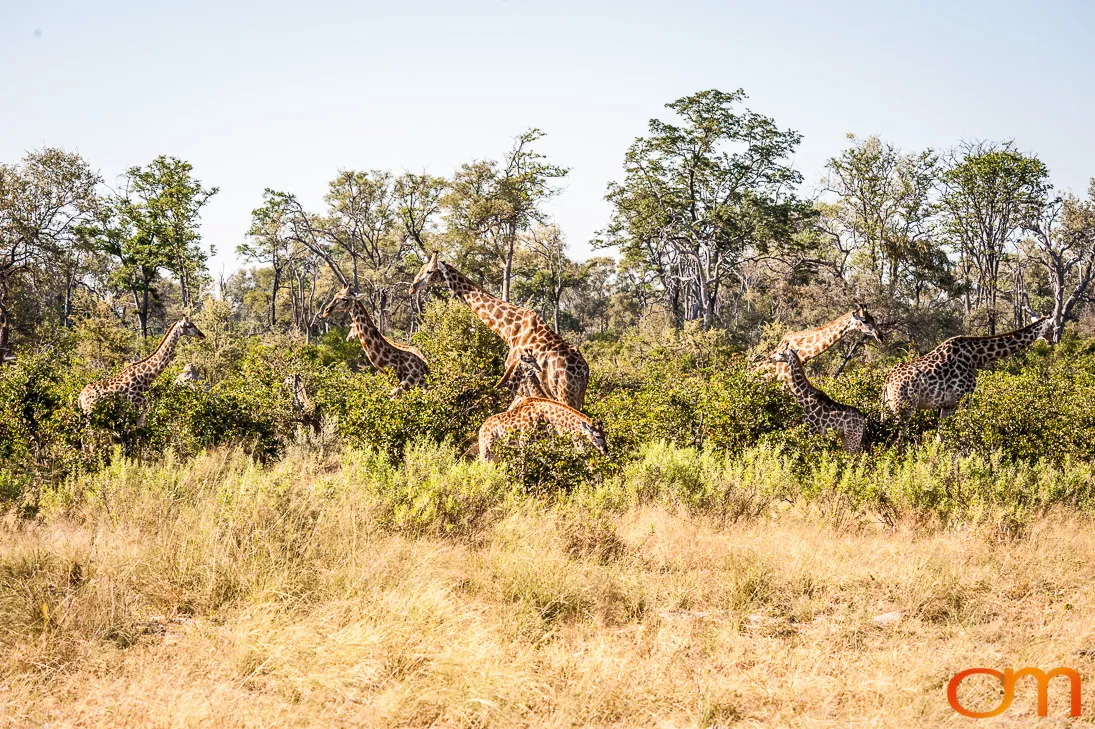
South African giraffes (Giraffa giraffa giraffa) inhabit northern Botswana, including the Okavango Delta and Moremi Game Reserve. They are one of two recognized subspecies of the southern giraffe (Giraffa giraffa), together with the Angolan giraffe.
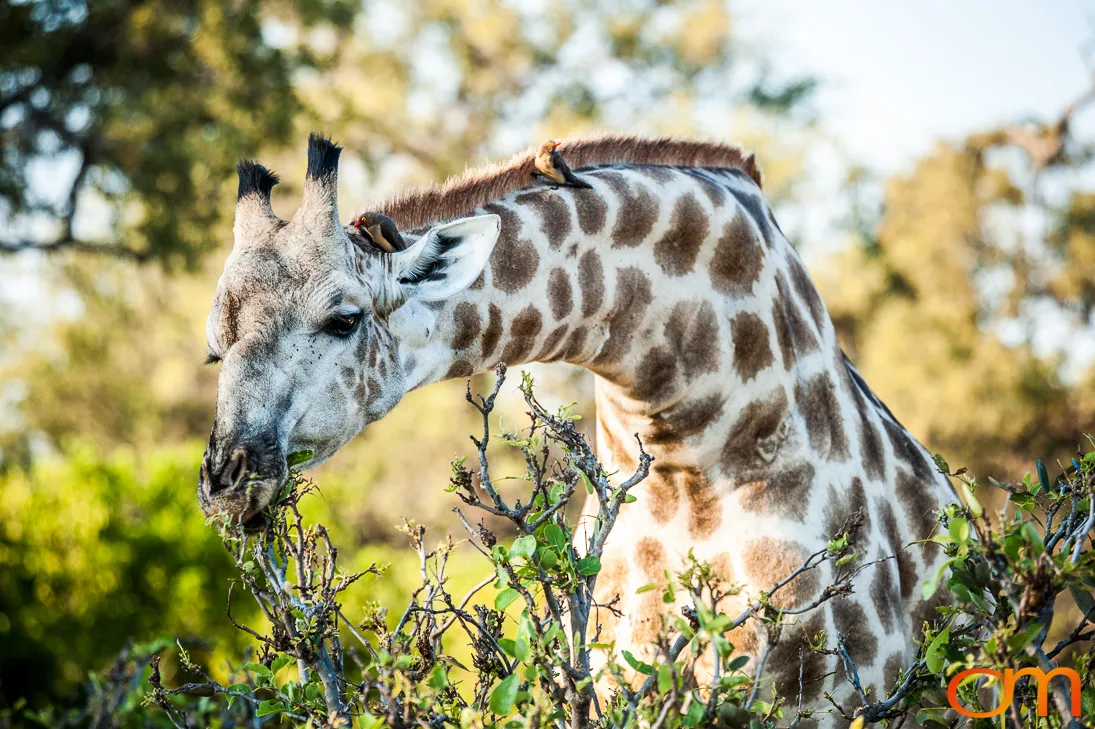
Giraffes are the tallest living land mammals. They browse on leaves, shoots, flowers, and fruit from trees and shrubs, often reaching vegetation unavailable to other herbivores. Their flexible, prehensile tongues are bluish-purple and measure approximately 18–20 inches (45–50 cm), helping them feed among thorny branches.
Every giraffe has a unique coat pattern. Researchers use photographs of these markings to identify individual animals and monitor their movements, relationships, survival, and reproduction. The pattern remains recognizable as the animal grows, functioning much like a human fingerprint.
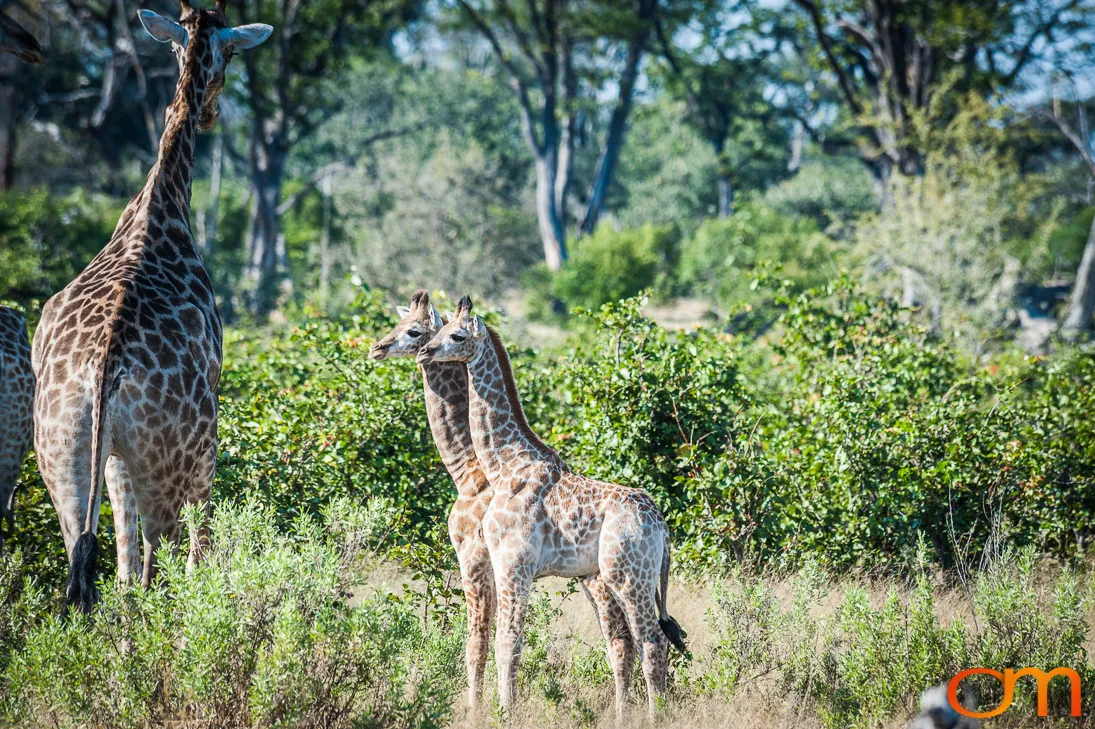
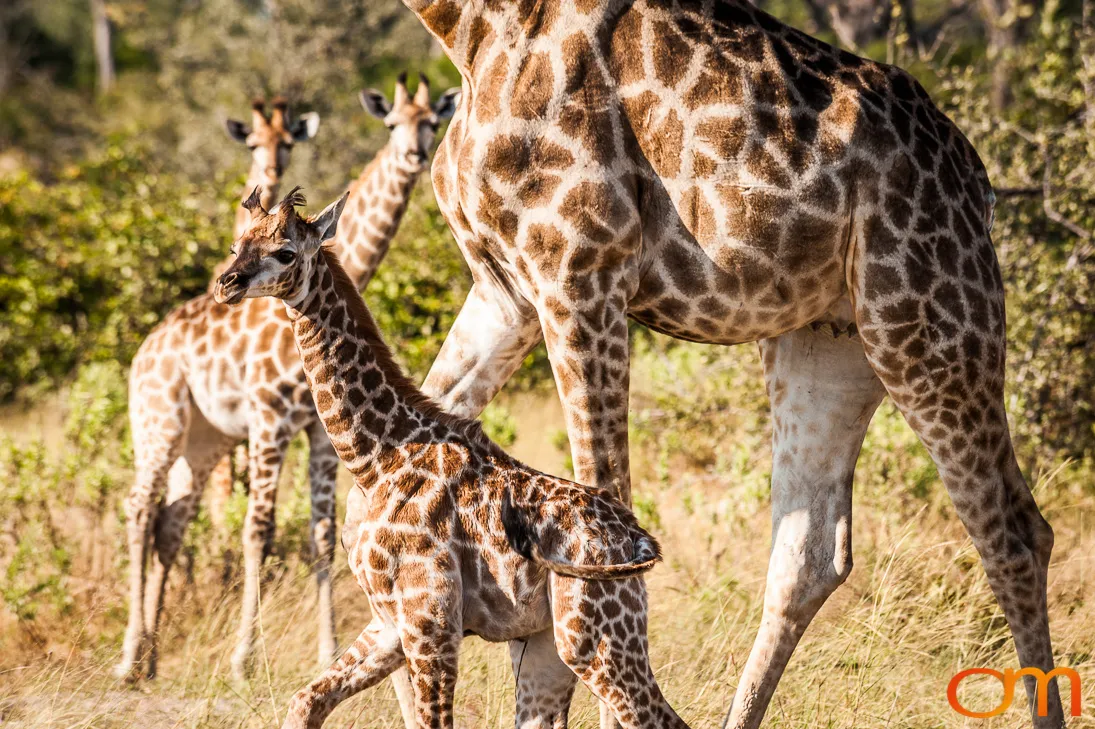
The structures on a giraffe’s head are called ossicones, rather than horns. Both males and females possess them. A calf is born with its ossicones lying flat and unattached to the skull, reducing the risk of injury during birth. They rise and gradually fuse to the skull as the giraffe matures.
Giraffe mothers give birth while standing. Despite their abrupt arrival, calves can usually stand within about an hour. Females and their young may also gather in temporary nursery groups, providing calves with opportunities to interact while the adults browse and move through the surrounding habitat.
Giraffes are not silent. Recorded vocalizations include snorts, grunts, bursts, and low-frequency humming. One study documented humming primarily at night, with an average frequency of approximately 92 hertz—low, but still within the range of human hearing. The study found no evidence that the sounds were infrasonic, and the purpose of the humming remains uncertain.