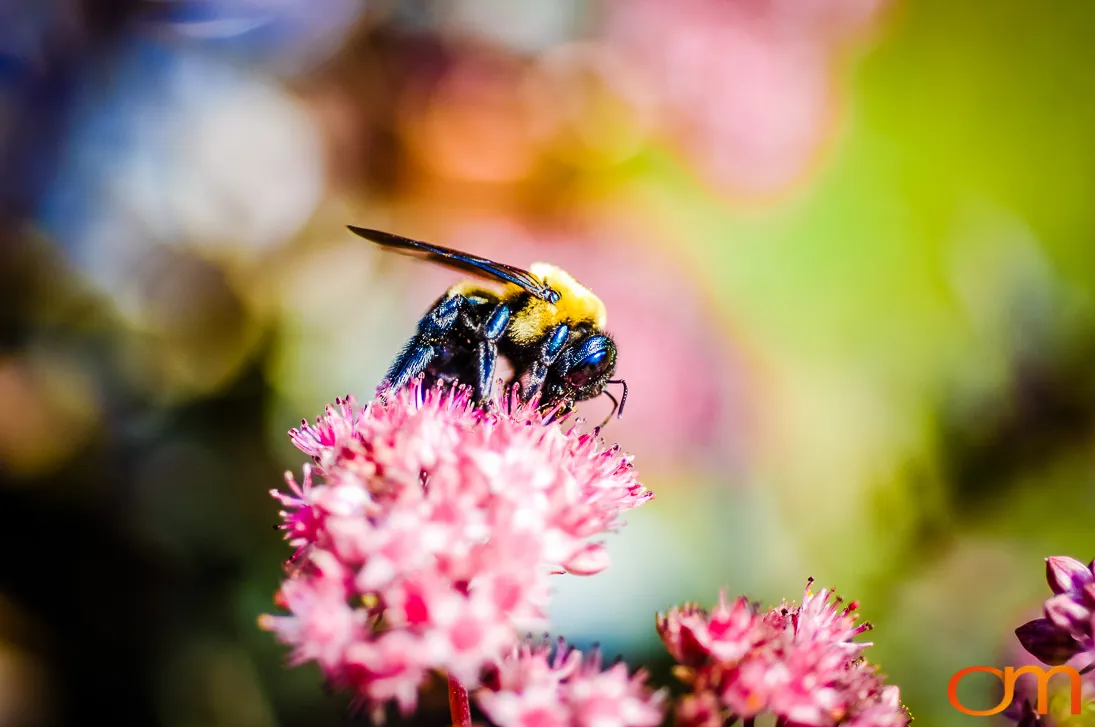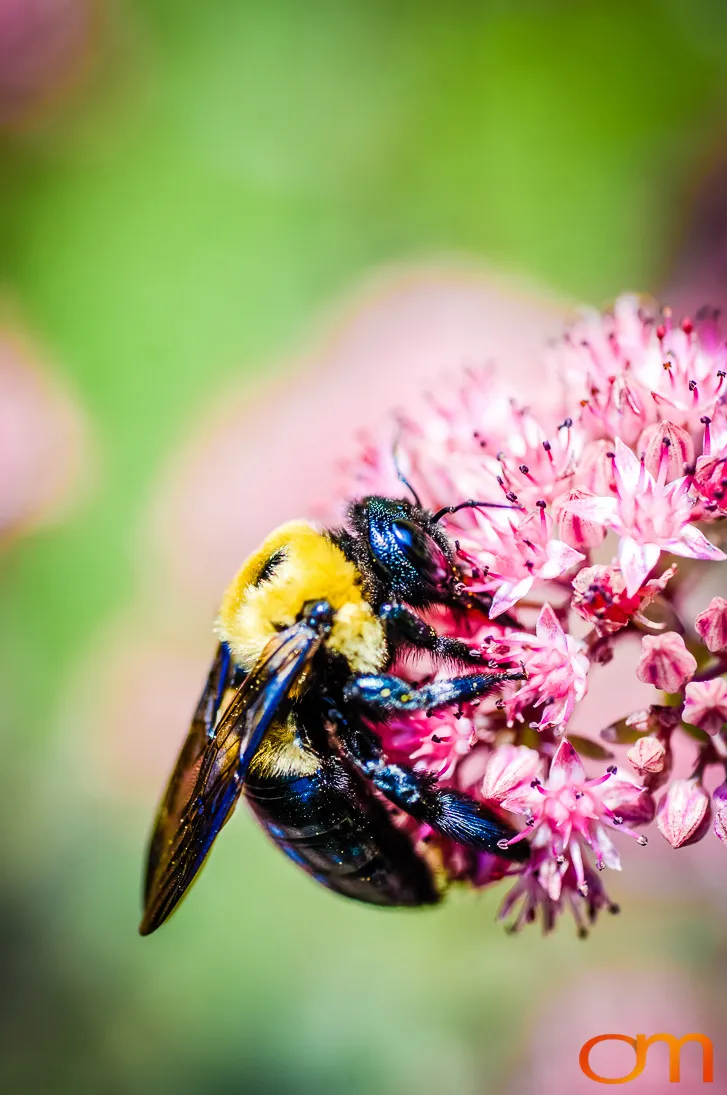
Connecticut
Bumblebees
September 2007
Bumblebees are robust, densely haired bees in the genus Bombus. Nearly 300 species are recognized, and the group is especially diverse in cool temperate and montane environments. Their bodies readily collect and transfer pollen, making bumblebees important pollinators of wild flowering plants and agricultural crops.
Most bumblebees are social. In temperate regions, a queen establishes a nest in spring, and the colony may grow to approximately 50–500 individuals. The colony usually lasts one season: workers, males, and the founding queen die by the end of the season, while newly mated queens overwinter and establish new nests the following year.
Bumblebees feed on nectar and pollen. Individual foragers often repeatedly visit the same flower type during a foraging trip, a behavior known as flower constancy. They can also perform buzz pollination by gripping a flower’s anthers and vibrating their flight muscles, releasing pollen that would otherwise remain trapped. This makes them effective pollinators of tomatoes, peppers, blueberries, cranberries, and other plants, including greenhouse-grown tomatoes.