Gujarat
Indian Wild Ass of the Little Rann of Kutch
September 2004
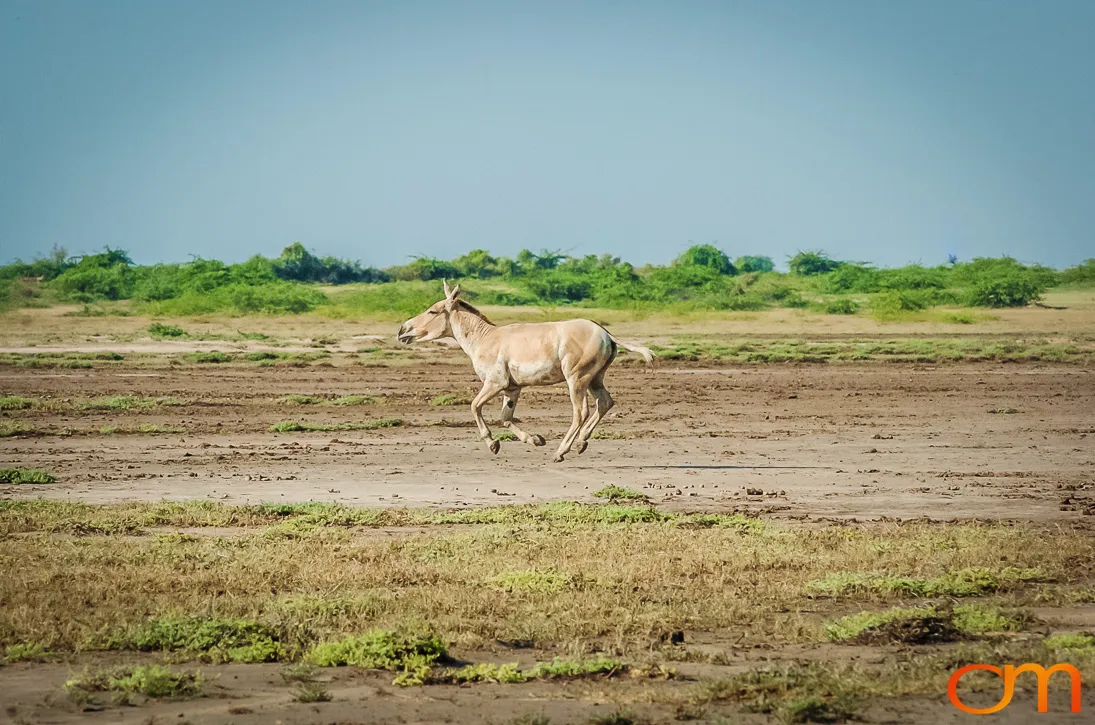
The Indian wild ass, or khur (Equus hemionus khur), is a subspecies of the Asiatic wild ass and a member of the horse family, Equidae. Its historical range extended across parts of western India and present-day Pakistan. Today, the world’s remaining wild population is centered in Gujarat, particularly in and around the Indian Wild Ass Sanctuary in the Little Rann of Kutch. As the population has increased, the animals have expanded into surrounding districts and parts of neighboring Rajasthan.
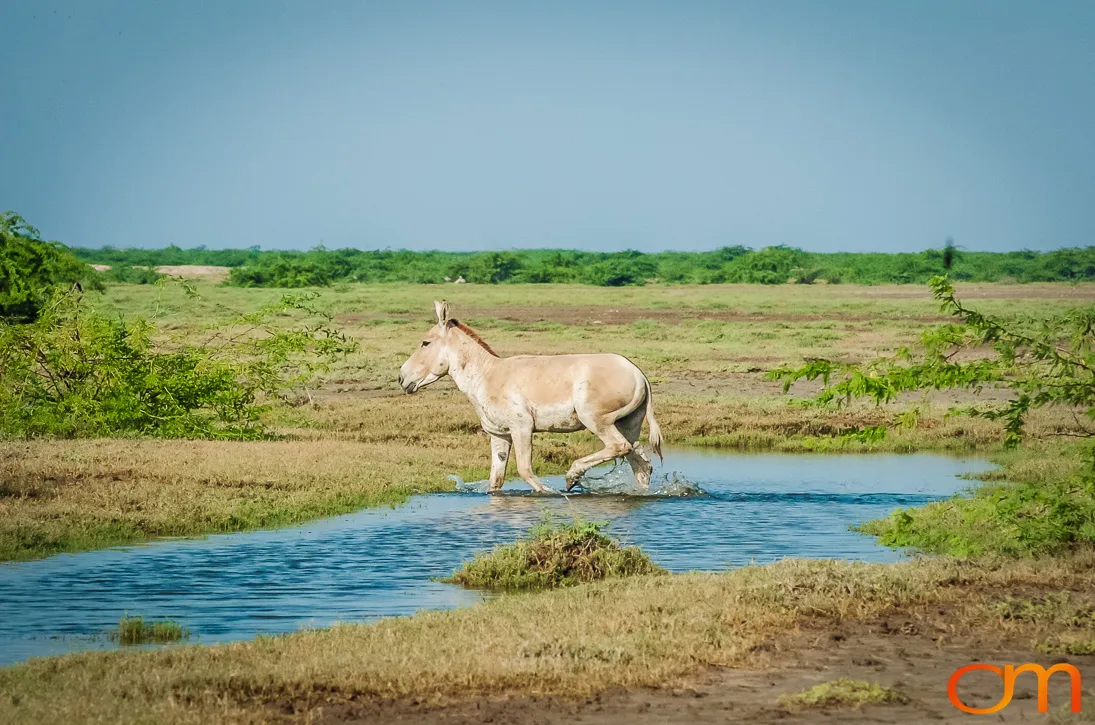
The Little Rann of Kutch is a saline desert that becomes a seasonal wetland during the monsoon. In the dry season, much of the region consists of salt-encrusted mudflats. Seasonal flooding creates temporary pools and channels, while elevated areas known locally as bets support grasses, shrubs and other vegetation.
Indian wild asses have sandy or pale reddish-brown coats with white coloring on the muzzle, underparts and rump. A short, erect mane continues into a dark stripe along the back. Adults generally weigh approximately 440 to 573 pounds (200 to 260 kilograms) and measure about 6.5 to 8 feet (1.98 to 2.44 meters) in body length. Males are usually larger than females.
The khur is a generalist herbivore. Its diet varies by season and may include grasses, sedges, leaves, seed pods, fruits and agricultural crops. Although well adapted to an arid and highly saline environment, Indian wild asses still require regular access to freshwater.
Their social structure is flexible. Mares and young animals may form family groups, while males may live alone, defend territories or gather in bachelor groups. Larger groups sometimes assemble during the monsoon, when fresh vegetation becomes more abundant. Females usually give birth to a single foal after a gestation period of approximately 11 months.
The Asiatic wild ass is classified as Near Threatened by the International Union for Conservation of Nature. The Indian wild ass also receives strong protection under Indian wildlife law. Continuing threats include habitat conversion, salt production, agricultural expansion, competition with livestock, disease and infrastructure that restricts movement between feeding and watering areas.
These photographs were taken in 2004, when Gujarat’s Indian wild ass population was estimated at 3,863. A 2024 survey recorded an estimated 7,672 animals across a substantially expanded range. The images therefore document the population during an earlier stage of one of India’s notable wildlife recoveries.