Vietnam
Making Fresh Rice Noodles in Vietnam
January 2003
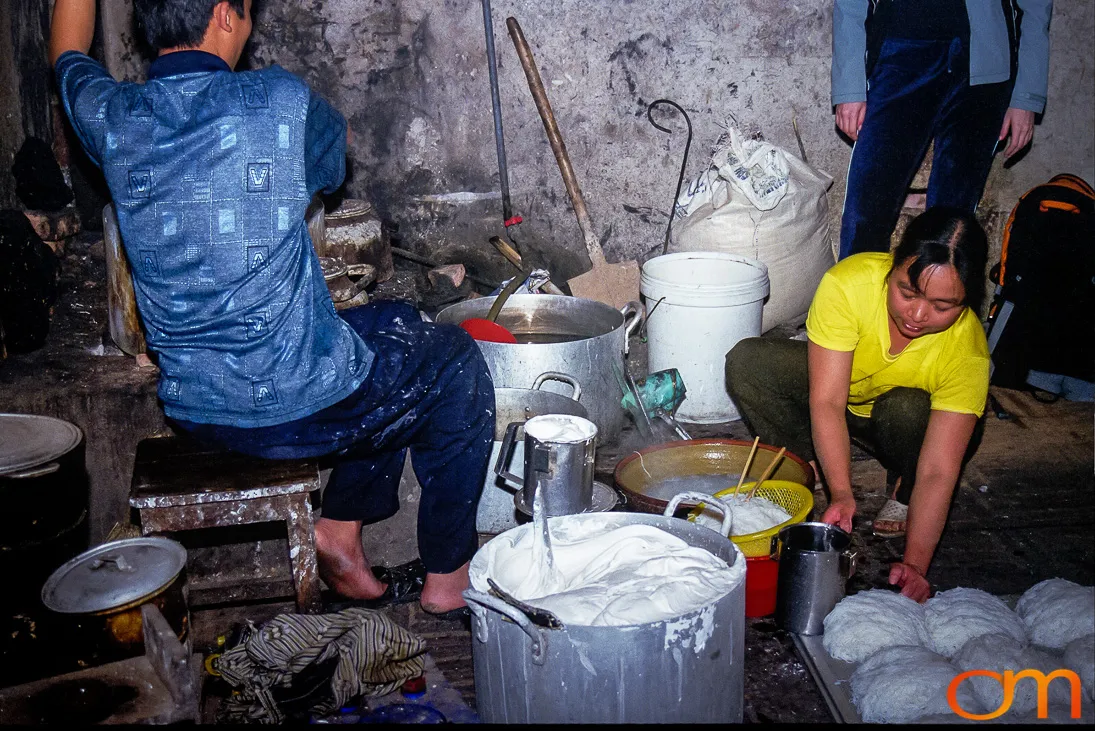
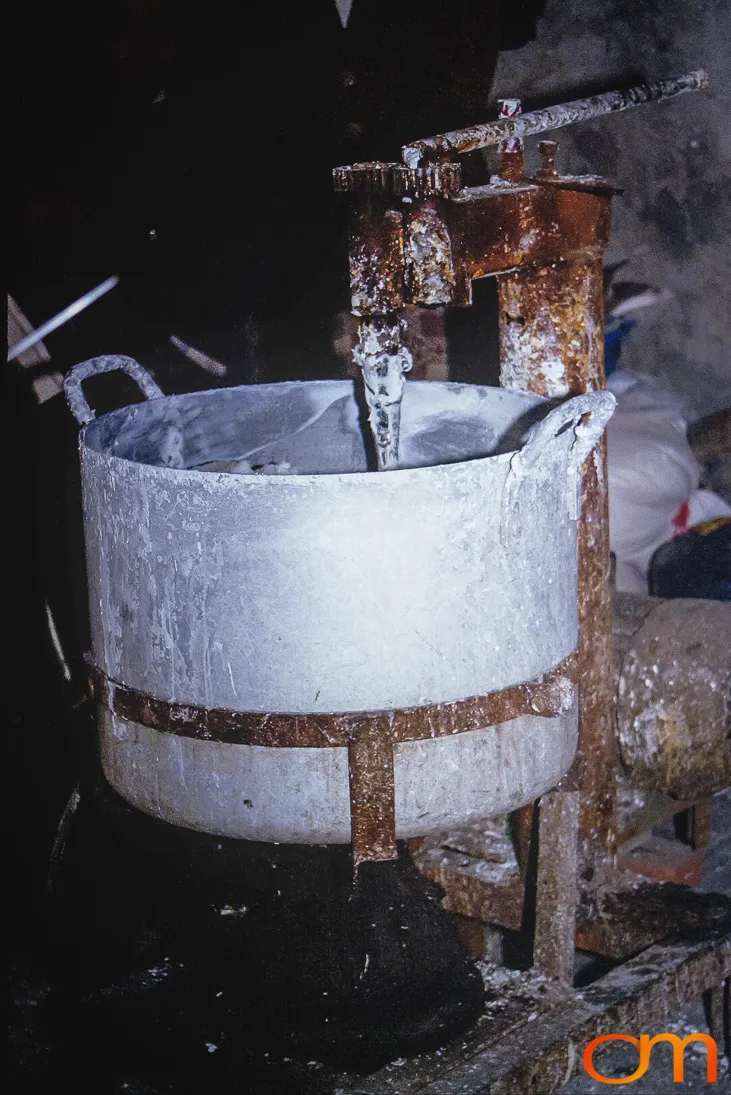
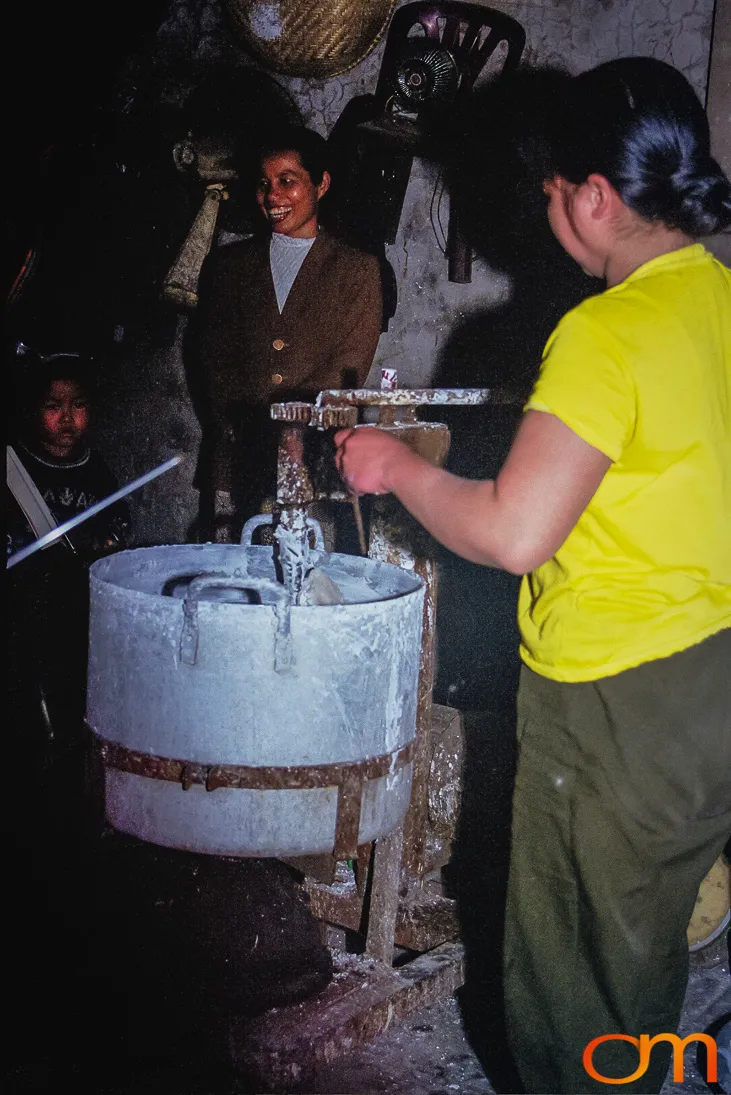
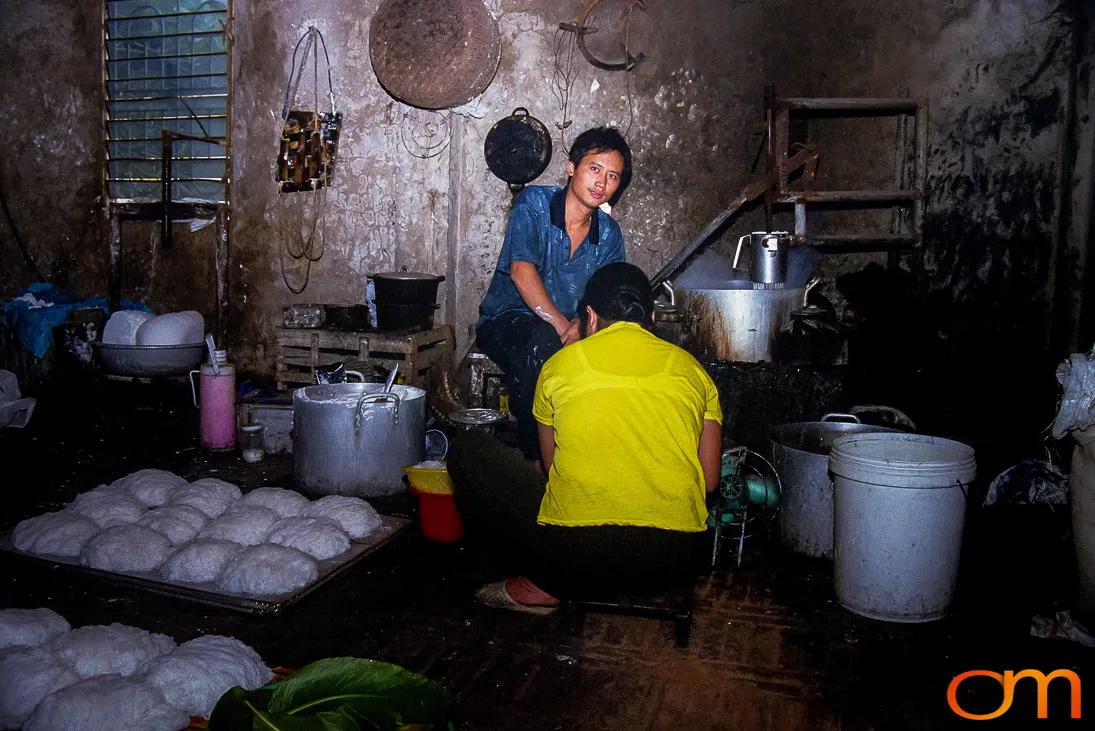
These photographs, taken in January 2003, document one small-scale method of producing fresh bún, the round rice noodles used in many Vietnamese dishes. Methods vary among regions and workshops, but the process observed here followed seven principal stages:
-
Rice selected for noodle making was rinsed and drained.
-
The rice was soaked in water overnight to soften the grains.
-
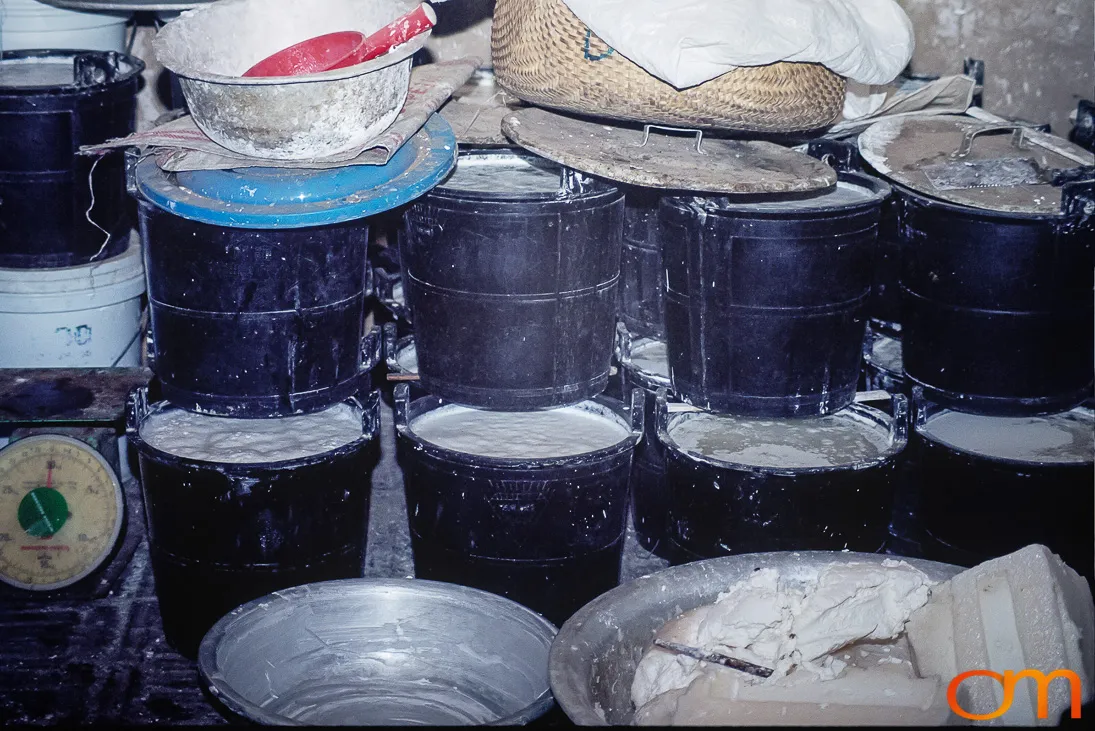
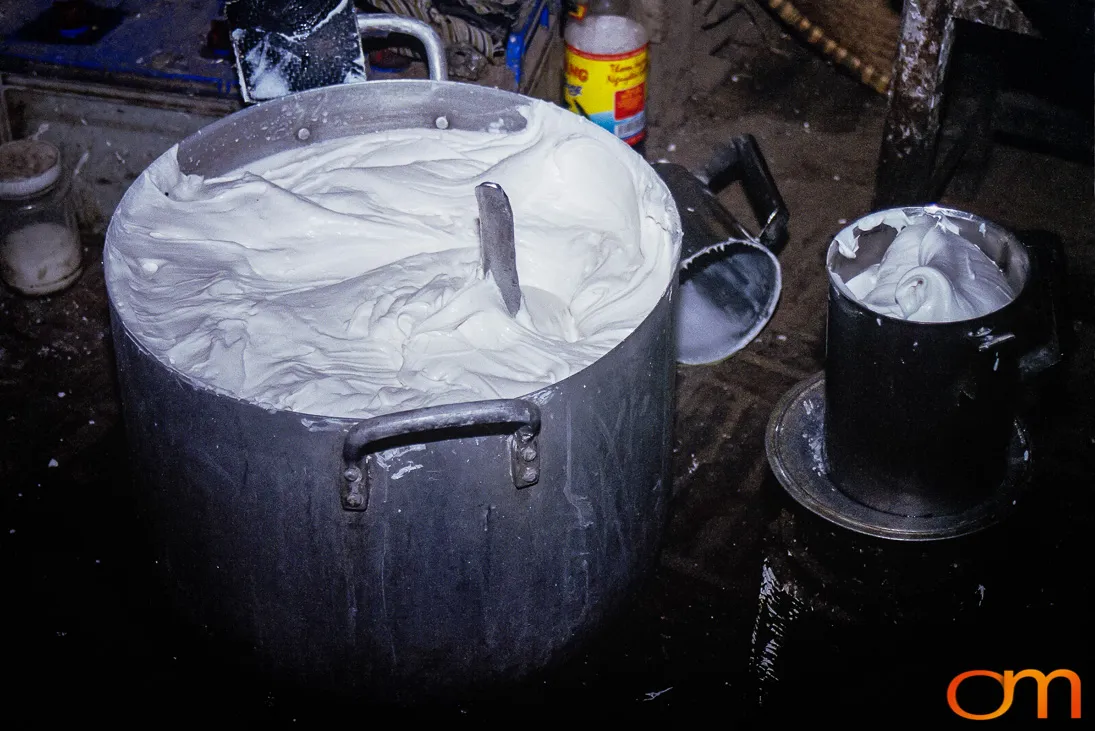
The softened rice was wet-milled with water into a thick white slurry, then allowed to rest for approximately two to three days. This resting period allowed natural fermentation to develop, influencing the texture of the finished noodles.
-
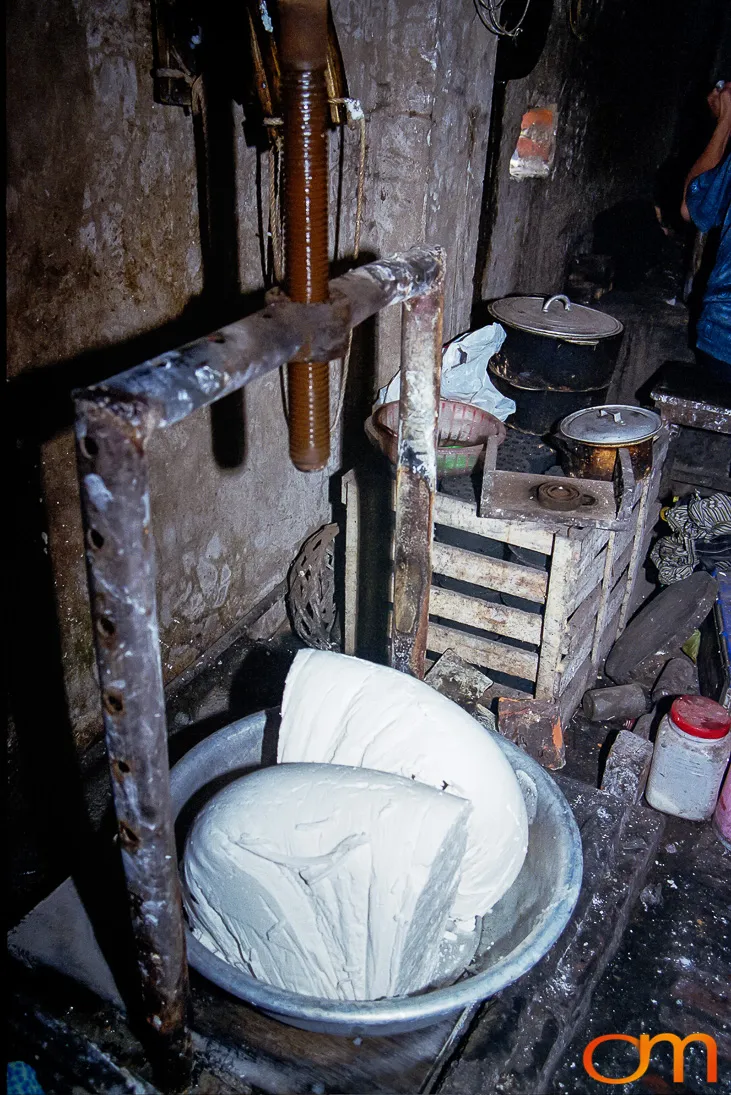
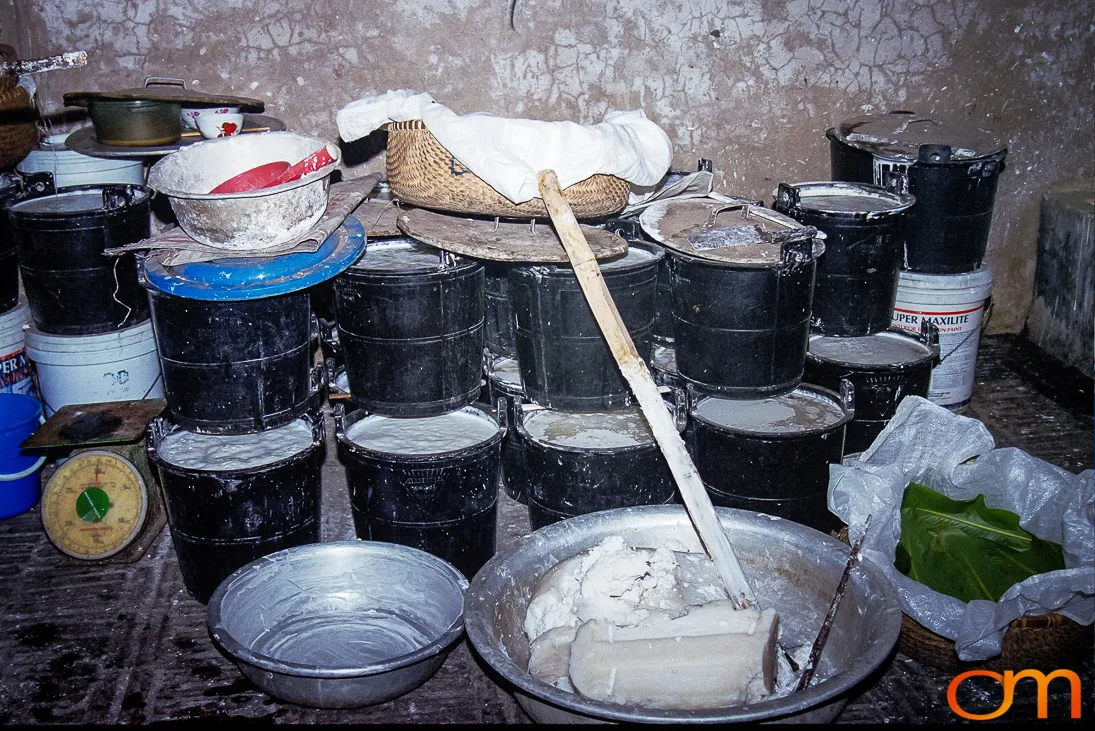
The slurry was transferred into cloth bags and compressed with a jack. Pressure forced out excess liquid and left dense blocks of rice paste. Some of the starchy liquid was retained for the next stage.
-
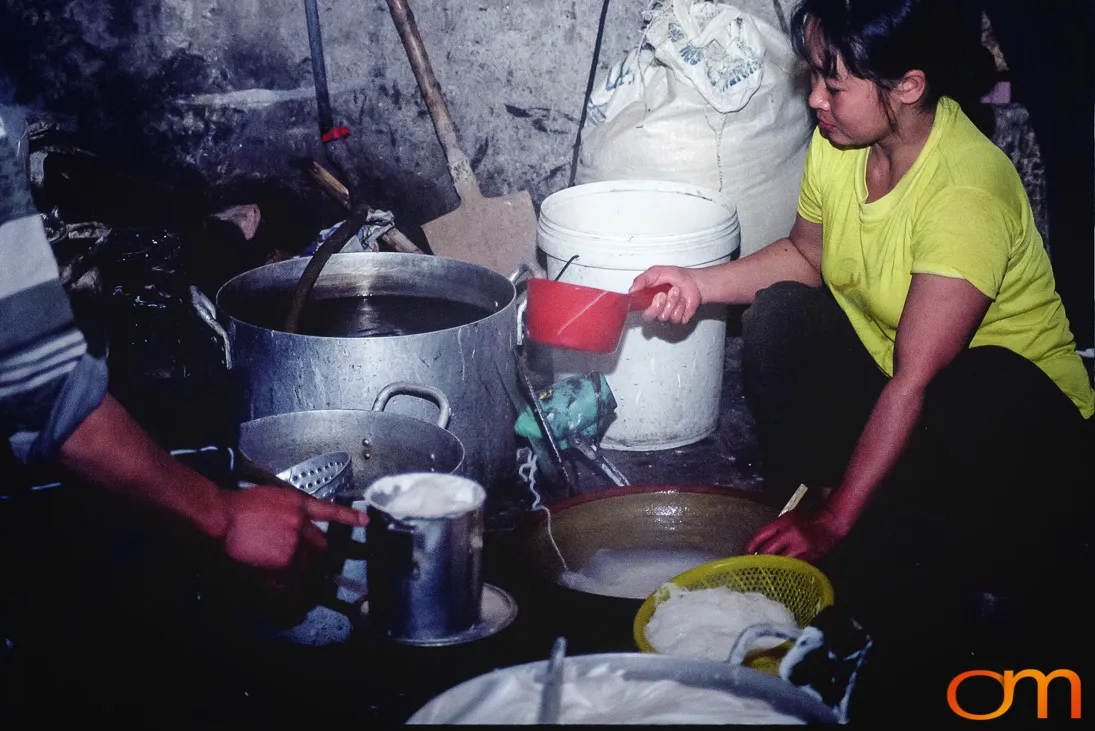
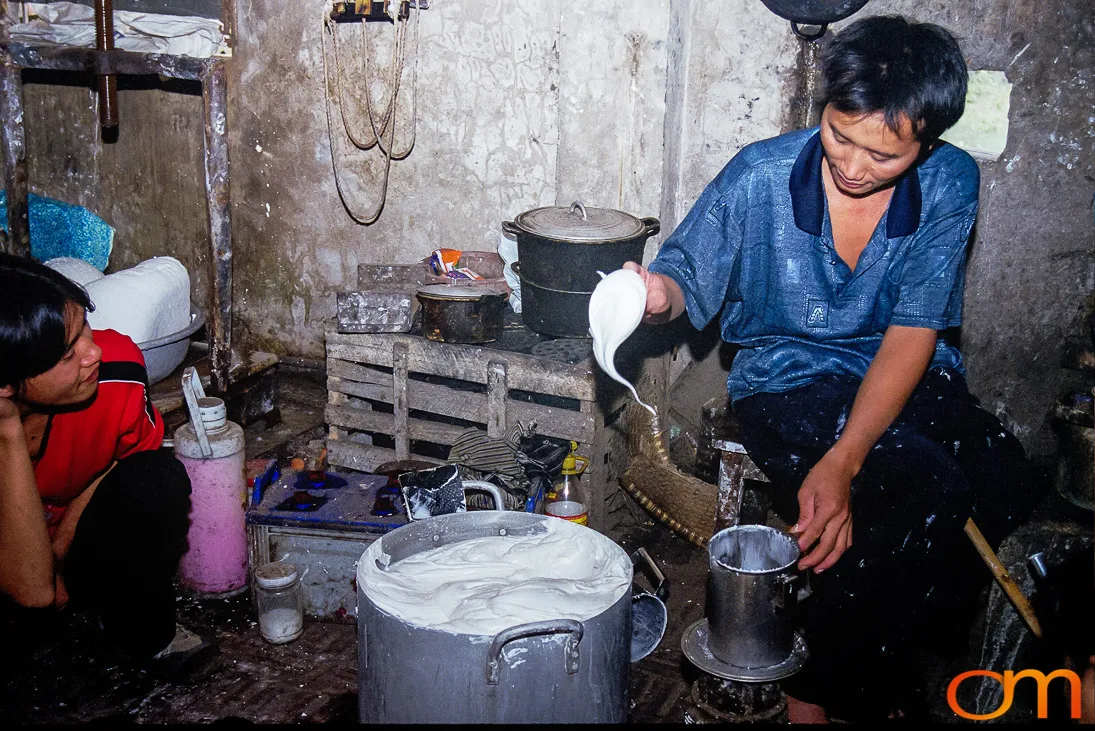
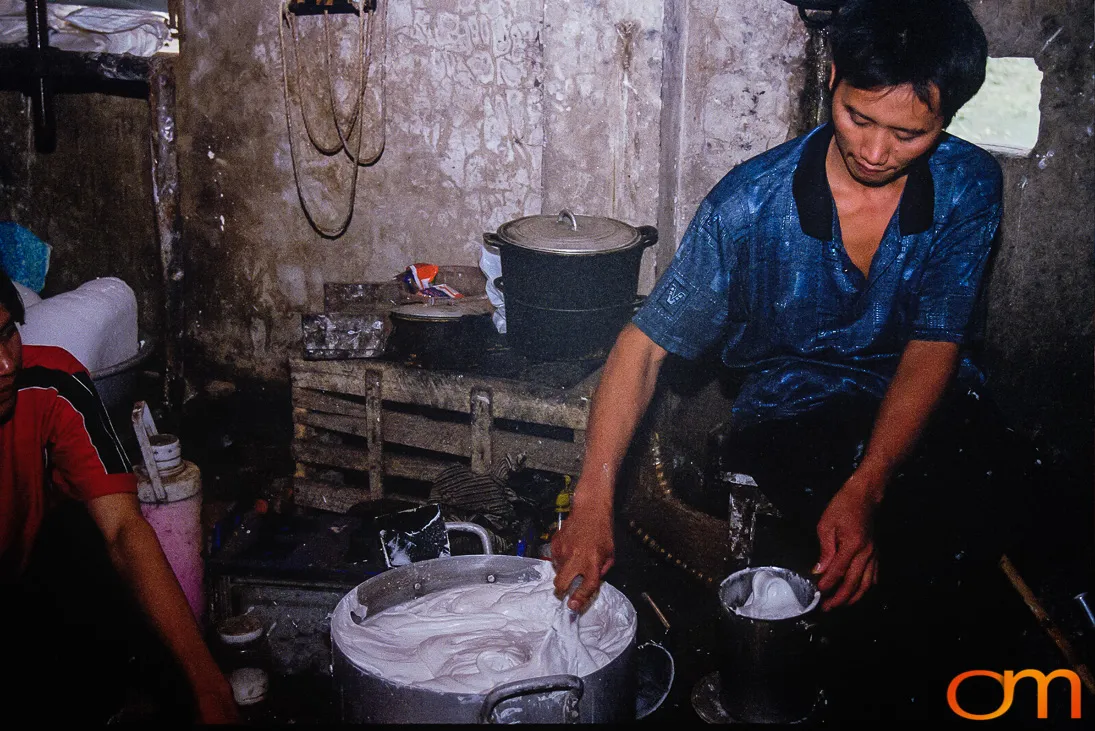
The pressed rice paste was broken apart and mixed with the reserved liquid until it formed a smooth, pourable batter. Experienced workers adjusted the consistency so the noodles would hold together without becoming dry or sticky.
-
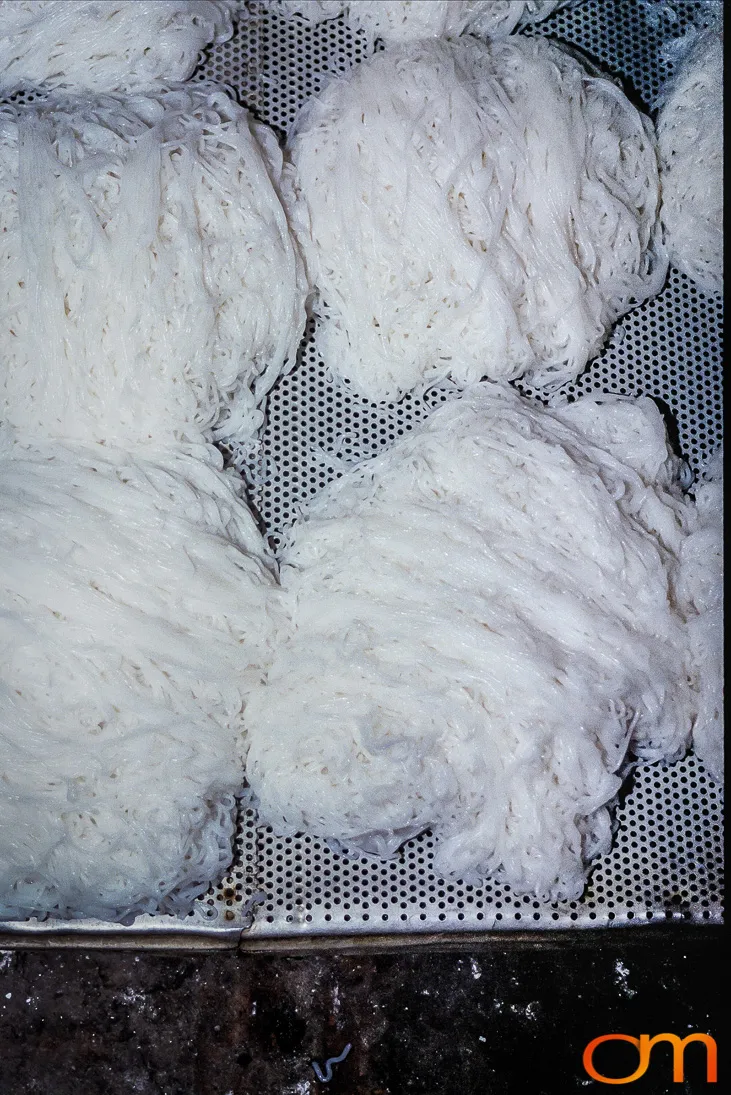
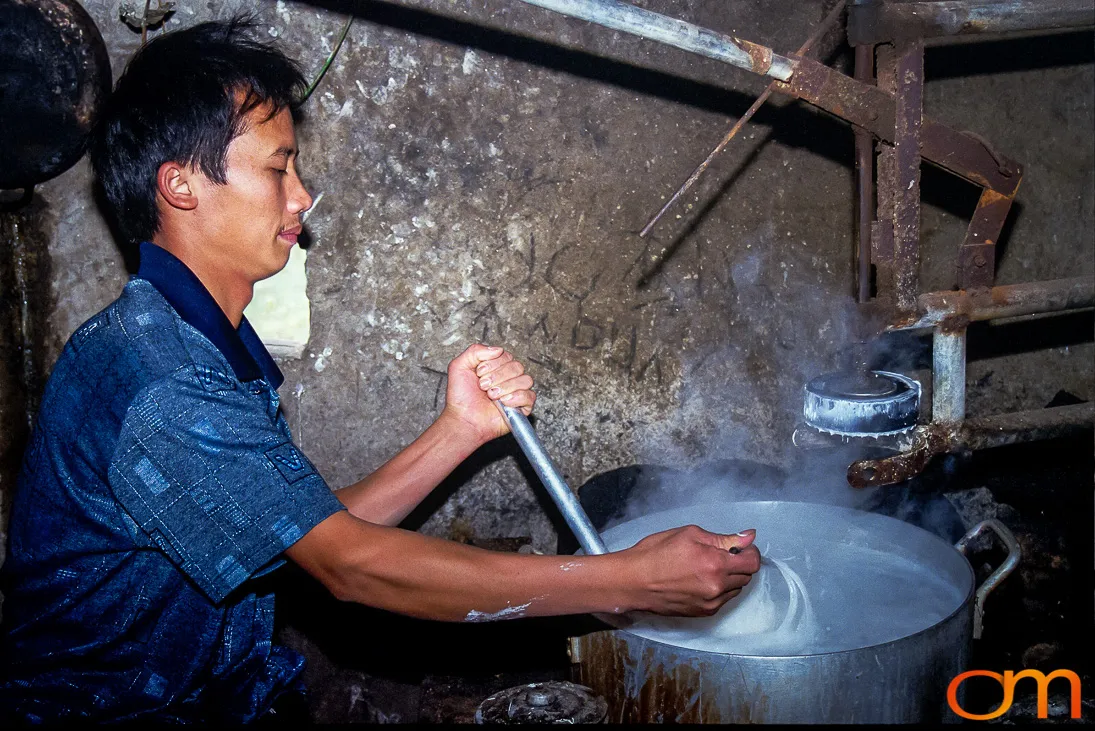
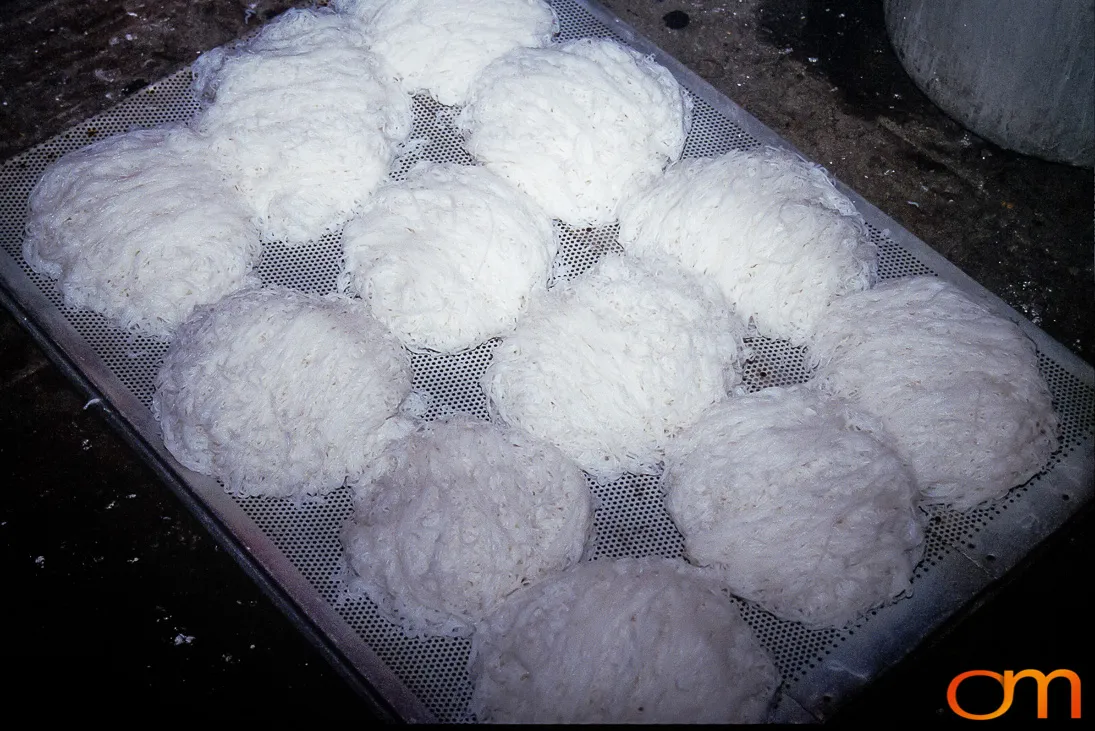
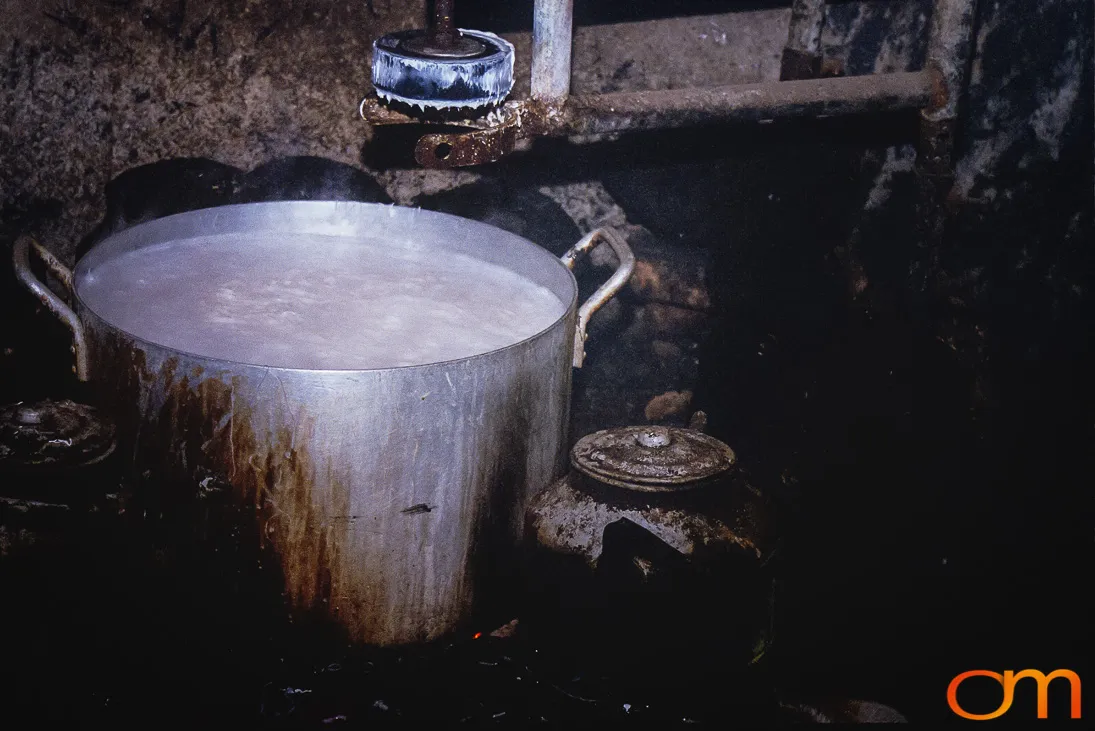
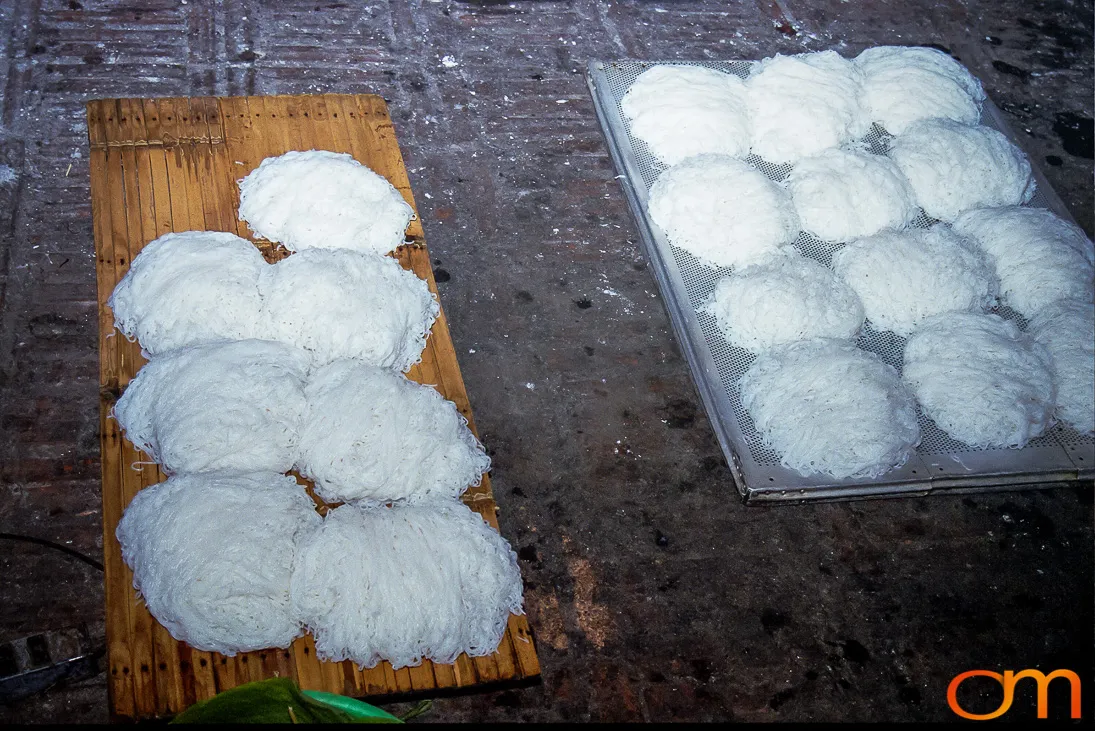
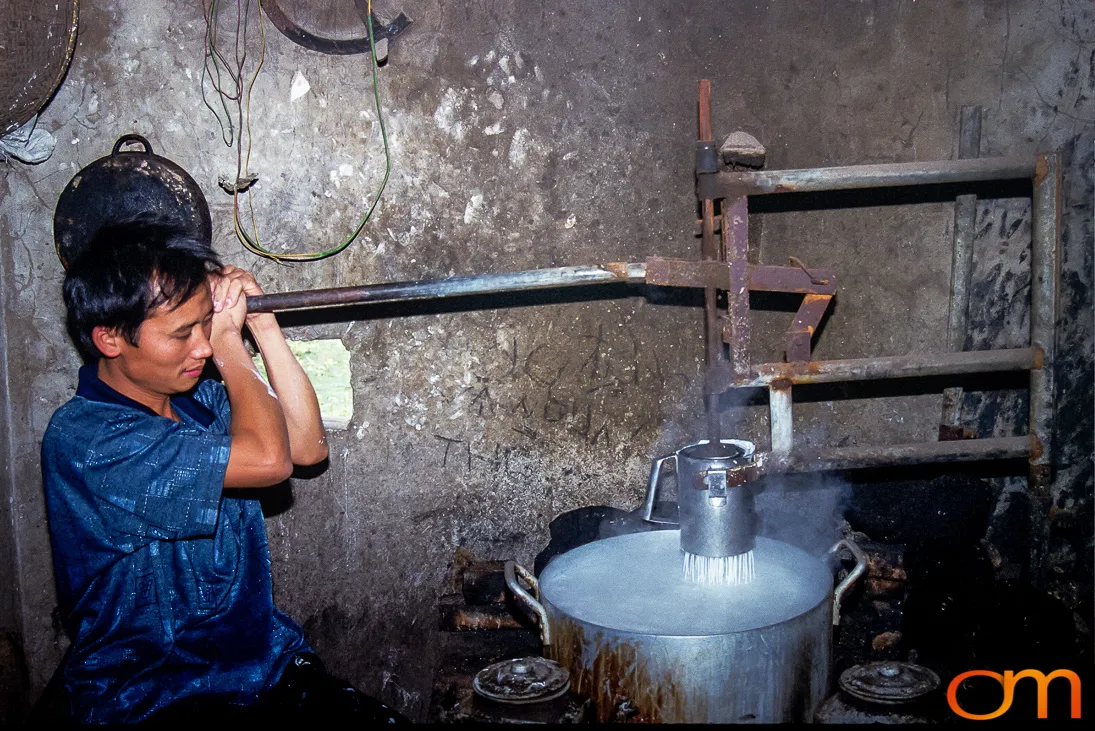
The batter was forced through a perforated die, producing thin strands directly into hot water, where the noodles cooked and set. They were then rinsed, cooled, drained, and gathered into portions.
-
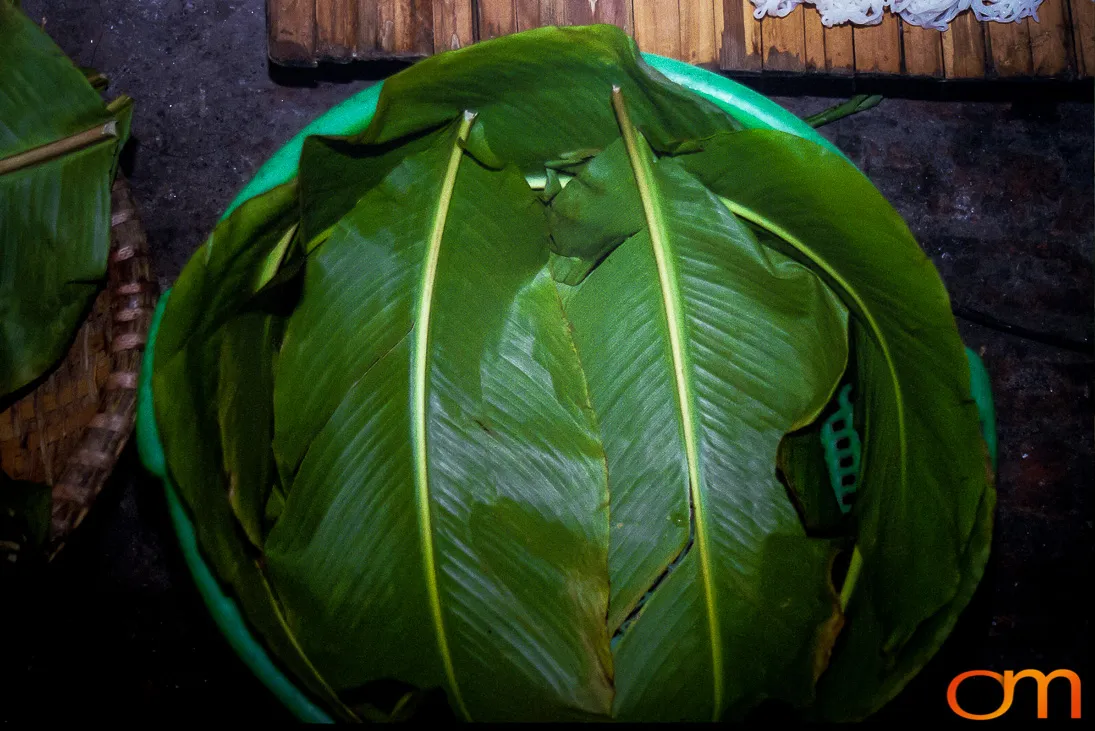
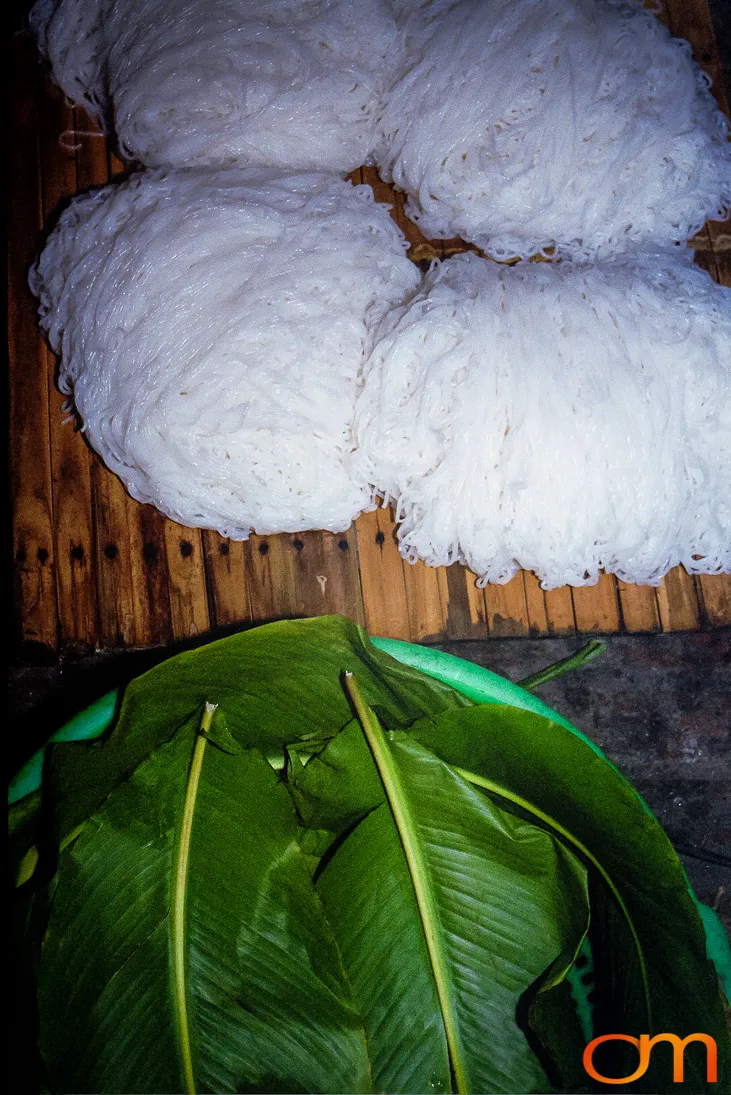
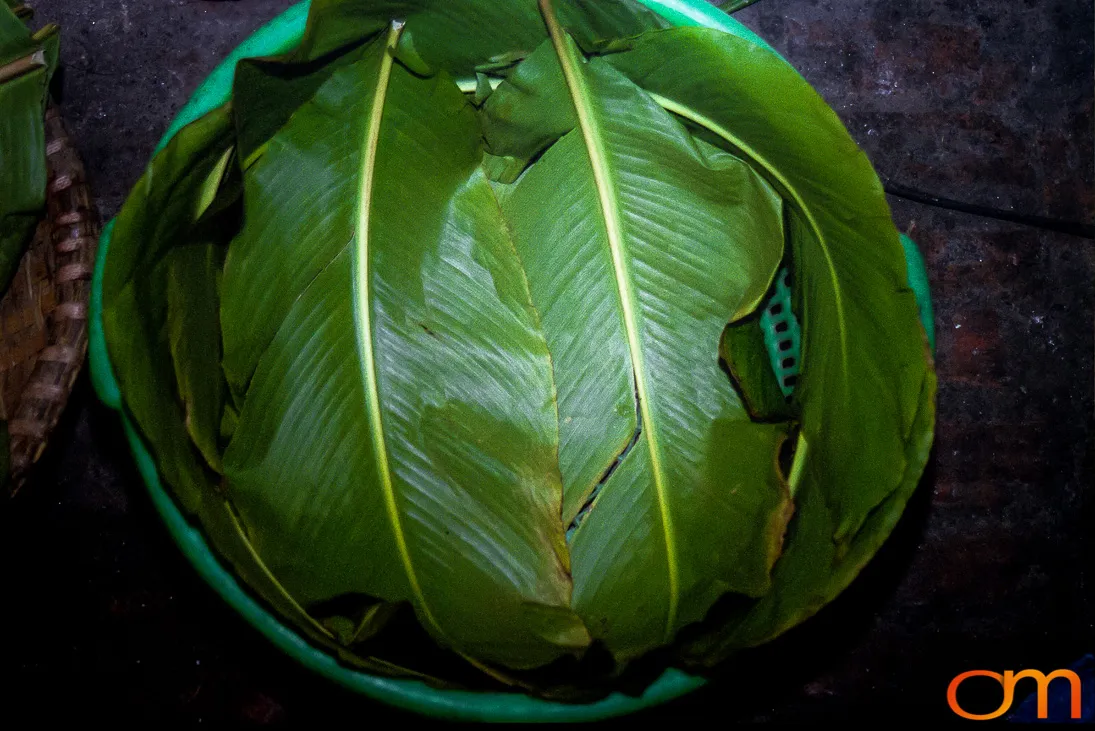
Once cool, the fresh noodles were arranged in bundles, packed, and distributed to local markets and restaurants.
The process combined soaked rice, natural fermentation, pressure, heat, and skilled judgment to produce fresh noodles in a small workshop.