Search 283 stories and 49 dives.

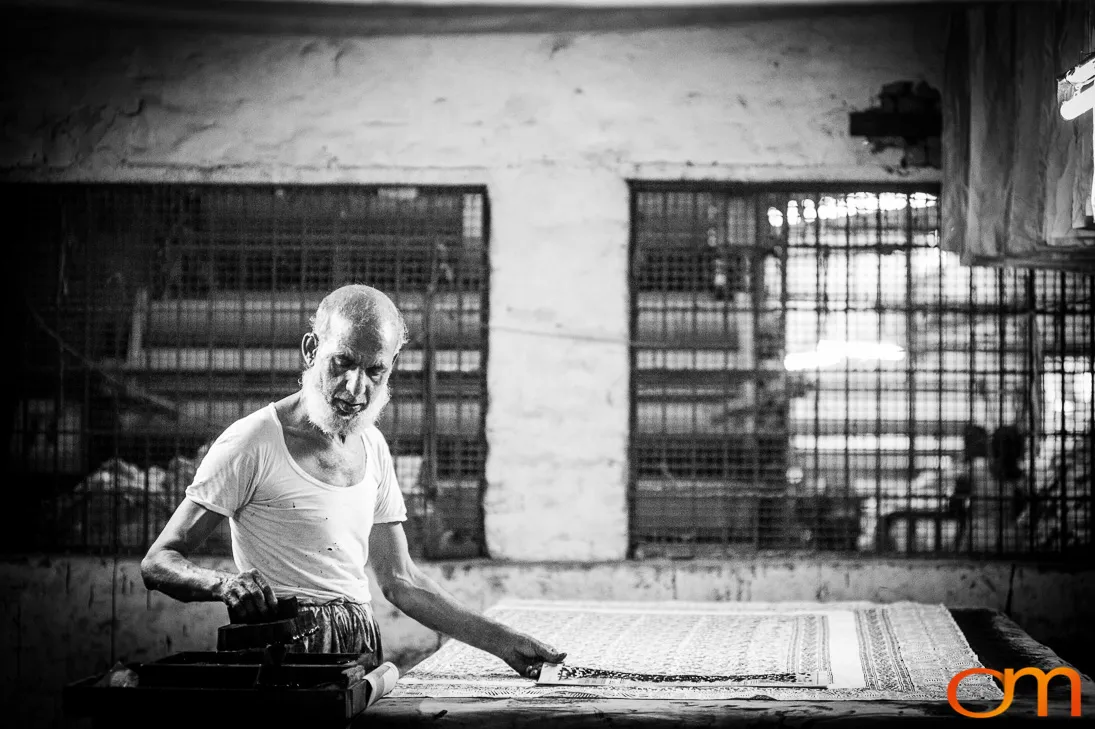
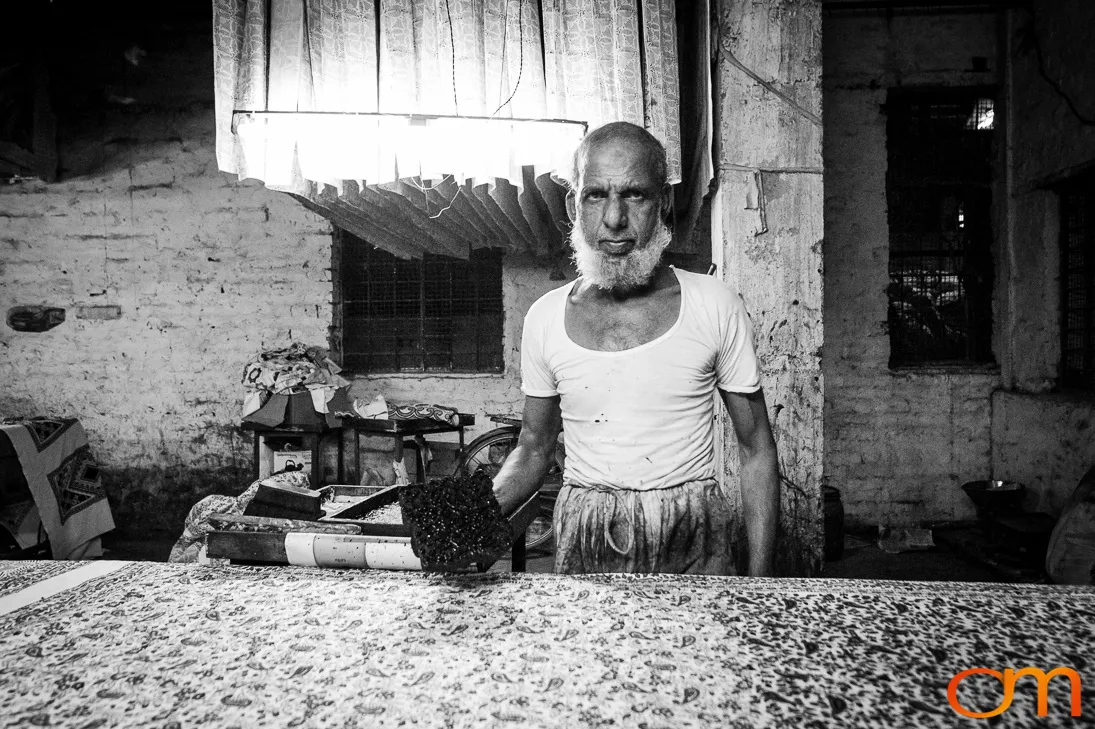
Bearded printer standing at his table holding a carved block, in black and white

Meerut

Textile Production and Hand Block Printing in Meerut, India

April 2016

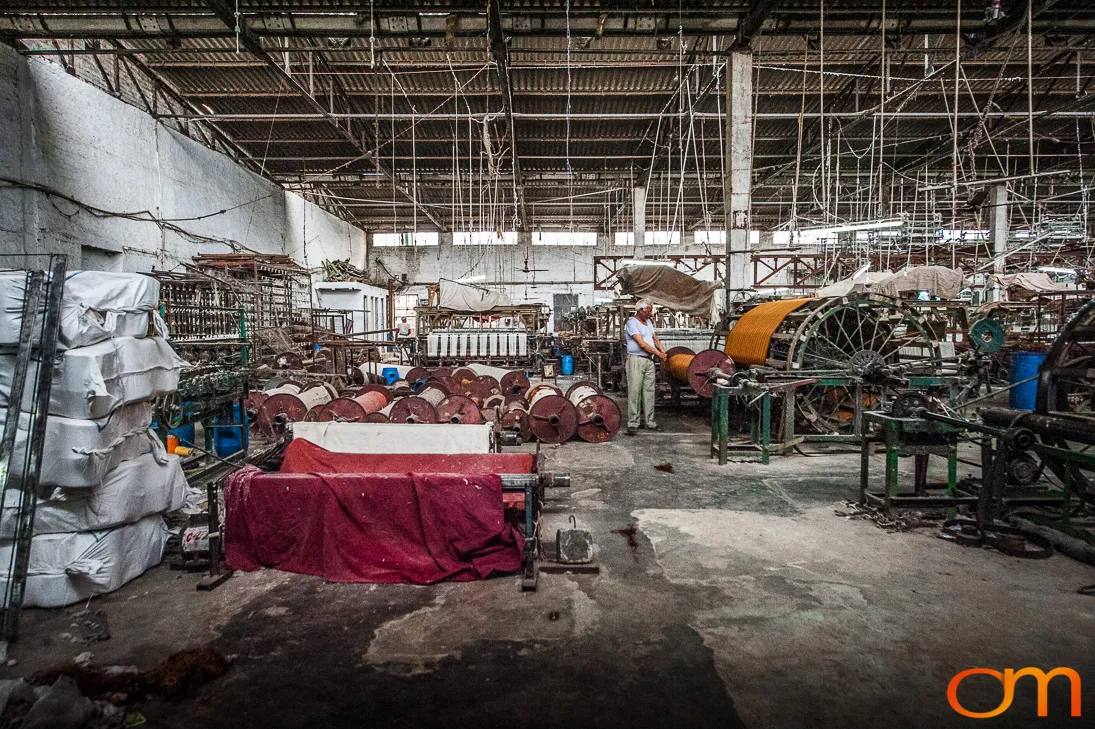
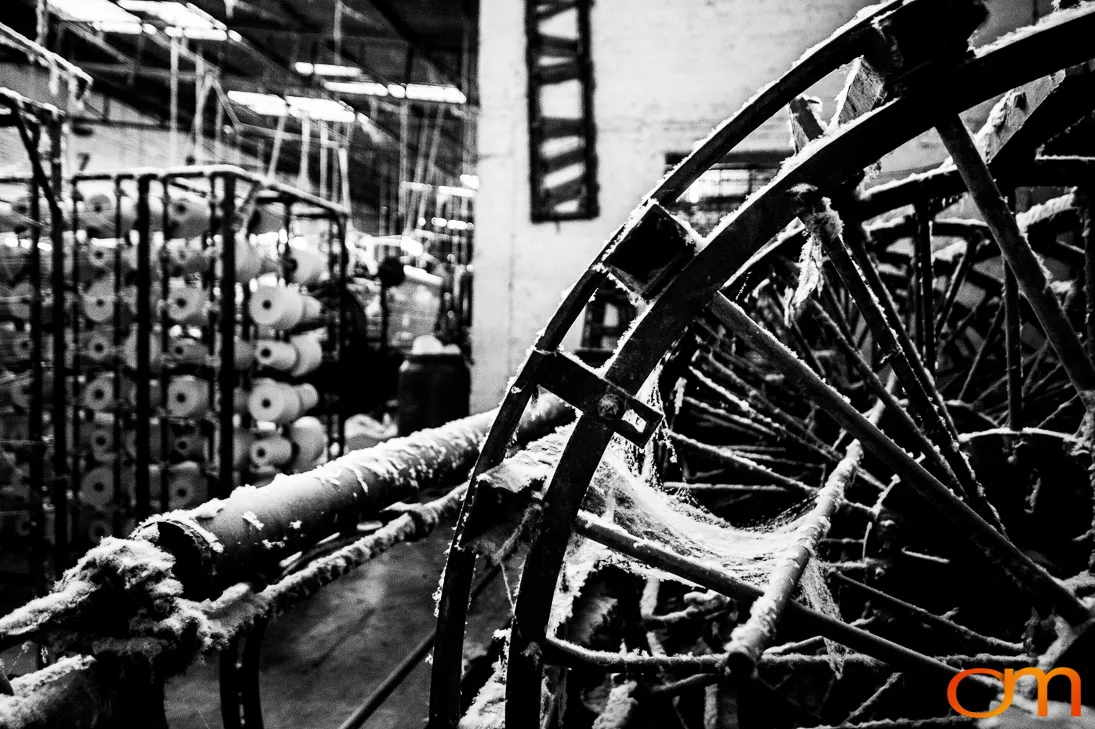
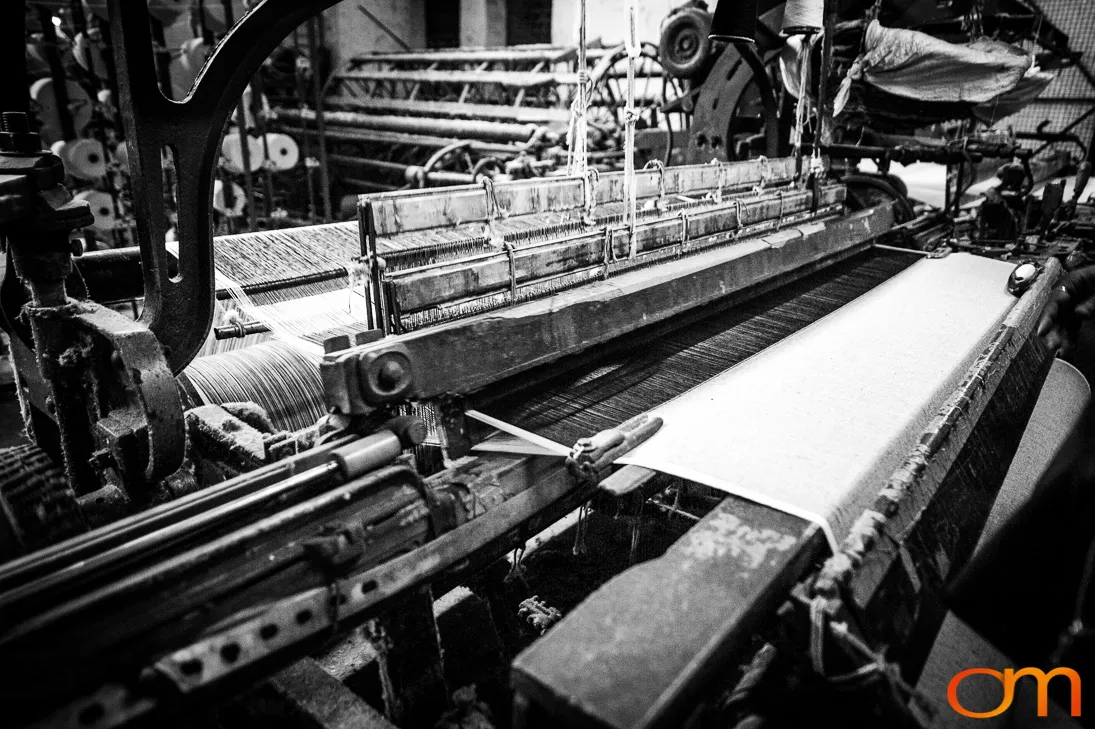
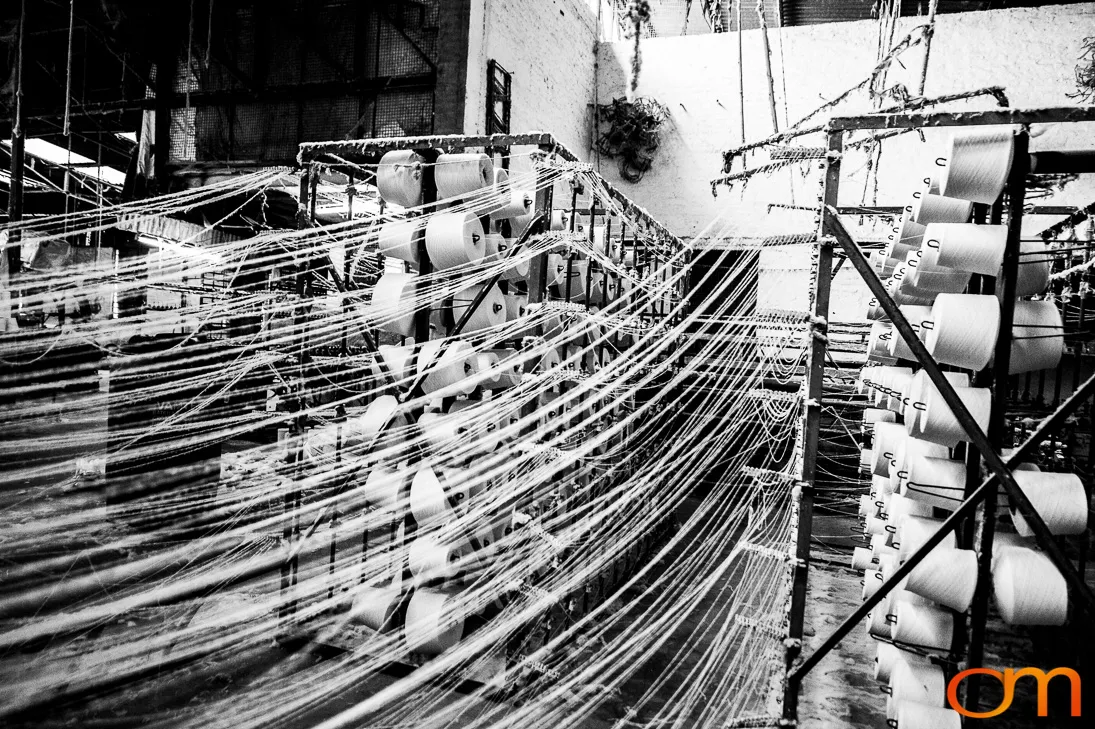
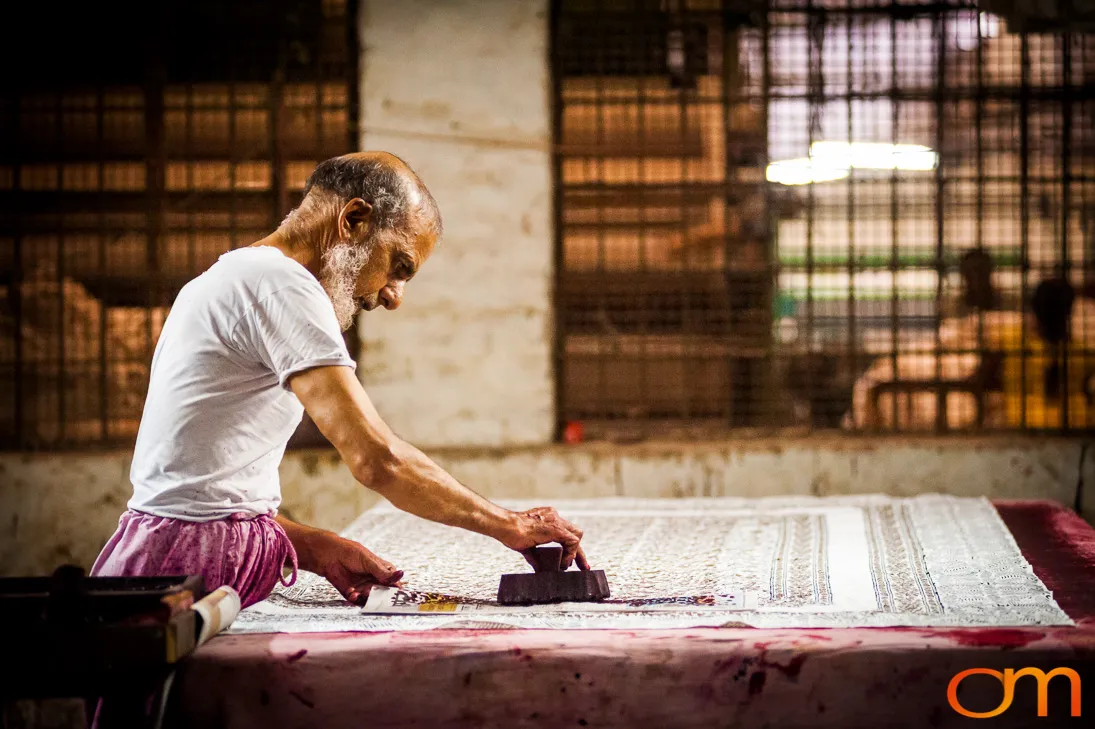
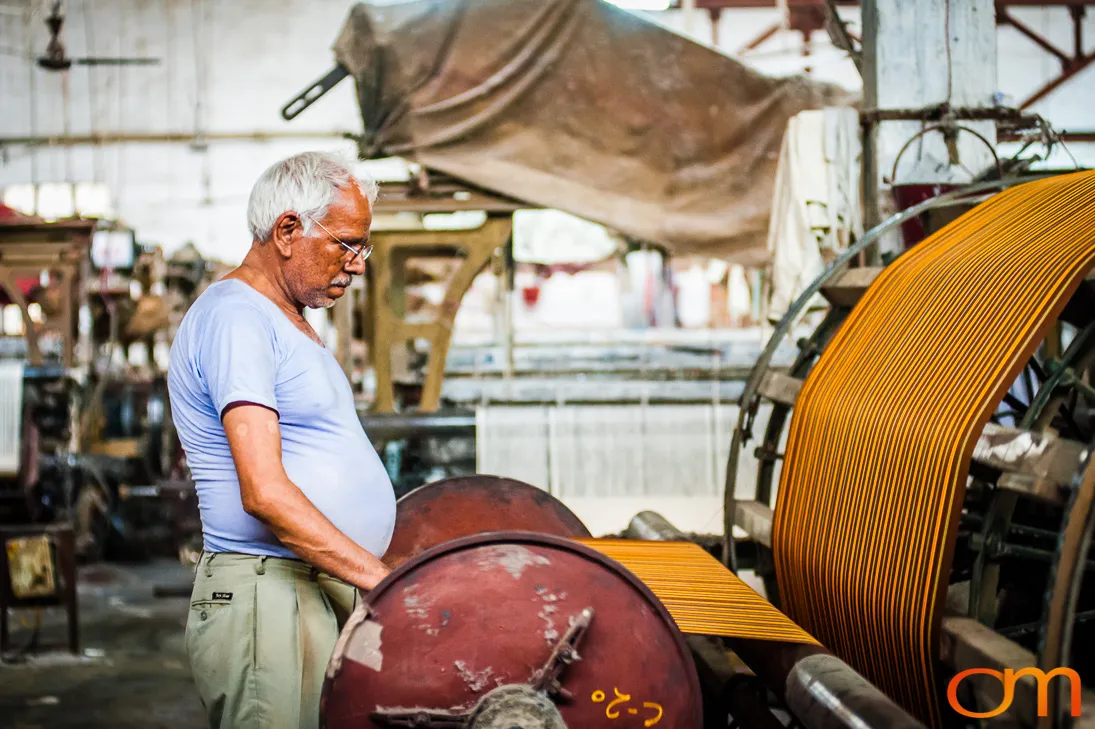
Photographed in Meerut in 2016, this series documents several stages of textile production within a working industrial and craft environment. The photographs show yarn arranged on large frames, mechanical textile-processing equipment, rolls of fabric, sewing stations, finished textiles, and an artisan applying a repeating pattern to cloth with a carved block.

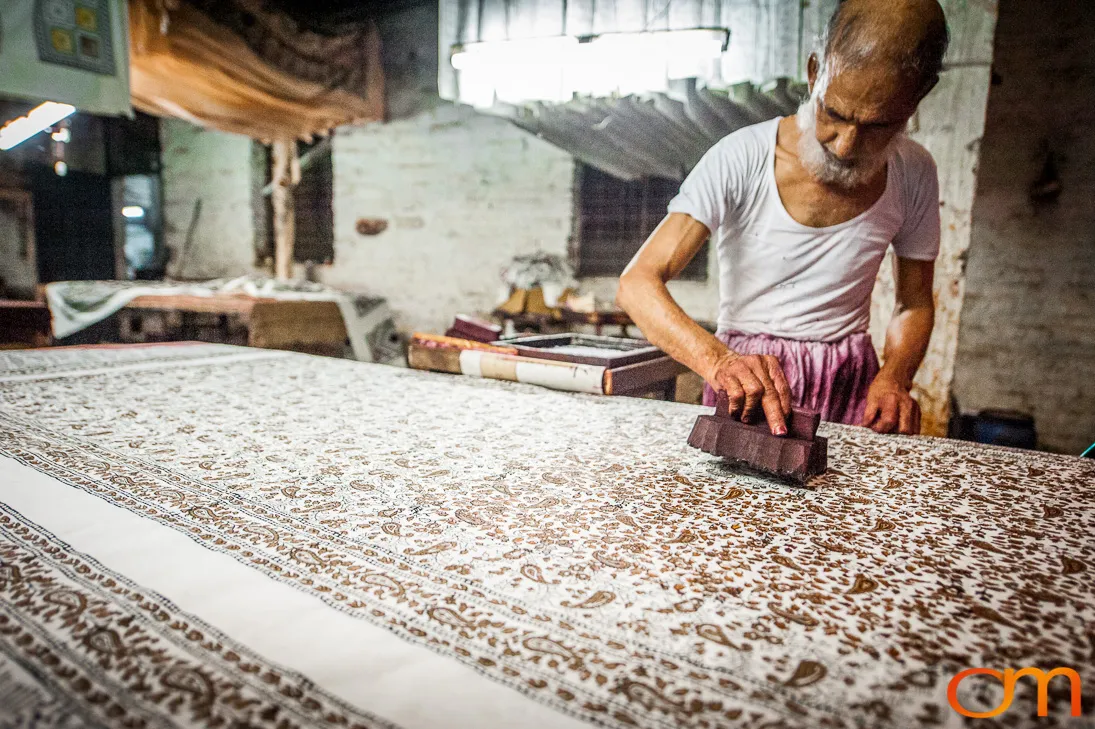
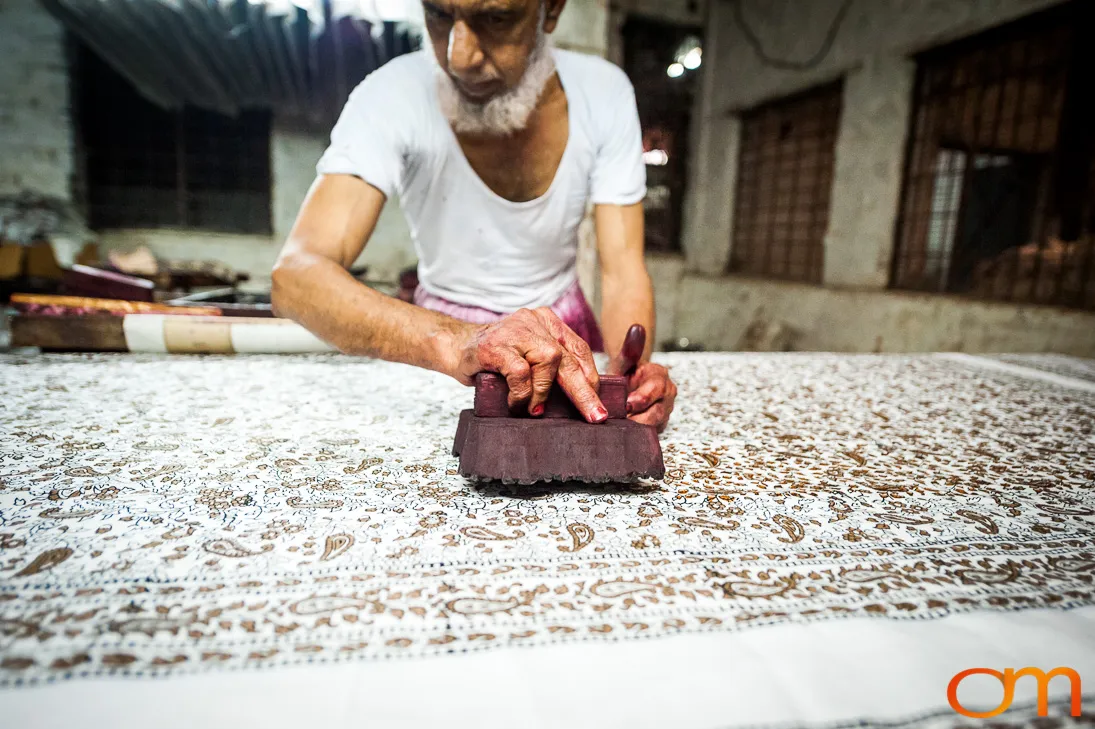
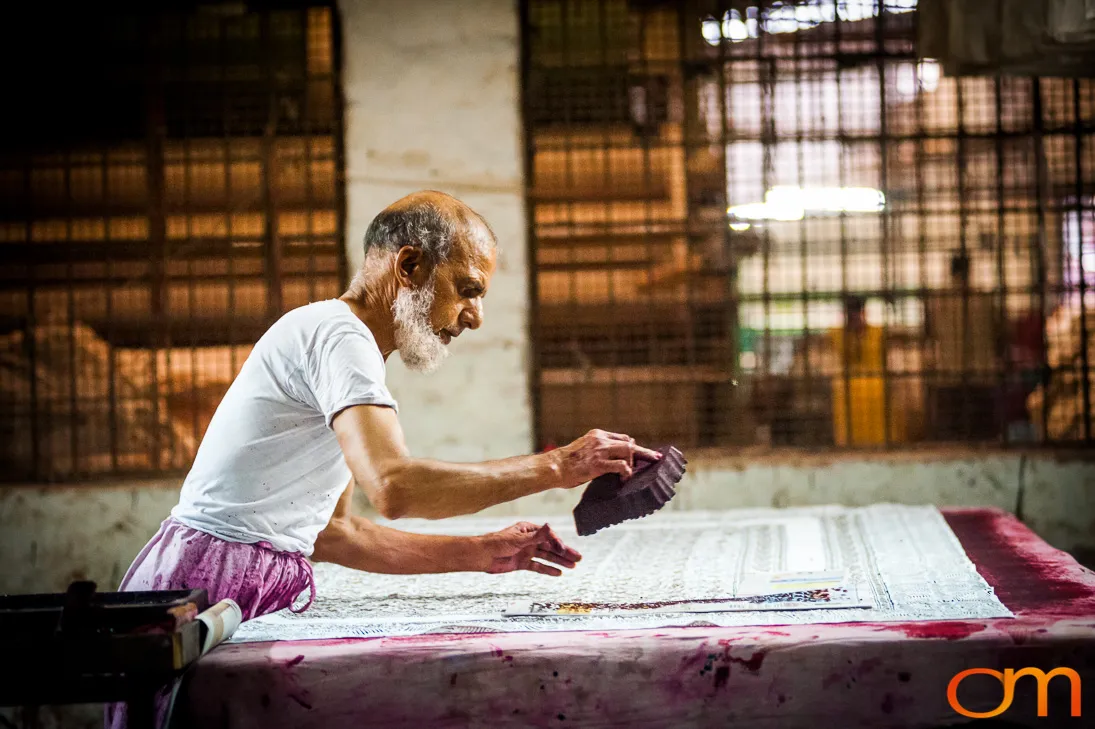
Hand block printing is a relief-printing technique. A pigment, dye, mordant, or resist paste is applied to the raised surface of a carved block and transferred to fabric through pressure. Multicolored patterns may require several blocks, with separate blocks used for outlines and individual areas of color. Each impression must be positioned carefully so that the design continues across the cloth with minimal visible interruption.

There is no single process used for every block-printed textile. Methods vary according to the fabric, colorant, design, workshop, and regional tradition. A typical production sequence may include:

  • Washing or preparing the cloth to remove starch, oil, and dirt
  • Stretching and securing the fabric on a printing table
  • Applying pigment, dye, mordant, or resist paste with one or more carved blocks
  • Drying, steaming, washing, or otherwise fixing the printed color
  • Rolling, cutting, sewing, and preparing the finished fabric for sale

The photographs do not establish the type of wood used for the blocks, the fiber content of the cloth, the dye chemistry, or whether the workshop followed a named regional printing tradition. These details should remain unspecified unless workshop records or additional field notes become available.

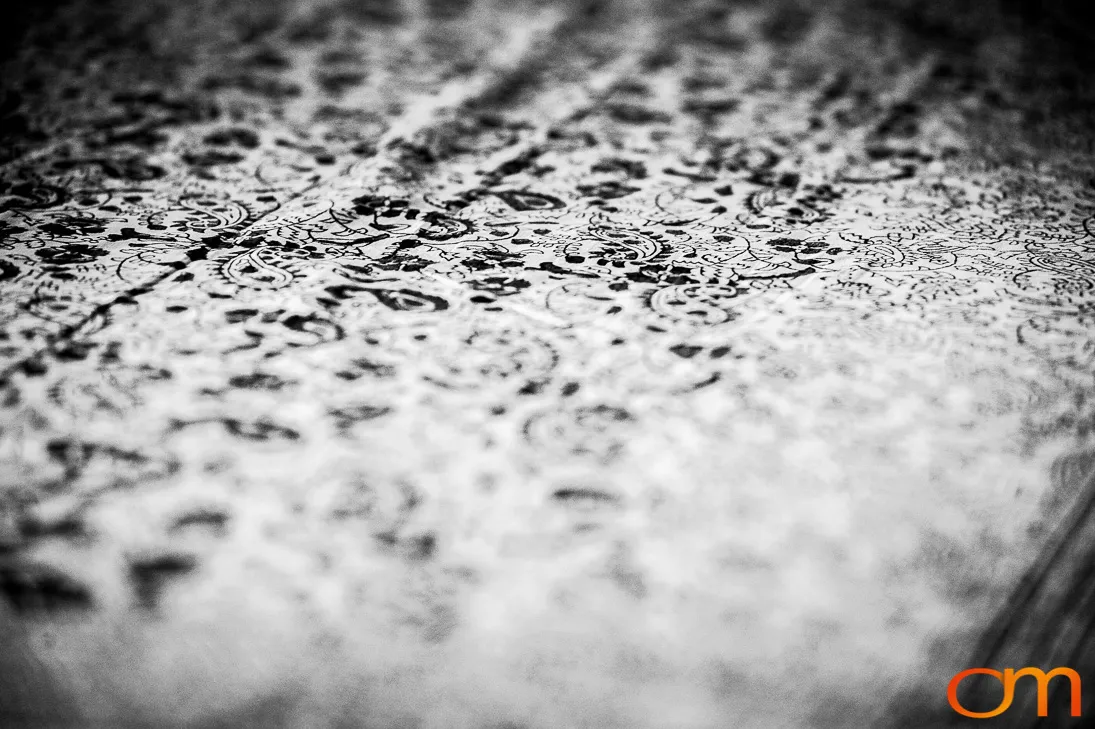
The curved, droplet-shaped motif commonly known in English as paisley is often described in South Asian textile traditions as a buta, boteh, or related regional term. The English name developed through the Scottish town of Paisley, which became a major nineteenth-century manufacturing center for textiles inspired by Kashmir shawls.

Together, the photographs document the relationship between manual craftsmanship and mechanized production. Skilled hand printing, industrial machinery, fabric finishing, sewing, and garment preparation operated as connected stages within the wider textile-production process.
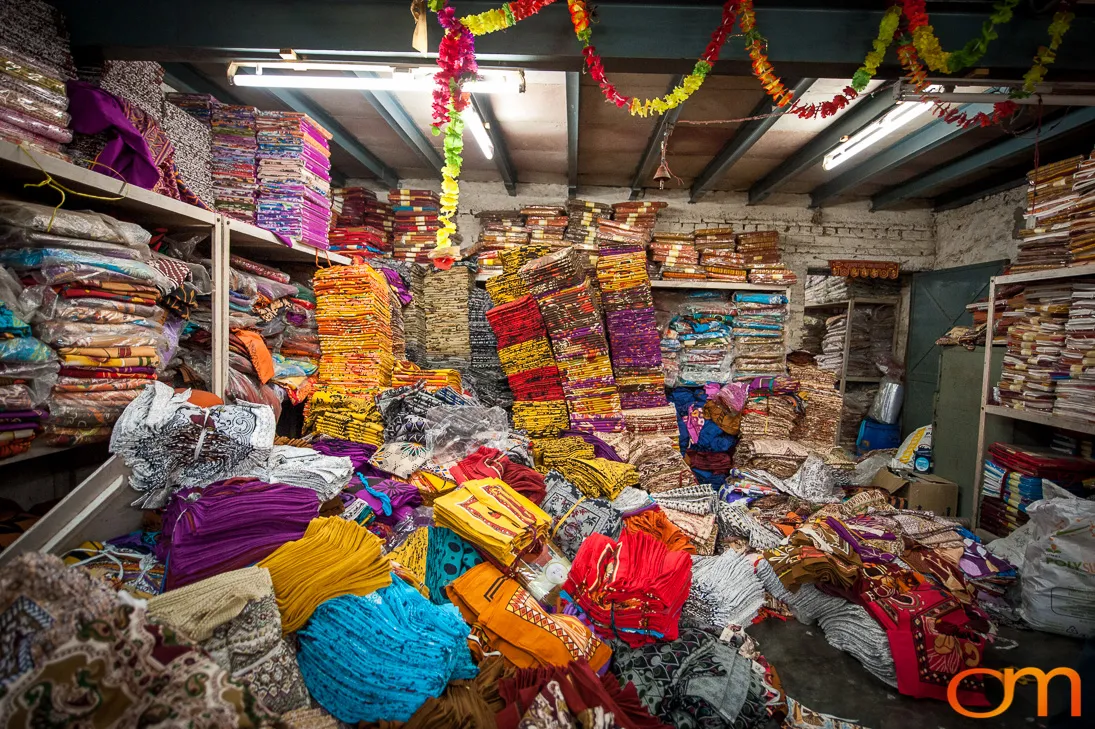
Storeroom piled with stacks of folded printed textiles under paper garlands
Worker in a white vest guiding orange yarn onto a red winding drum
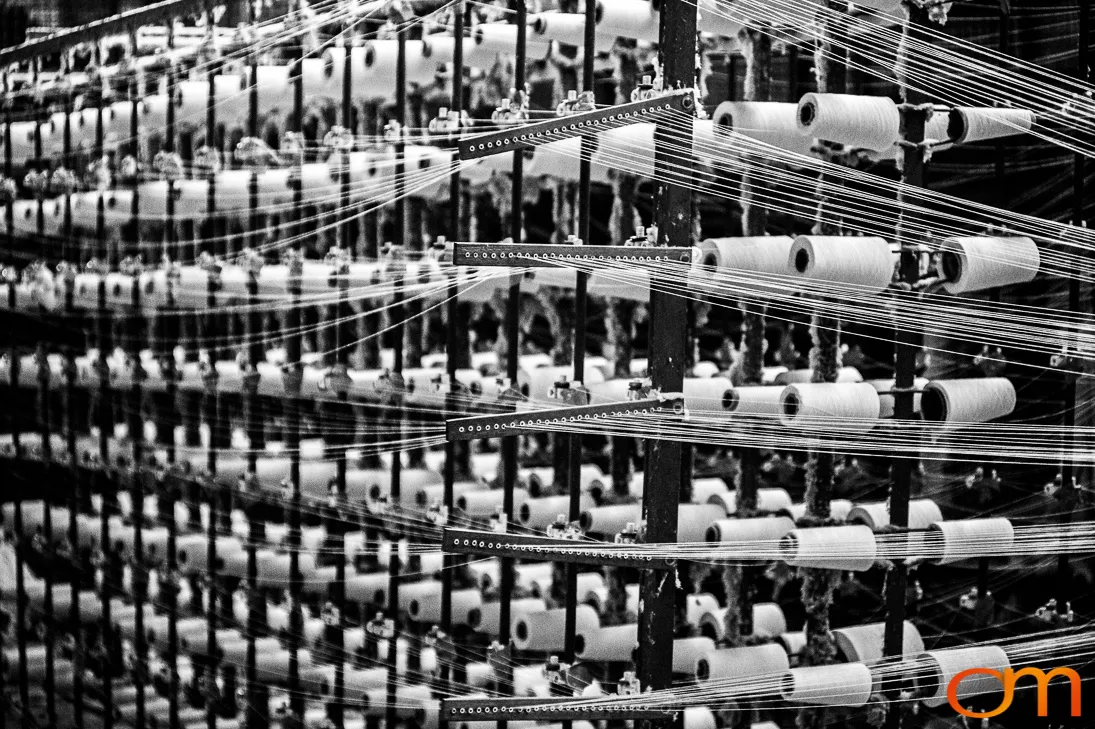
Rack of yarn cones with threads streaming across the frame, in black and white
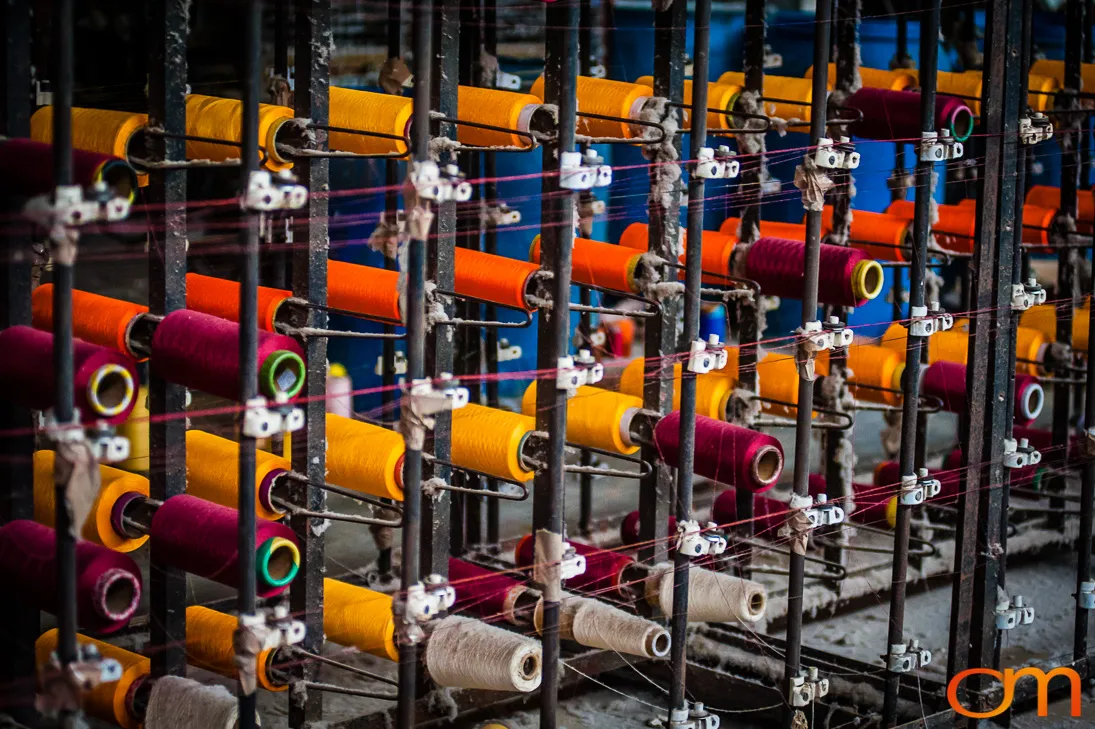
Cones of yellow, orange and magenta yarn stacked on a metal creel
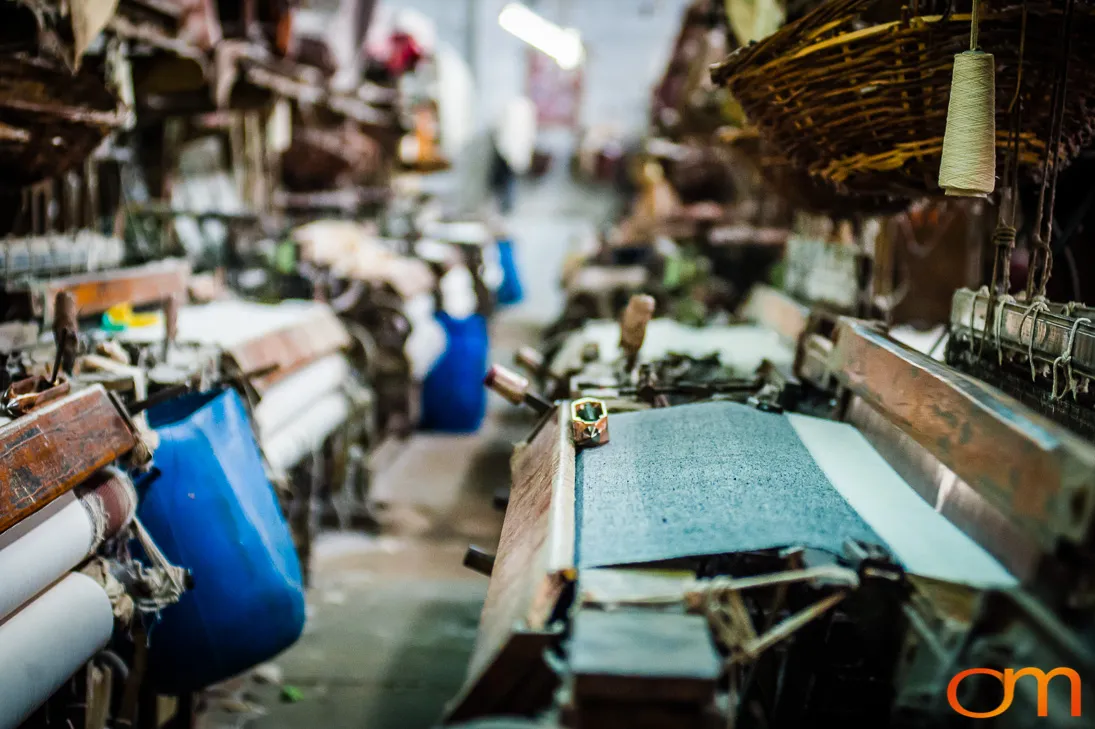
Narrow aisle between textile machines, with cloth and blue plastic drums
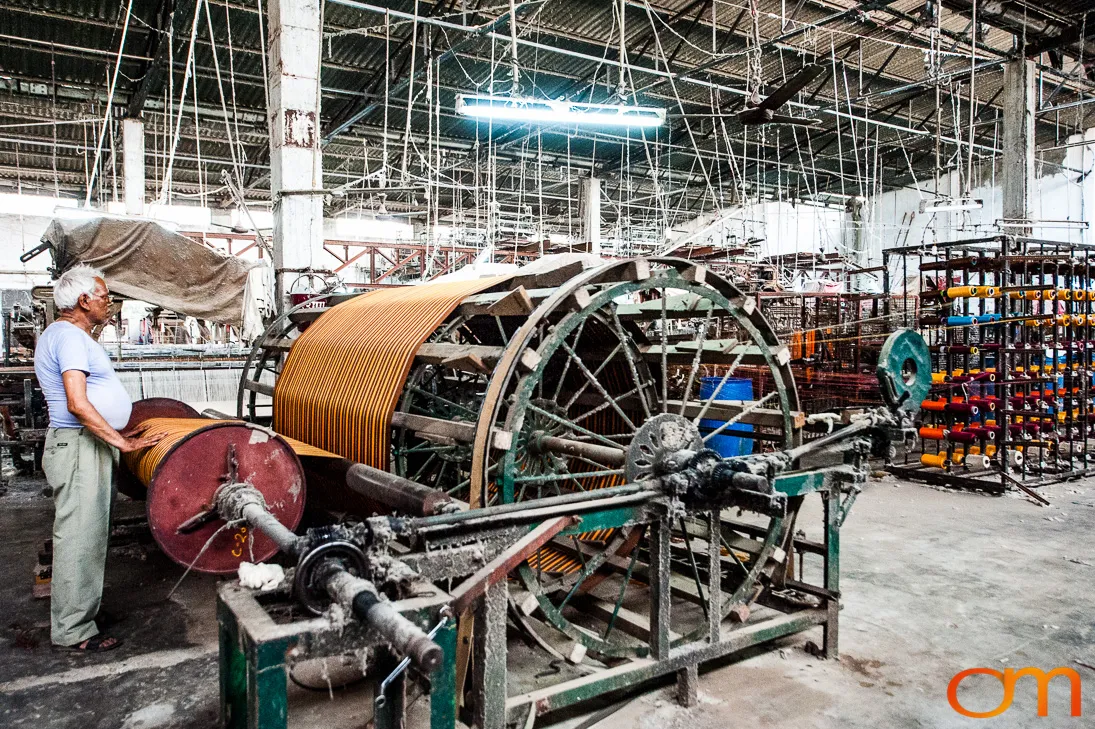
Man beside a large spoked winding machine wound with striped orange yarn
Factory hall with rows of red beams, bagged goods and a lone worker
Cotton fluff clinging to a large spoked machine wheel, in black and white
Woven cloth emerging from the reed of a mechanical loom
Threads fanning out from racks of cones across a warping frame
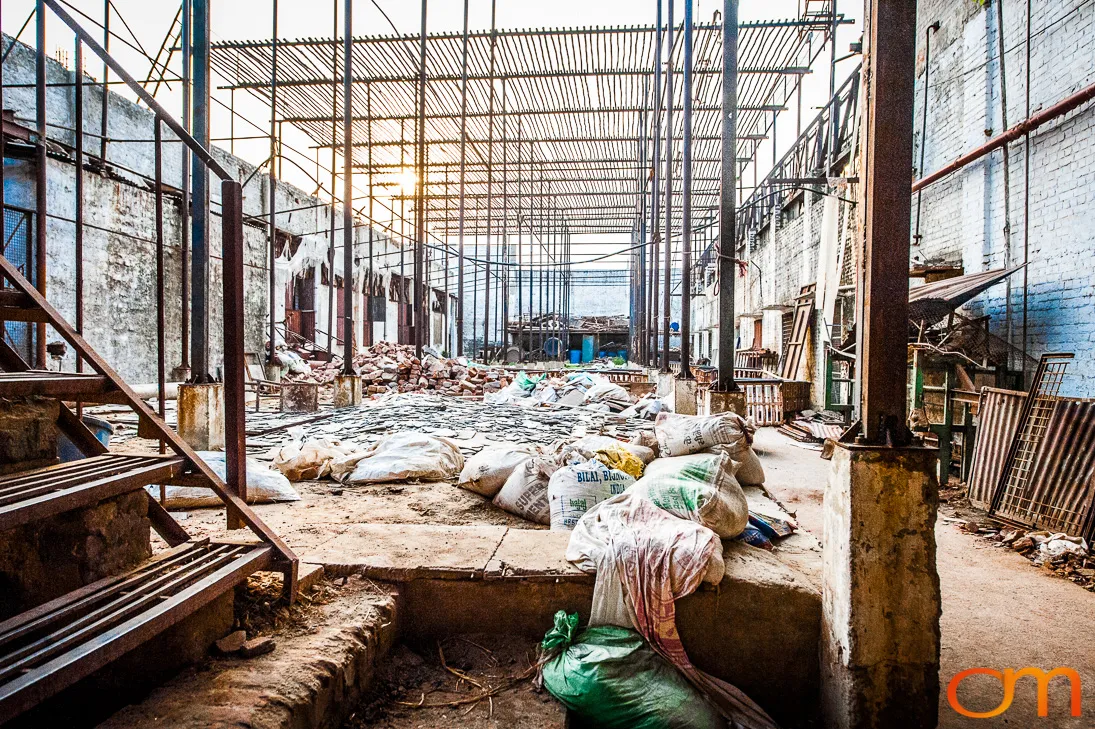
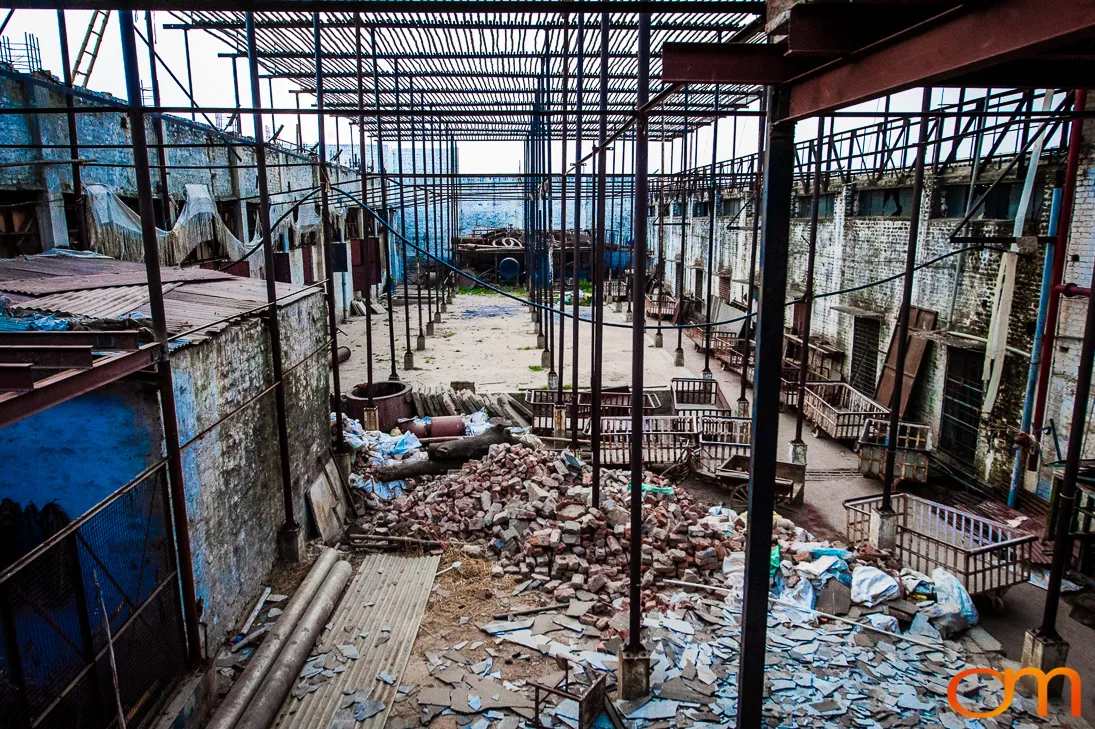
Roofless industrial hall with bare steel framing, rubble and stacked sacks
Artisan pressing a carved block onto cloth covered in paisley motifs
Bearded printer standing at his table holding a carved block, in black and white
Dye-stained hands pushing a wooden block down onto printed fabric
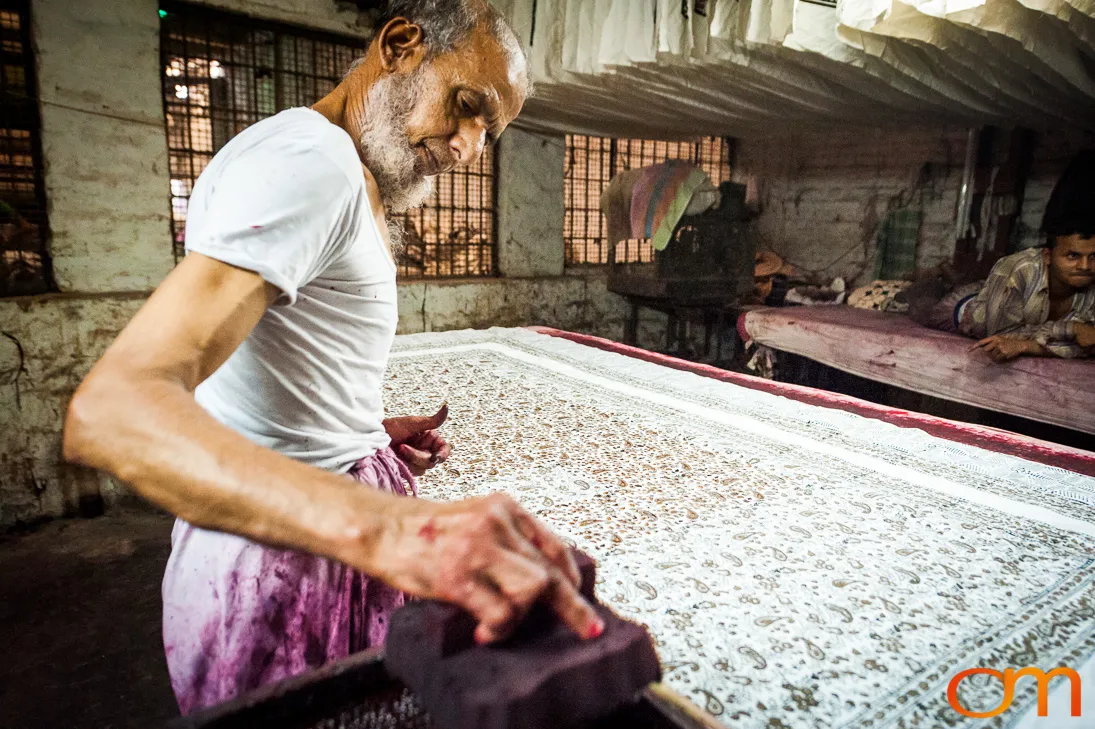
Printer working along a length of paisley cloth as another man watches
Printer in a white vest pressing a carved block onto patterned cloth at a long printing table
Block printer leaning across a dye-stained table to line up his next impression on the cloth
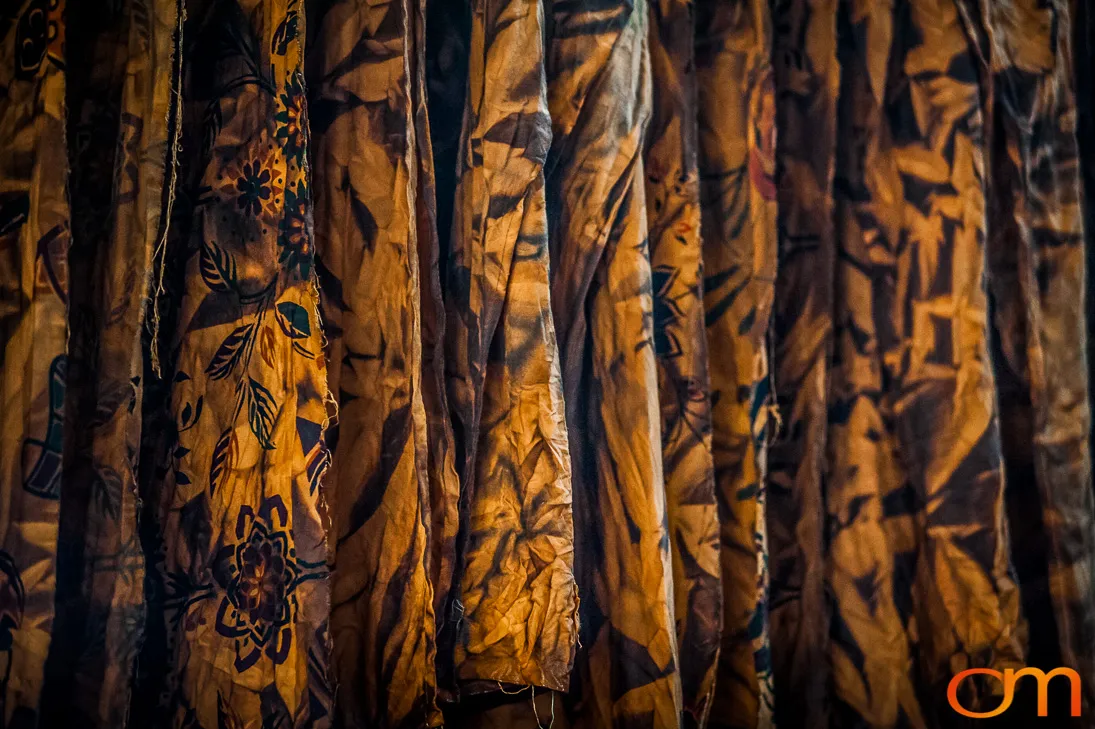
Printed lengths of cloth with floral and leaf motifs hanging in warm workshop light
Dense paisley pattern printed across cloth stretched on a table
Disused mill yard of steel columns and brick rubble between weathered workshop buildings
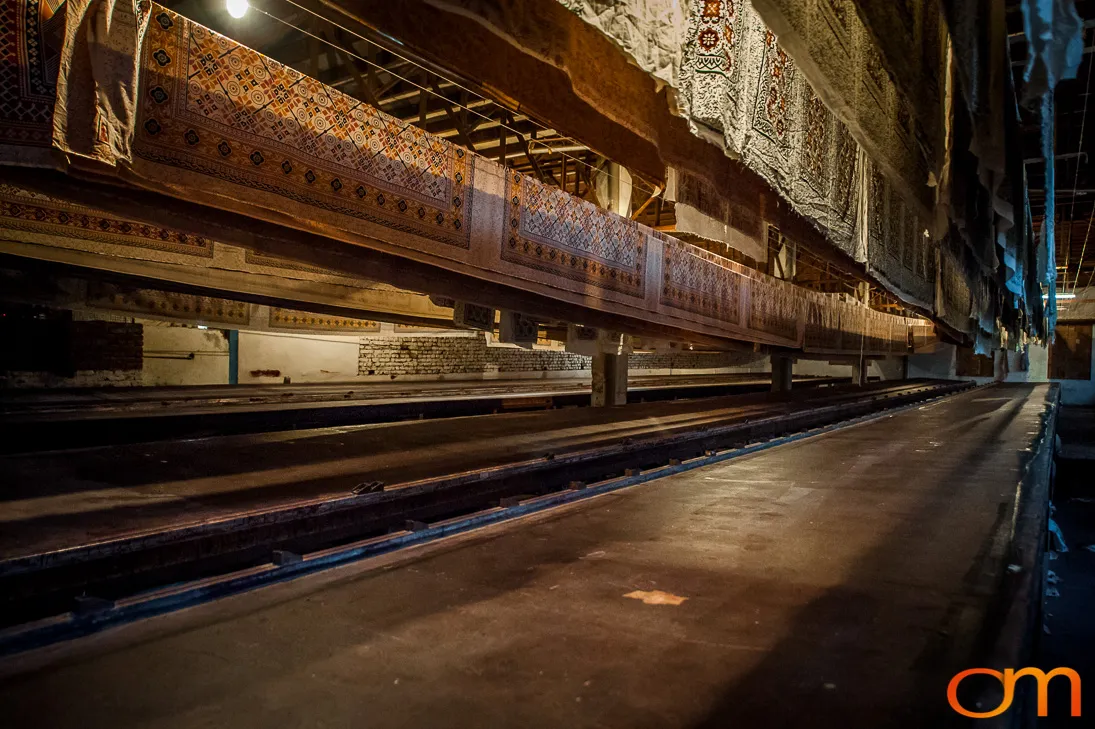
Patterned fabrics drying on overhead rails above long printing tables in a dim hall
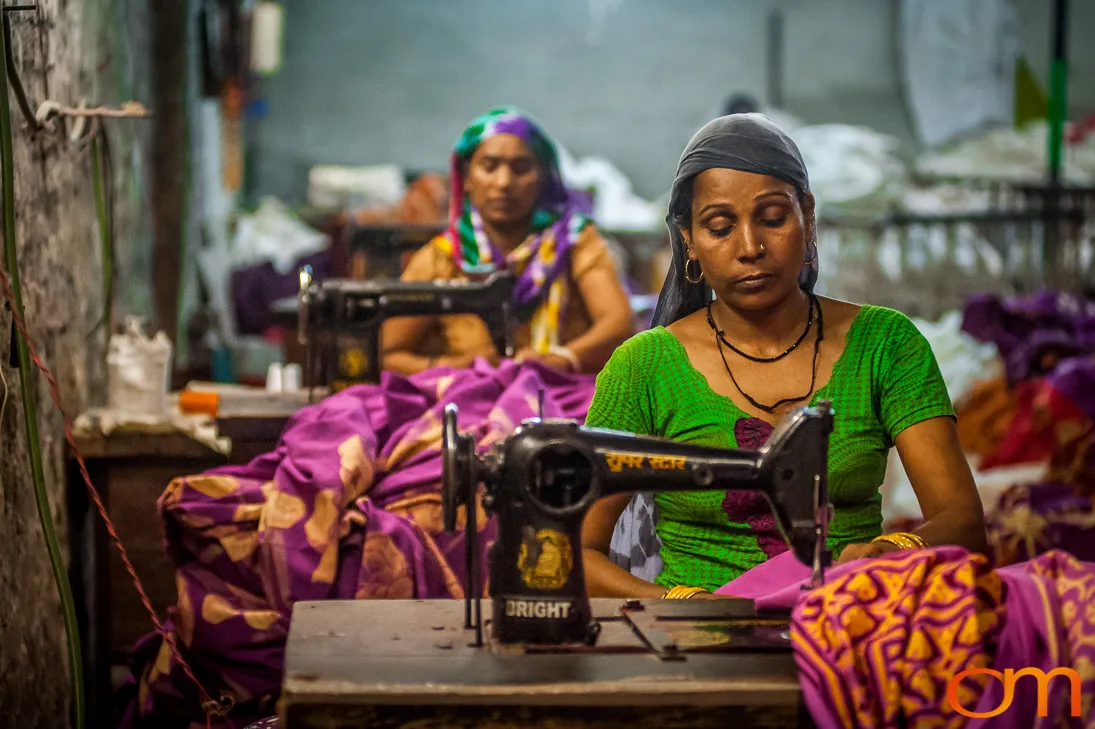
Two women stitching purple and gold fabric at hand-cranked sewing machines
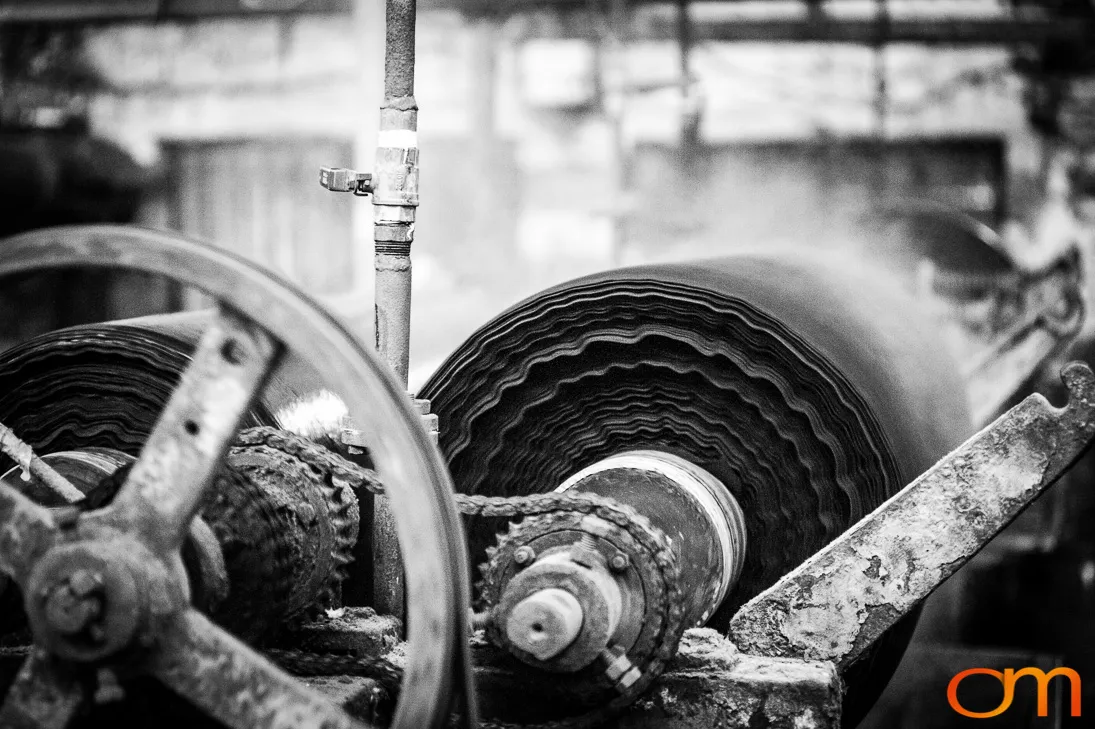
Chain-driven roller drawing pleated fabric through a machine as steam drifts past
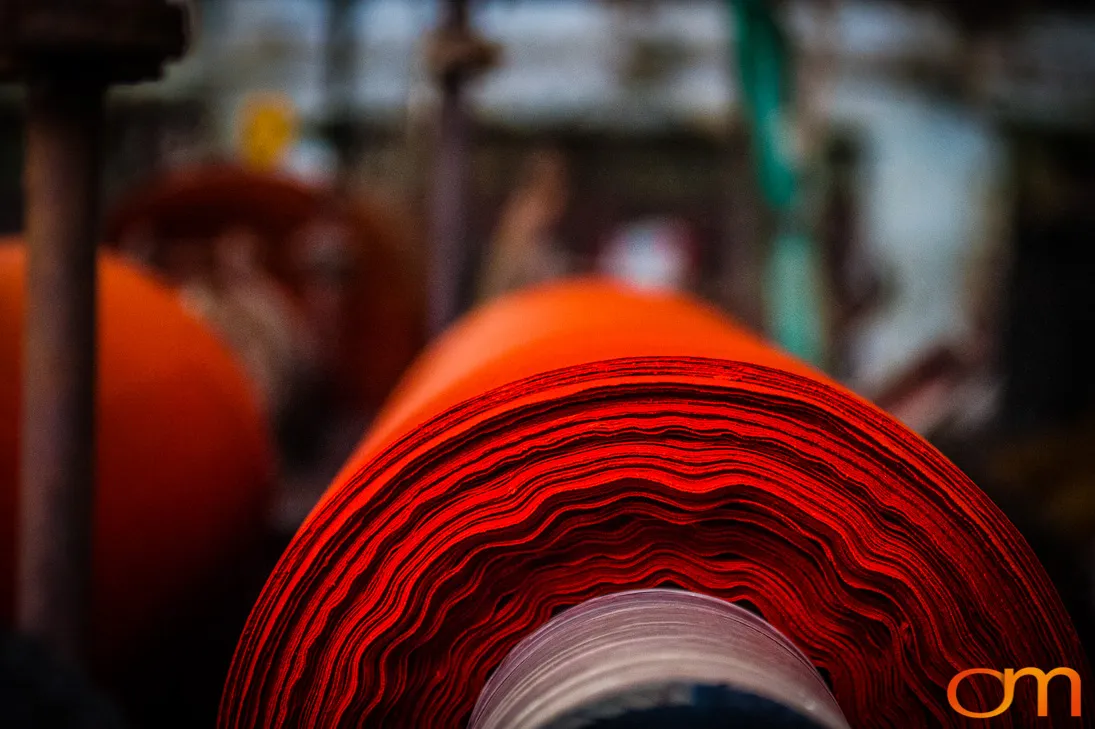
Bright red cloth wound in tight ridged layers on a roller
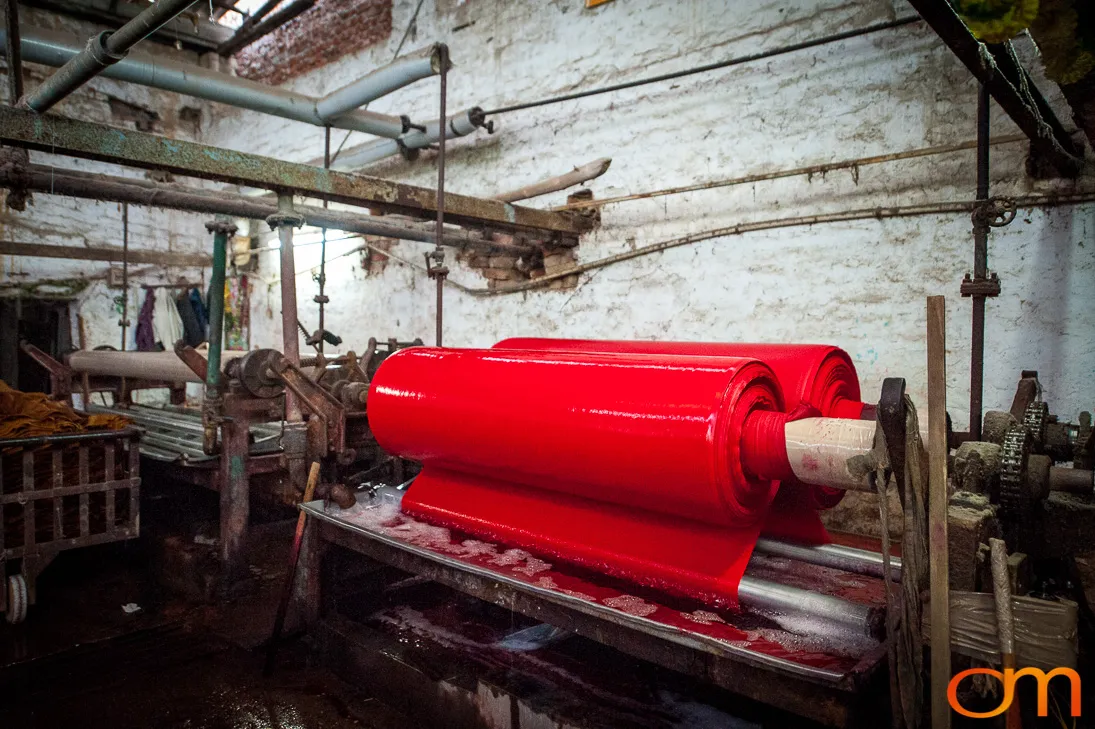
Wet scarlet fabric rolling onto a drum in a whitewashed dyeing room
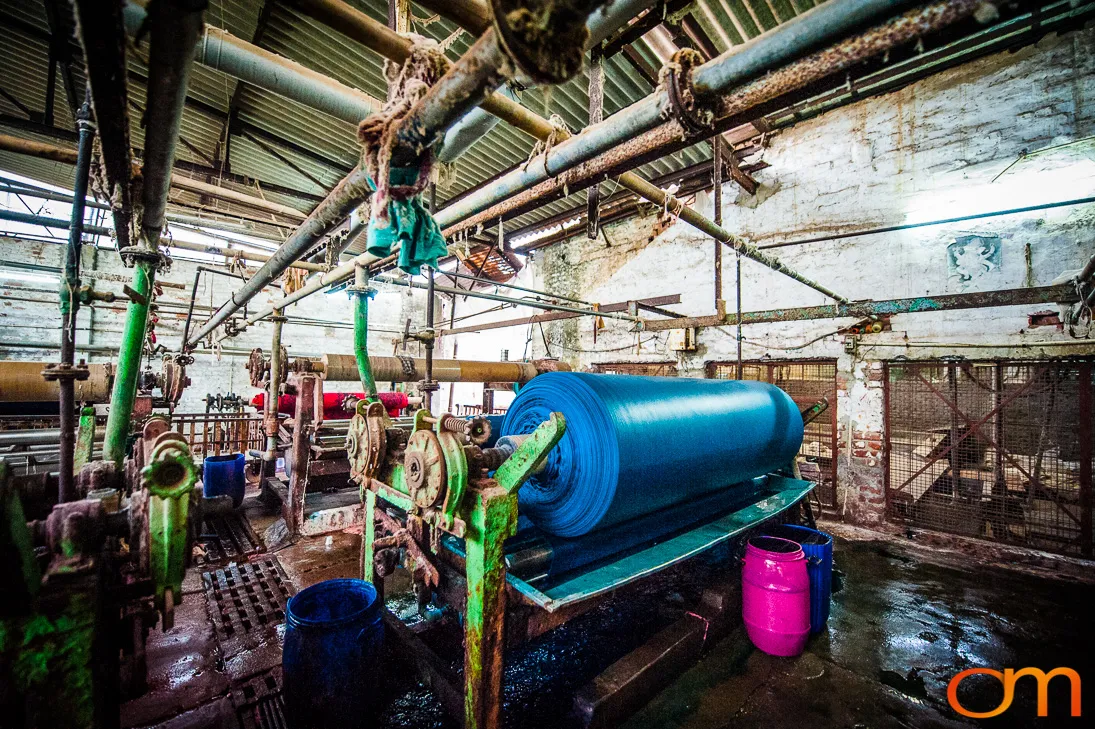
Teal fabric on a roller in a dye-splashed workshop with pipes and plastic drums
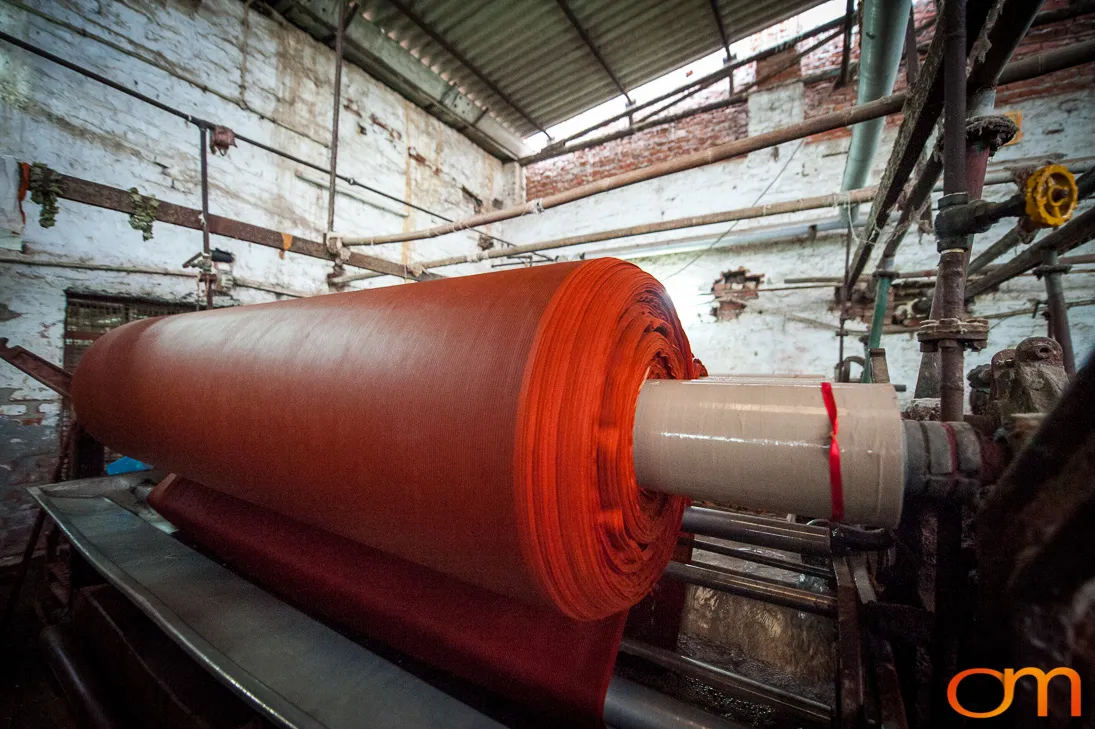
Huge roll of orange-red cloth on machine rollers under a corrugated metal roof
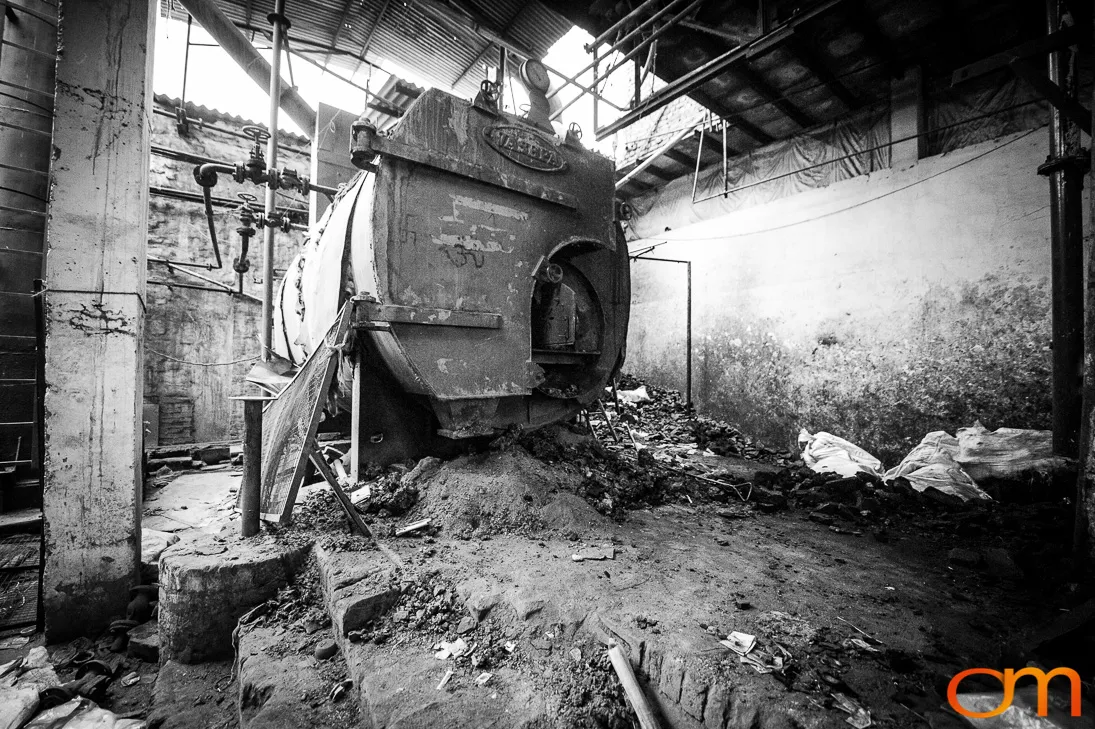
Soot-blackened industrial boiler standing over heaps of ash and debris
Artisan lifting a carved wooden block above the printed cloth to place the next repeat
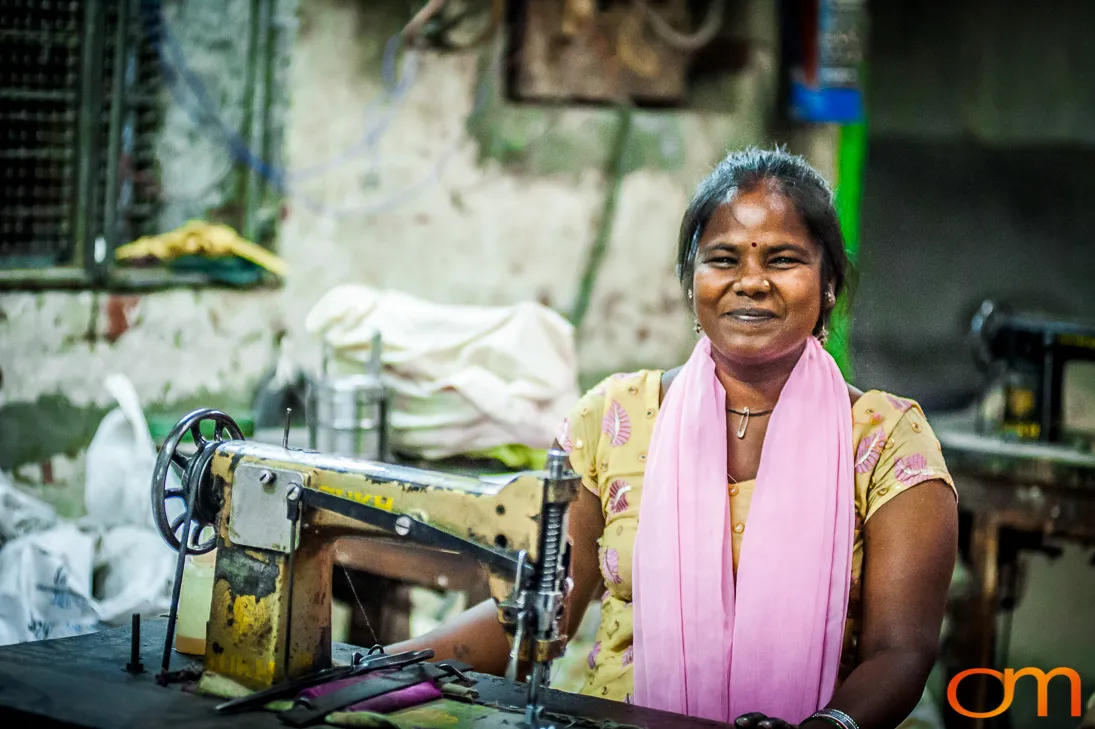
Seamstress in a yellow blouse and pink scarf smiling beside her sewing machine

All Stories →

Fact check: Accuracy matters. If something looks incorrect, please suggest a correction.