Falkland Islands
Black-Browed Albatross
December 2008
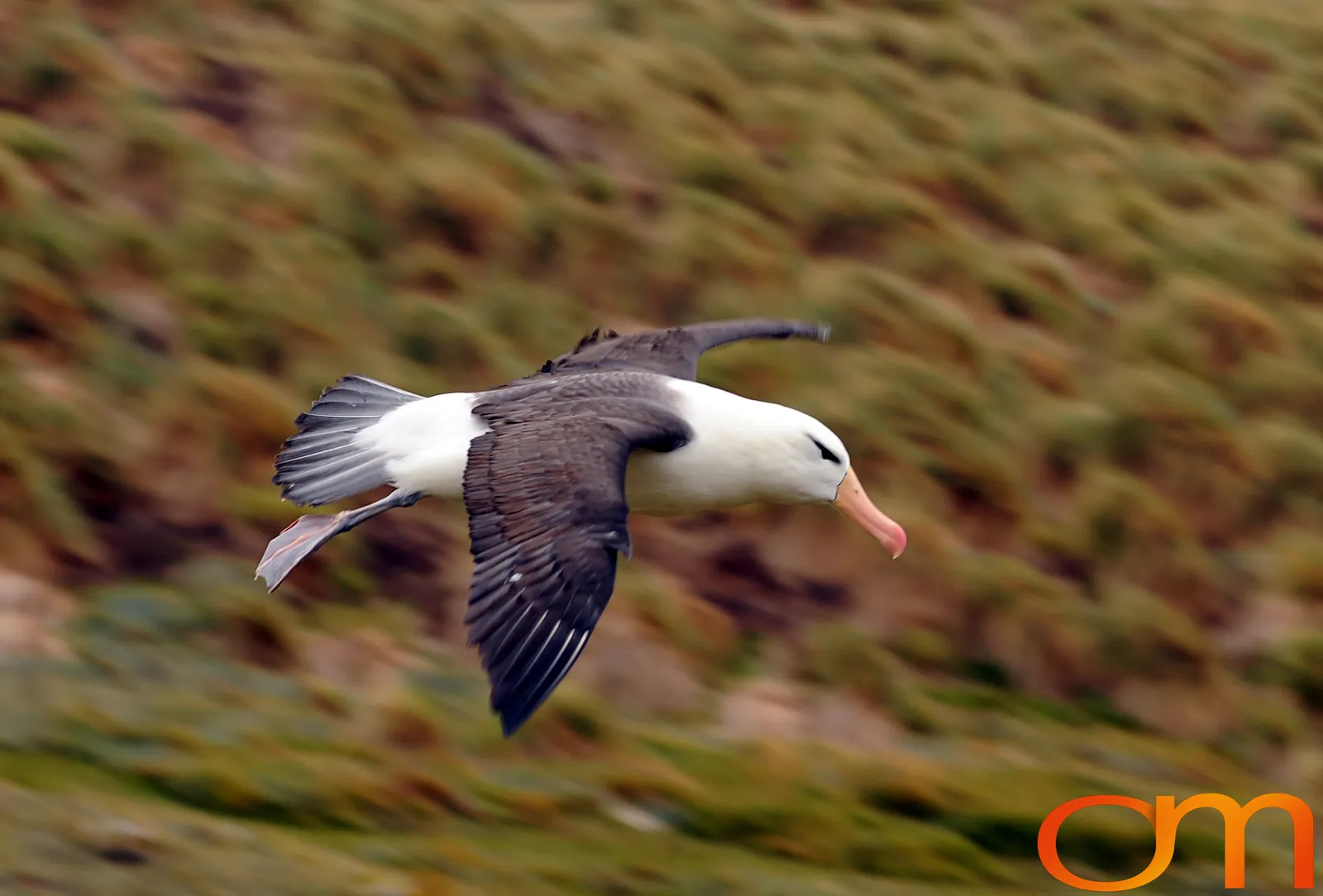
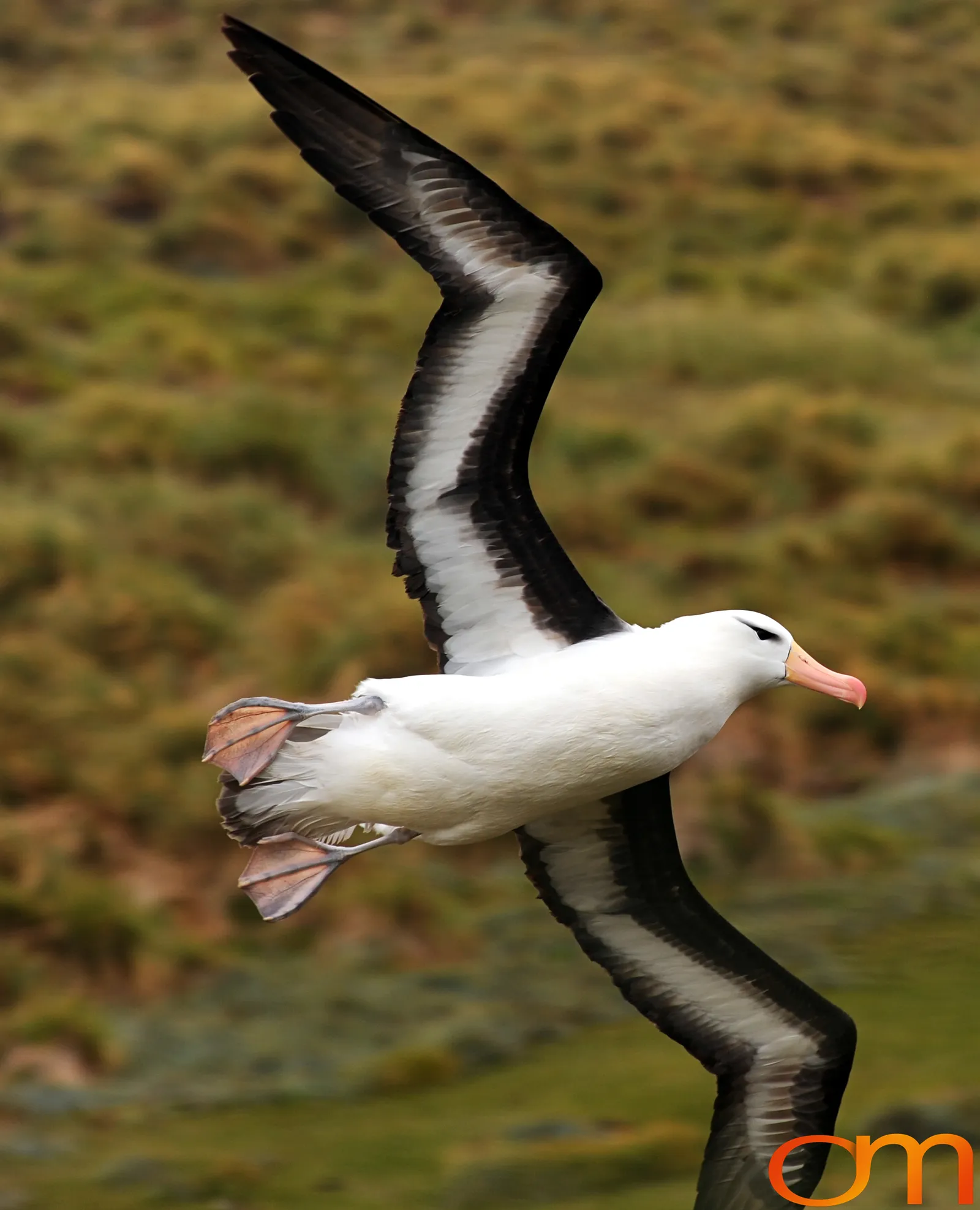
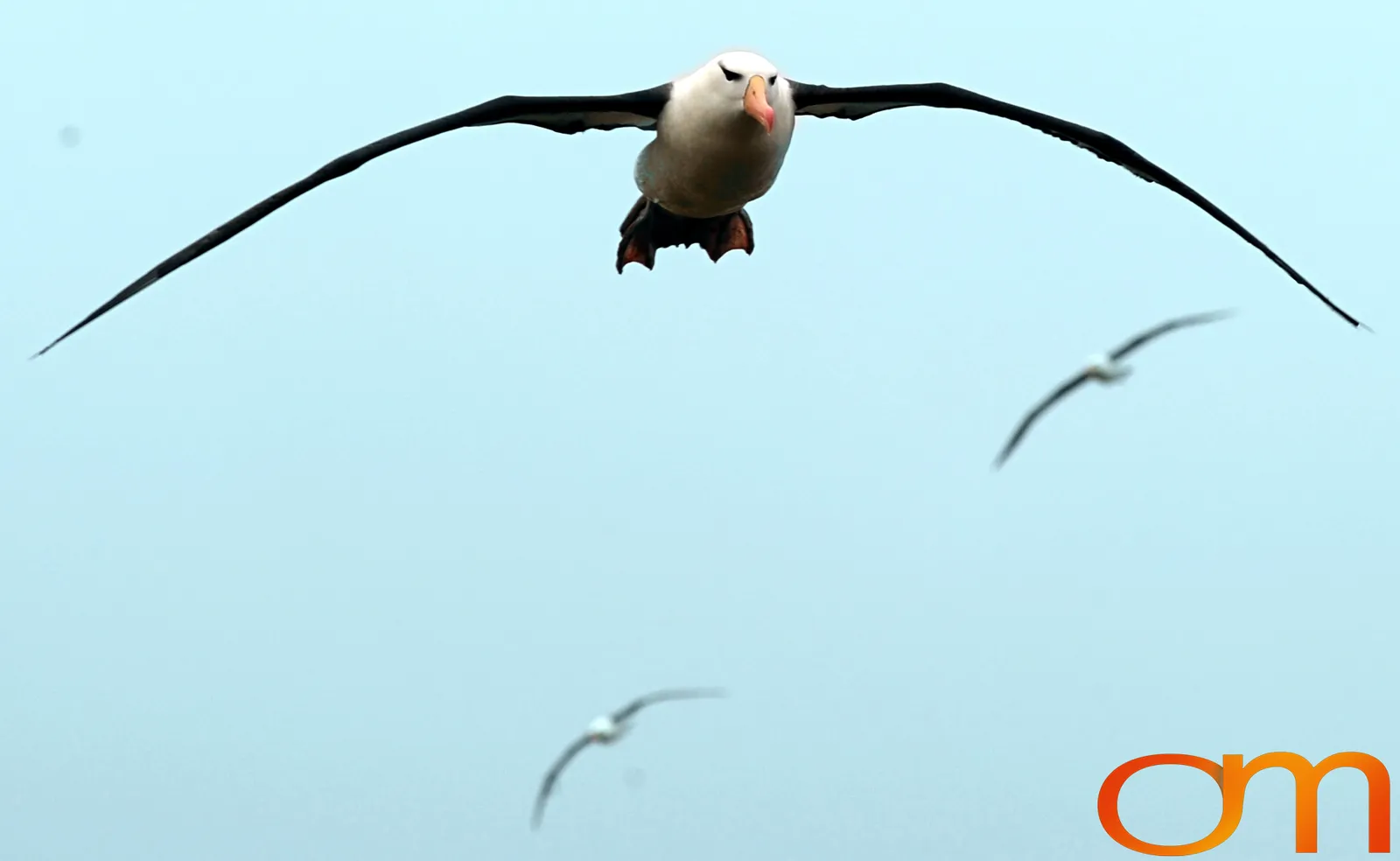
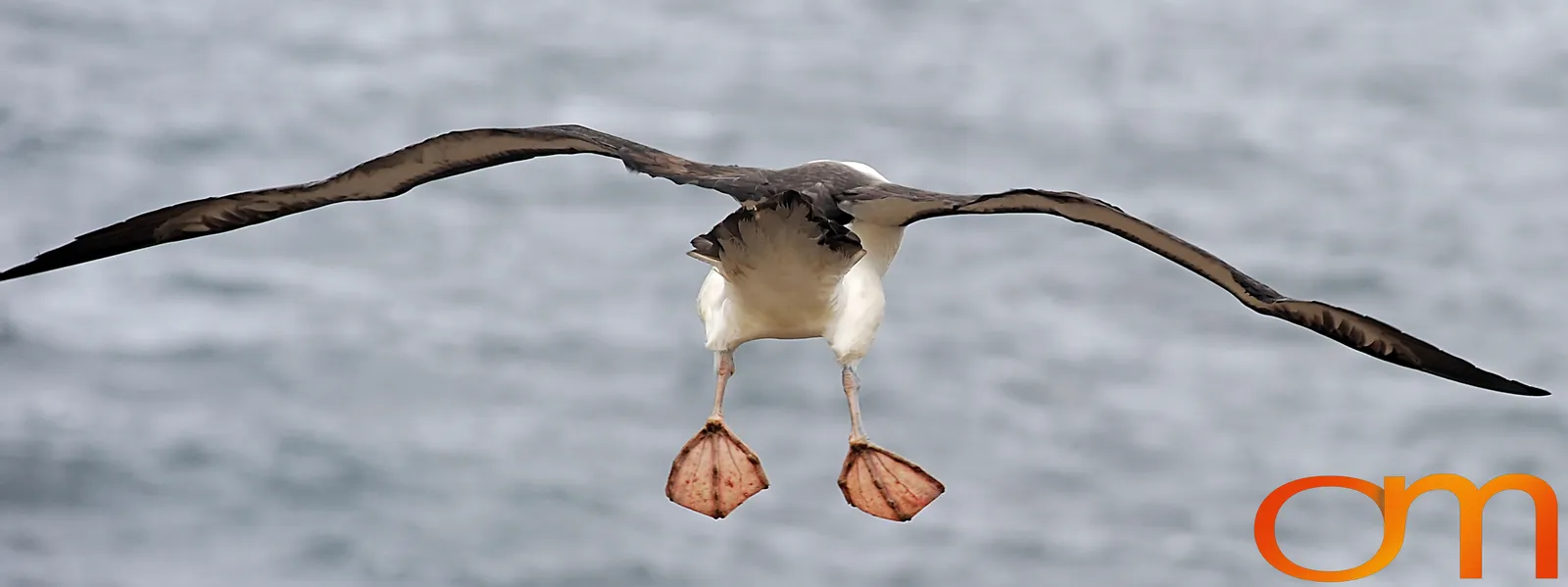
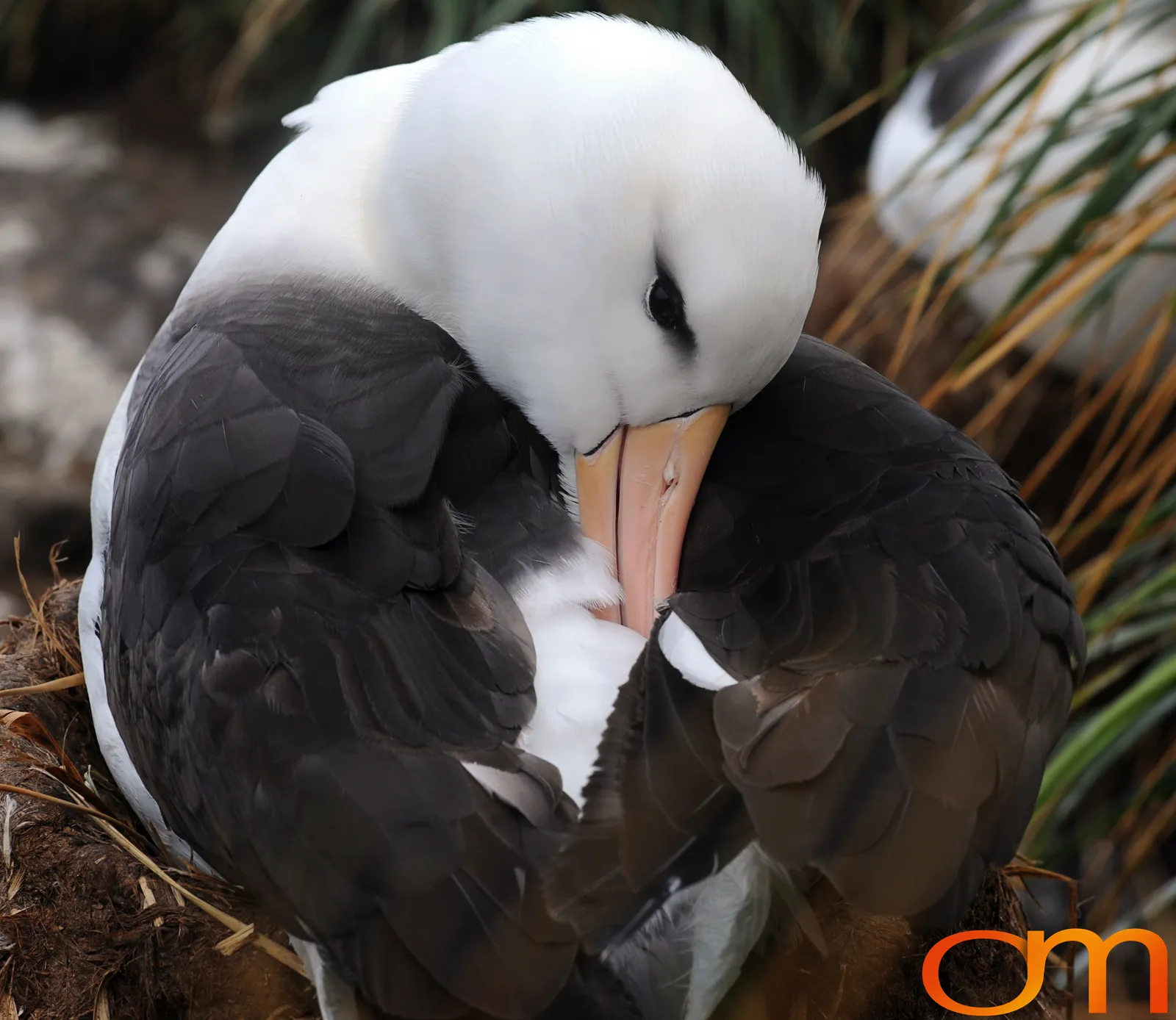
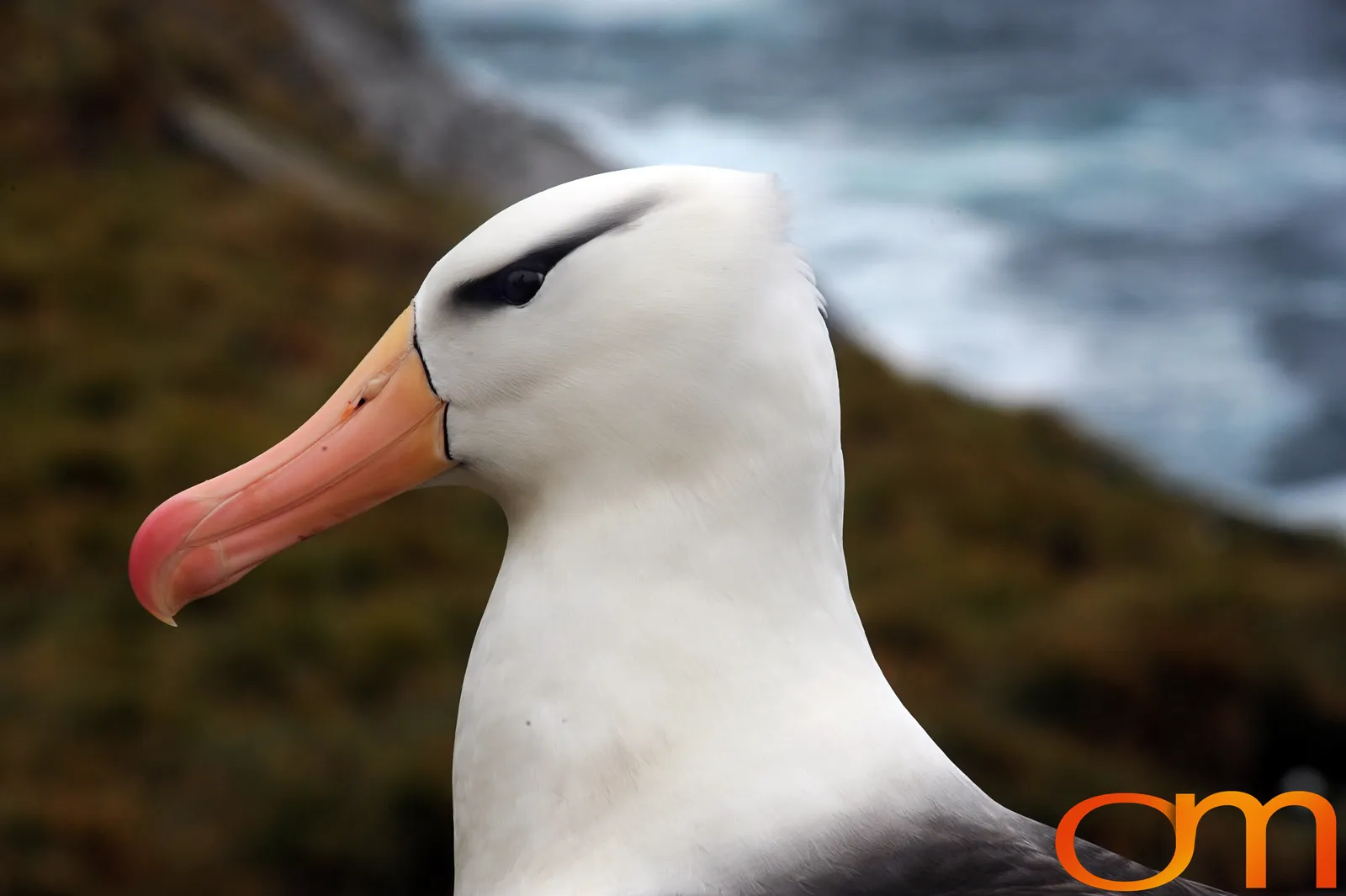
The black-browed albatross, Thalassarche melanophris, is a large seabird named for the dark band of feathers extending above each eye. Adults measure approximately 80–95 centimeters in length, weigh 3–5 kilograms, and have a wingspan of about 2.1–2.5 meters.
The species ranges widely across the Southern Ocean and breeds on subantarctic islands, including the Falkland Islands, South Georgia, and islands off southern Chile. The Falkland Islands support the largest breeding population. Outside the breeding season, these highly pelagic birds spend much of their time at sea, using ocean winds to travel long distances with minimal wingbeats.
Black-browed albatrosses are long-lived and can survive for more than 30 years. They show strong loyalty to their breeding colonies and frequently reunite with the same partner in successive seasons, although individuals may form new pair bonds.
Breeding pairs construct raised, pillar-shaped nests from mud, guano, grass, seaweed, and other vegetation. The same nest may be repaired and reused in later years. A female lays a single egg, and both parents share incubation and chick-rearing duties. Incubation lasts approximately 68–70 days, and the chick remains at the nest for about four months before fledging. First breeding generally occurs between eight and thirteen years of age, with an average near ten.
Black-browed albatrosses feed primarily on fish, squid, and crustaceans. Although they usually collect prey from or near the ocean surface, they can dive several meters underwater. Accidental capture in longline and trawl fisheries remains an important threat to some populations.