Antarctica and the Sub-Antarctic
Blue-Eyed Shag
December 2008
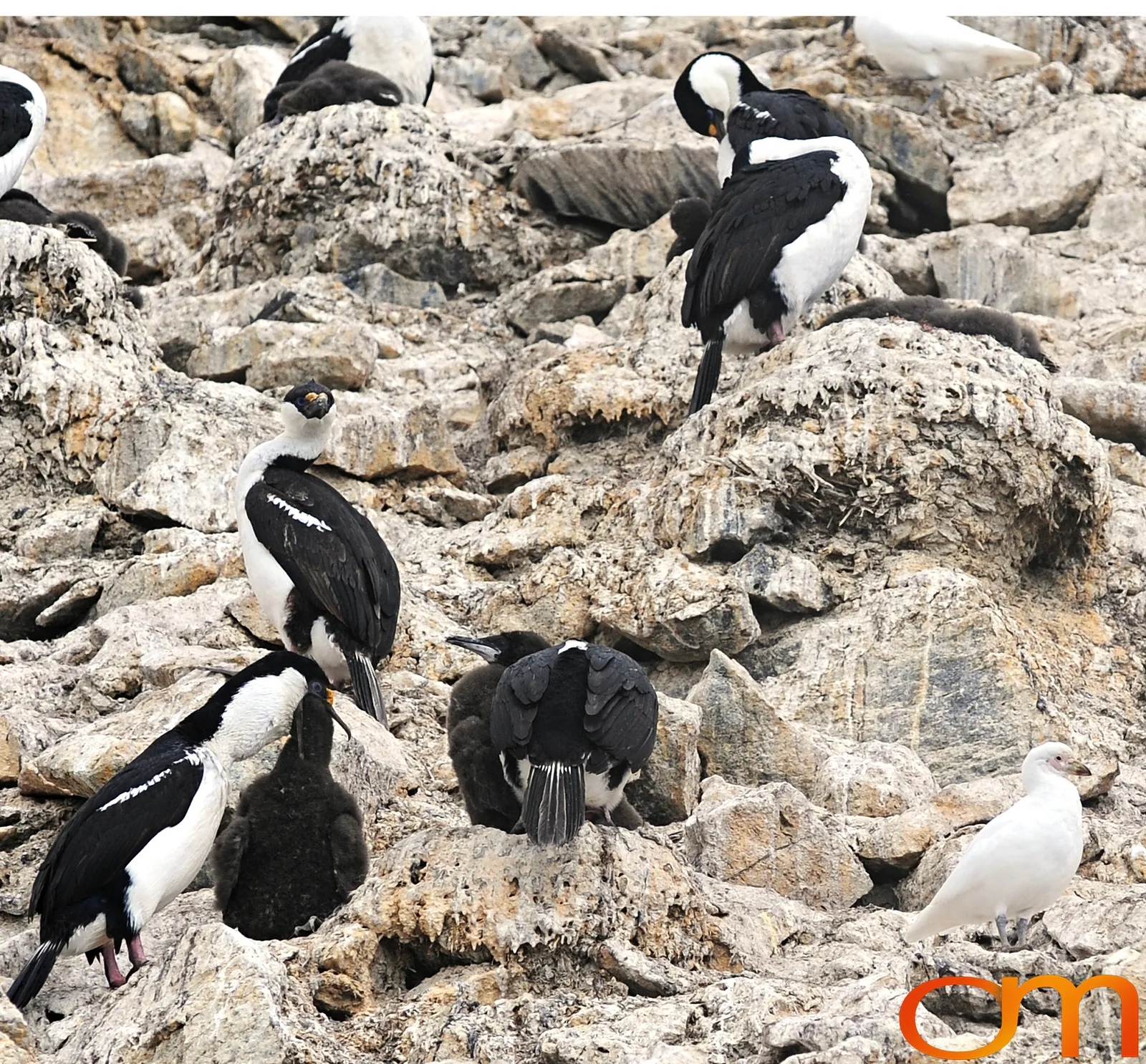
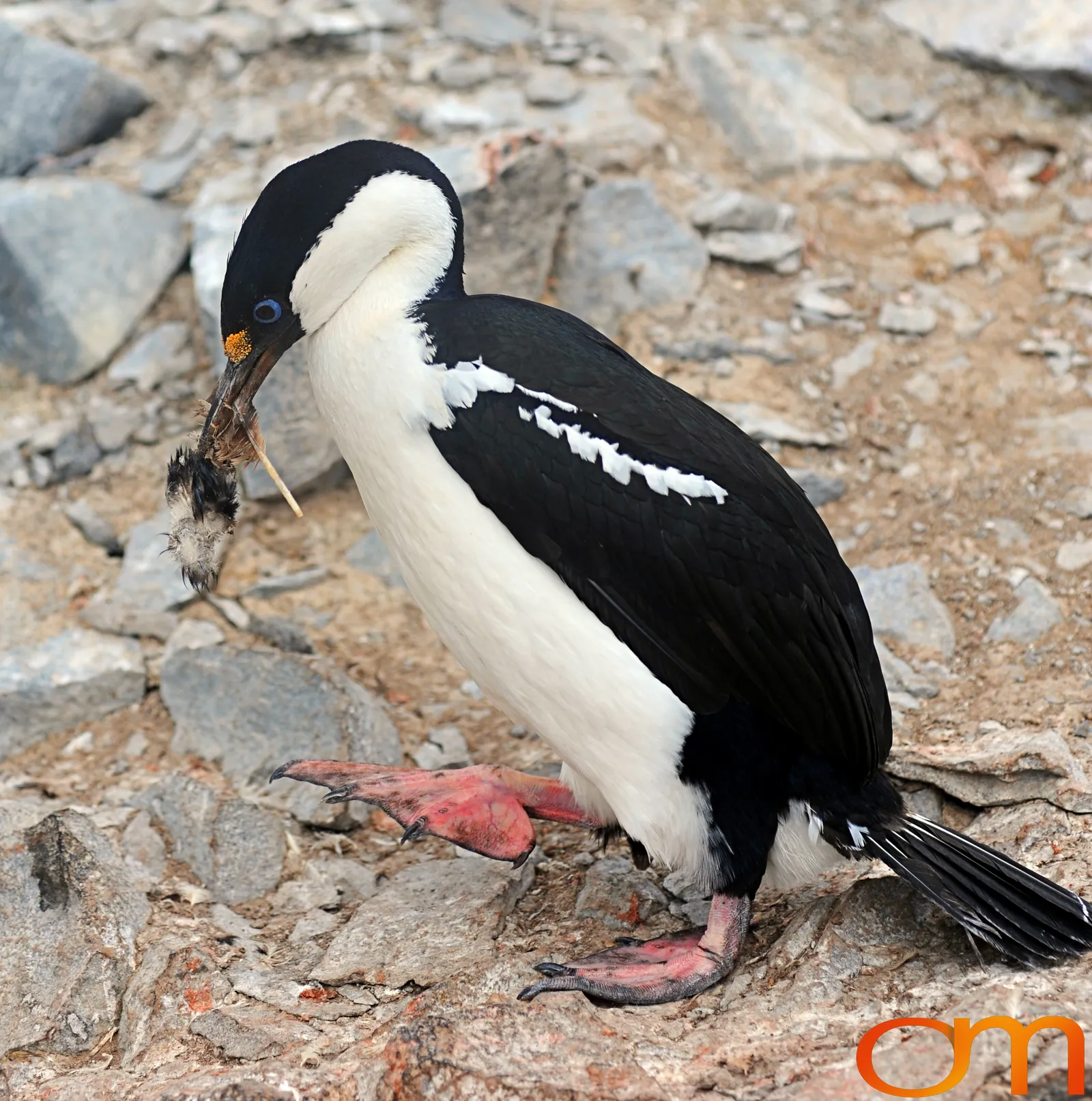
The Antarctic shag is a black-and-white marine bird found around the Antarctic Peninsula and the South Shetland Islands. It belongs to a closely related group of Southern Ocean cormorants commonly known as blue-eyed shags. The name refers to the vivid blue bare skin surrounding the eye rather than the eye itself.
Its classification remains unsettled. AviList and eBird currently treat the Antarctic population as Leucocarbo atriceps bransfieldensis, a subspecies of the imperial cormorant. The IOC World Bird List continues to recognize it as a separate species, Leucocarbo bransfieldensis. “Antarctic shag” is therefore the clearest common name for birds photographed along the Antarctic Peninsula.
Antarctic shags feed in coastal waters, diving for fish and bottom-dwelling marine animals. Dive depth and duration vary with water depth, prey availability and individual behavior. Field research has documented considerable solitary foraging, so cooperative fish herding should not be presented as a characteristic behavior of the species.
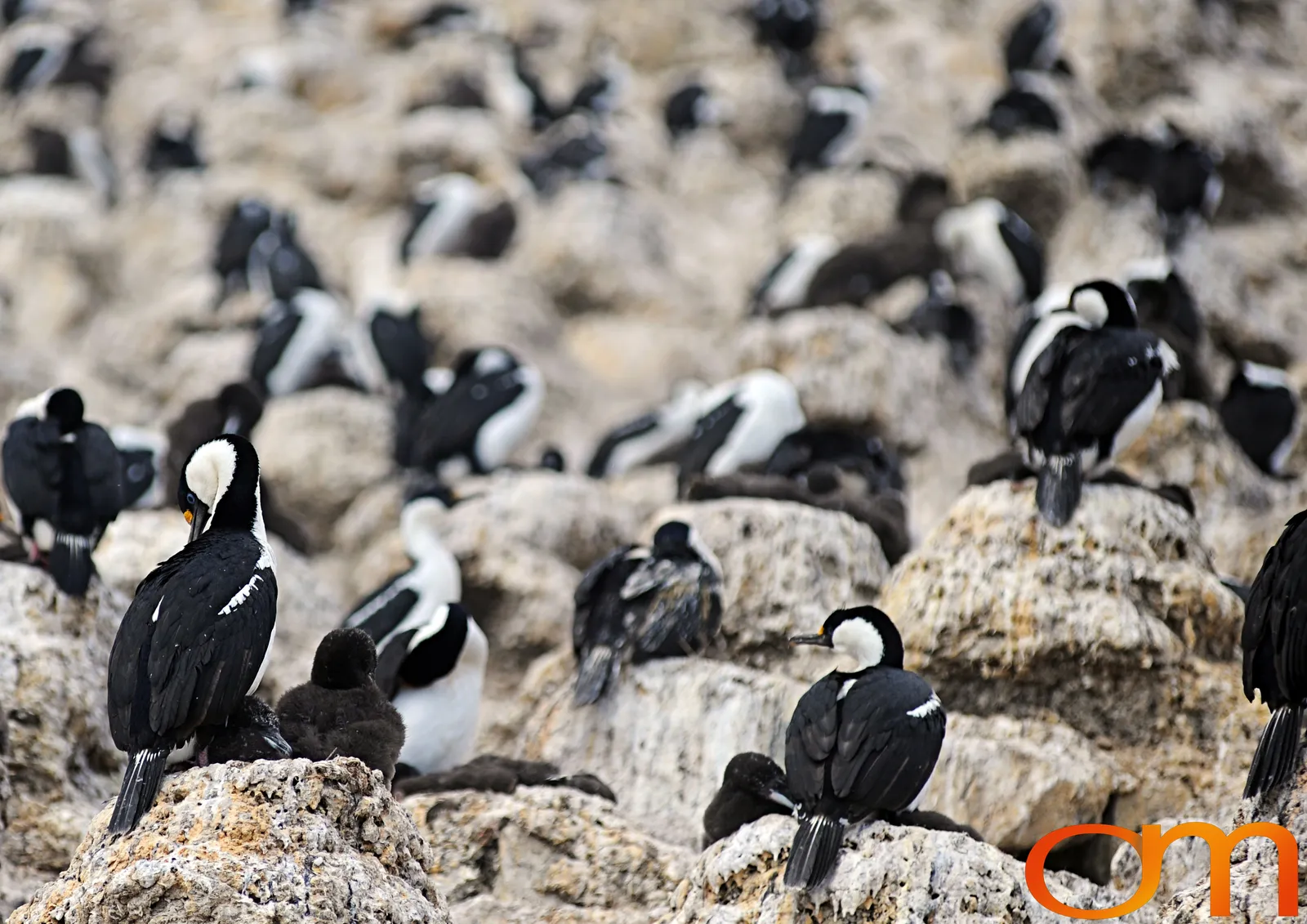
During the austral breeding season, colonies occupy ice-free cliff tops, rocky outcrops and coastal ledges. A typical clutch contains two or three eggs. Both parents participate in incubation and chick-rearing. Birds often return to established nesting areas, but individuals may change partners between breeding seasons; describing the species as mating for life is too definitive.
Nest construction is unusually elaborate. Males have been observed collecting algae from the seafloor and carrying it back to the colony, where females incorporate it into the nest. Guano gradually cements the vegetation into a raised structure that researchers have compared to a clay pot. Feathers and other available objects may also be added.
An Unusual Cormorant
Researchers studying Antarctic blue-eyed shags did not observe the familiar spread-wing drying posture associated with many other cormorants. During the same research, wooden stakes placed beside nests as identification markers were repeatedly stolen by neighboring birds and incorporated into their own nests.