Antarctica and the Sub-Antarctic
Southern Giant Petrel
December 2008
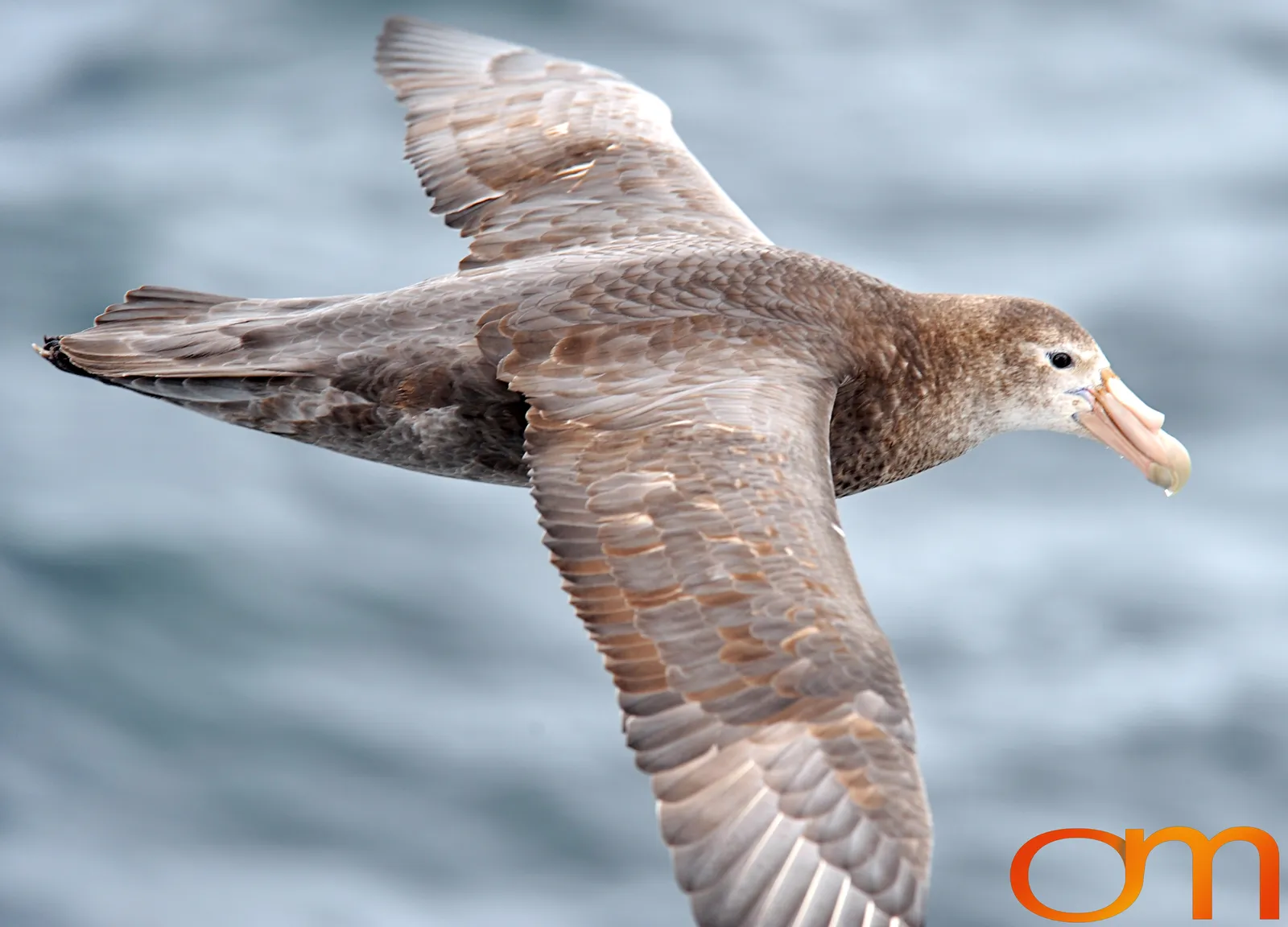
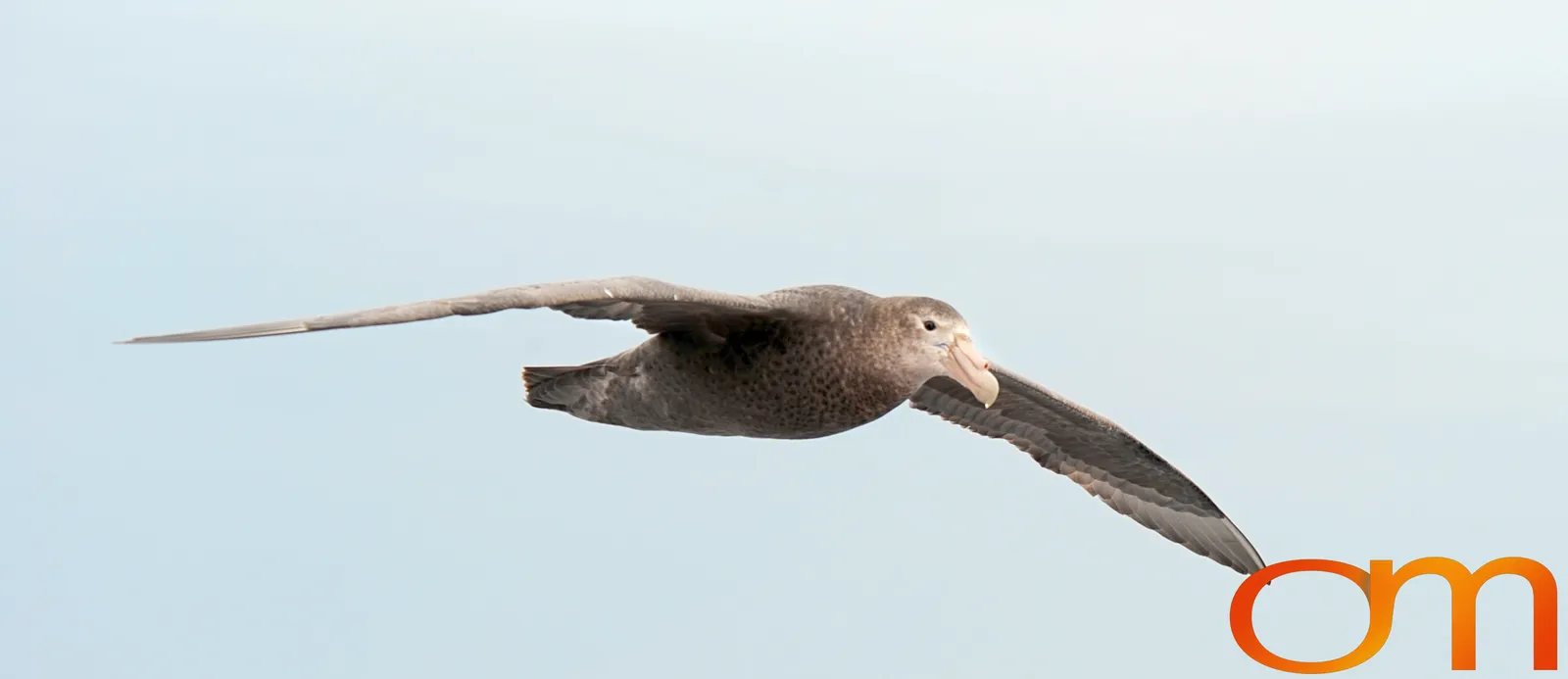
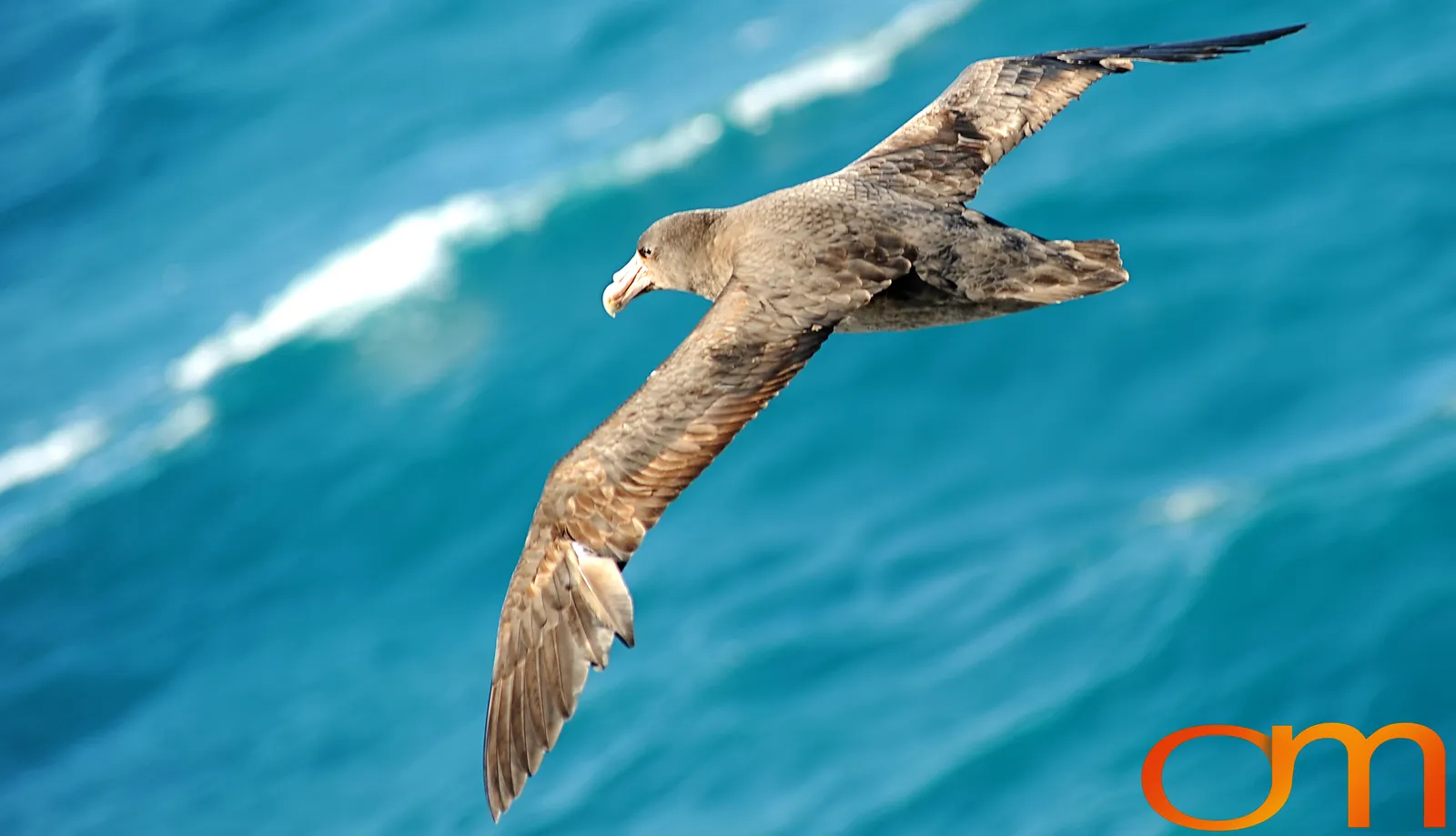
The southern giant petrel (Macronectes giganteus) is one of the largest members of the petrel family. Its wingspan can reach approximately 6.9 feet (2.1 m), allowing it to glide efficiently over the strong winds of the Southern Ocean. The species breeds on the Antarctic continent, the Antarctic Peninsula, and islands throughout the Southern Ocean. Outside the breeding season, individuals may travel widely across southern waters.
Southern giant petrels occur in two plumage forms. Most have mottled brown, gray, and whiteage forms. Most have mottled brown, gray, and white feathers, while a much rarer form is predominantly white with scattered dark markings. The pale green tip of the bill helps distinguish the species from the closely related northern giant petrel, which has a reddish bill tip. Males are generally larger and heavier than females.
These seabirds are both predators and scavengers. Their diet includes fish, squid, krill, seabirds, and the carcasses of marine mammals. Although they often travel alone or in small numbers, southern giant petrels may gather around concentrated food sources, including carrion. Their scavenging helps recycle nutrients within Southern Ocean ecosystems.
Southern giant petrels belong to an order of seabirds commonly known as tubenoses because their nostrils form visible tubes along the bill. Specialized salt glands allow them to remove excess salt absorbed while feeding and drinking at sea.
Breeding timing varies by location. Southern giant petrels nest in loose colonies on ice-free coastal ground, rocky slopes, open flats, and offshore islands. Each pair produces a single egg, which both parents incubate for approximately 60 days. The chick remains near the nest for roughly 100 to 130 days before fledging. Most individuals do not begin breeding until they are at least five or six years old.
Adults and chicks can defend themselves by ejecting oily stomach contents toward a perceived threat. This behavior can discourage predators but also makes nesting birds especially vulnerable to disturbance by human visitors.