Falkland Islands
Falkland Skuas
December 2008
The Falkland skua is commonly classified as the Falkland subspecies of the brown skua, Stercorarius antarcticus antarcticus. Southern skua taxonomy has varied among authorities, and the older scientific name Catharacta antarctica remains in use in some literature.
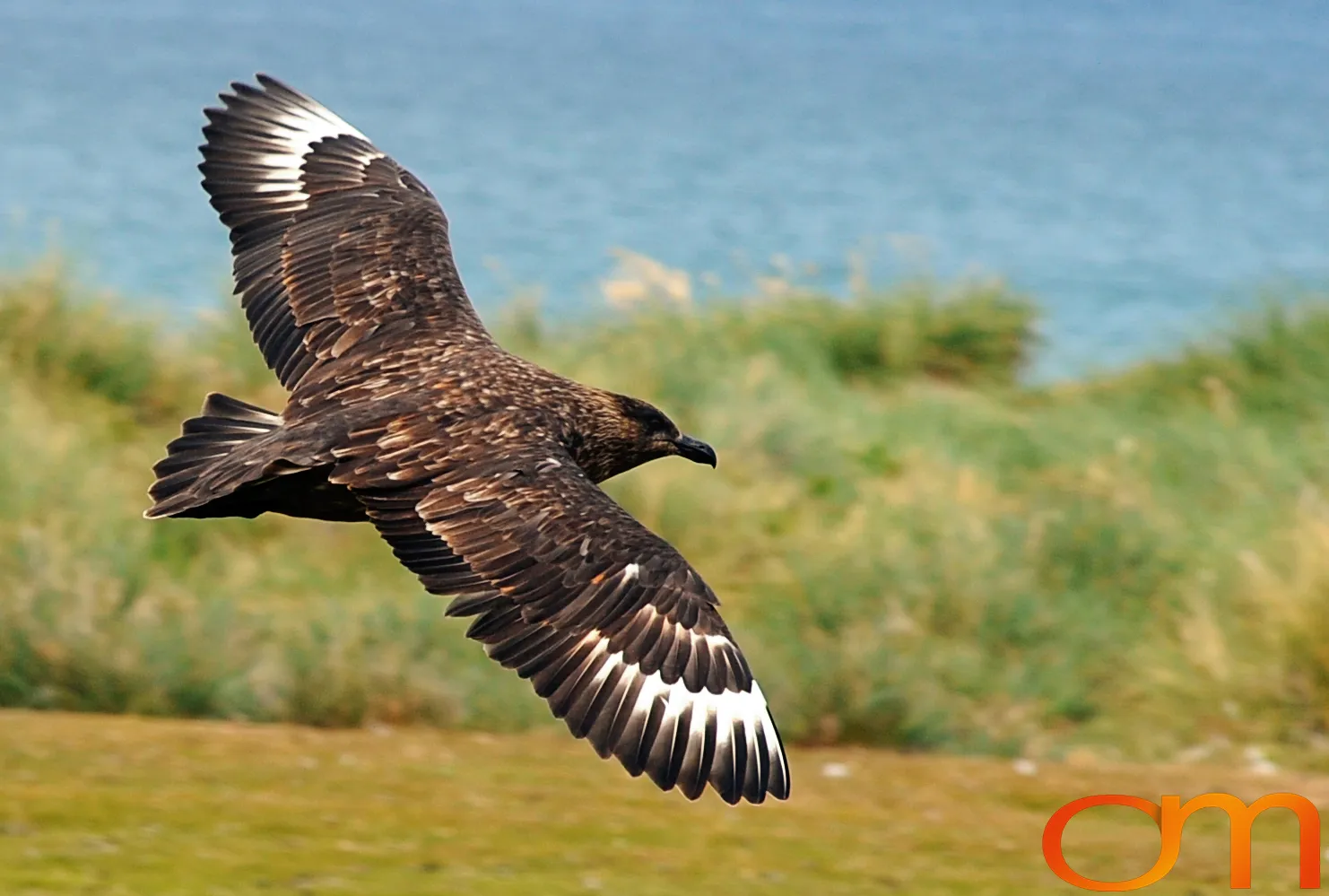
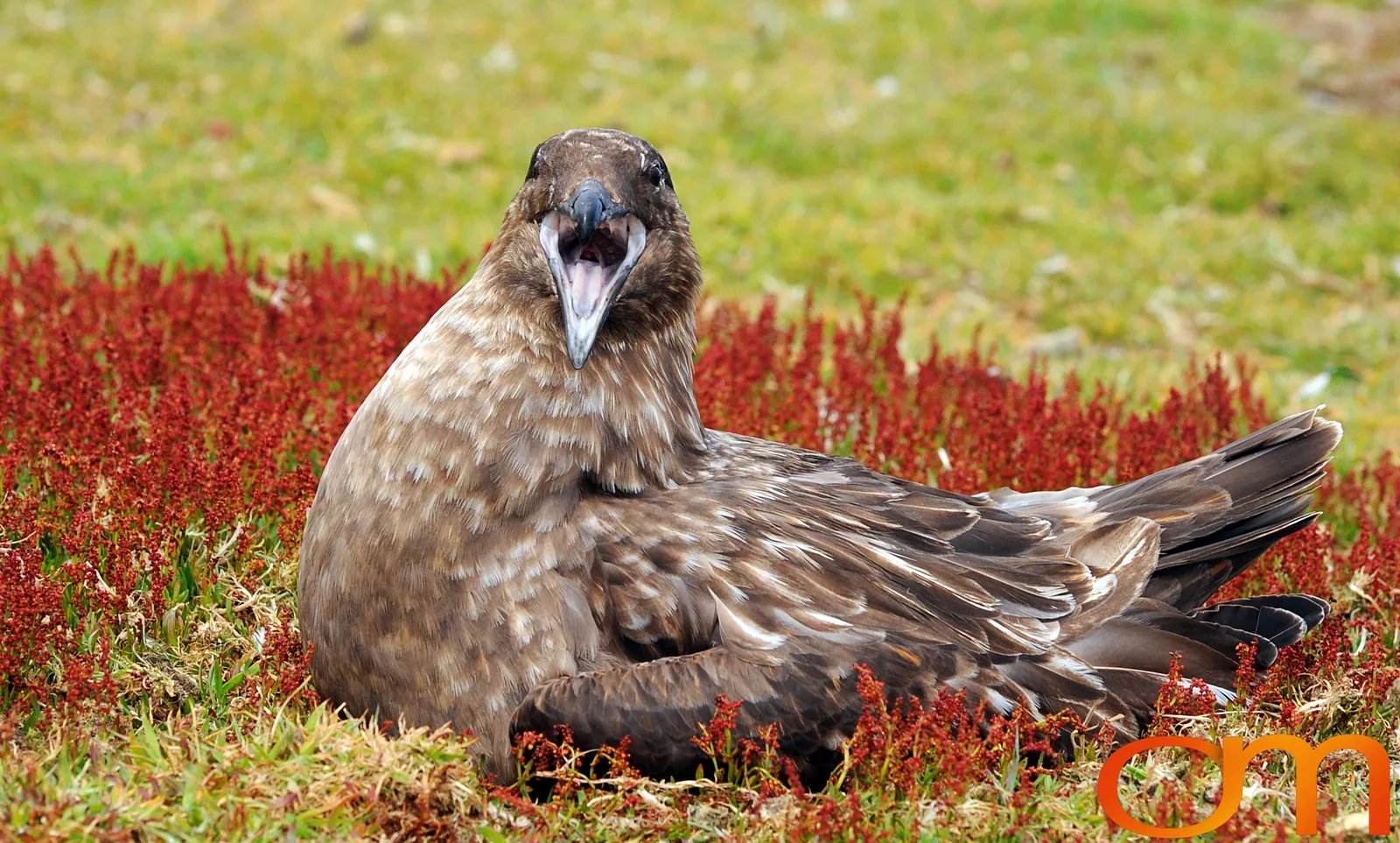
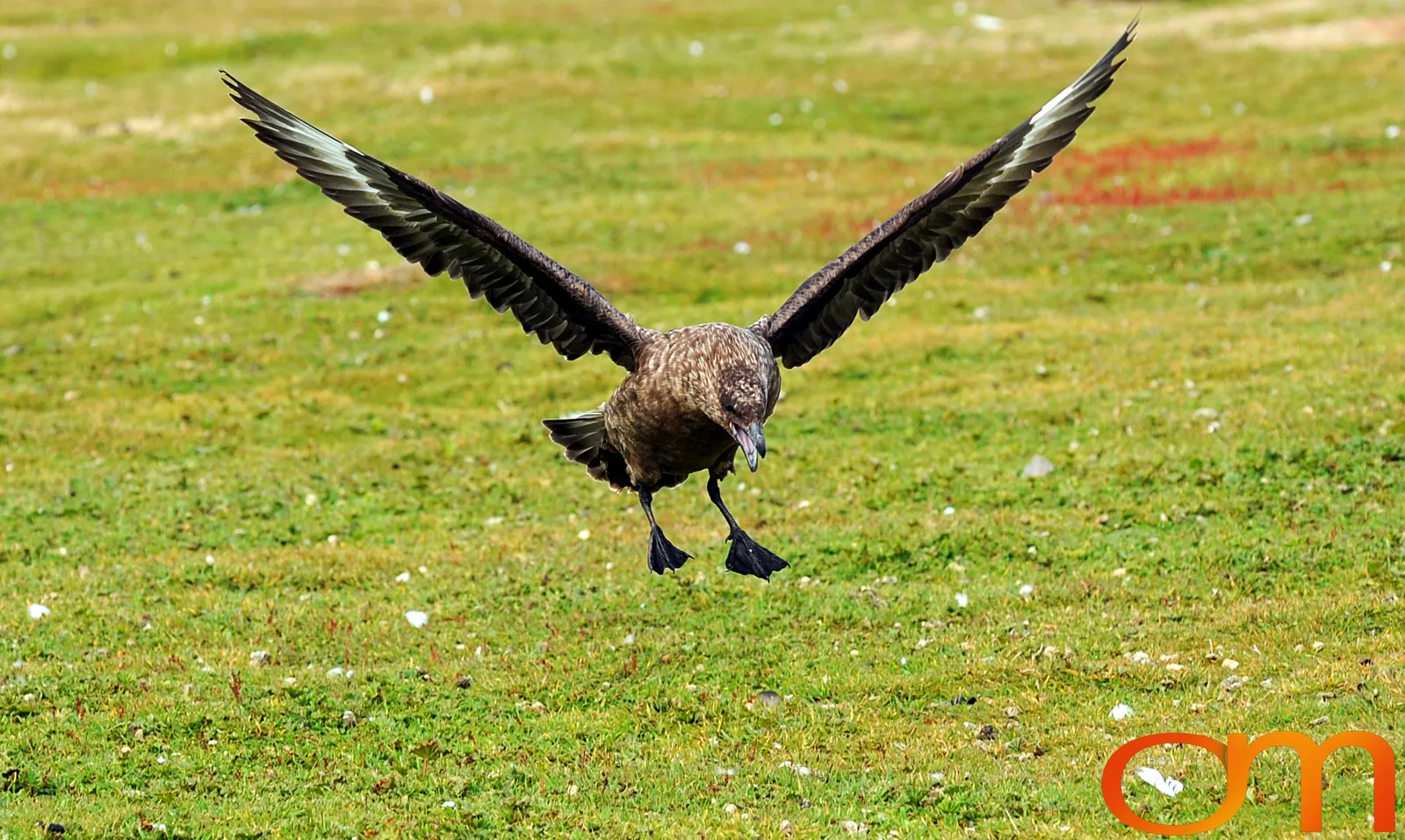
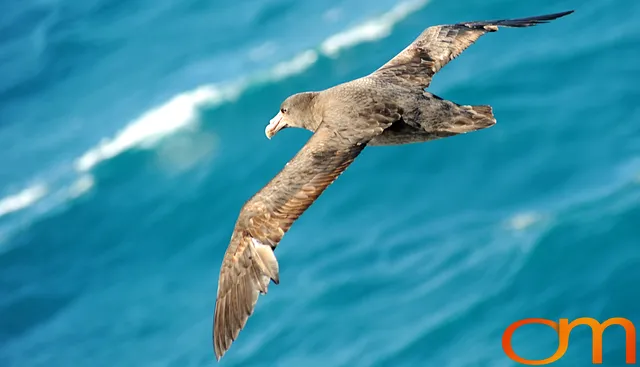
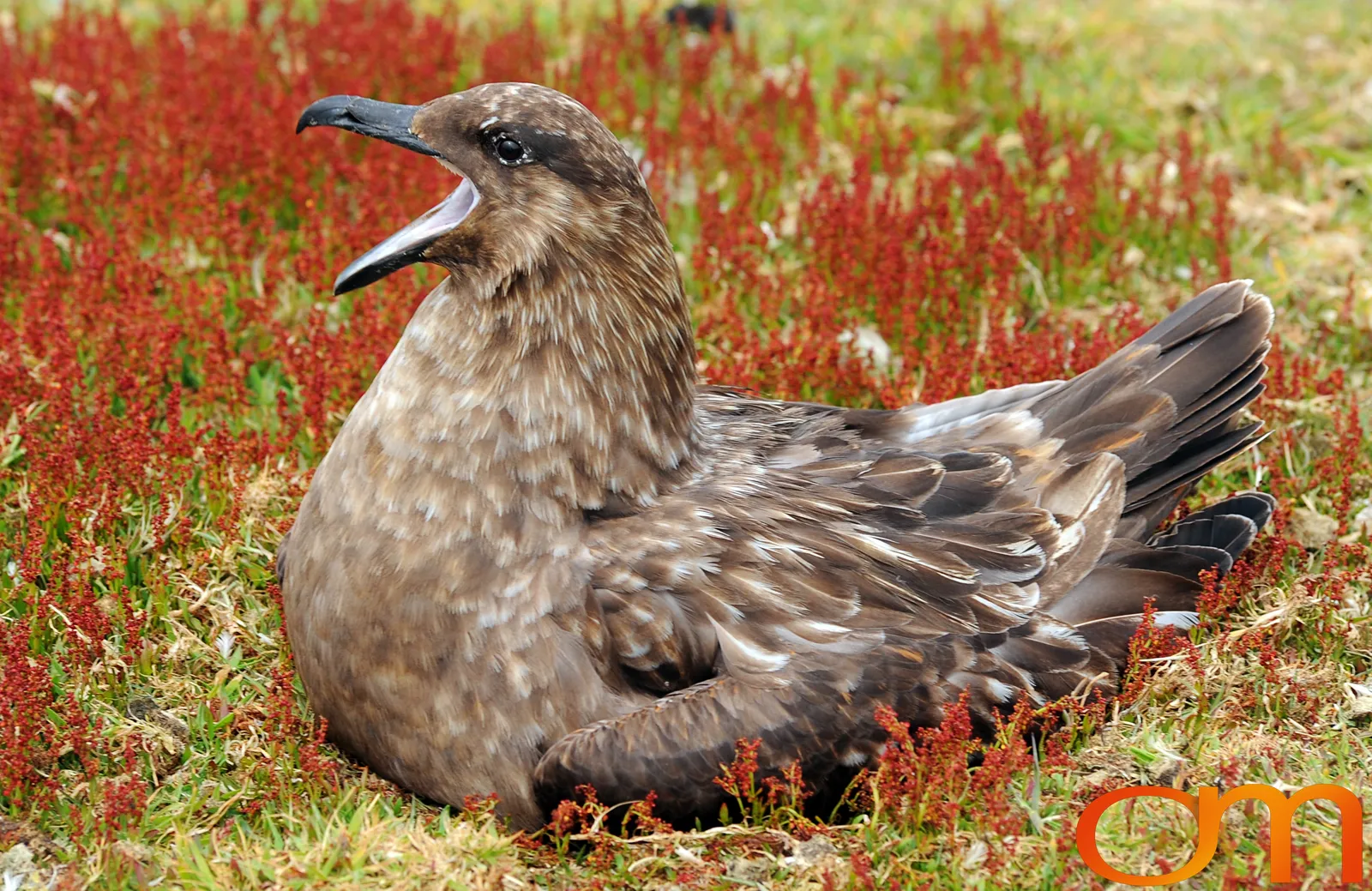
Falkland skuas are large, dark-brown seabirds with heavy, hooked bills, webbed feet, and conspicuous white patches on their wings. These white wing flashes are especially visible in flight.
They are adaptable predators, scavengers, and kleptoparasites. Kleptoparasitism is a form of food piracy in which a skua pursues another bird and forces it to release or regurgitate its meal. Falkland skuas also consume fish, carrion, eggs, chicks, and other birds.
Breeding occurs during the austral spring and summer. The birds nest on the ground, often in open grassland or other low vegetation, and commonly lay two eggs. Both parents participate in incubation and chick-rearing.
The chicks are mobile soon after hatching and may walk away from the nest scrape within several days. This early movement should not be confused with fledging. The young remain flightless and dependent on their parents for several more weeks before they are capable of sustained flight.