South Georgia Island
King Penguins
December 2008
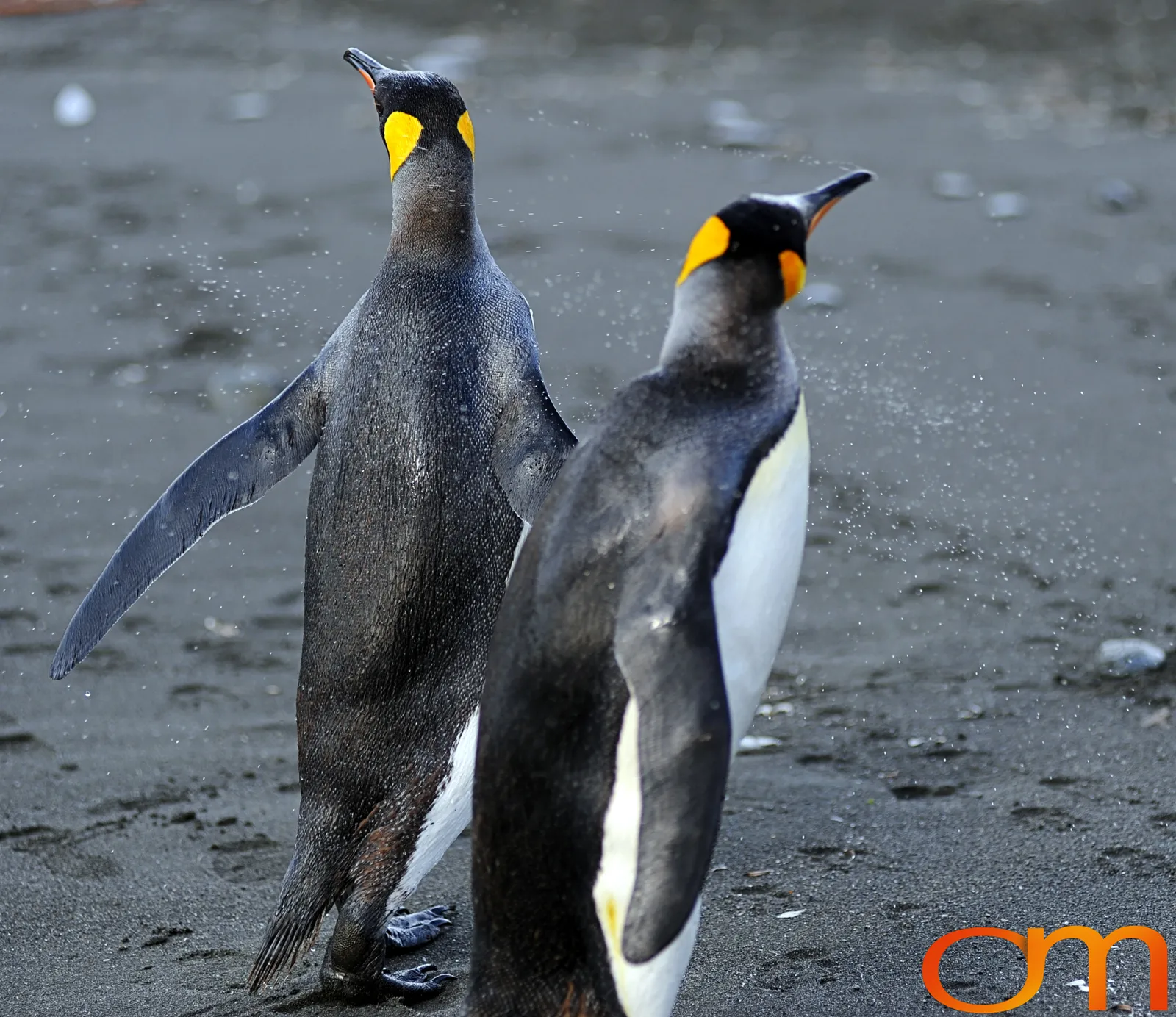
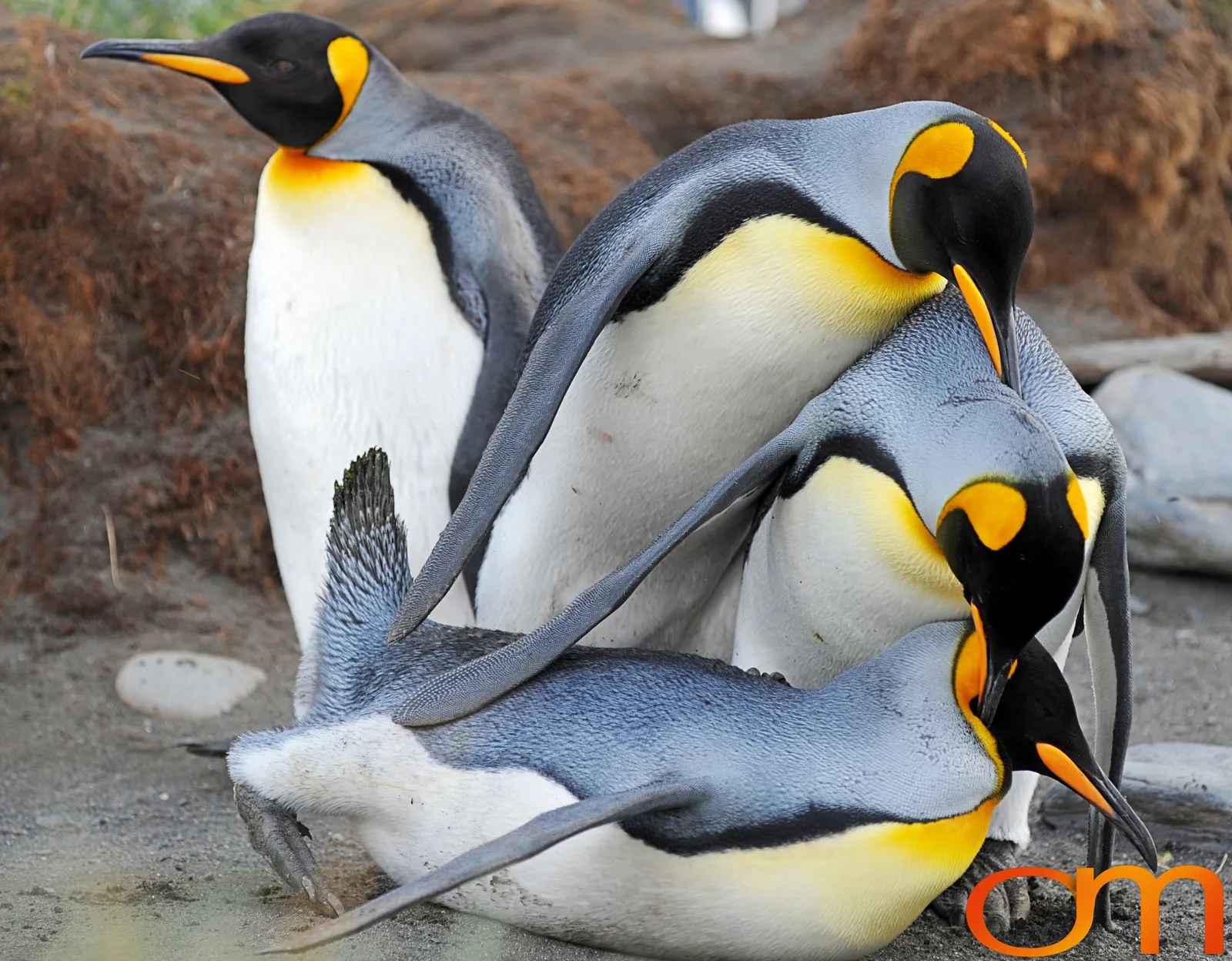
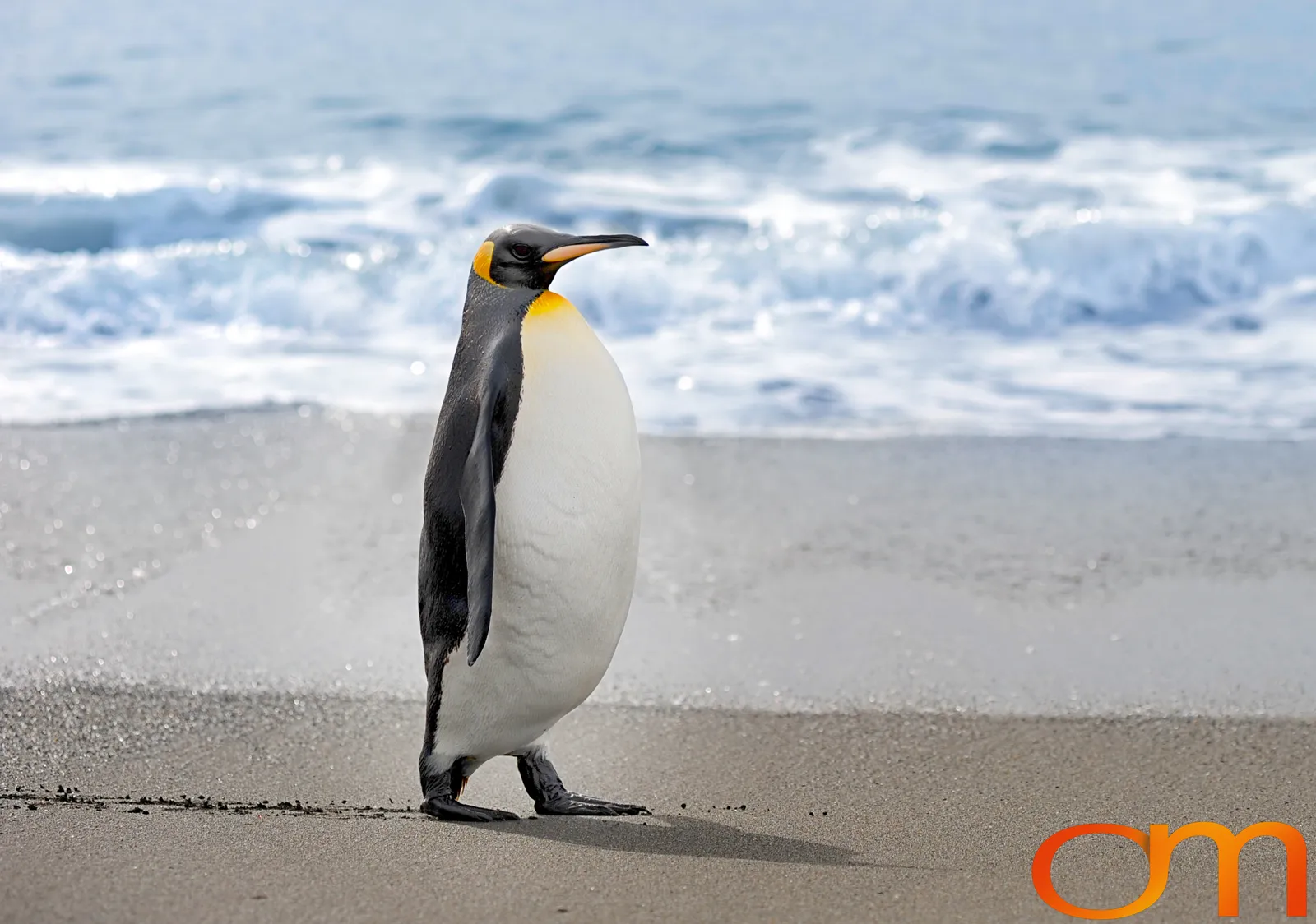
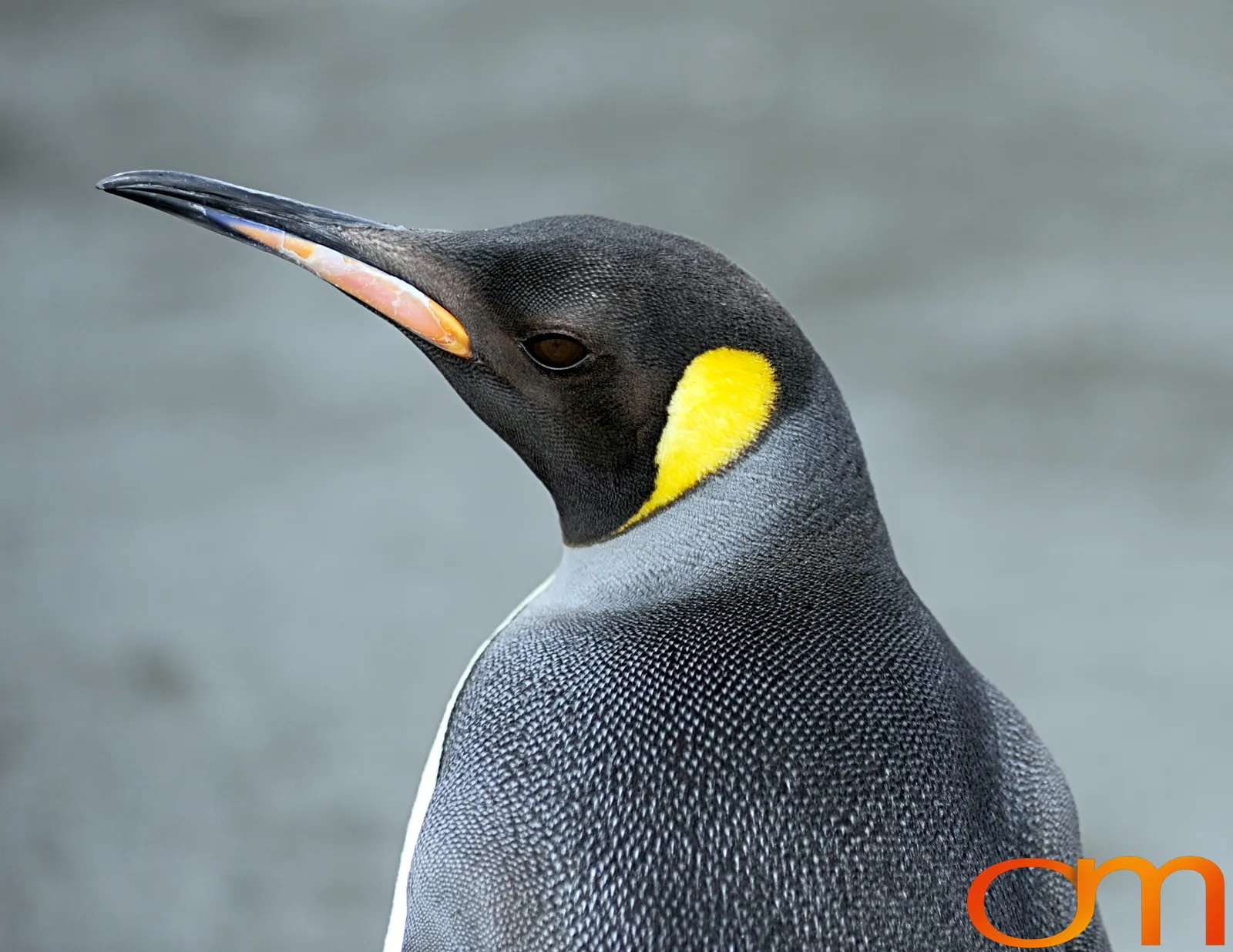
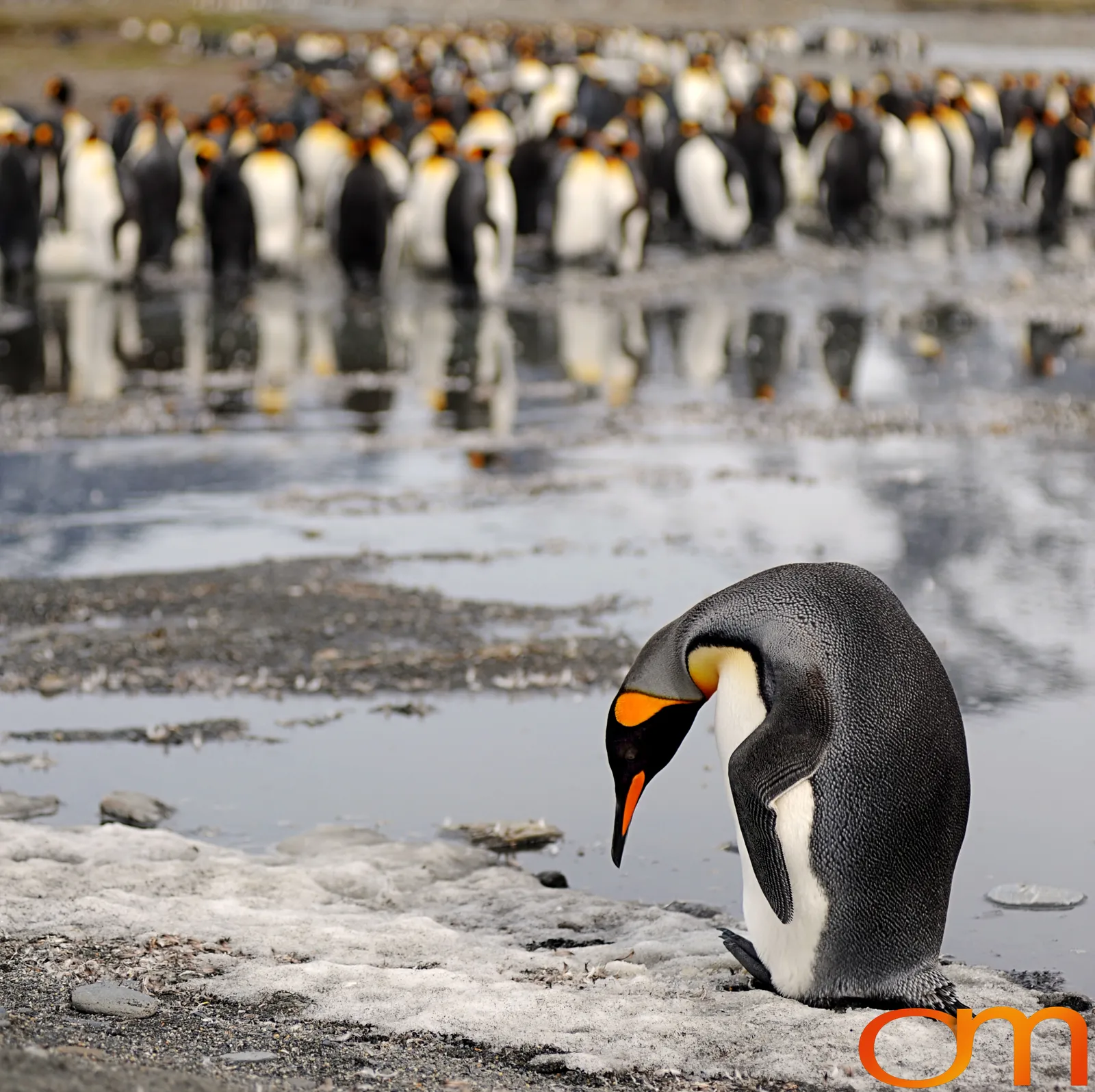
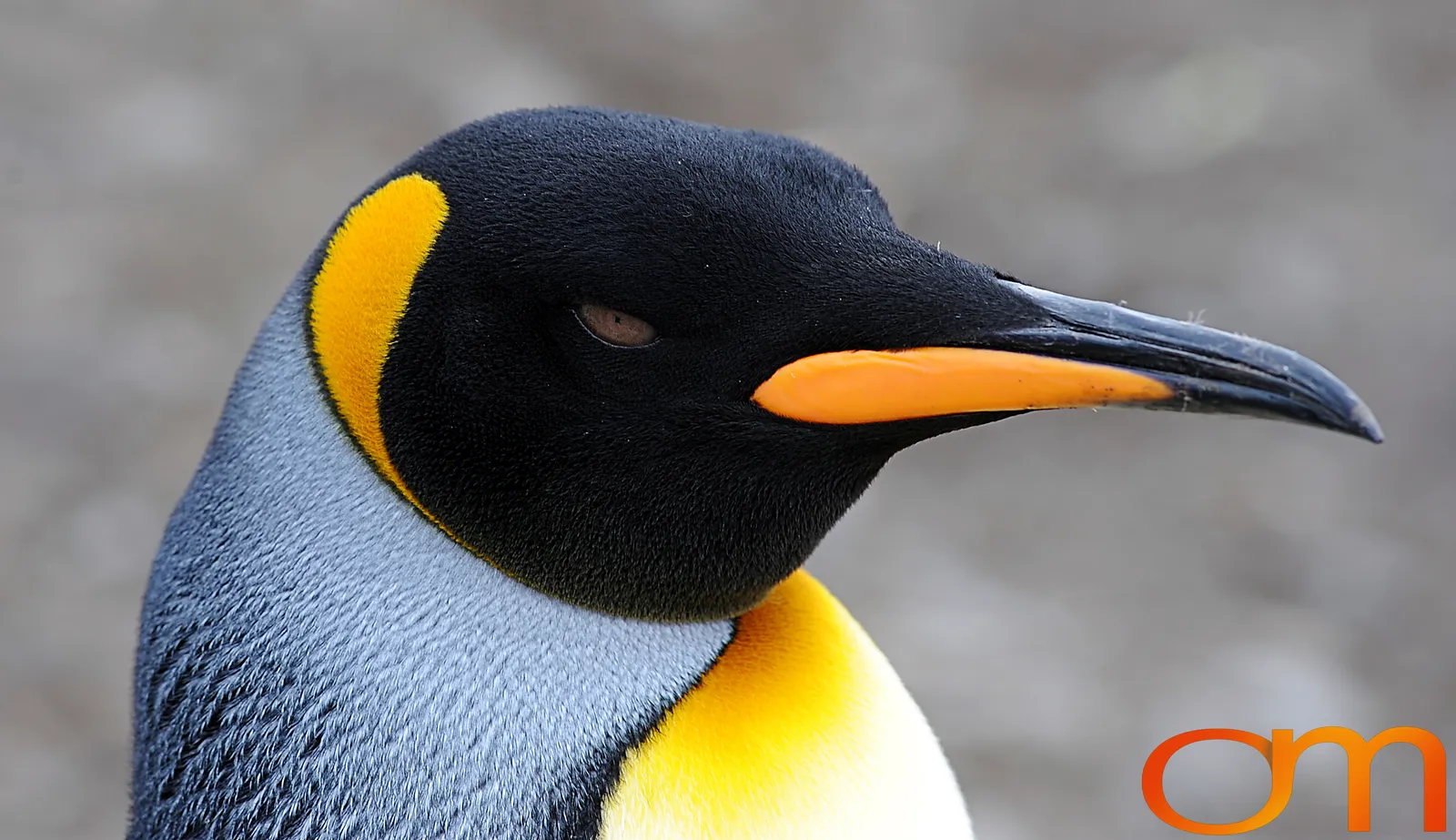
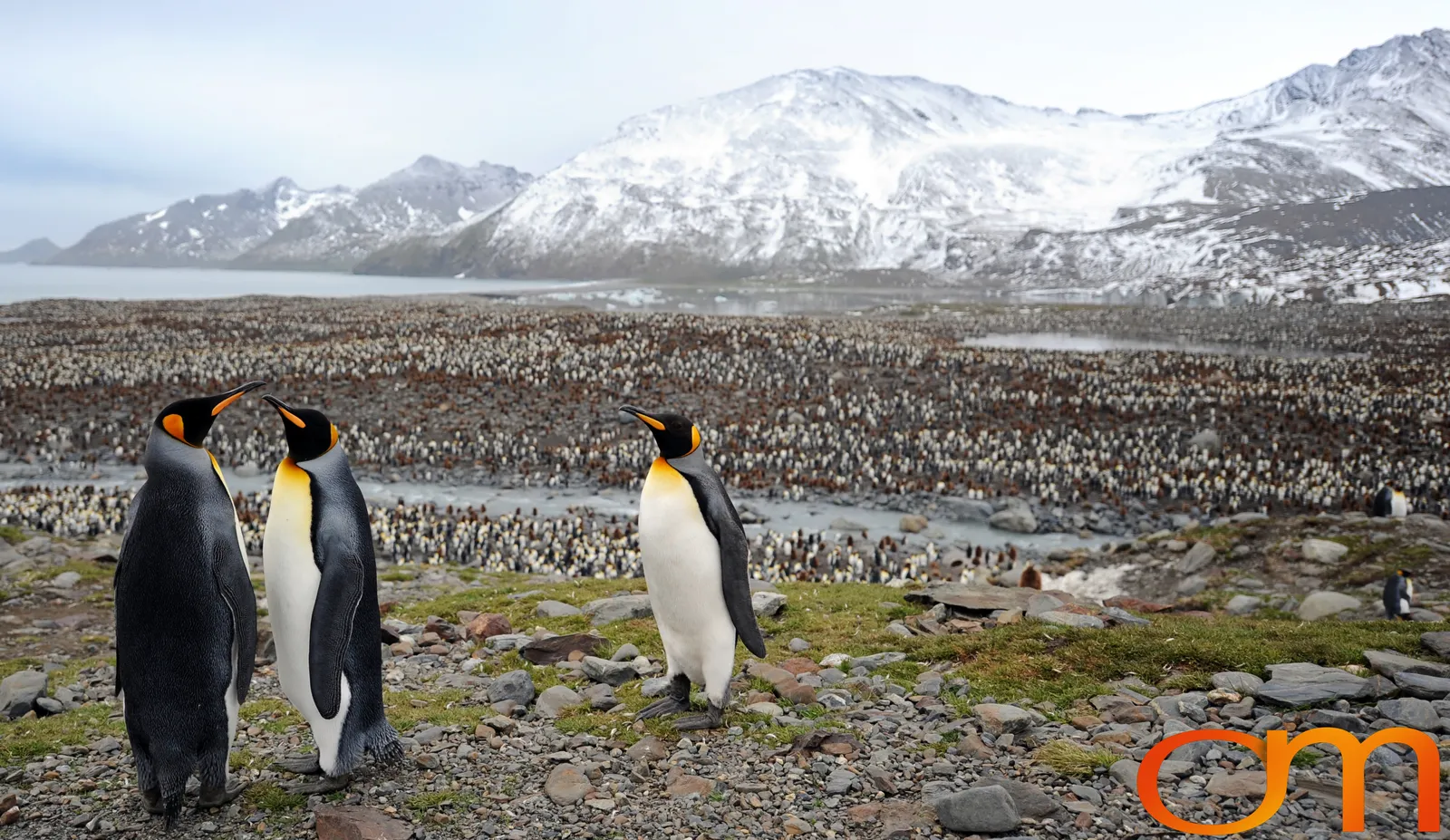
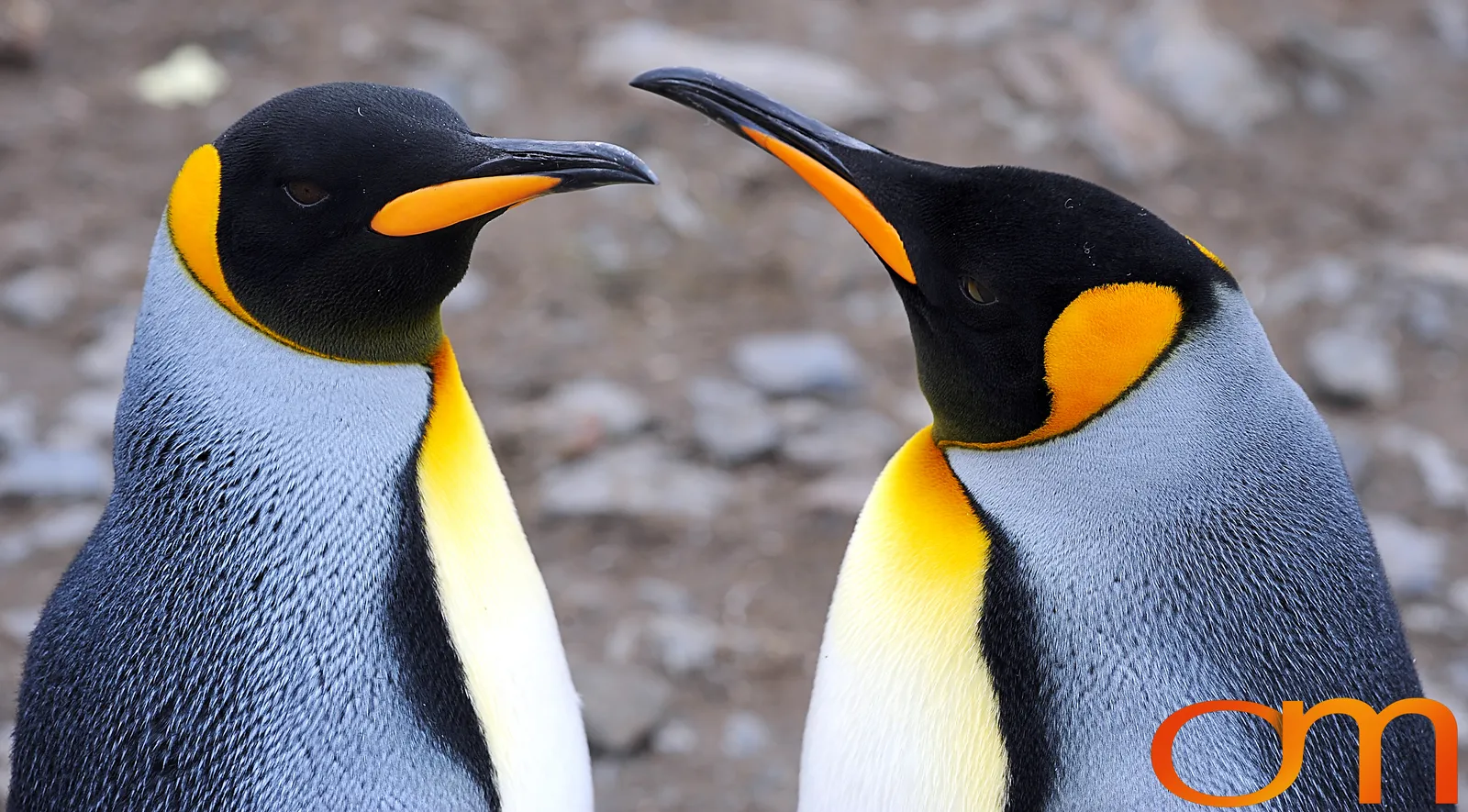
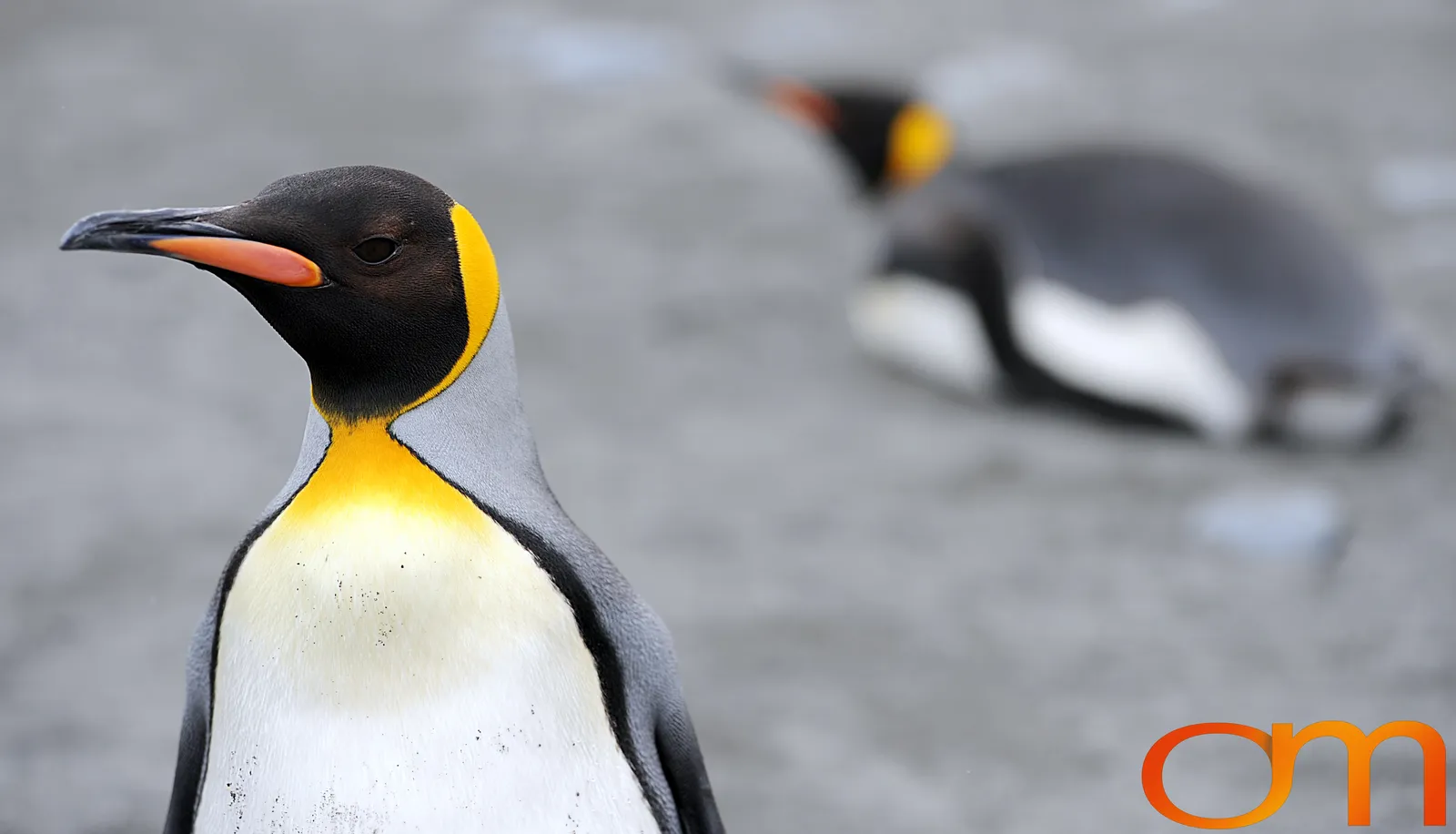
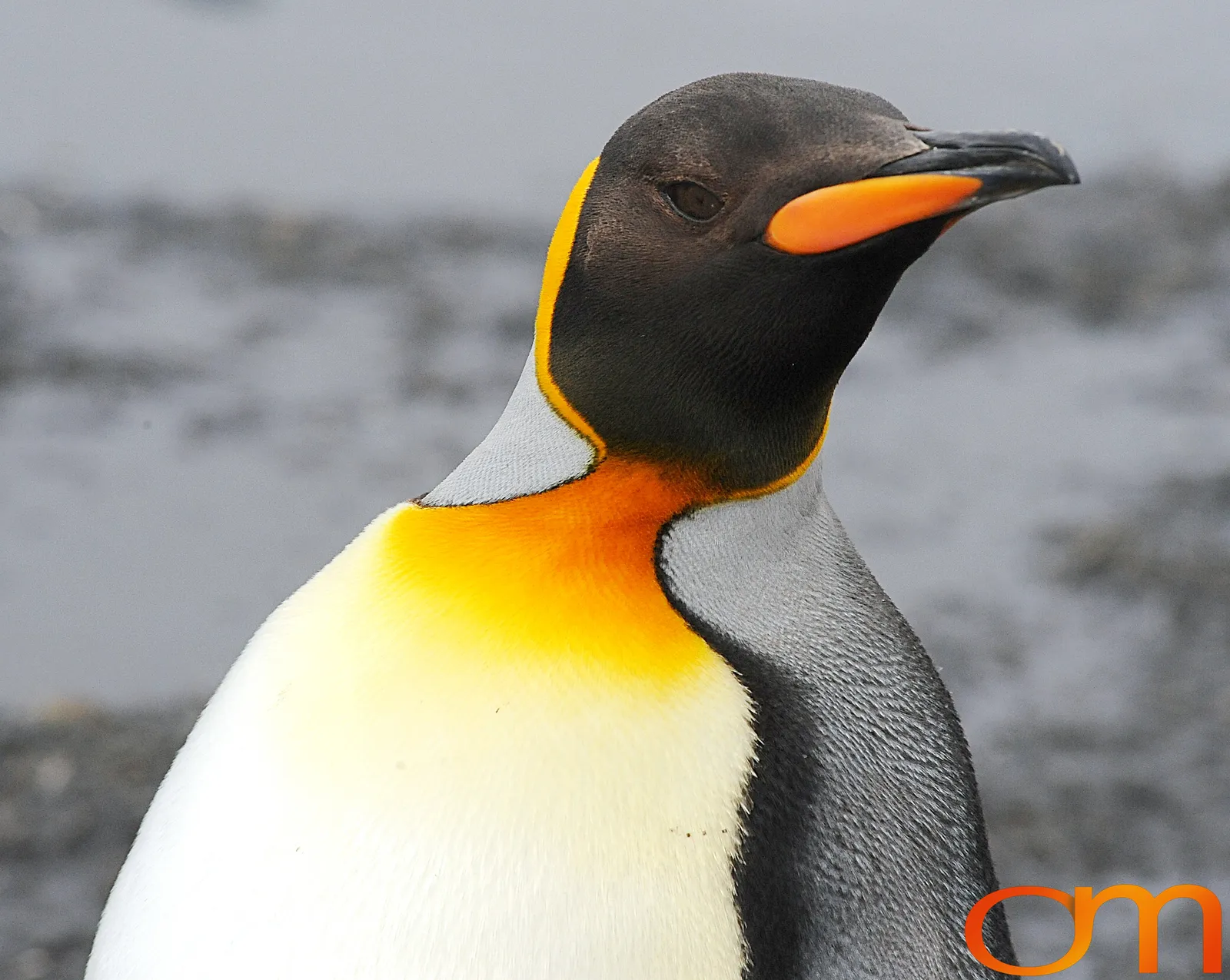
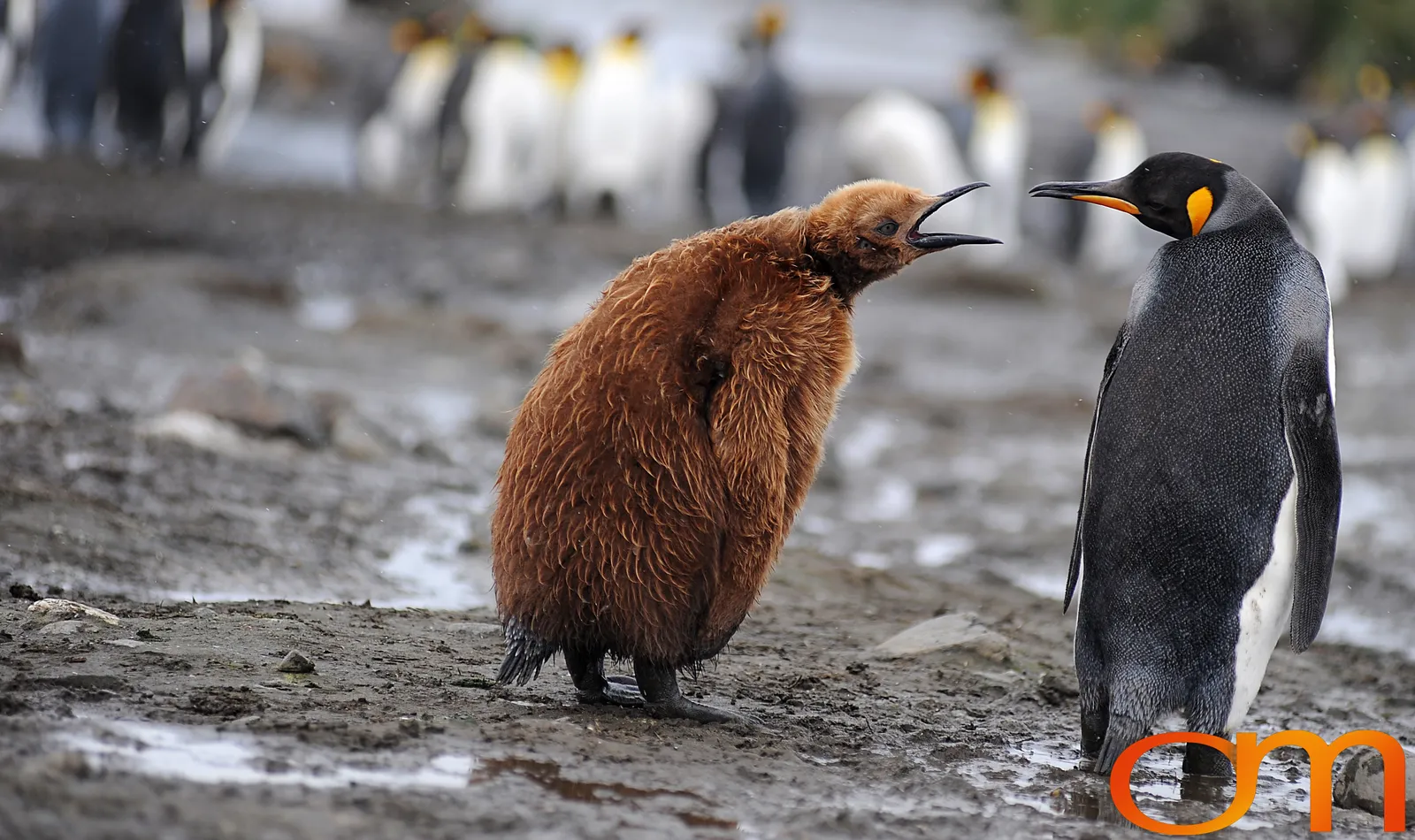
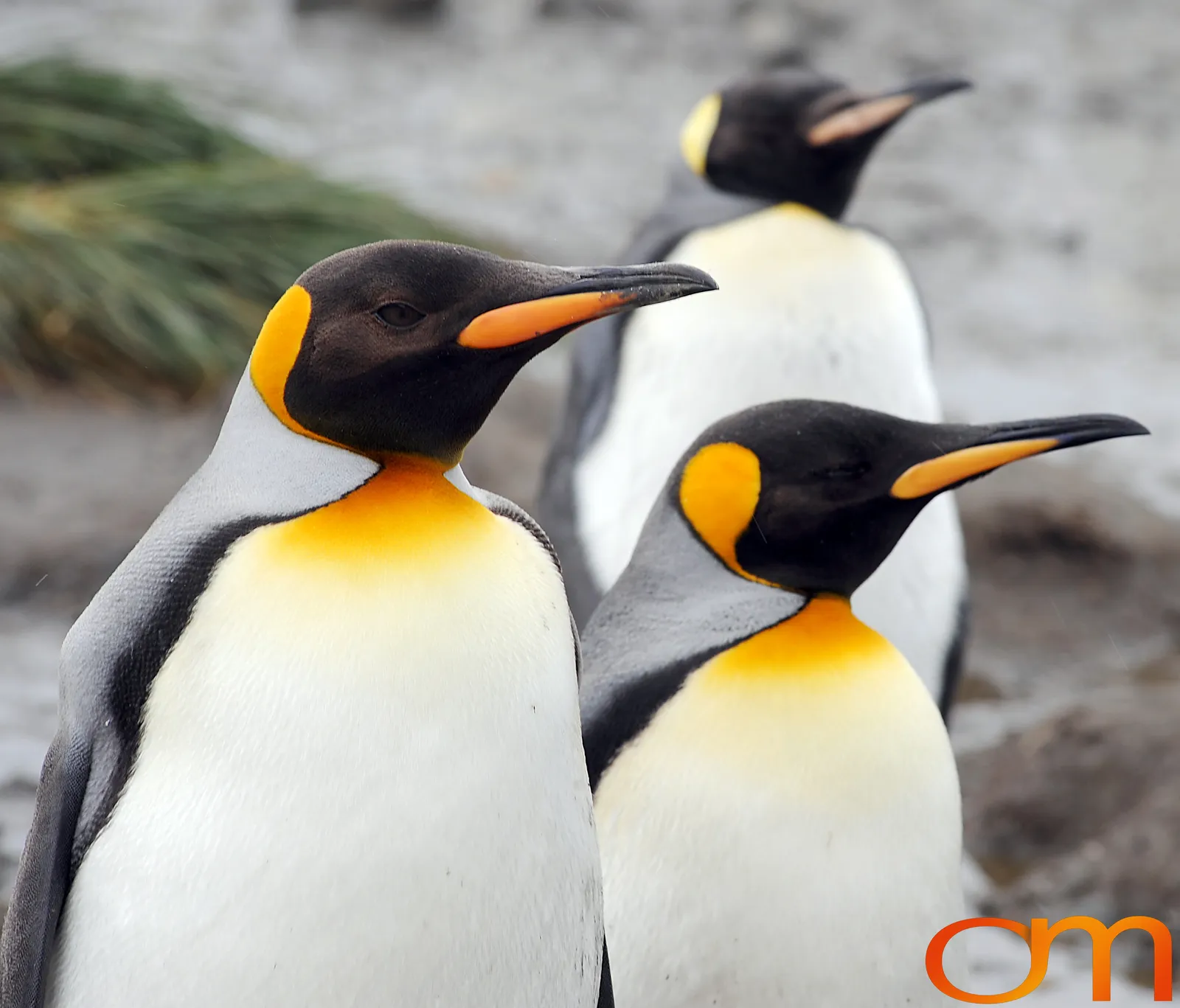
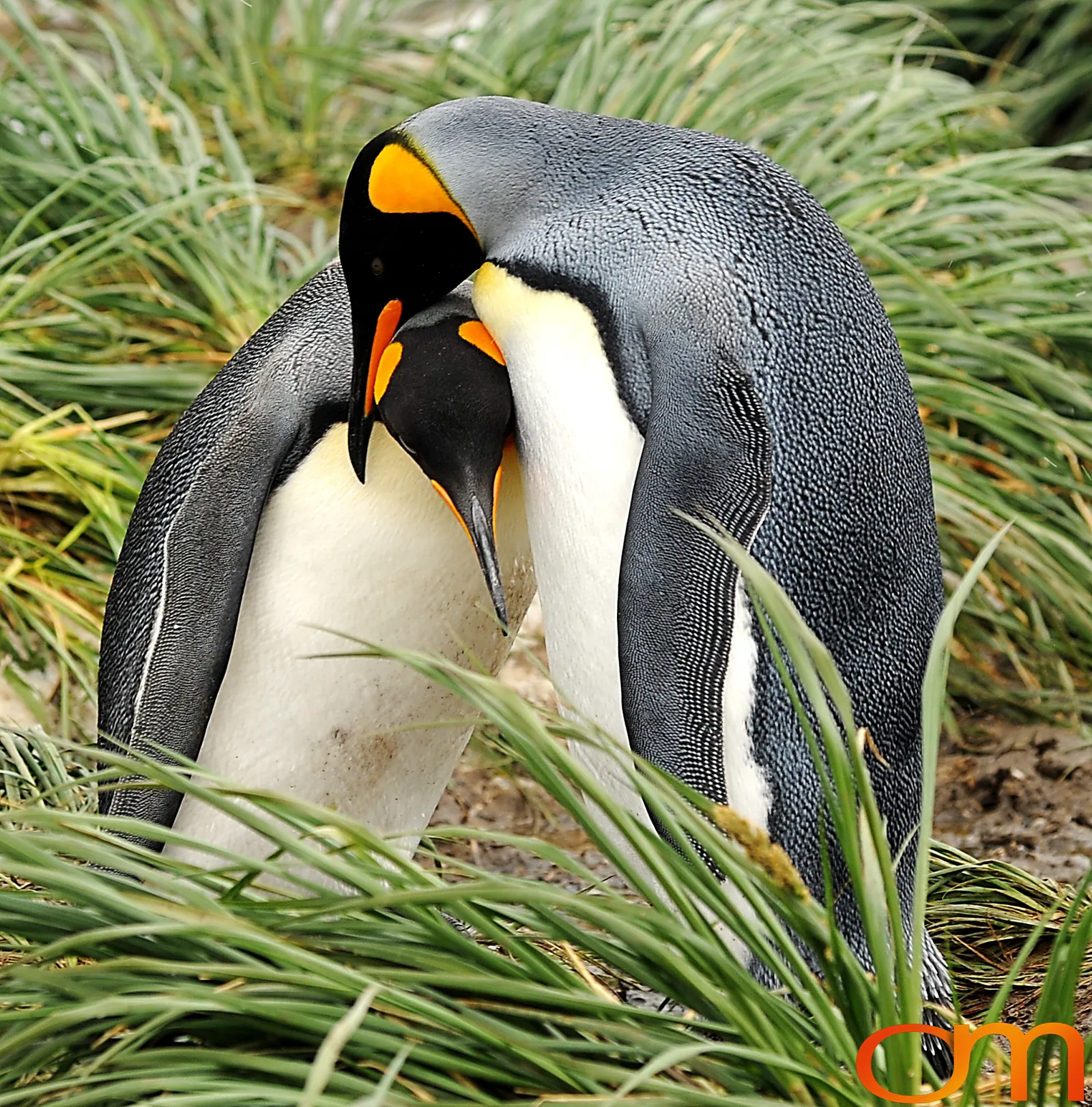
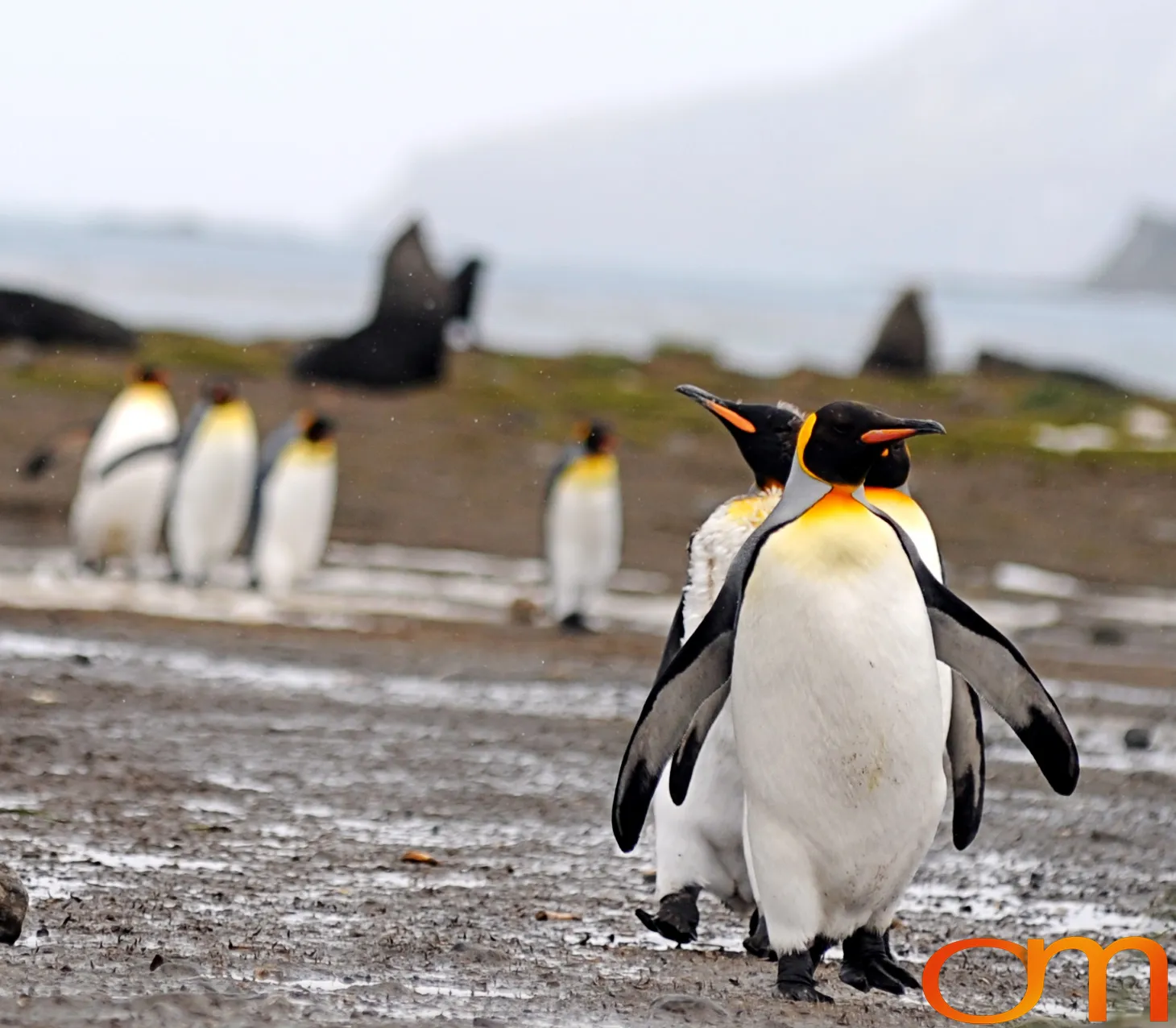
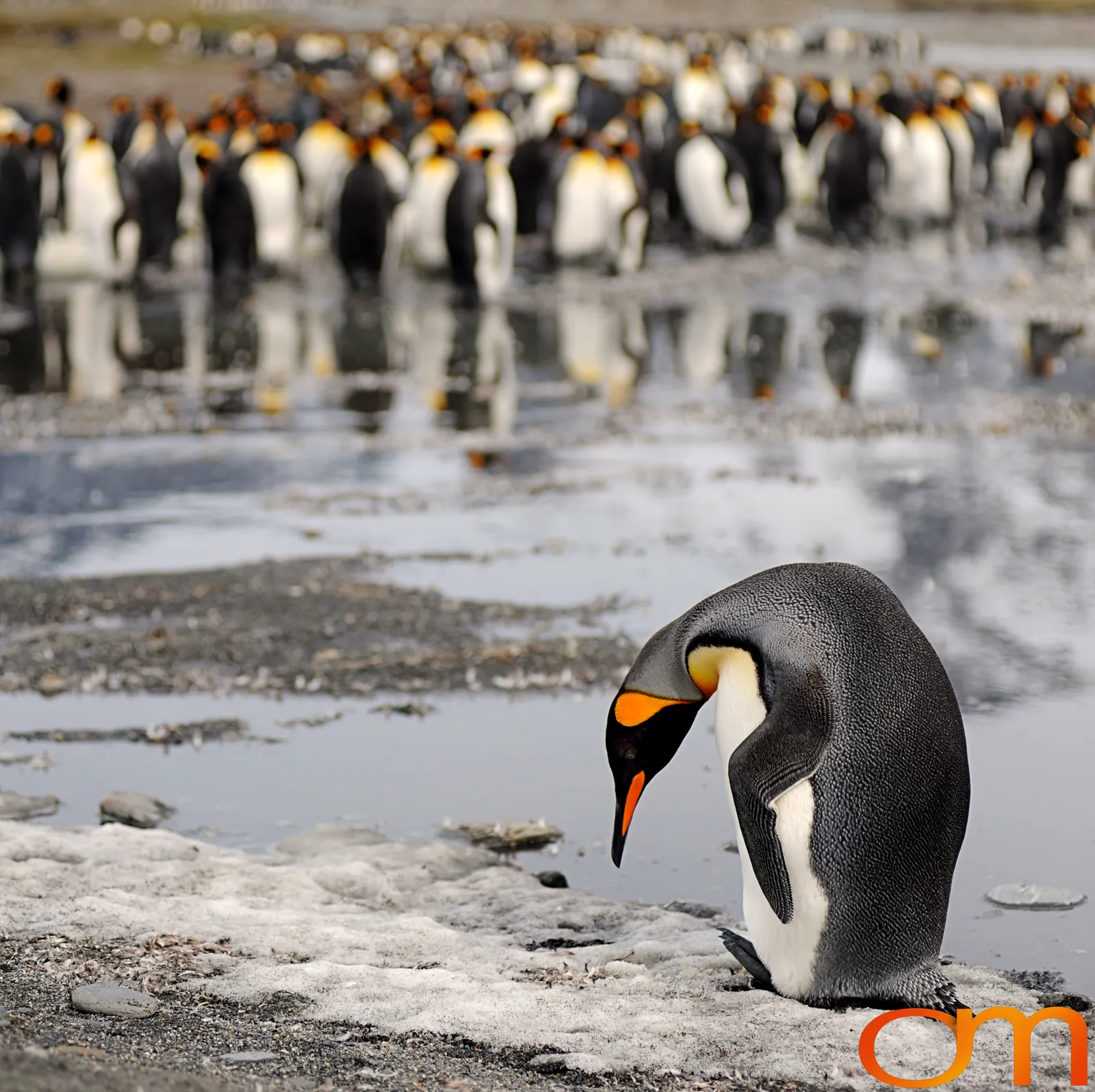
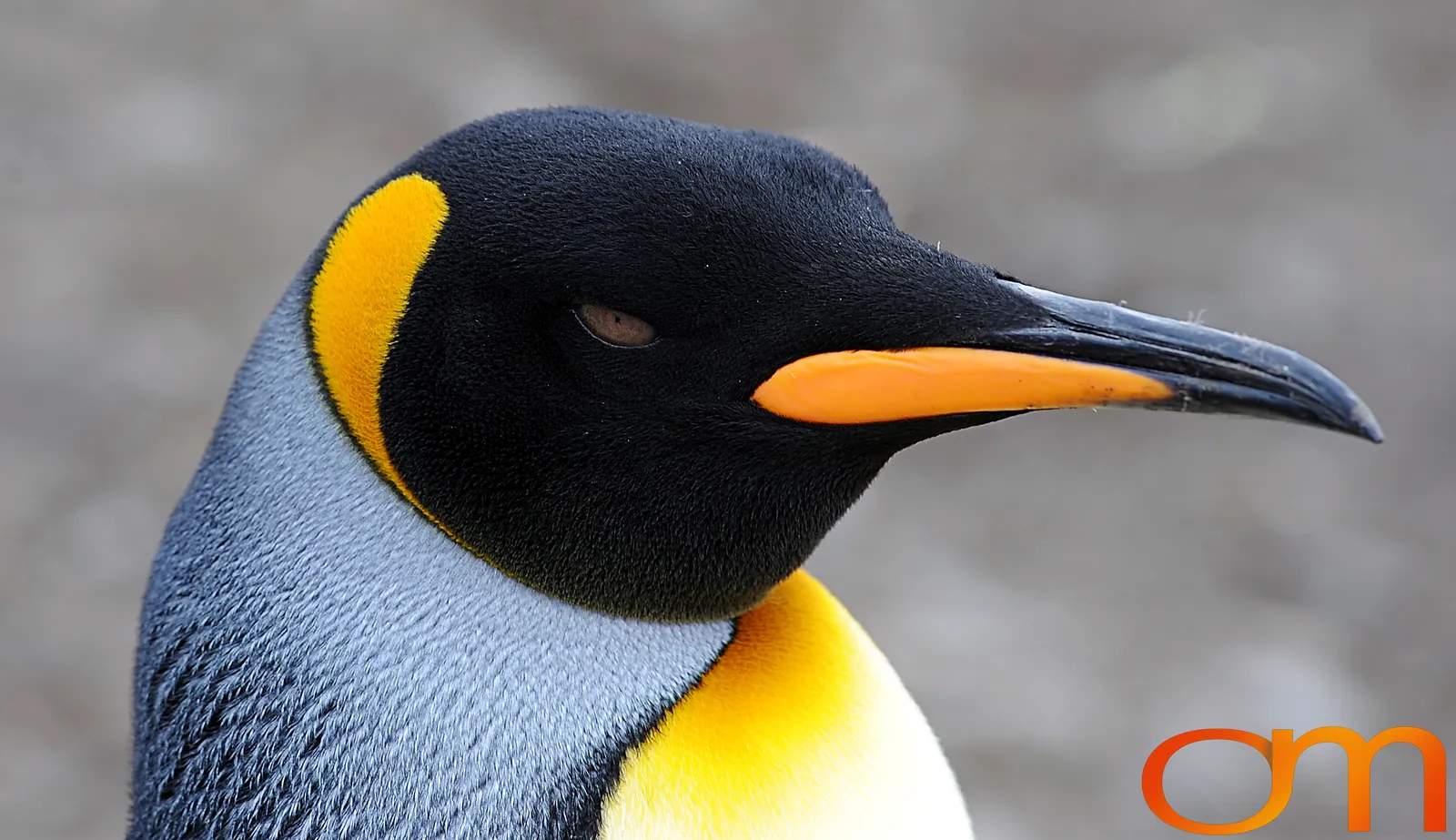
The king penguin, Aptenodytes patagonicus, is the second-largest penguin species, surpassed only by the emperor penguin. Adults stand approximately 33–37 inches (85–95 cm) tall and generally weigh 18–33 pounds (8–15 kg), although body mass changes considerably during the breeding cycle. Males tend to be slightly larger than females. King penguins resemble emperor penguins but have a slimmer build, proportionally larger flippers, and vivid orange ear patches that extend toward the upper chest.
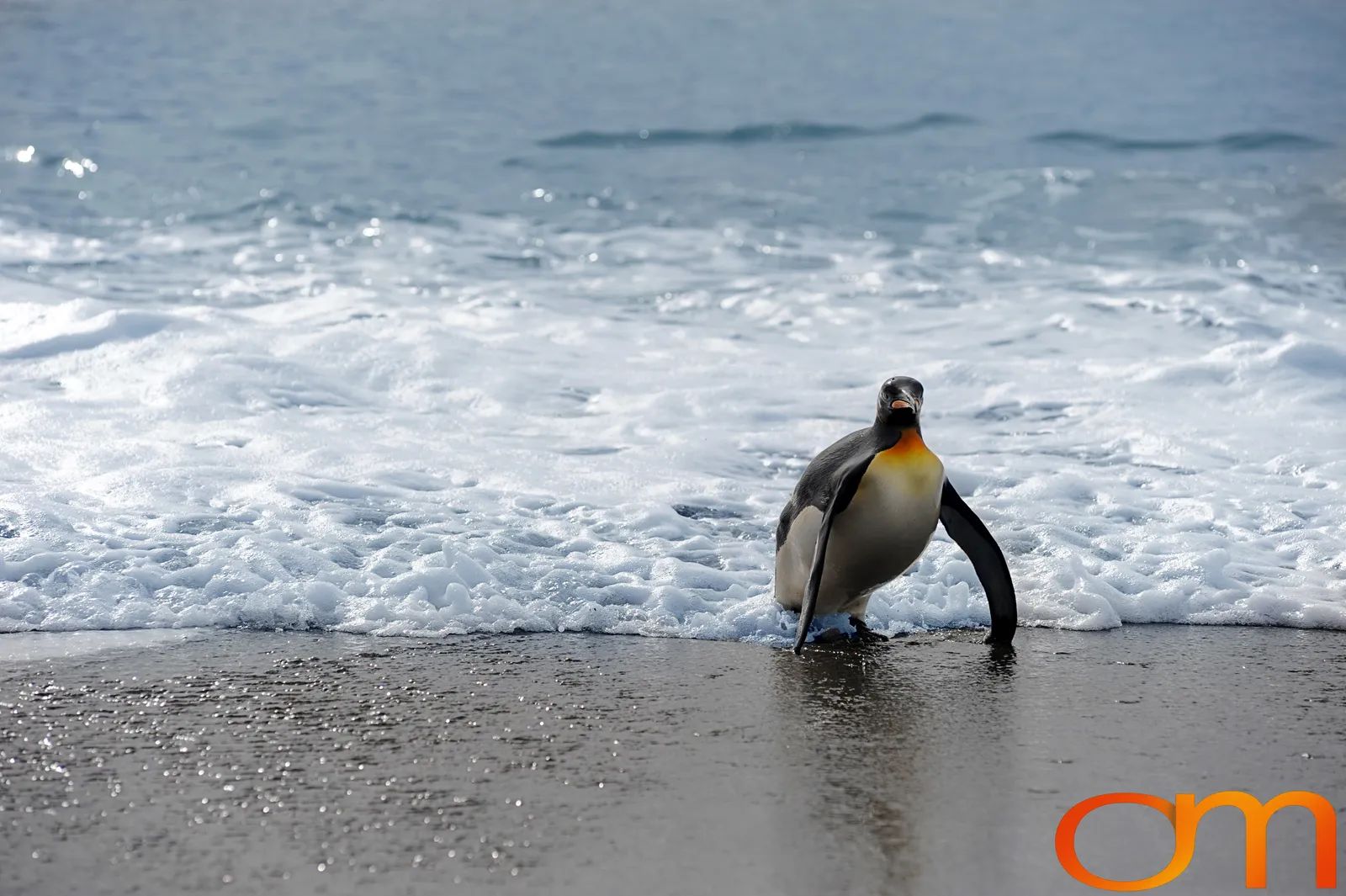
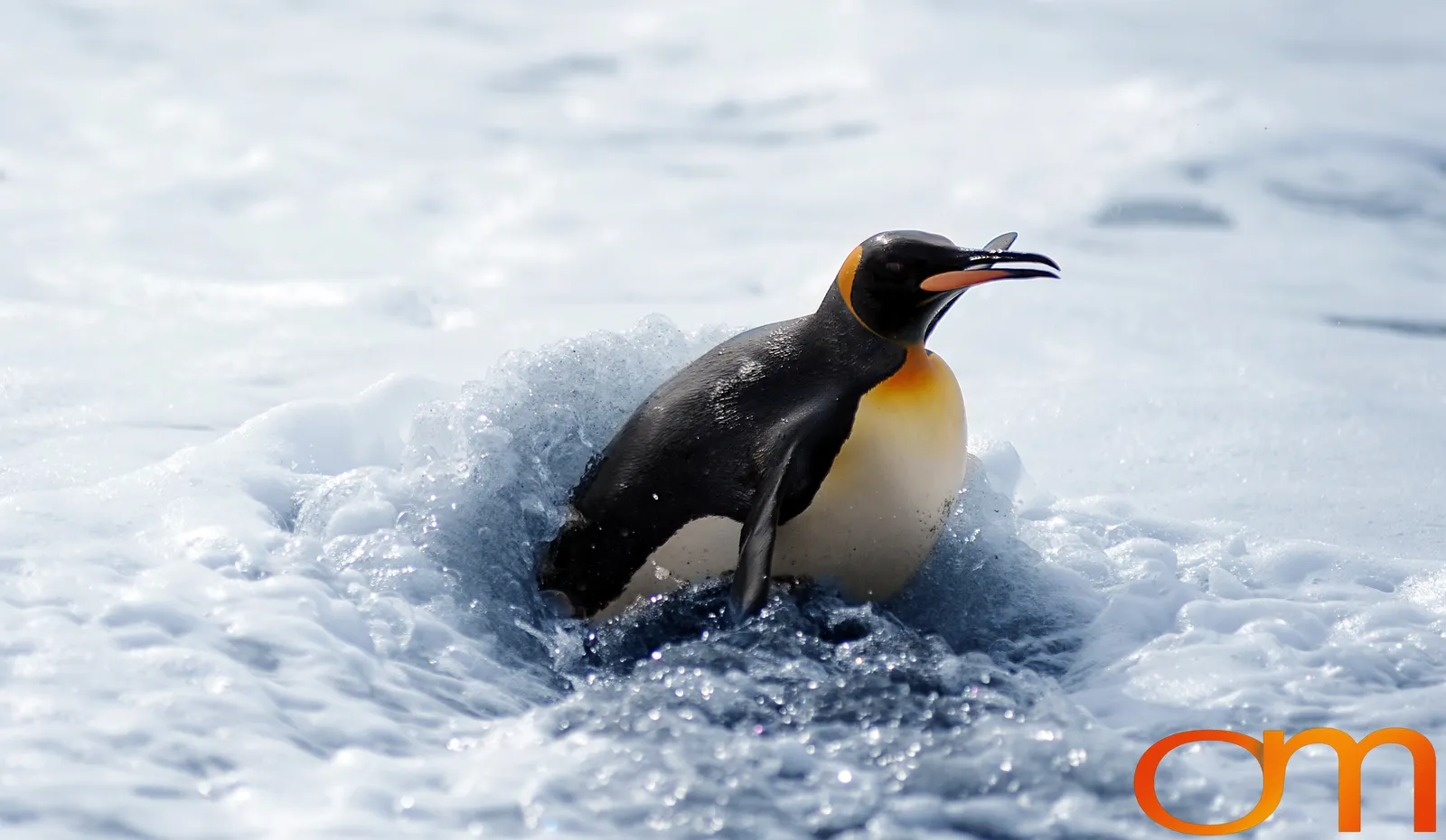
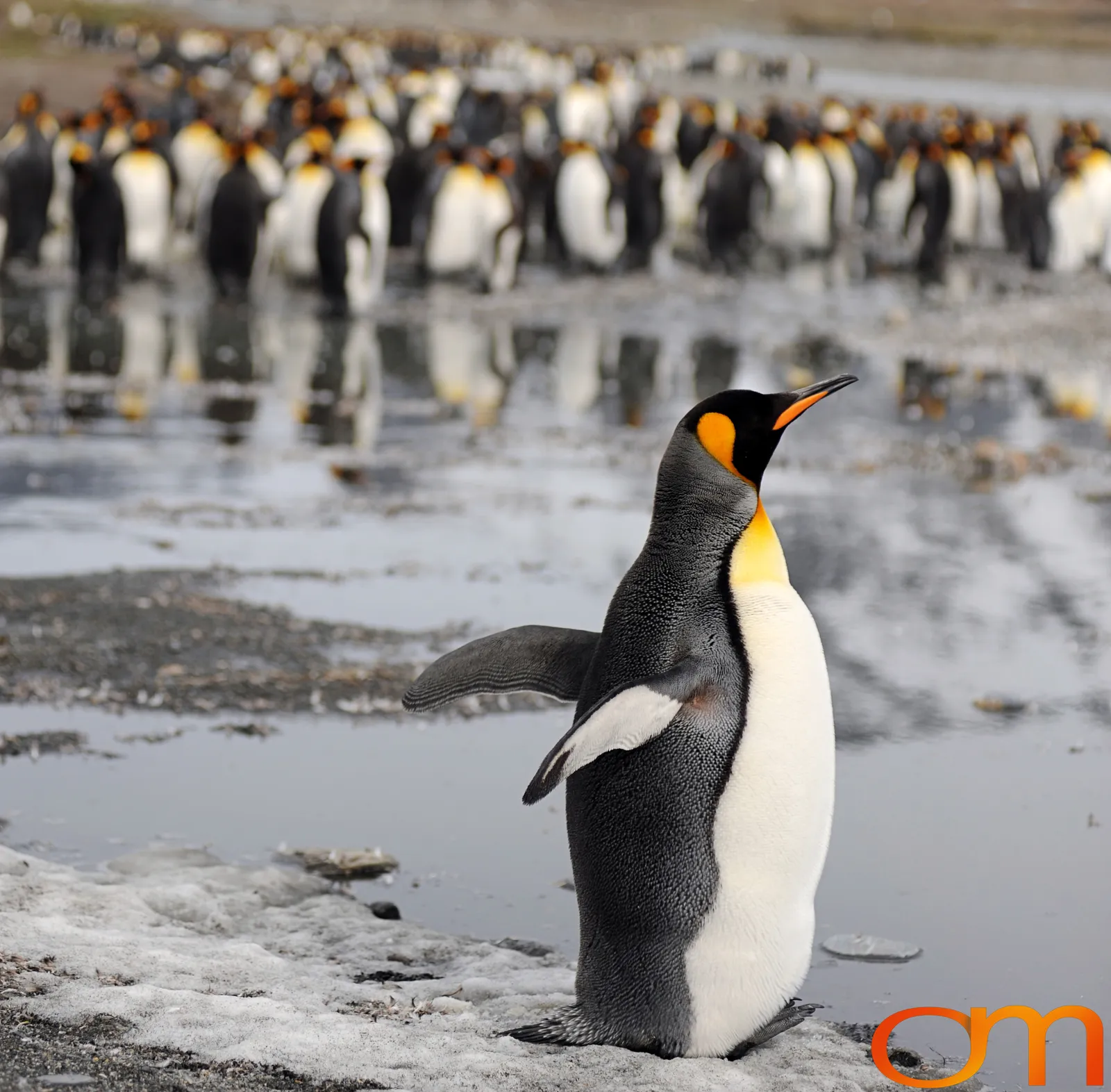
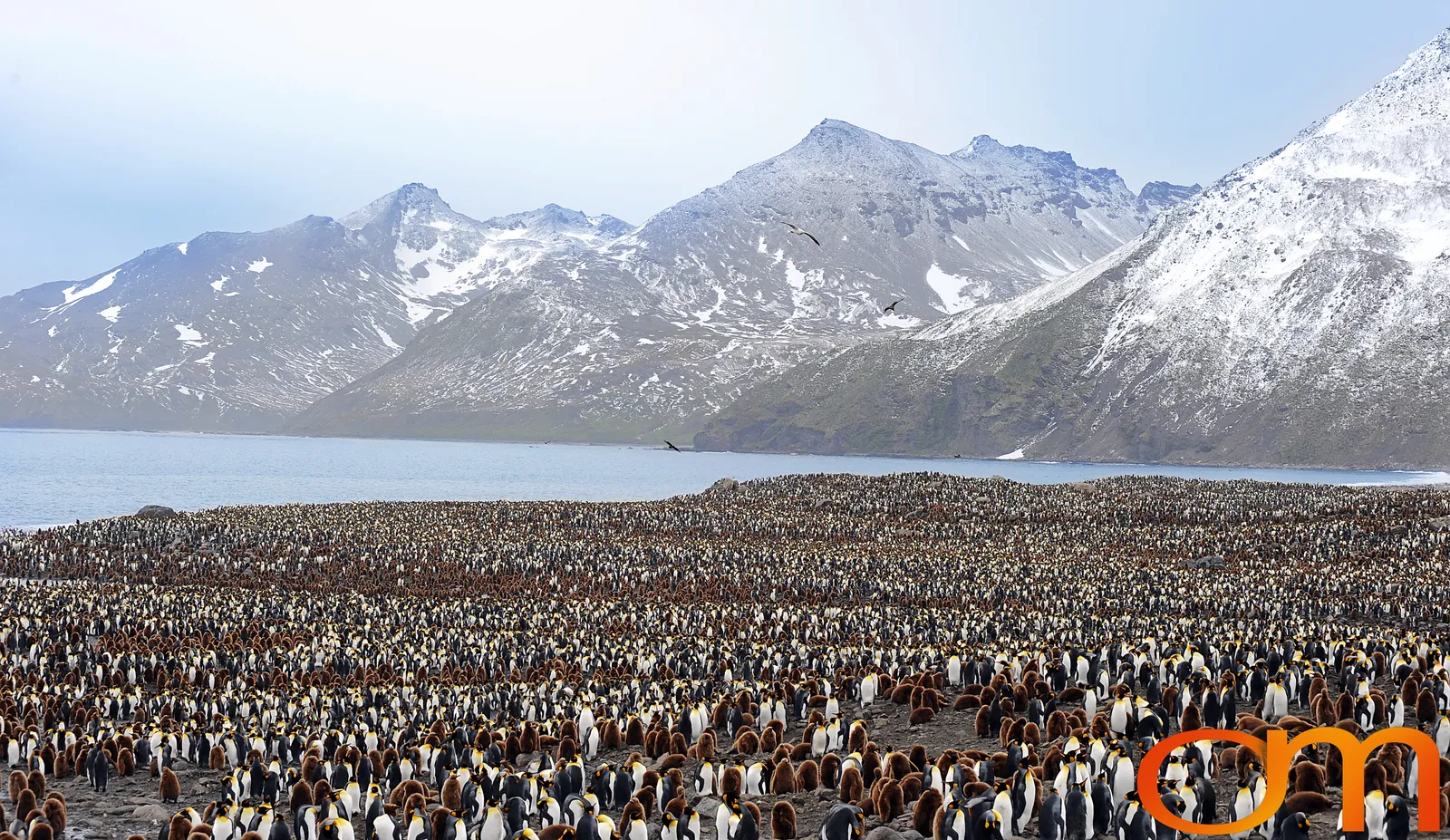
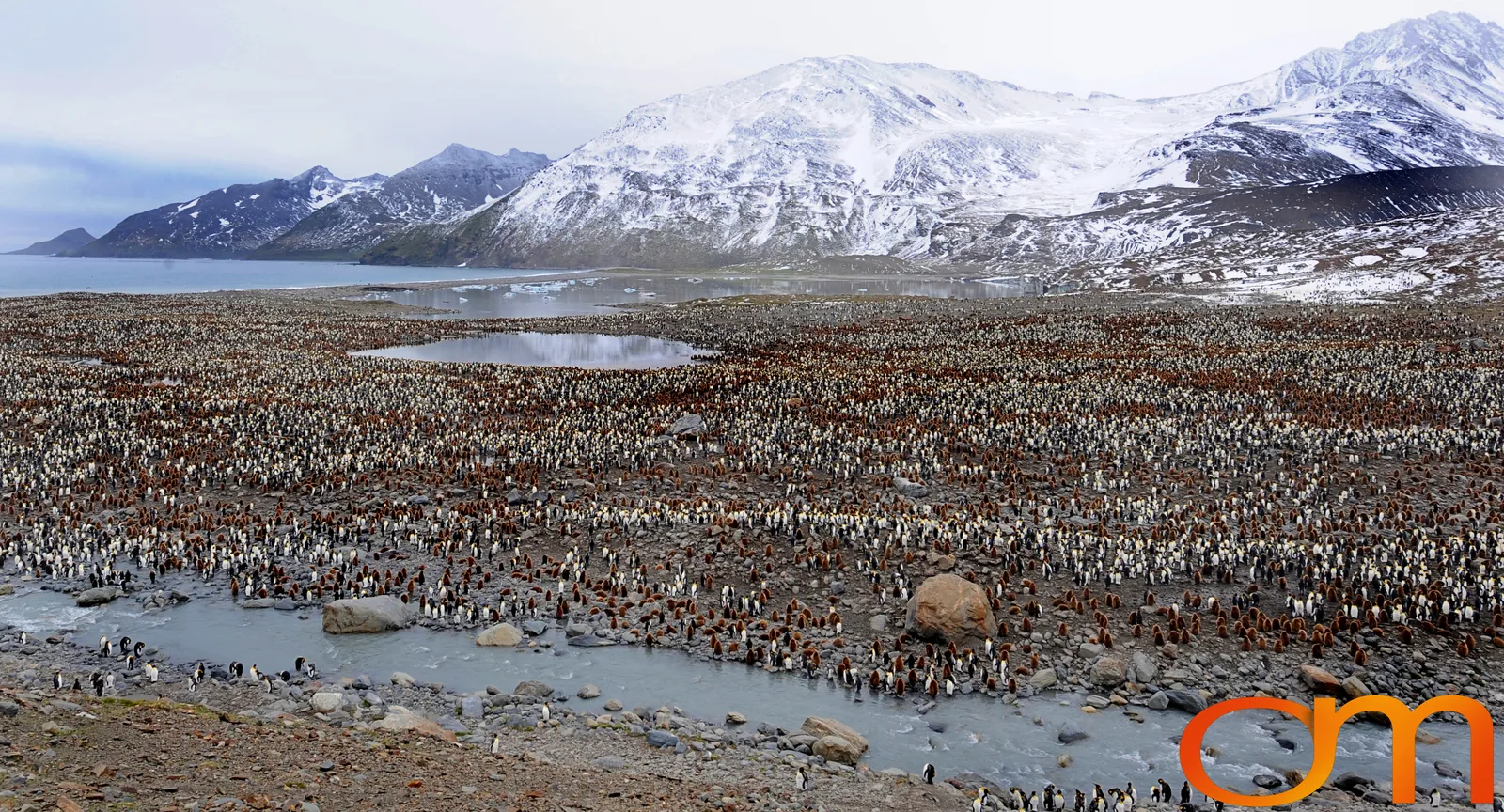
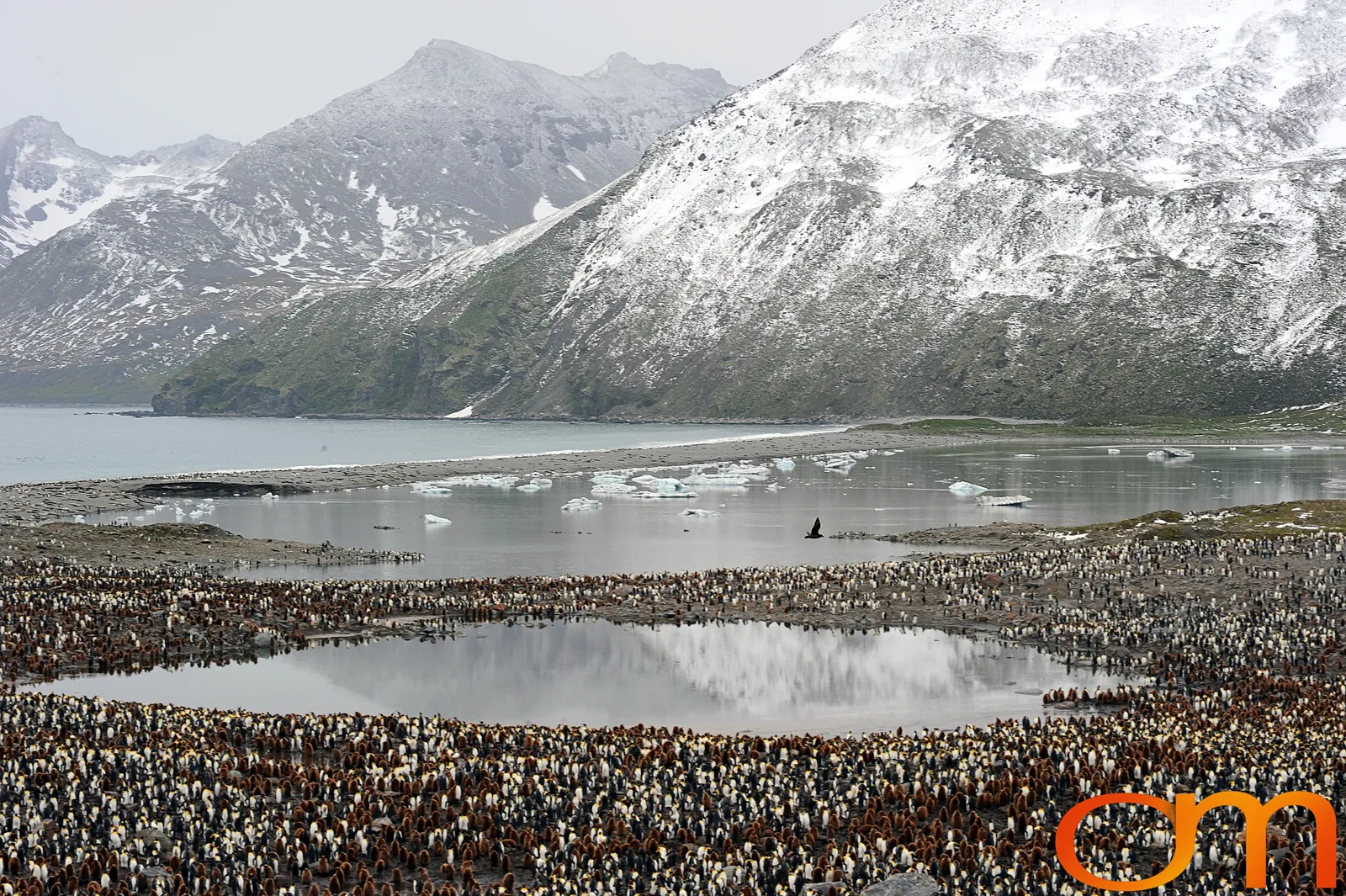
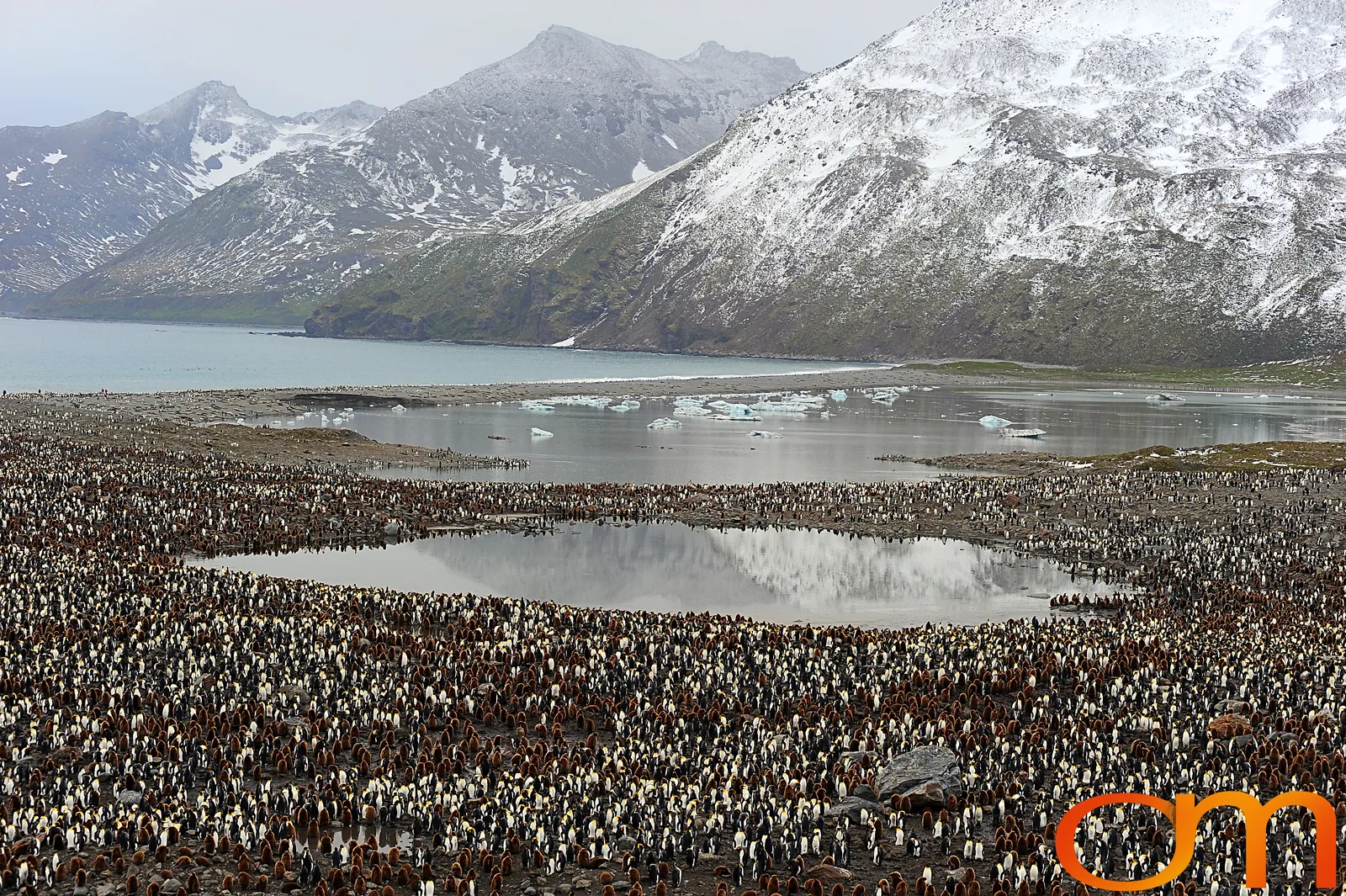
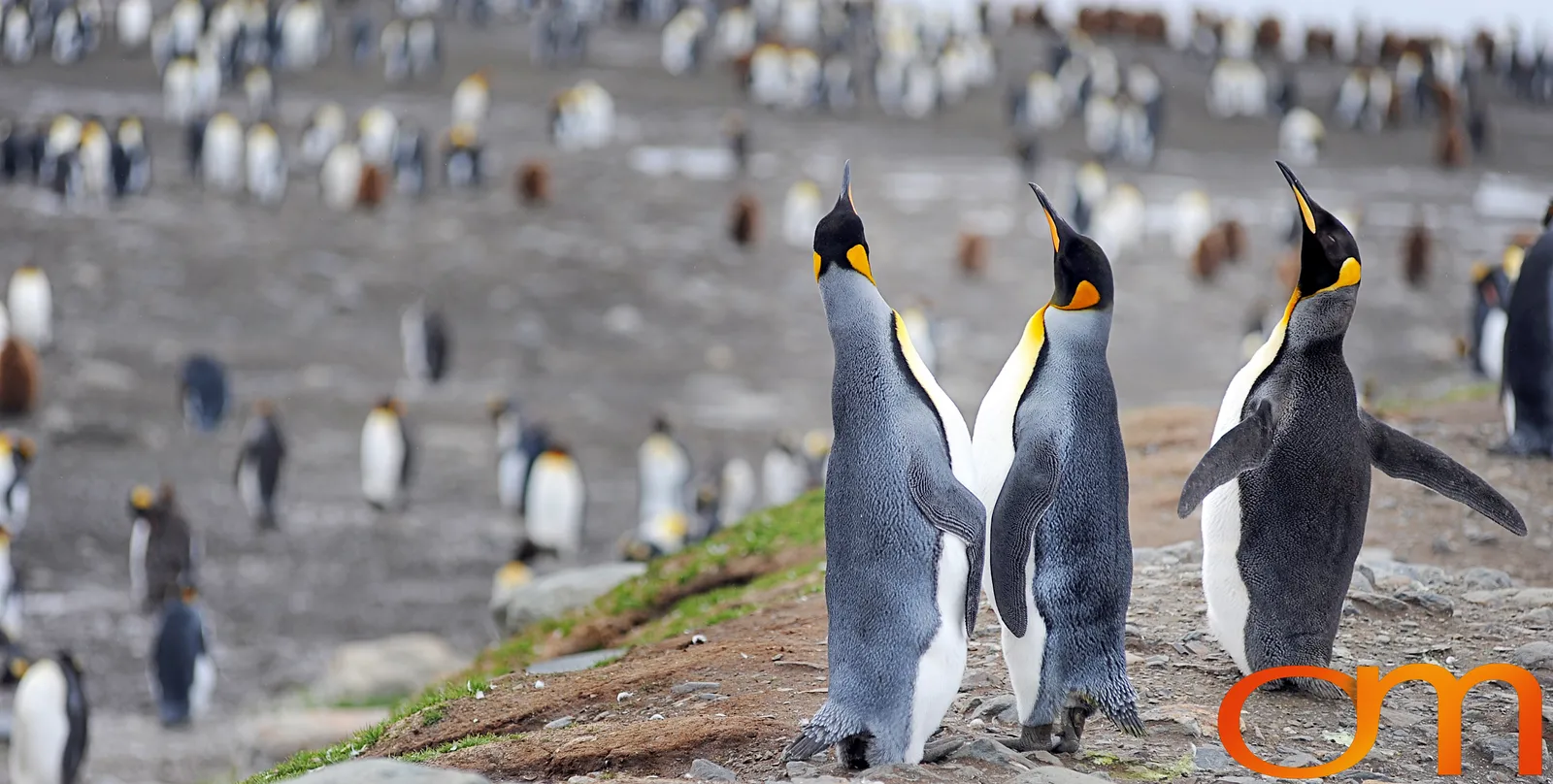
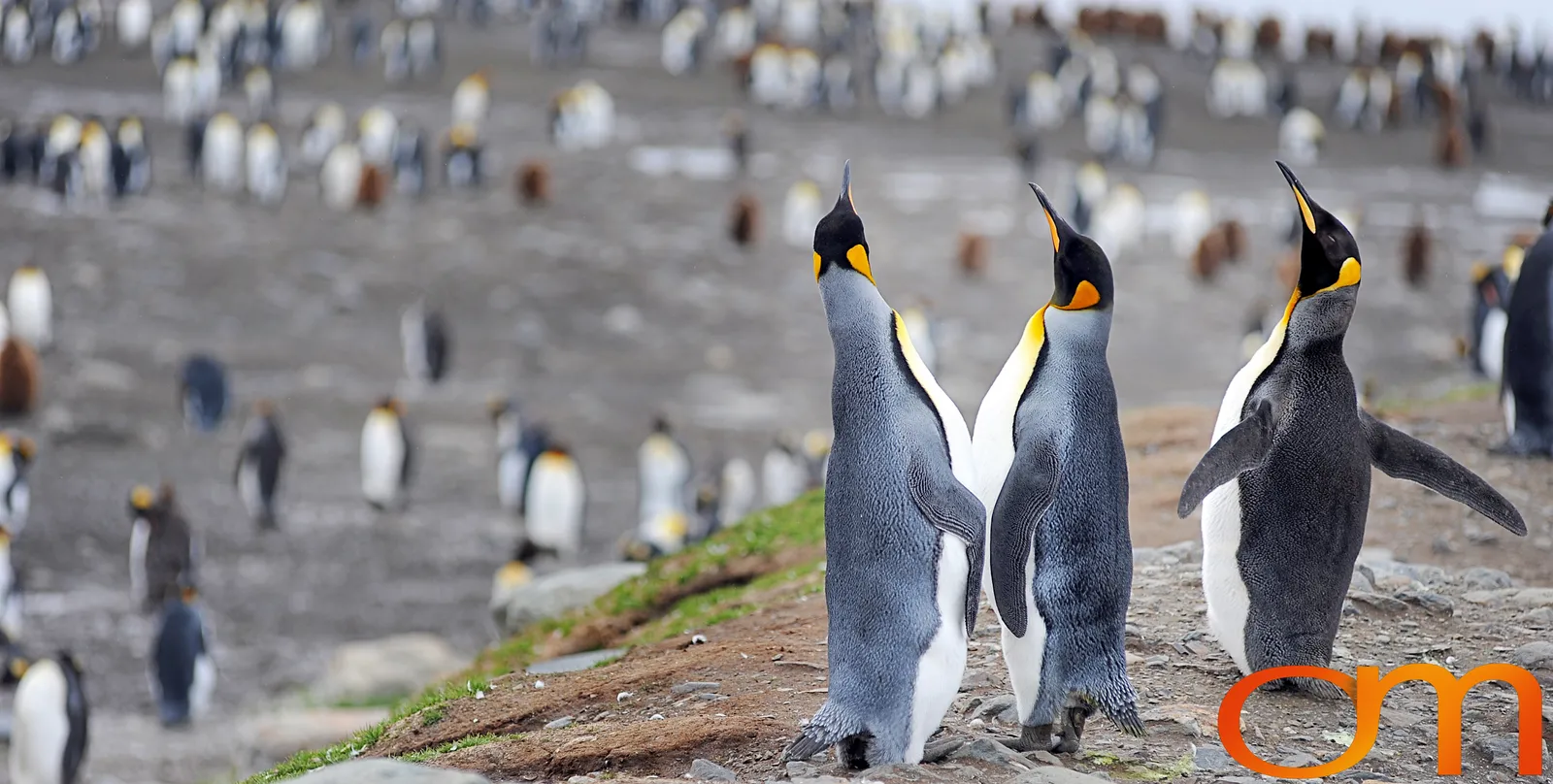
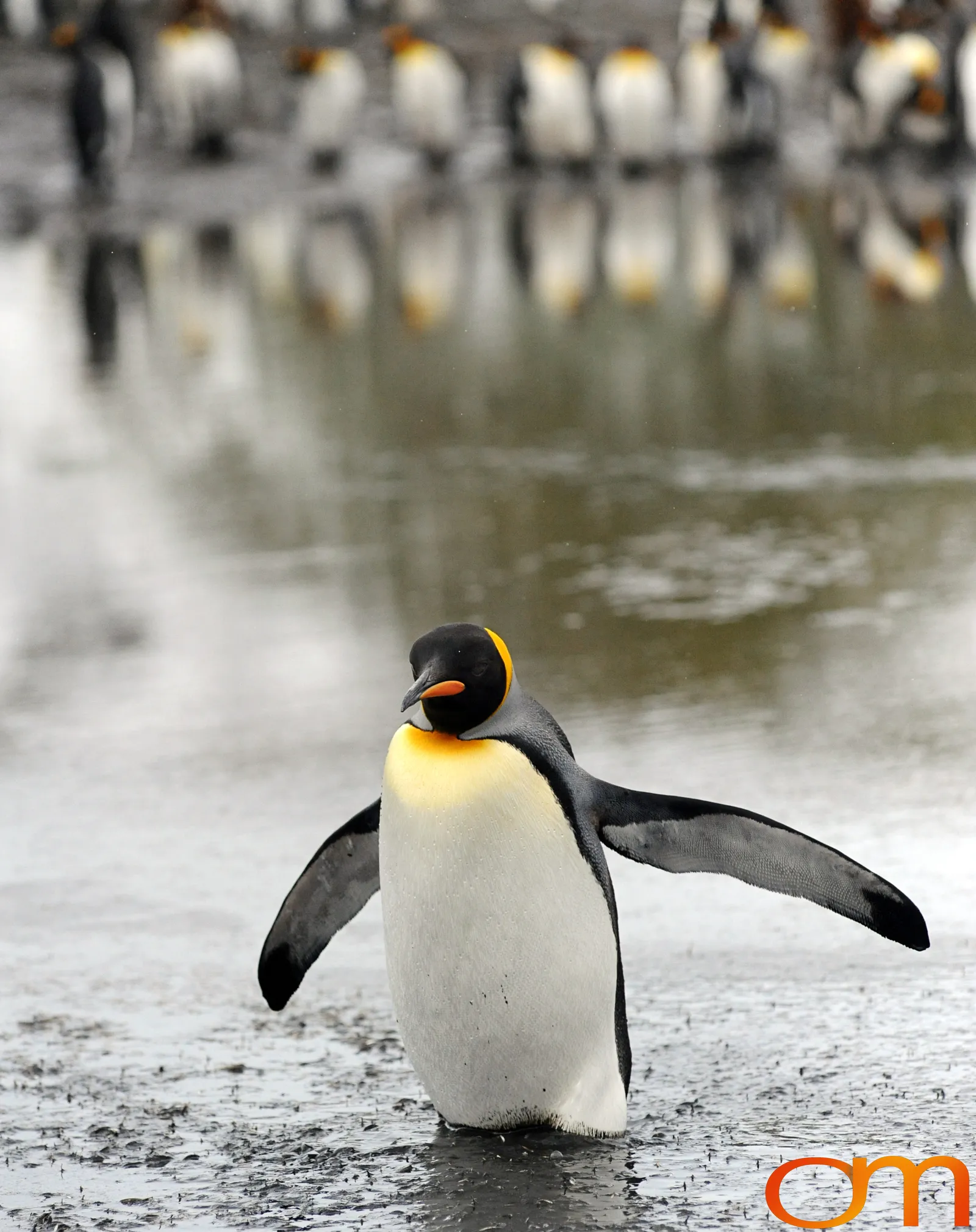
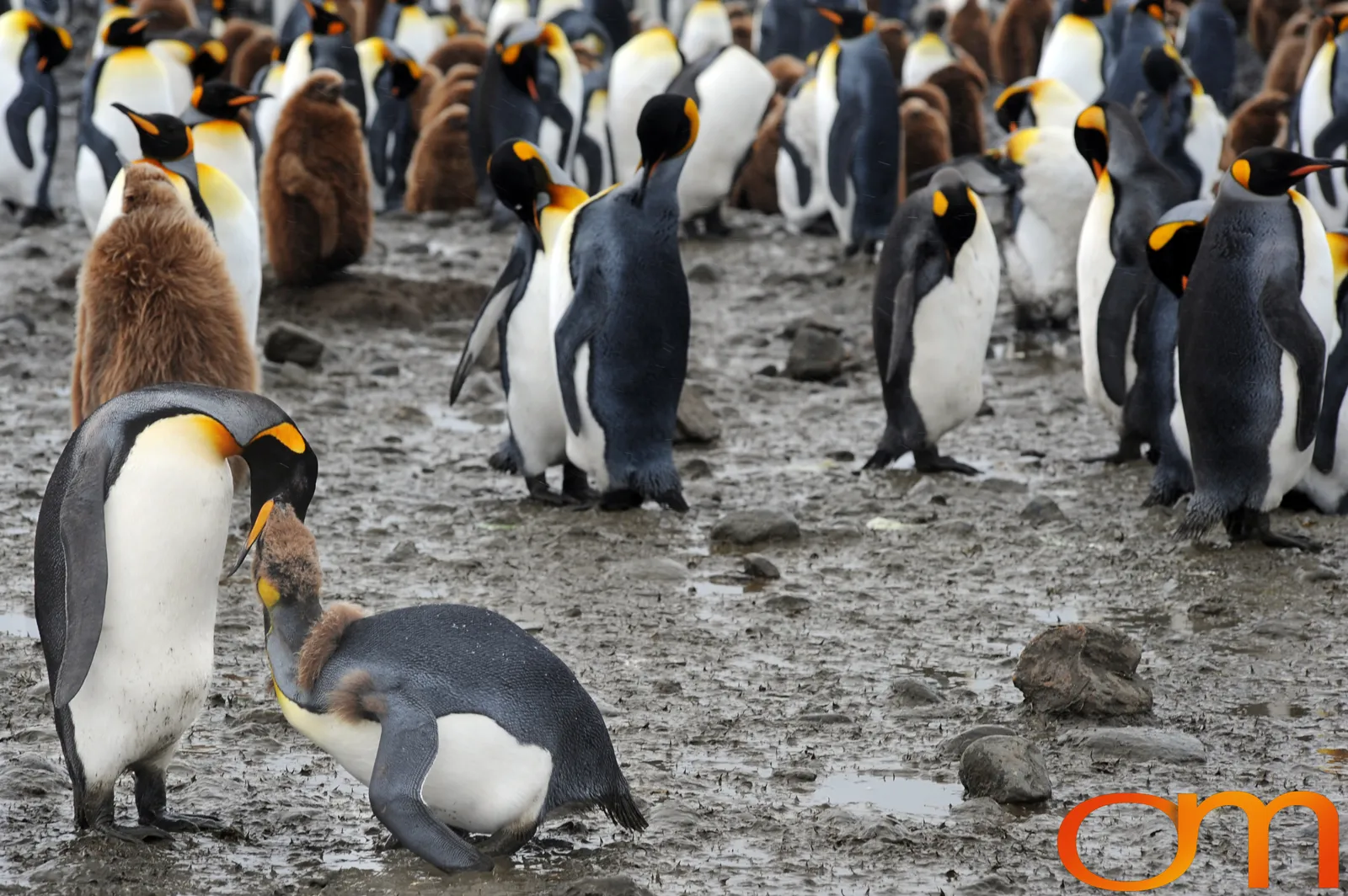
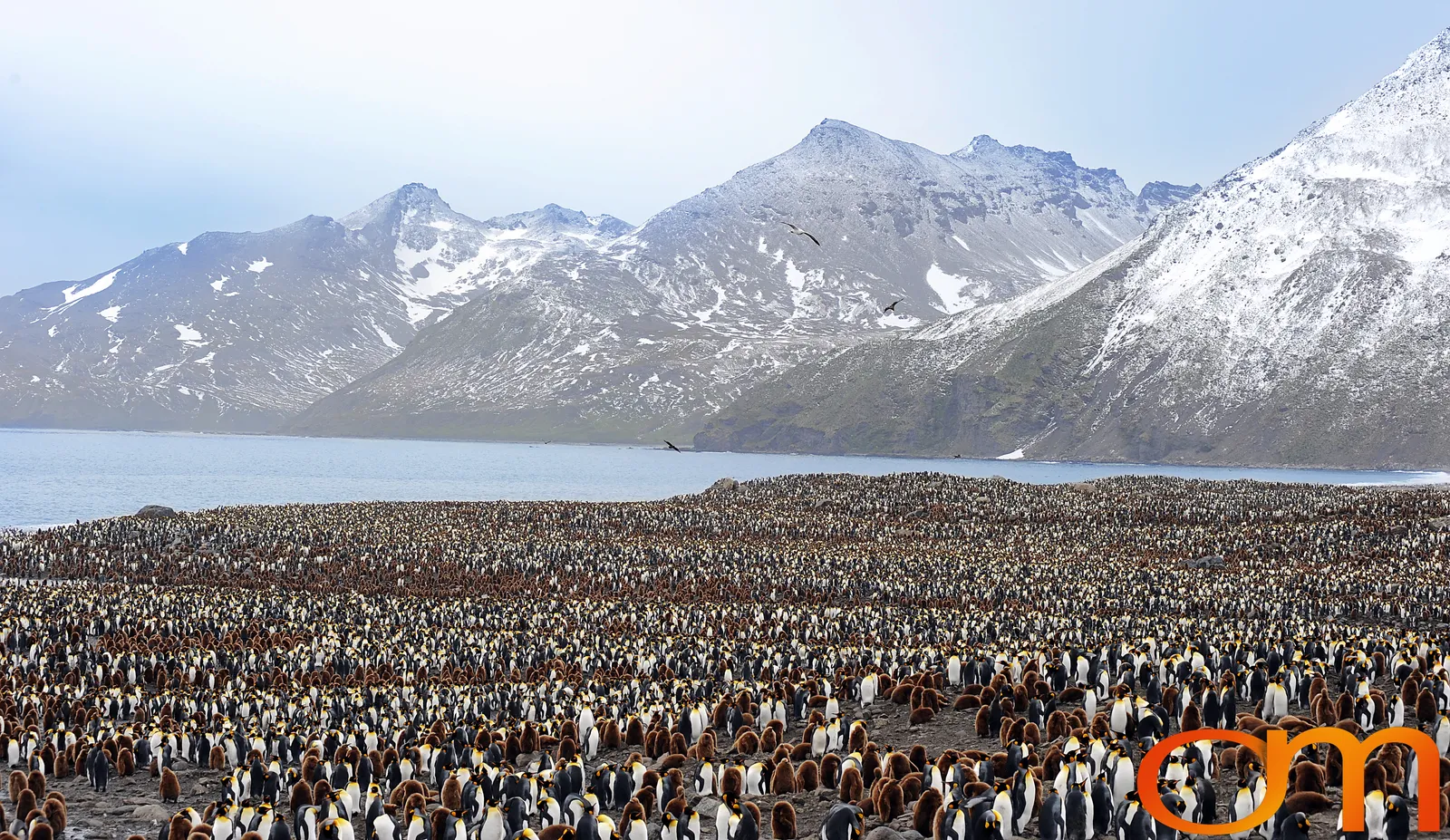
King penguins breed on numerous subantarctic islands across the Southern Ocean, including South Georgia, the Falkland Islands, the Crozet and Kerguelen Islands, the Prince Edward Islands, Heard Island, and Macquarie Island. Immature and nonbreeding birds may travel far from these breeding grounds while at sea. Colonies vary from small groups to several hundred thousand breeding pairs and typically occupy snow- and ice-free beaches, valleys, and moraines near the coast.
King penguins build no nest. The female lays a single egg, which each parent balances on its feet beneath a fold of abdominal skin called a brood pouch. Both adults share the approximately 54-day incubation period. Including the premolt stage, the full breeding cycle can last 13–16 months, longer than that of any other penguin. Because of this extended schedule, successful pairs generally cannot raise a chick every year.
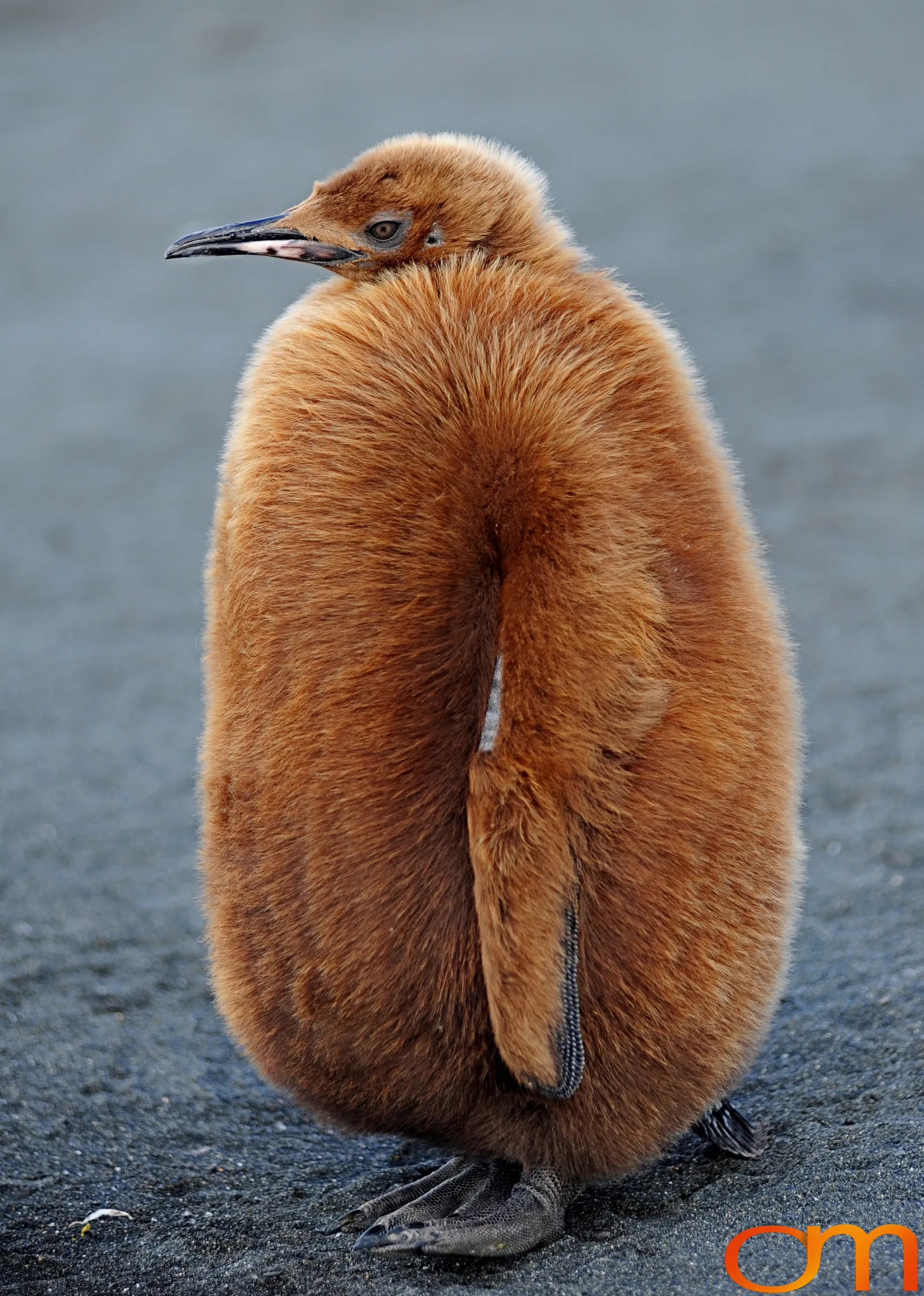
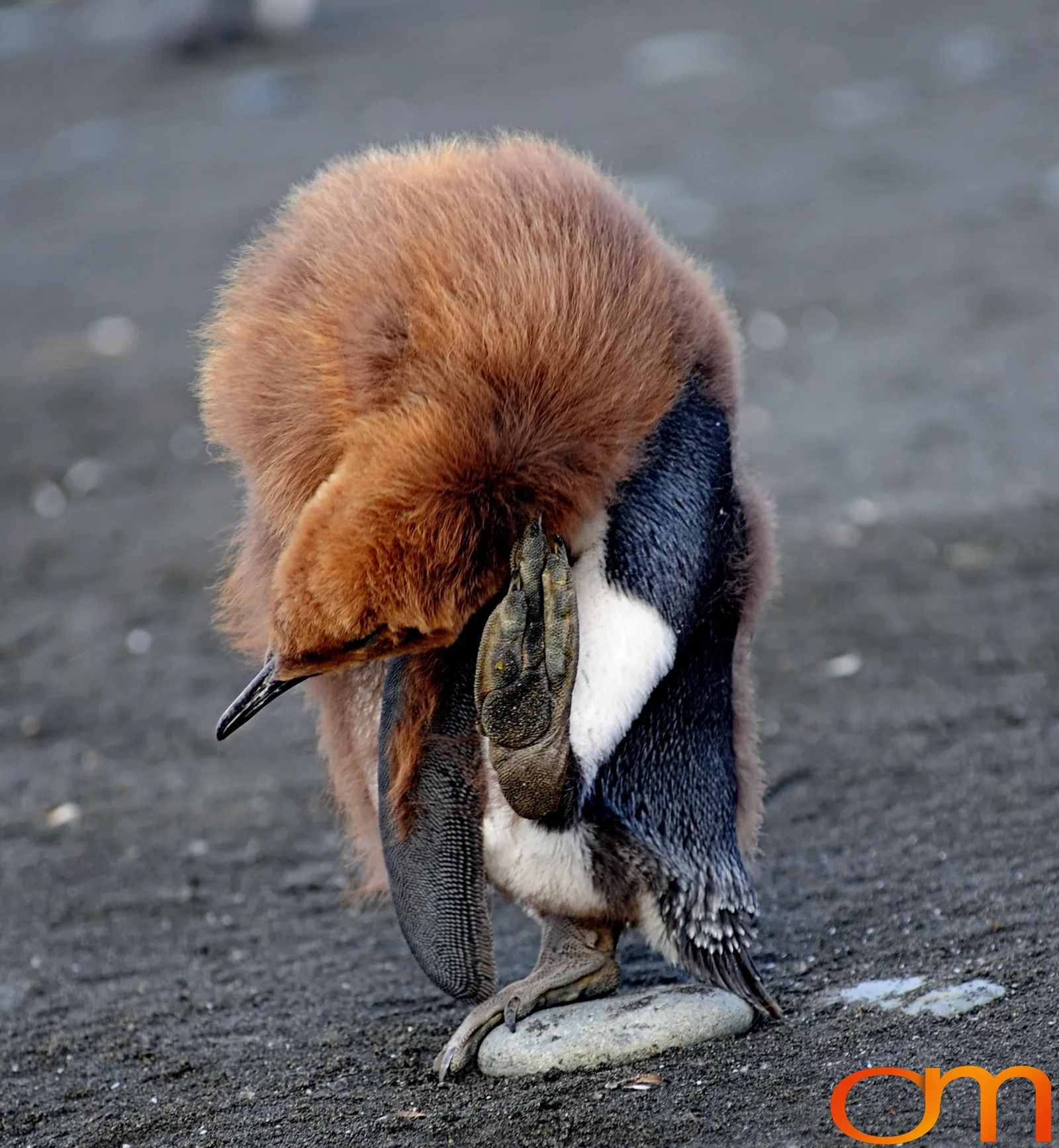
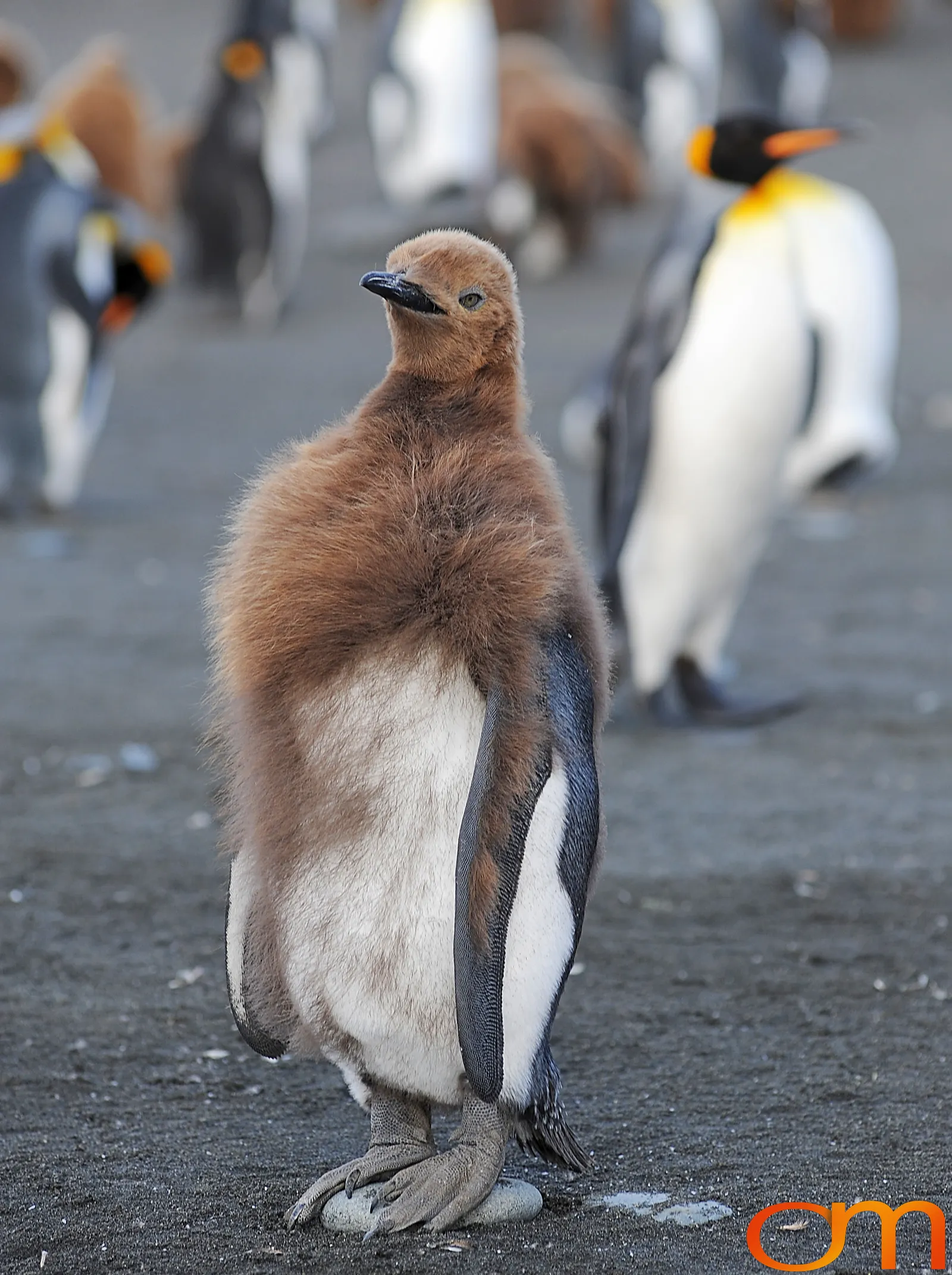
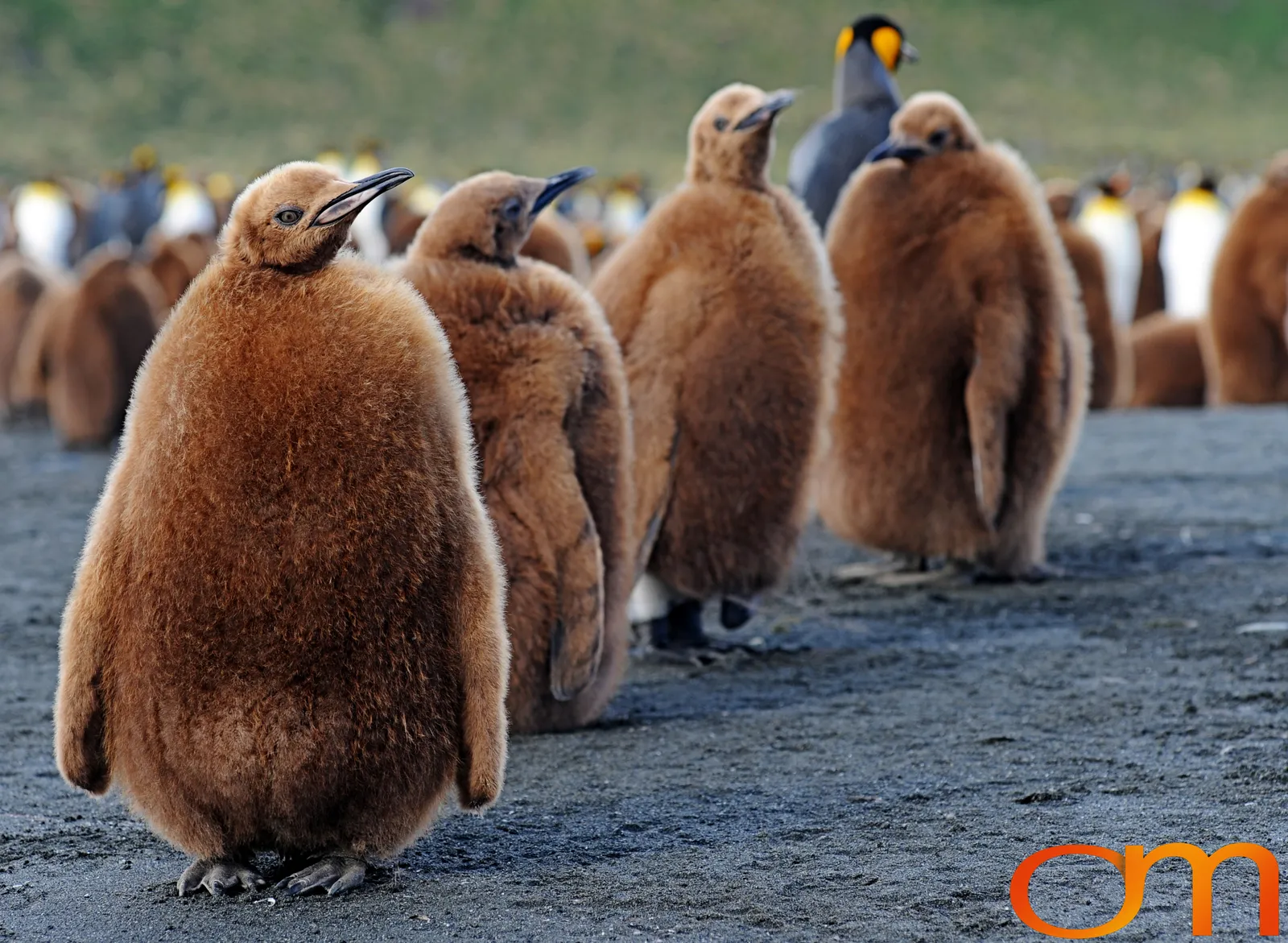
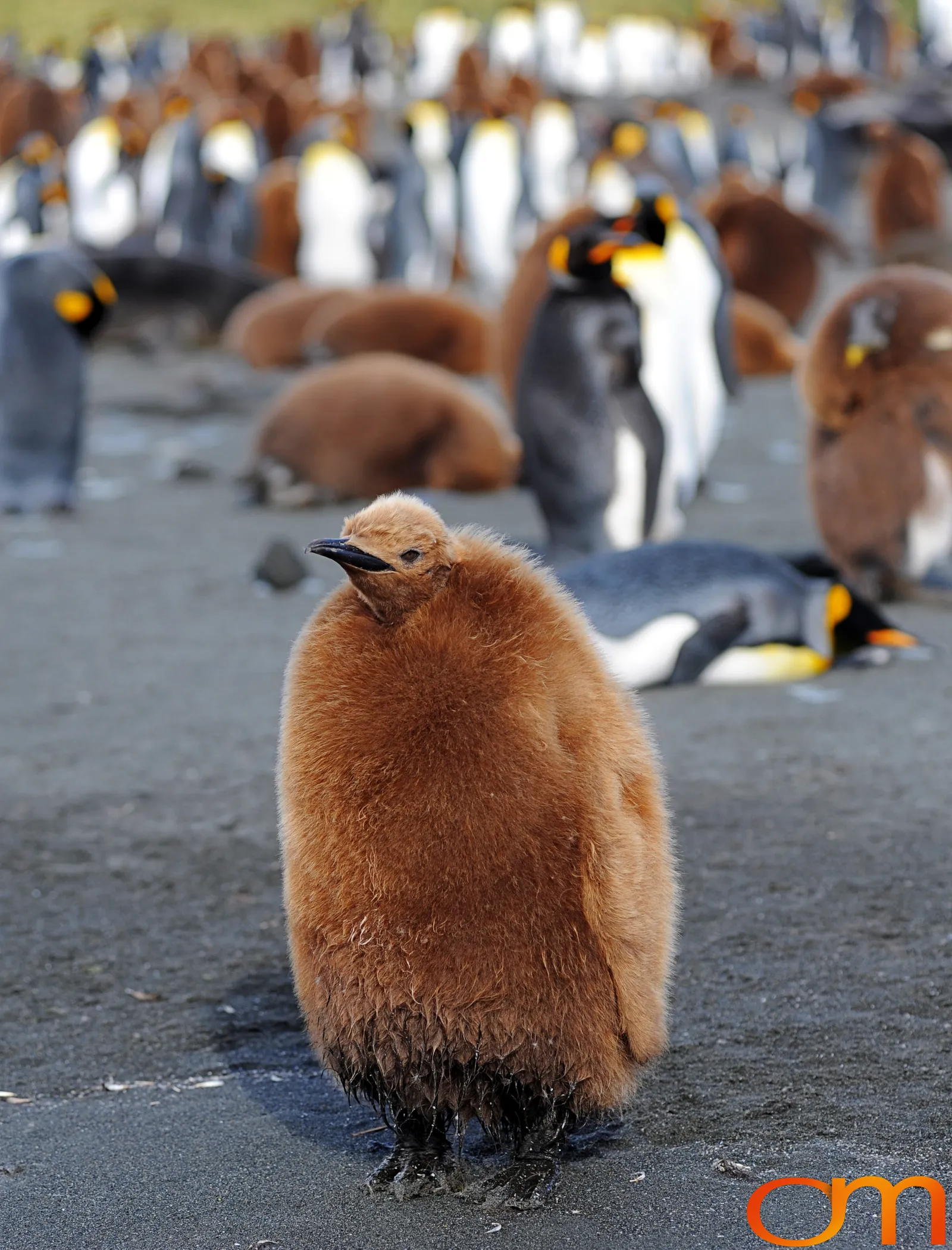
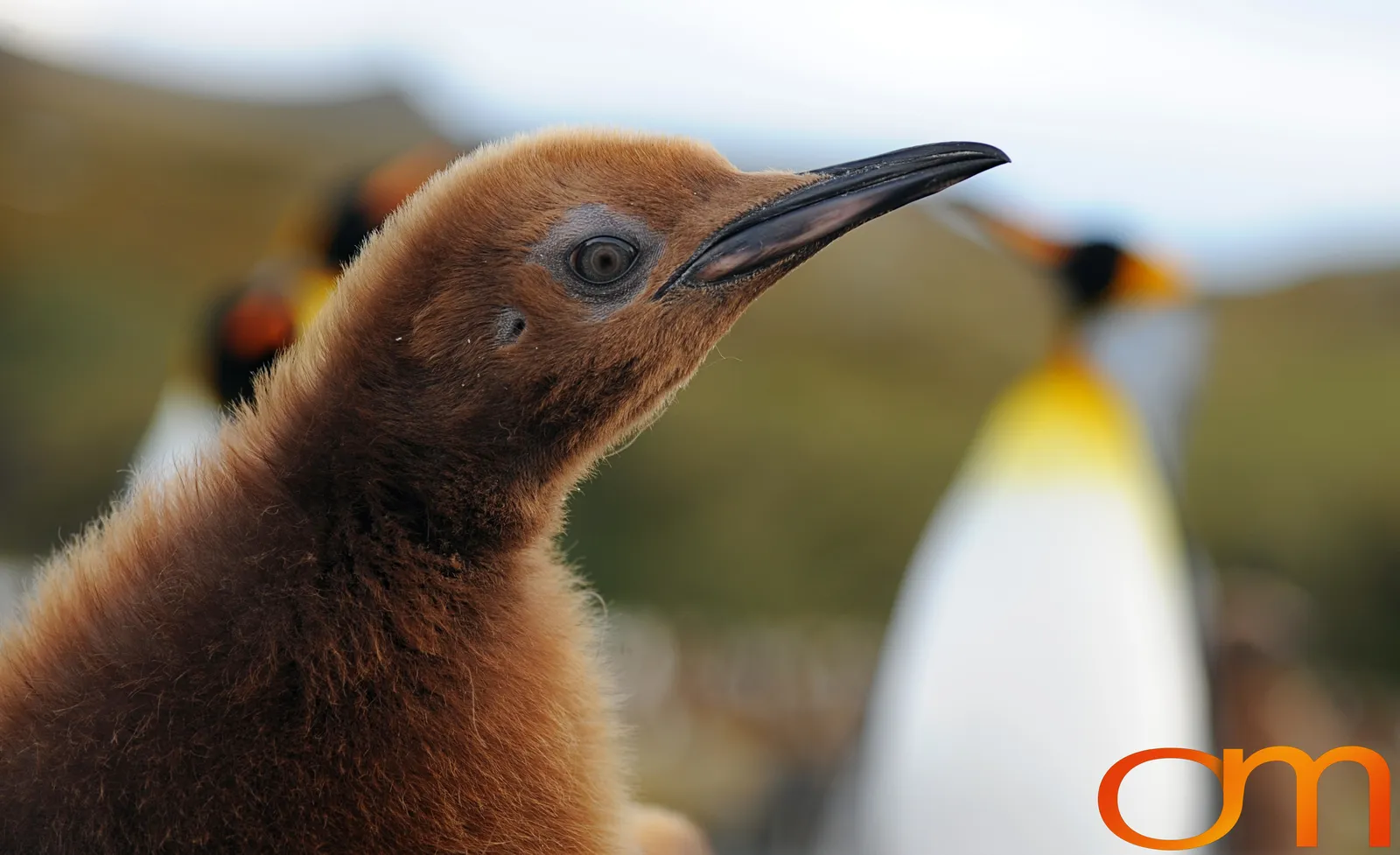
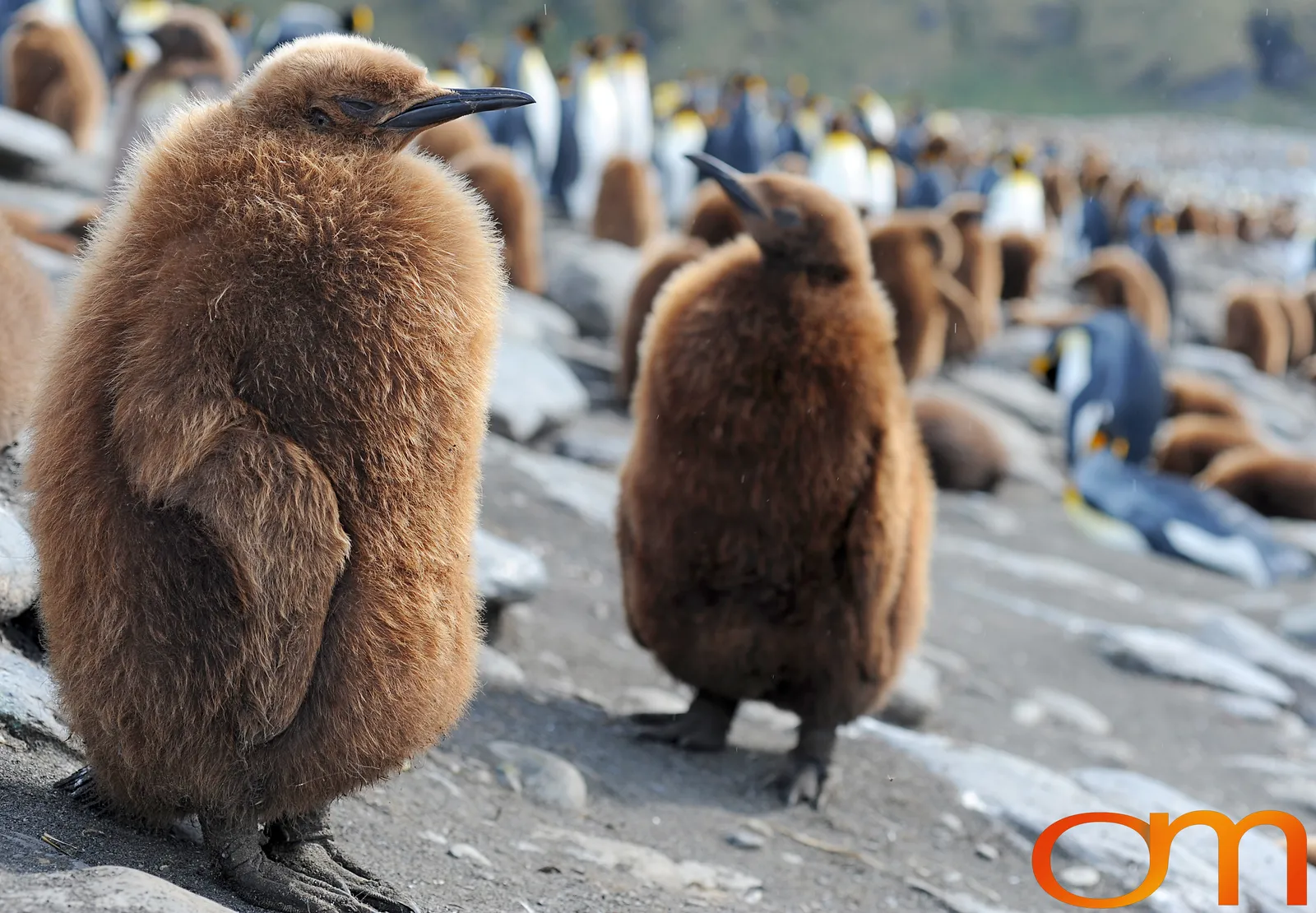
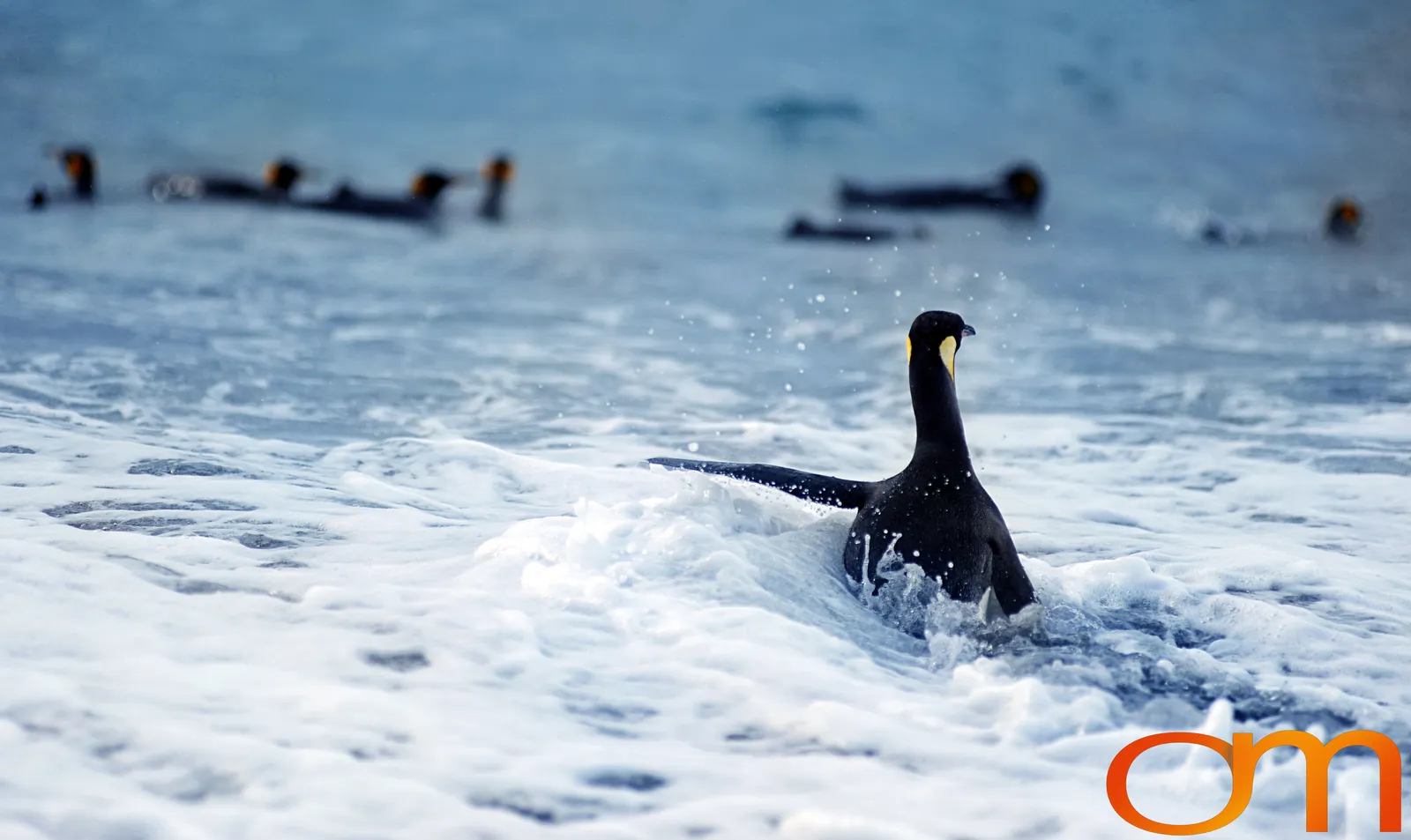
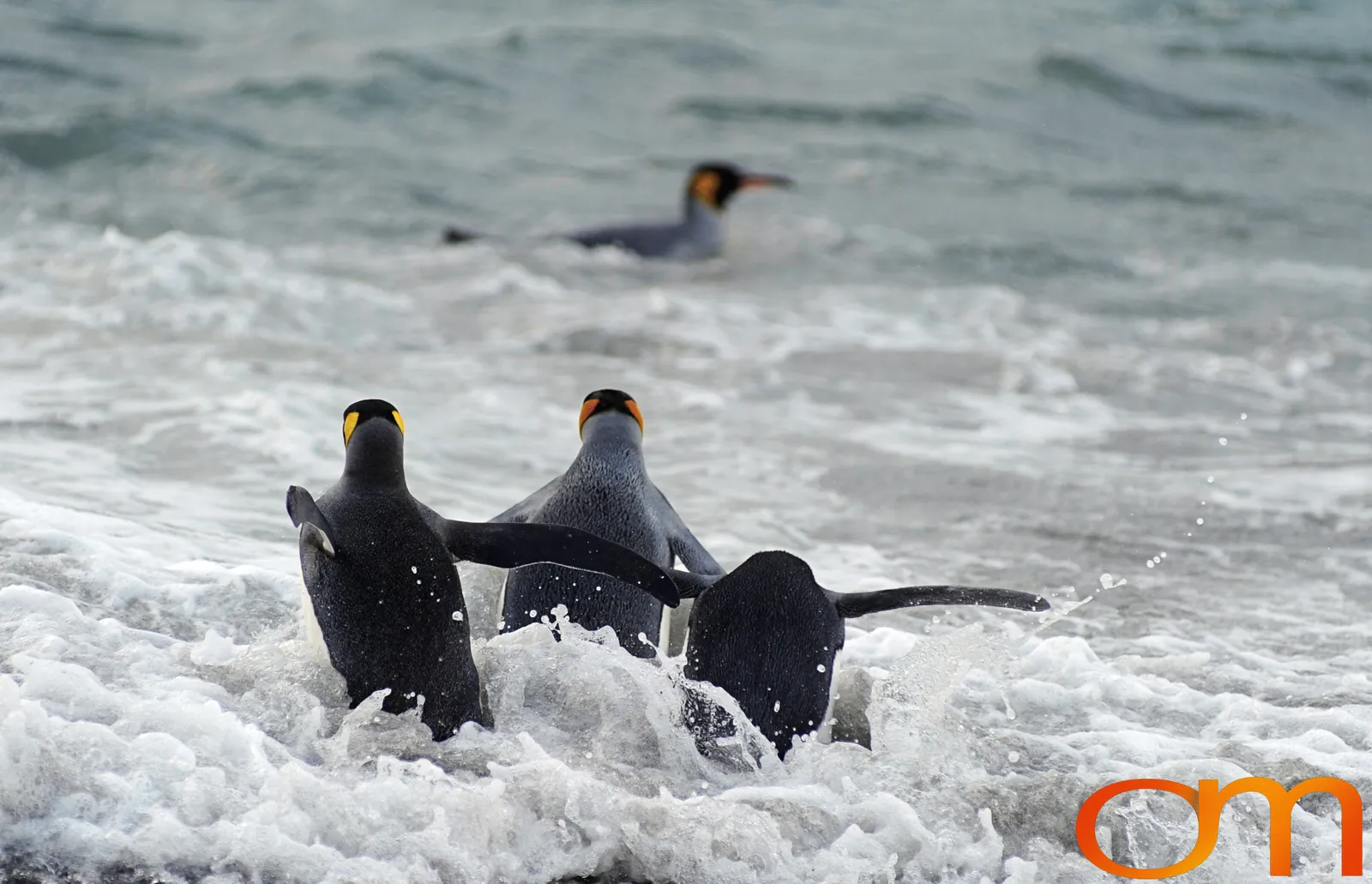
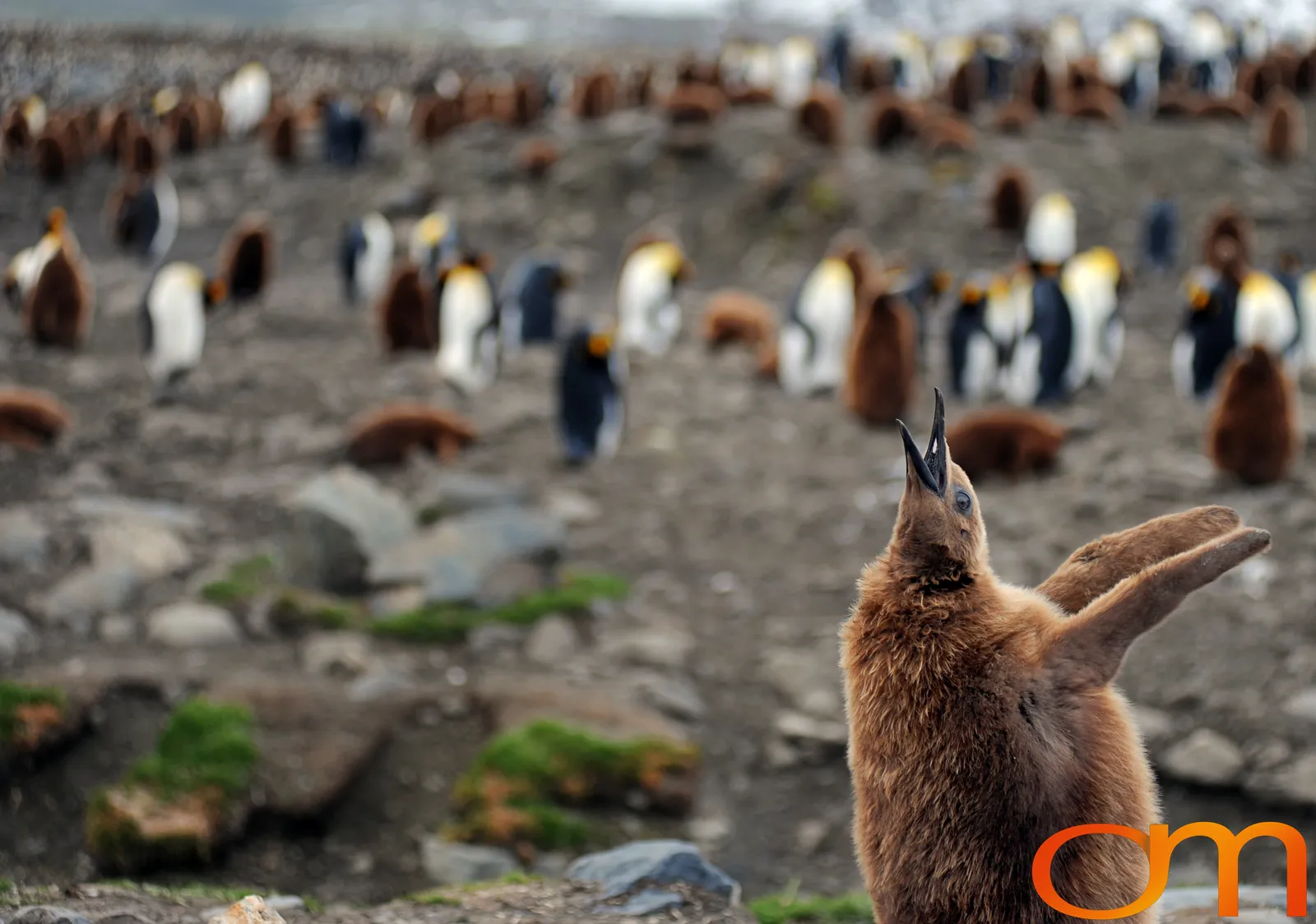
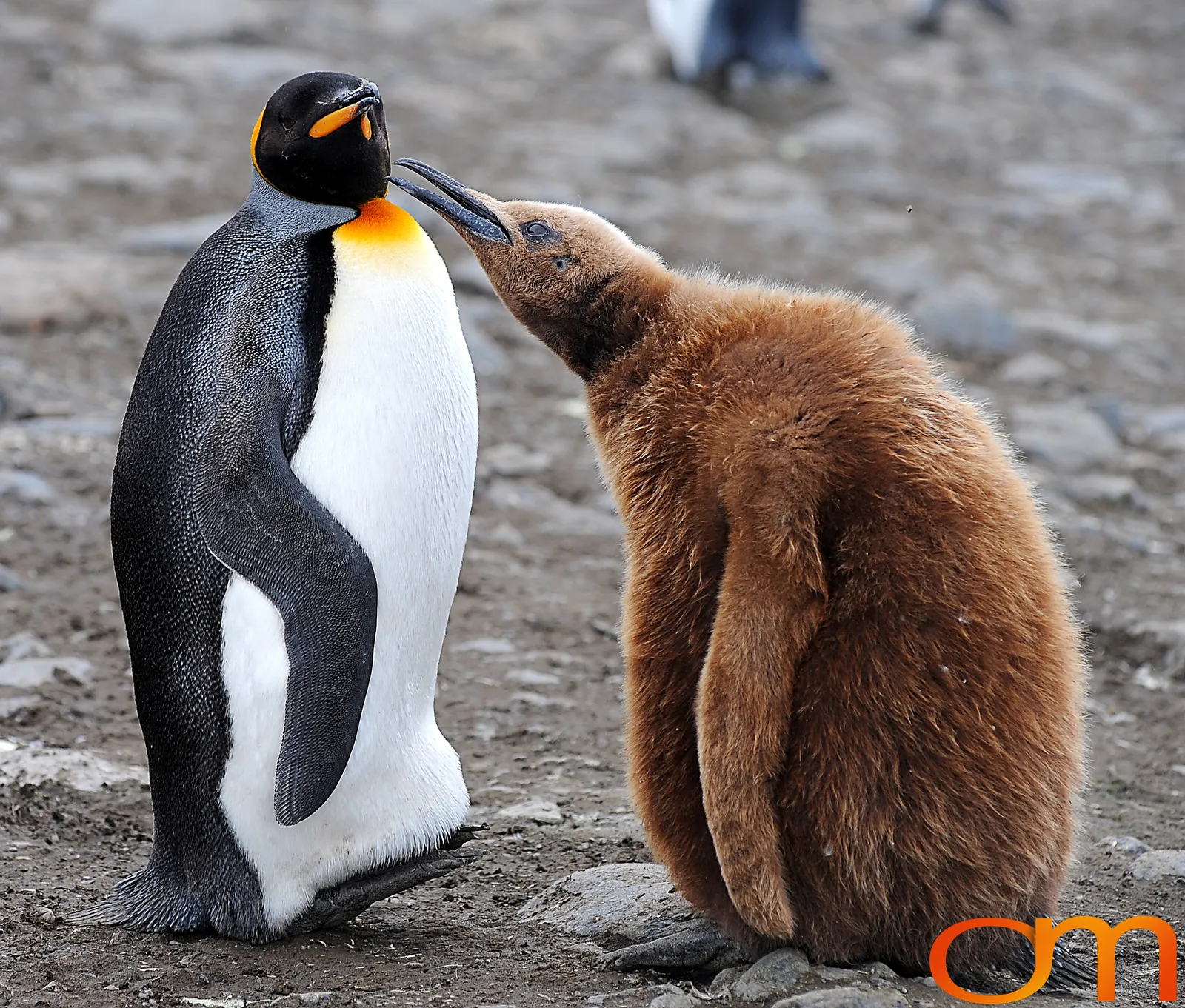
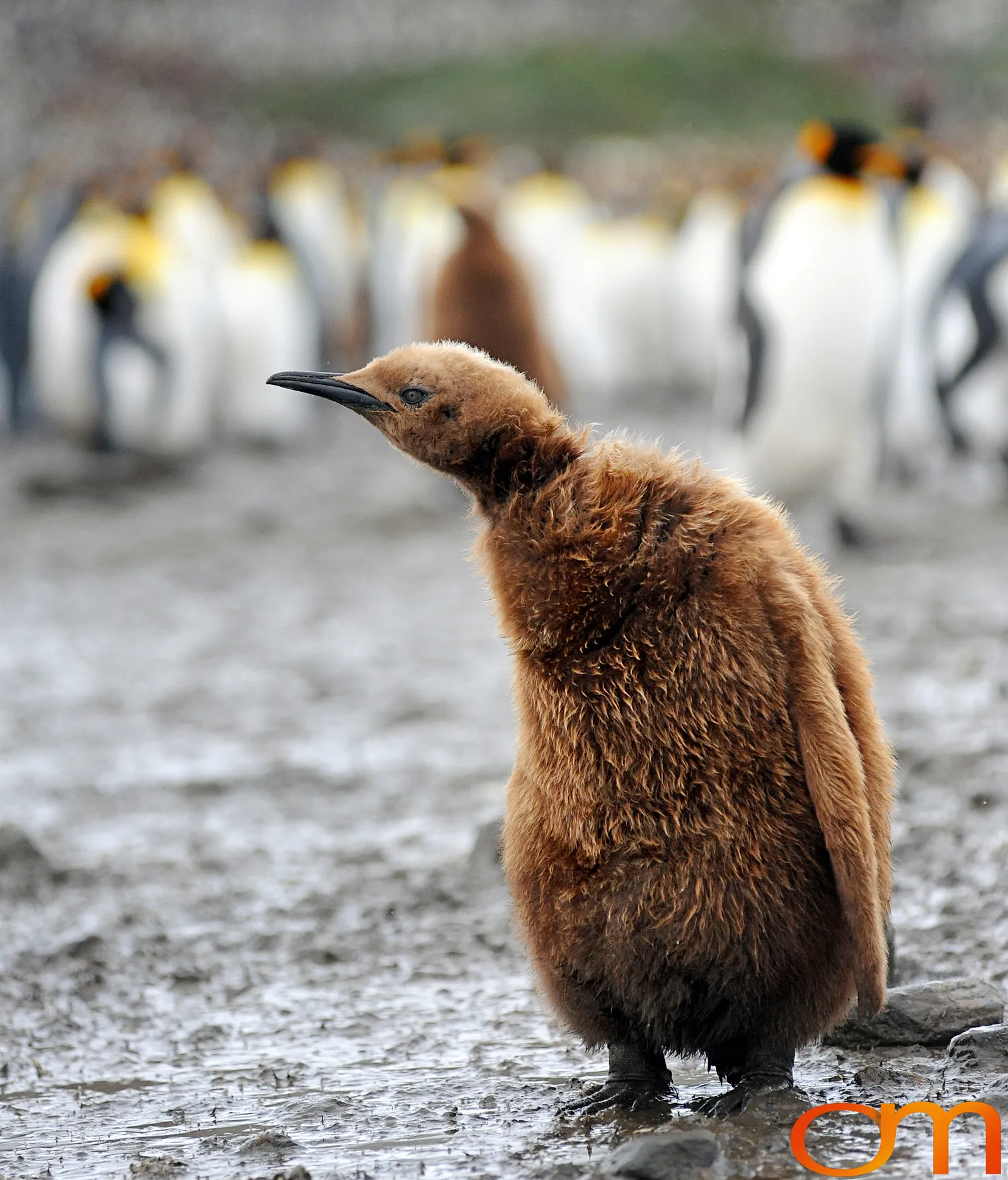
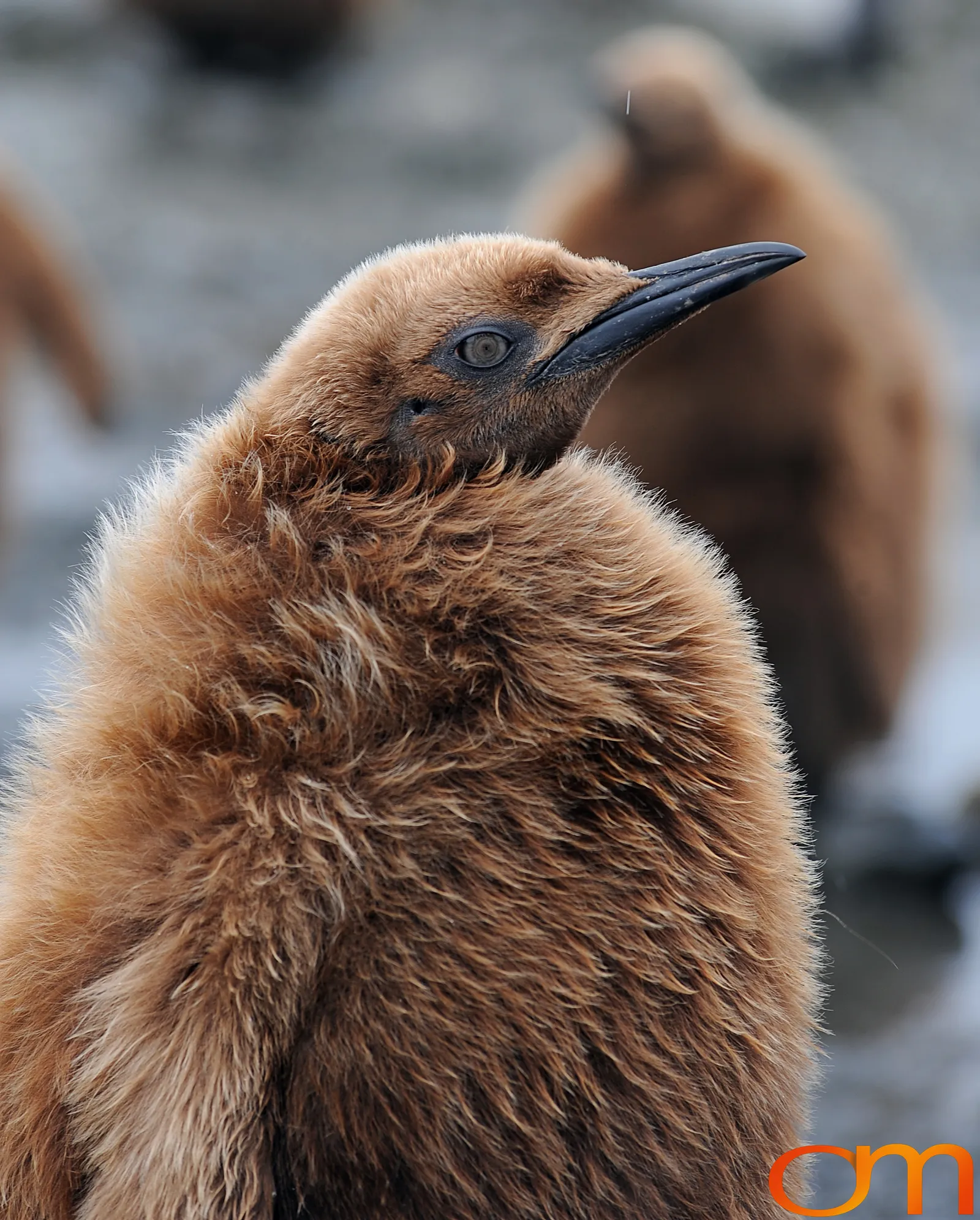
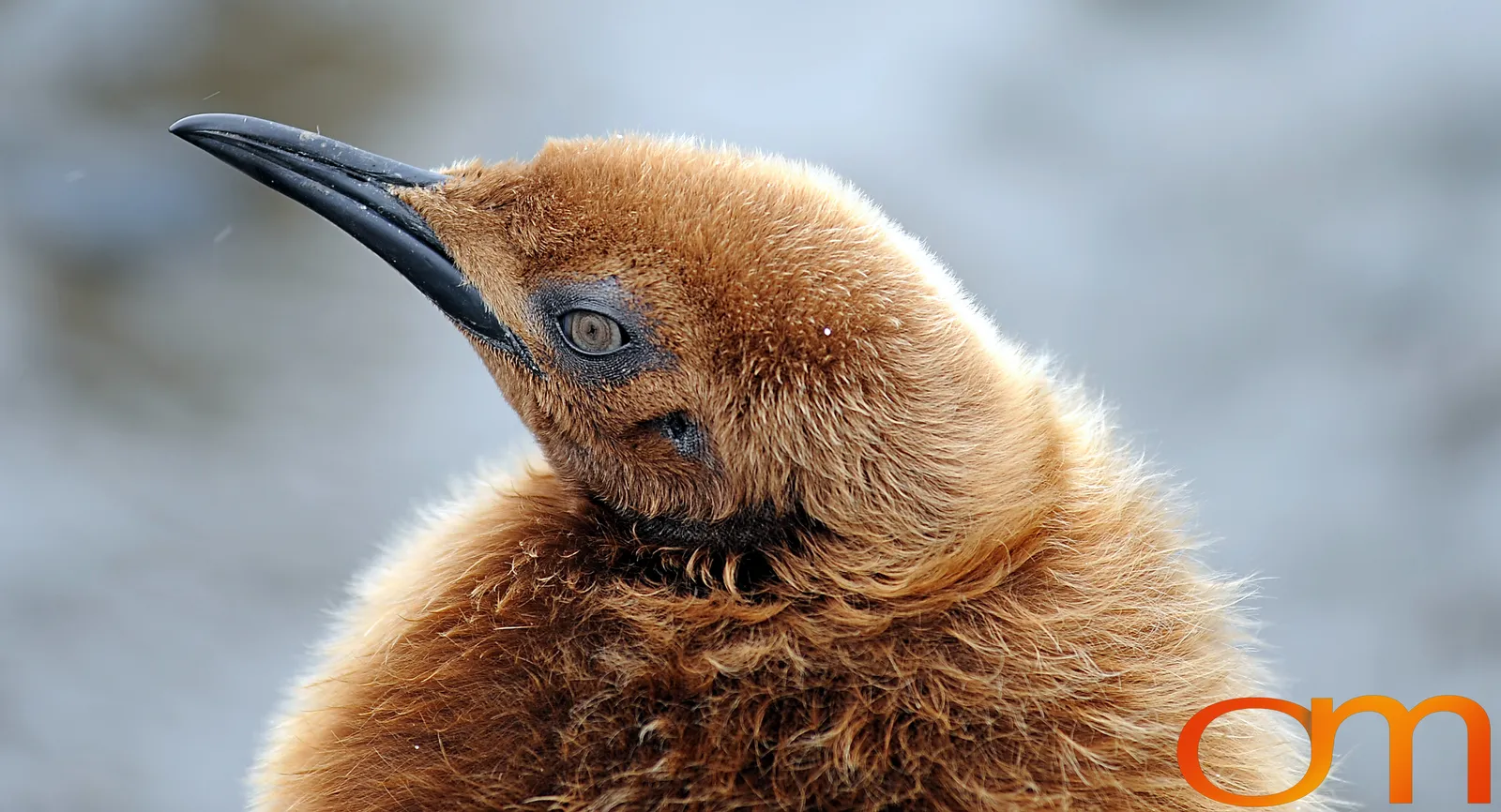
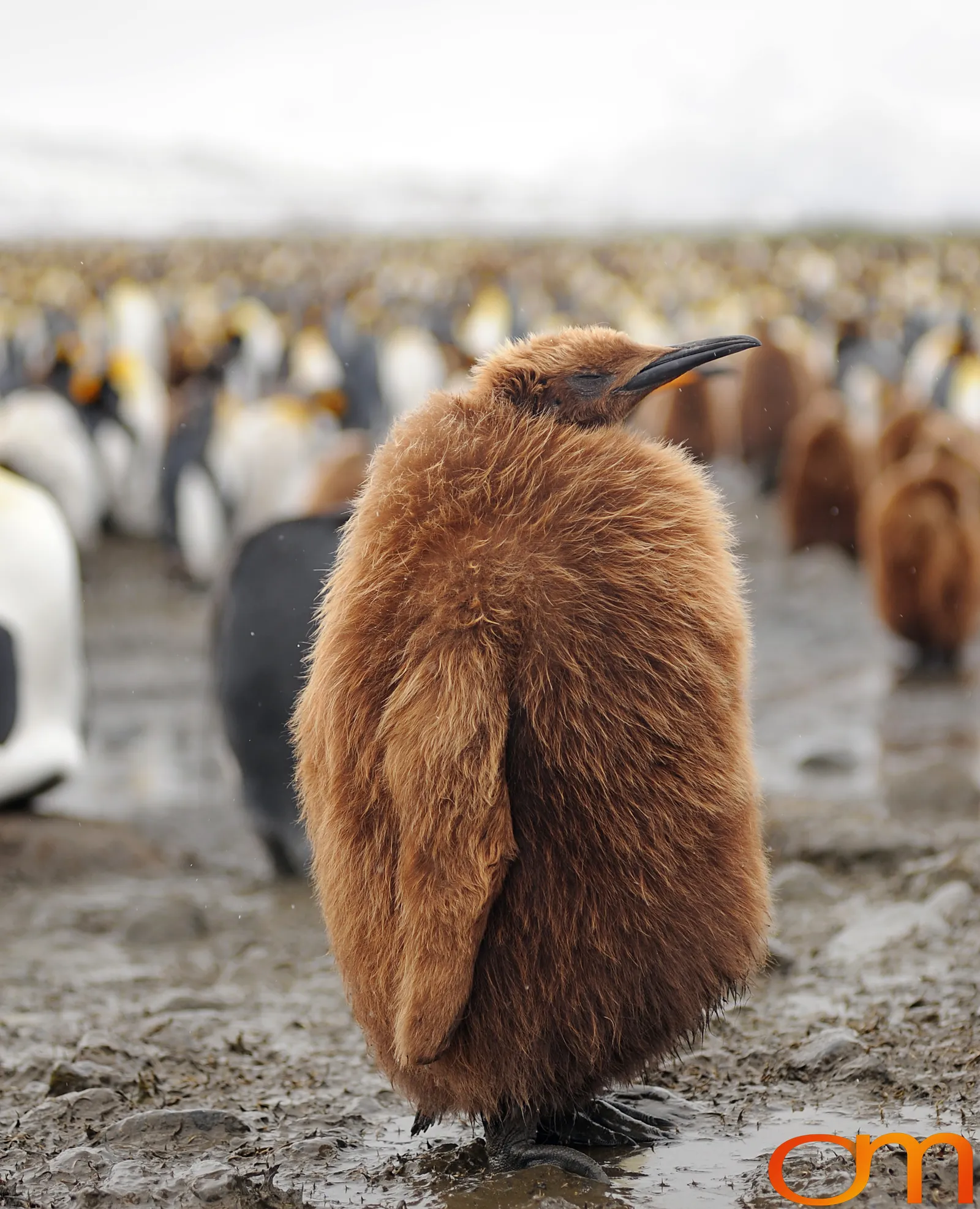
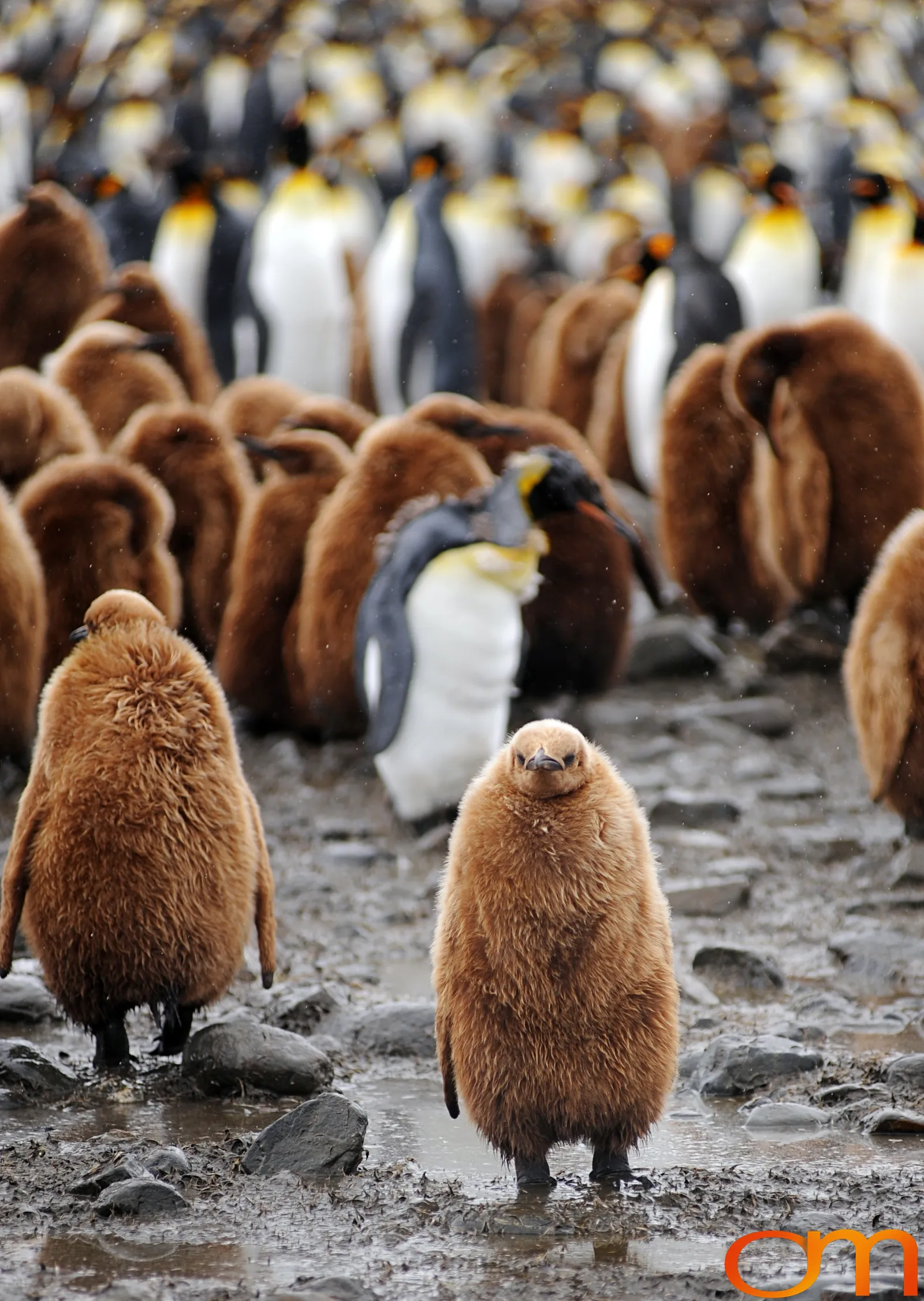
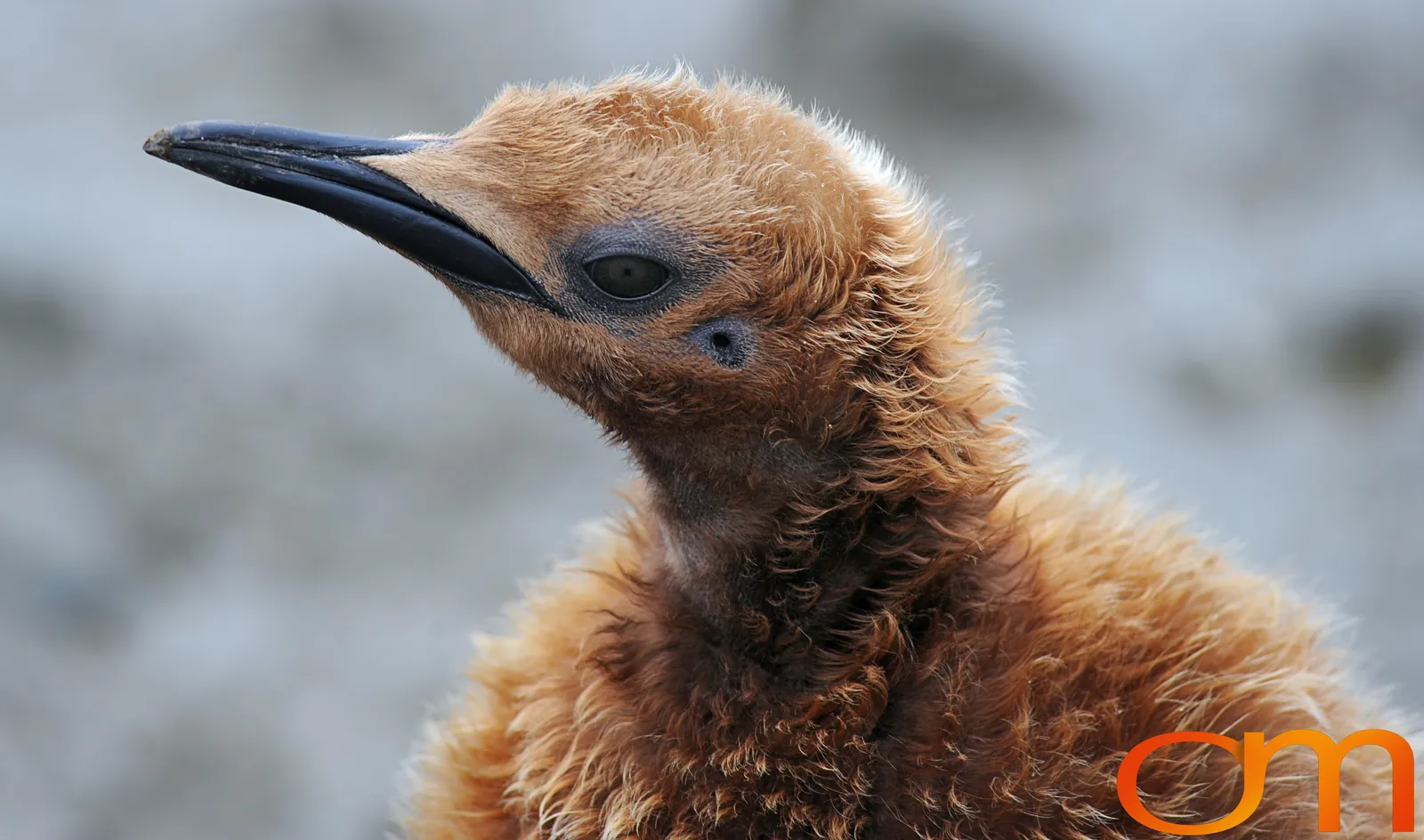
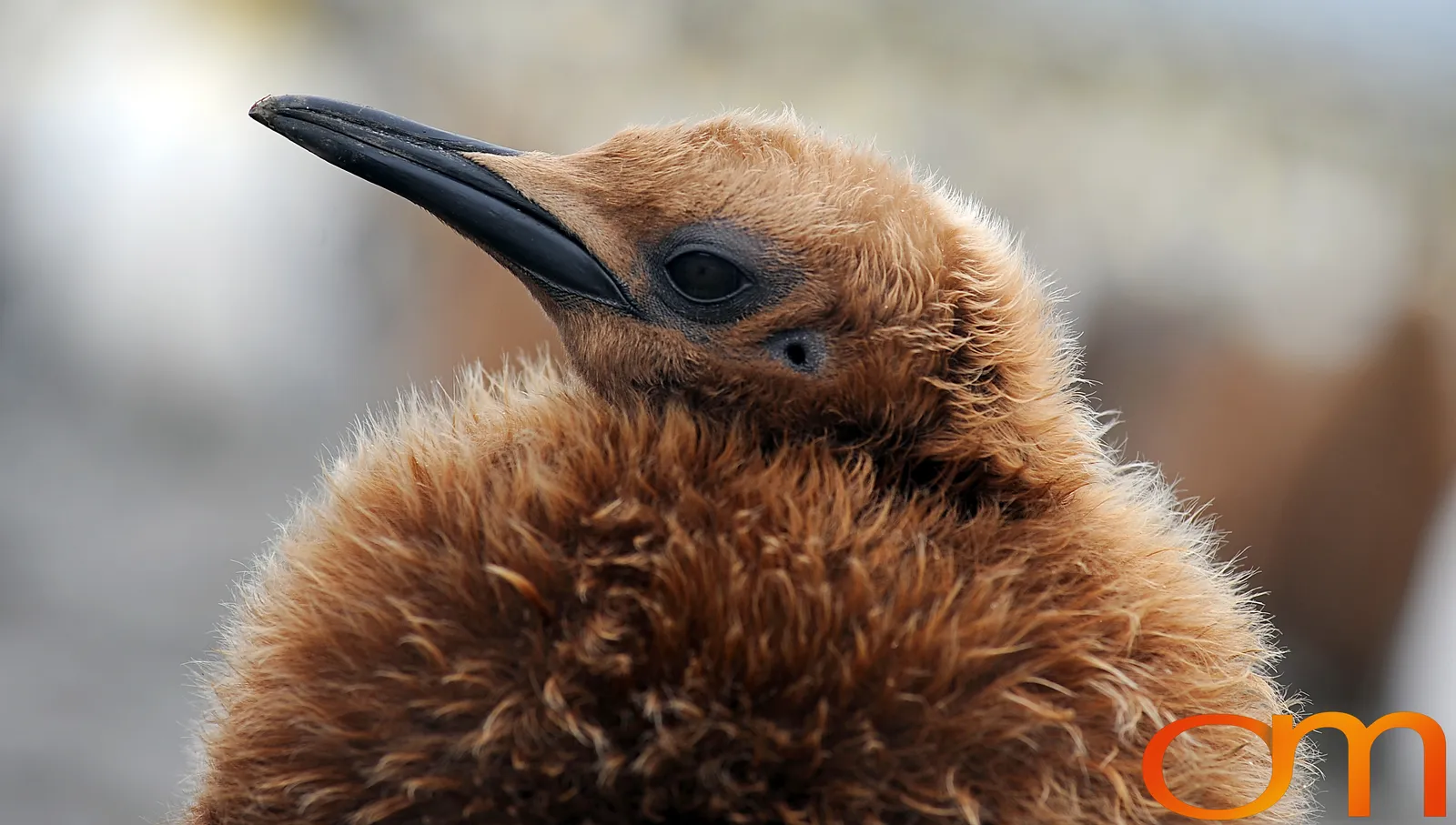
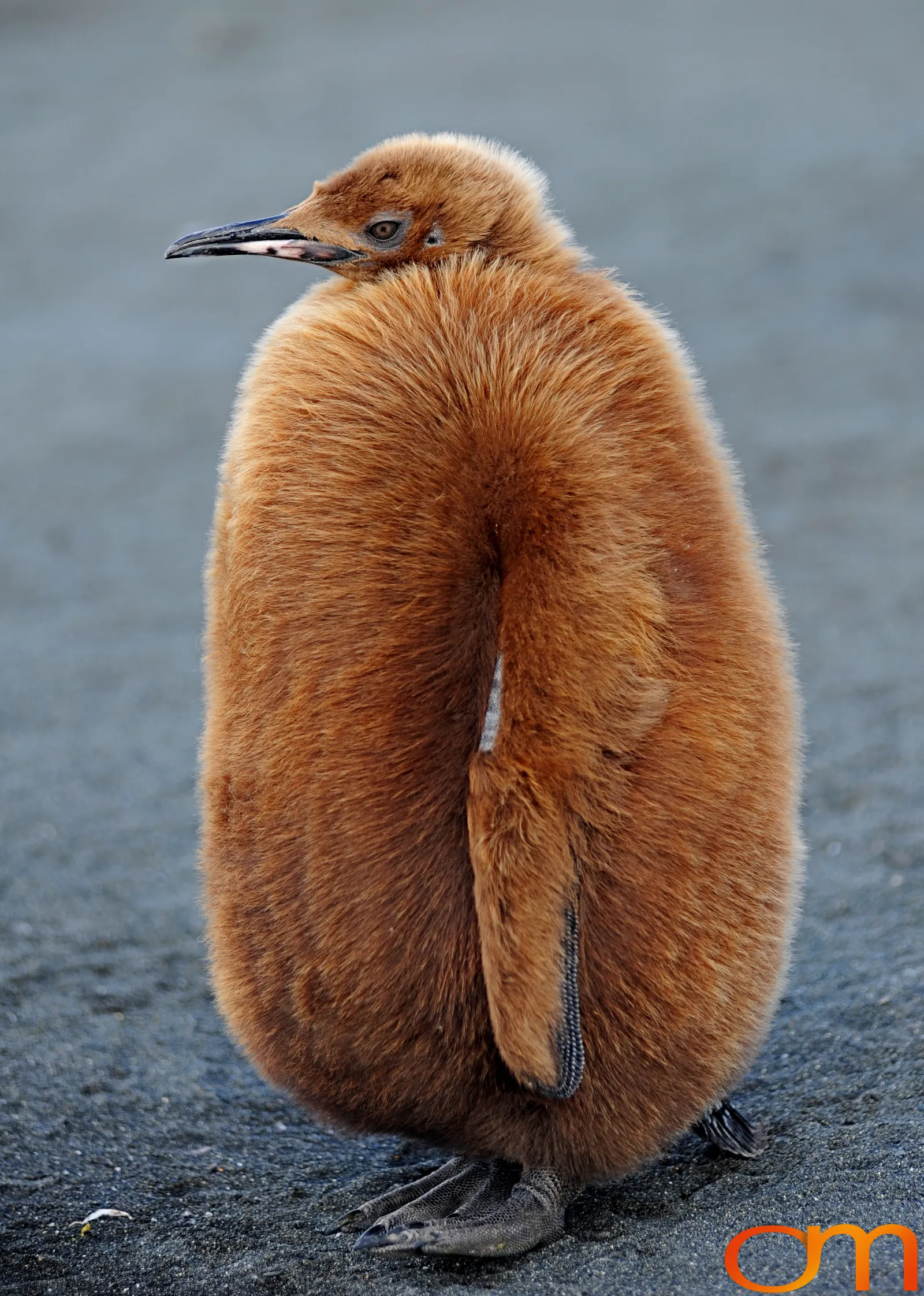
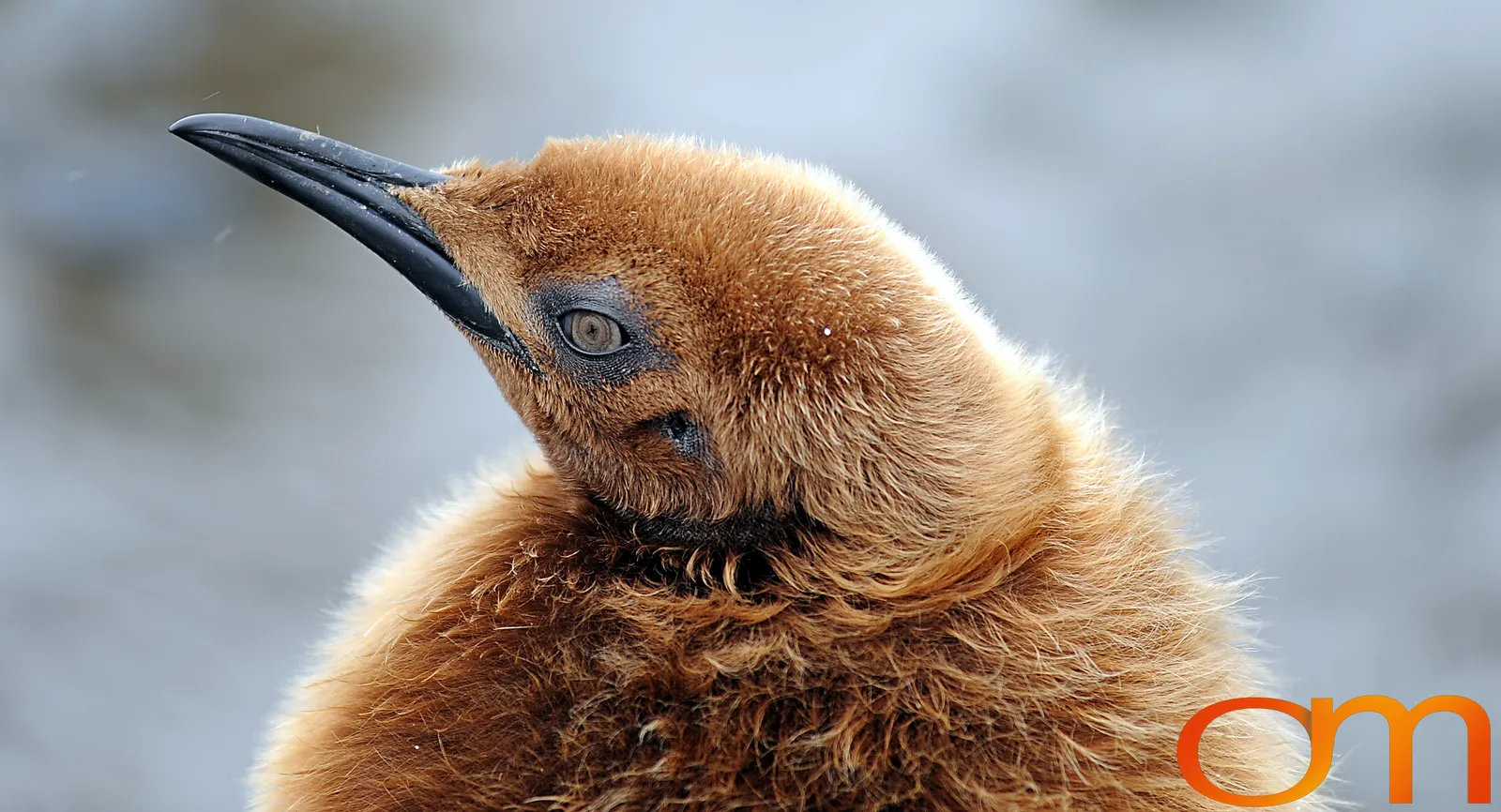
After their initial guard period, chicks gather in groups called crèches while their parents forage at sea. During winter, food deliveries become infrequent, and chicks may fast for weeks or even months between meals. Adults feed primarily on lanternfish, with squid becoming more important during winter, and can dive to depths exceeding 790 feet (240 m). Their pupils contract into square-shaped openings in bright conditions and expand into large circles in darkness, helping their eyes adjust to the extremely low light encountered during deep dives. The chicks’ thick brown down once made them appear so different from adults that 19th-century scientific works described them as a separate “woolly penguin.”