South Georgia Island
Macaroni Penguins
December 2008
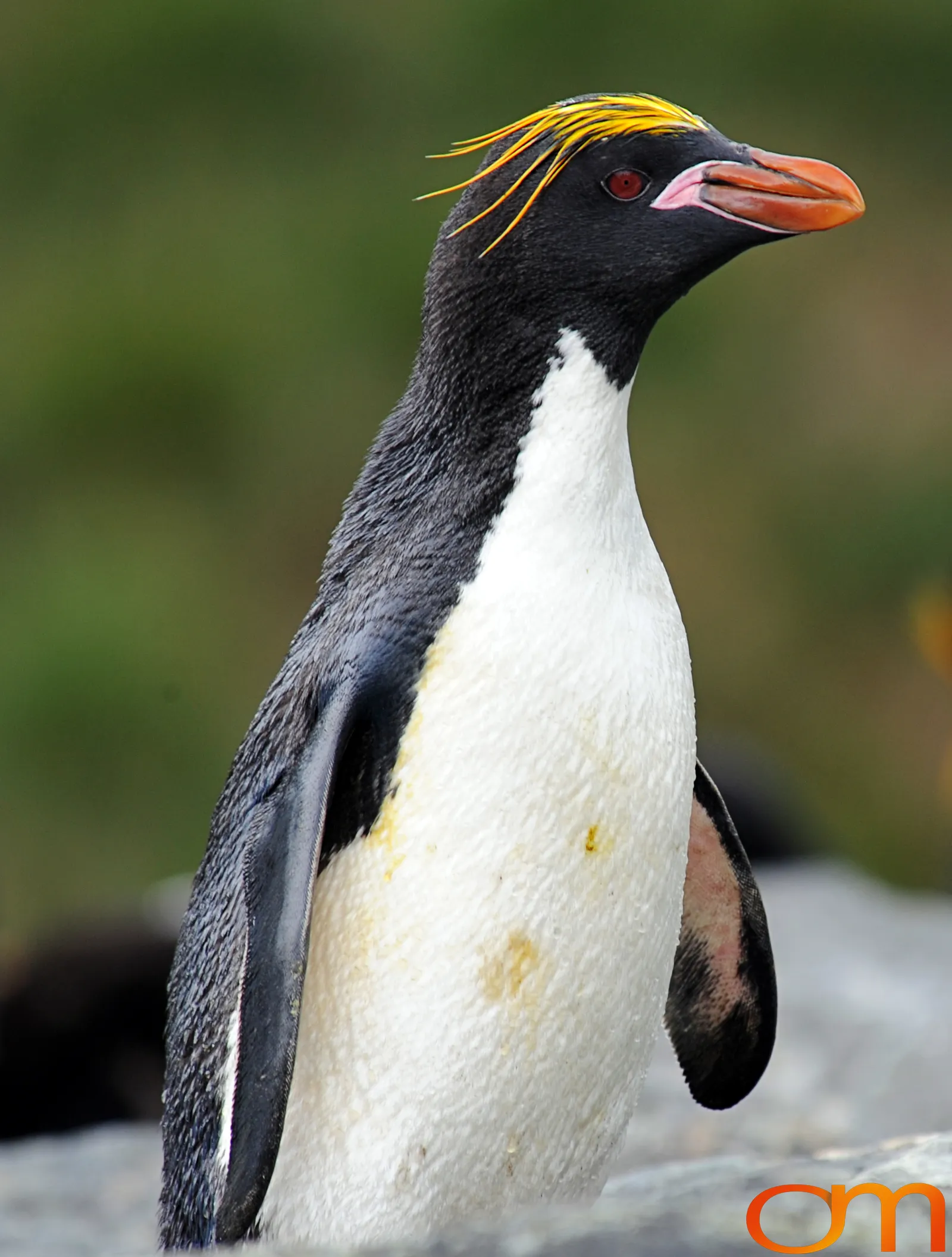
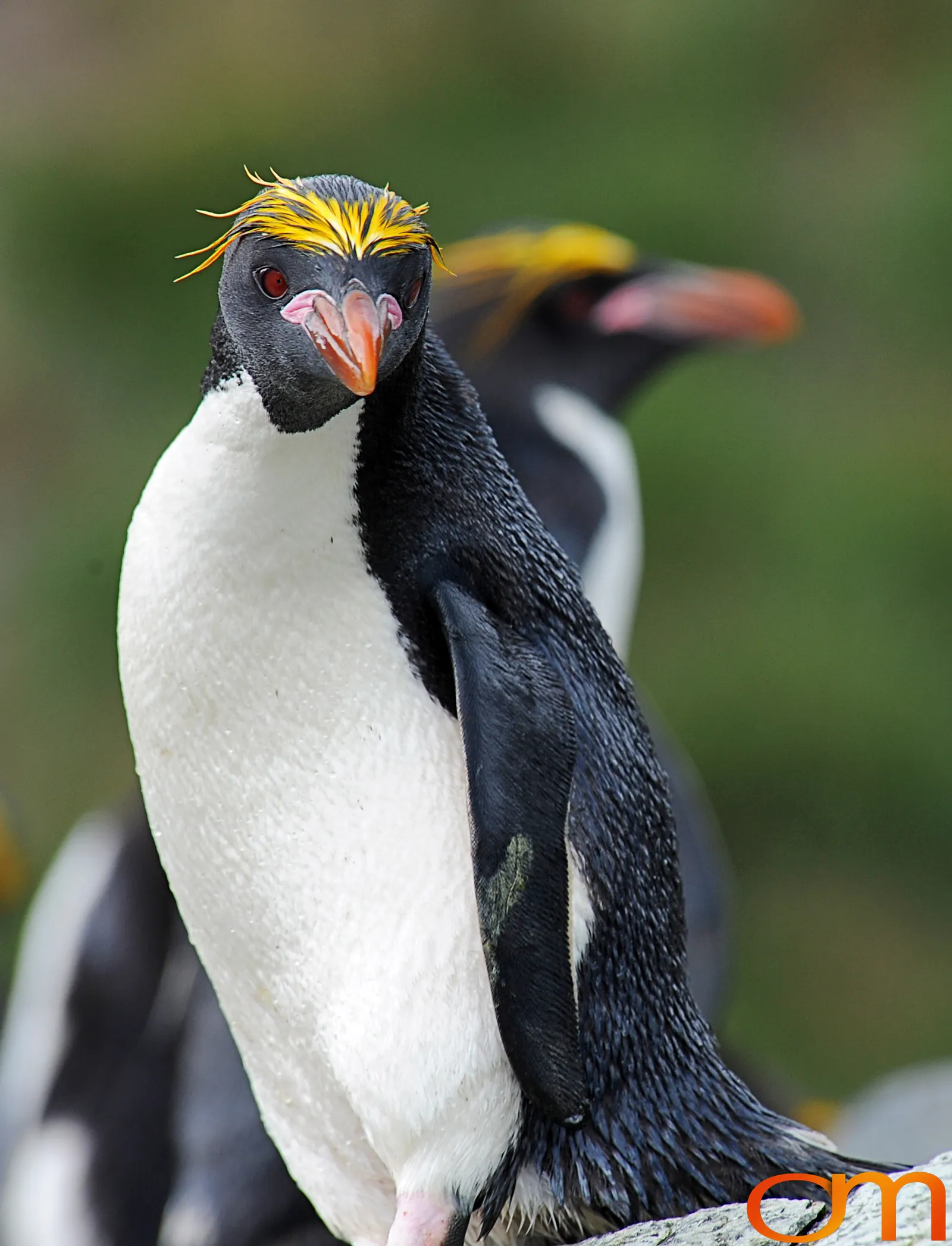
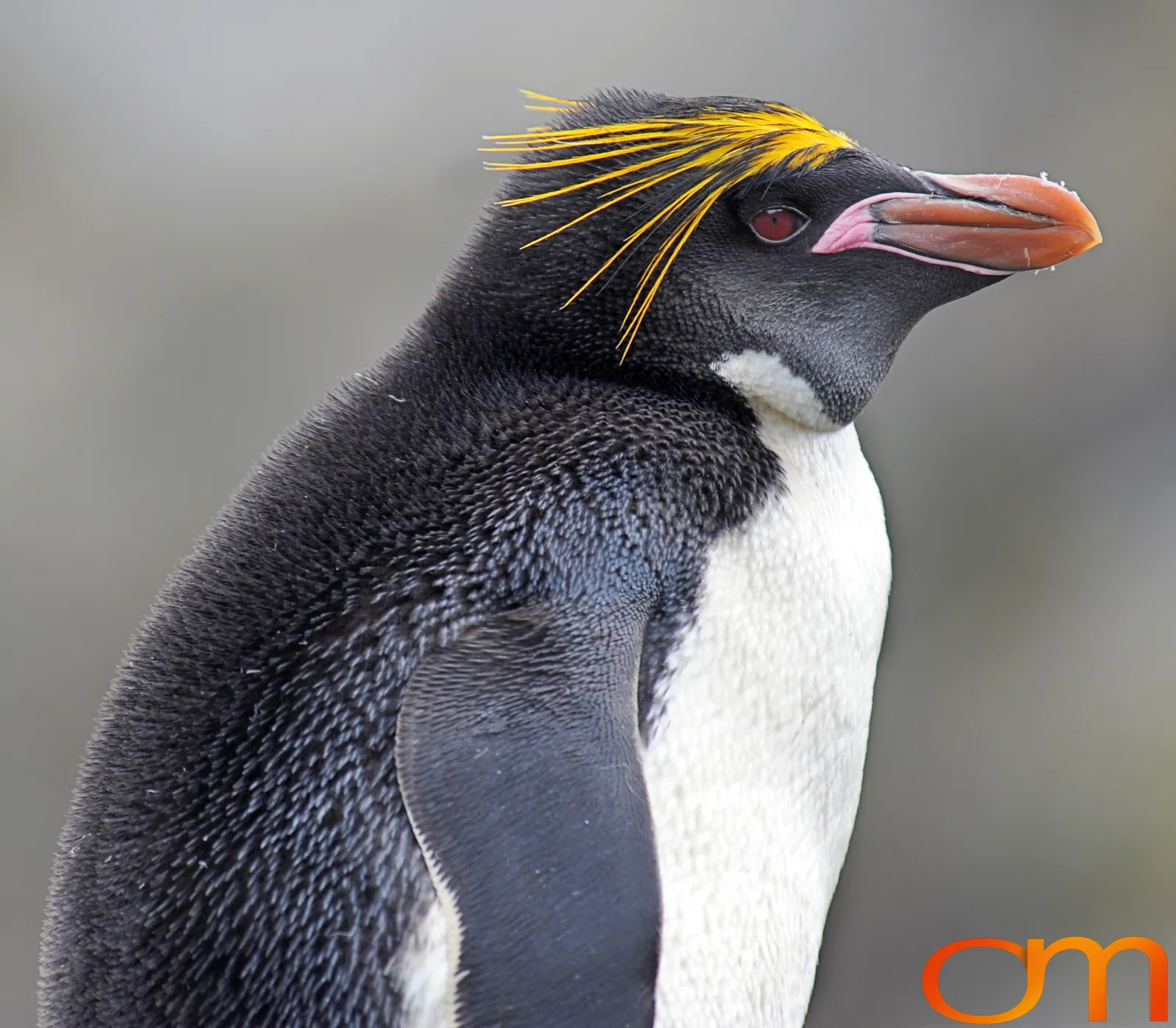
The macaroni penguin, Eudyptes chrysolophus, is a crested penguin recognized by the long yellow-orange feathers extending backward from its forehead. Adults have black upperparts, white underparts, red eyes, and a thick orange-brown bill. Males and females are similar in appearance, although males are generally larger.
Adults measure approximately 28 inches (70 centimeters) in length and generally weigh between 8.8 and 15.4 pounds (4 and 7 kilograms). Body weight varies considerably throughout the year, particularly during breeding and molting.
Macaroni penguins have a circumpolar distribution across the Southern Ocean. They breed primarily on sub-Antarctic islands in the South Atlantic and southern Indian oceans, with additional colonies in the Antarctic Peninsula region. Breeding colonies are often established on steep, rocky slopes, coastal terraces, and areas with sparse vegetation.
Breeding schedules vary by location but are highly synchronized within each colony. Females lay two eggs several days apart. The first egg is considerably smaller and rarely produces a surviving chick. The larger second egg usually receives most of the parents’ attention and is generally the one that successfully hatches.
Both parents participate in incubation through a series of extended shifts lasting approximately five weeks in total. After hatching, the male initially guards the chick while the female returns to sea to feed. As the chicks grow, they gather in groups called crèches while both parents forage. Young penguins generally leave the colony when they are approximately two months old.
Macaroni penguins feed mainly on Antarctic krill, supplemented by fish, squid, and other crustaceans. They usually forage in the upper levels of the ocean but are capable of diving to depths exceeding 660 feet (200 meters).
Although macaroni penguins remain one of the most numerous penguin species, several major populations have experienced substantial declines. The species is classified as Vulnerable, with climate change, changes in prey availability, fisheries interactions, and marine pollution among the potential pressures affecting its populations.