Falkland Islands
Striated Caracaras
December 2008
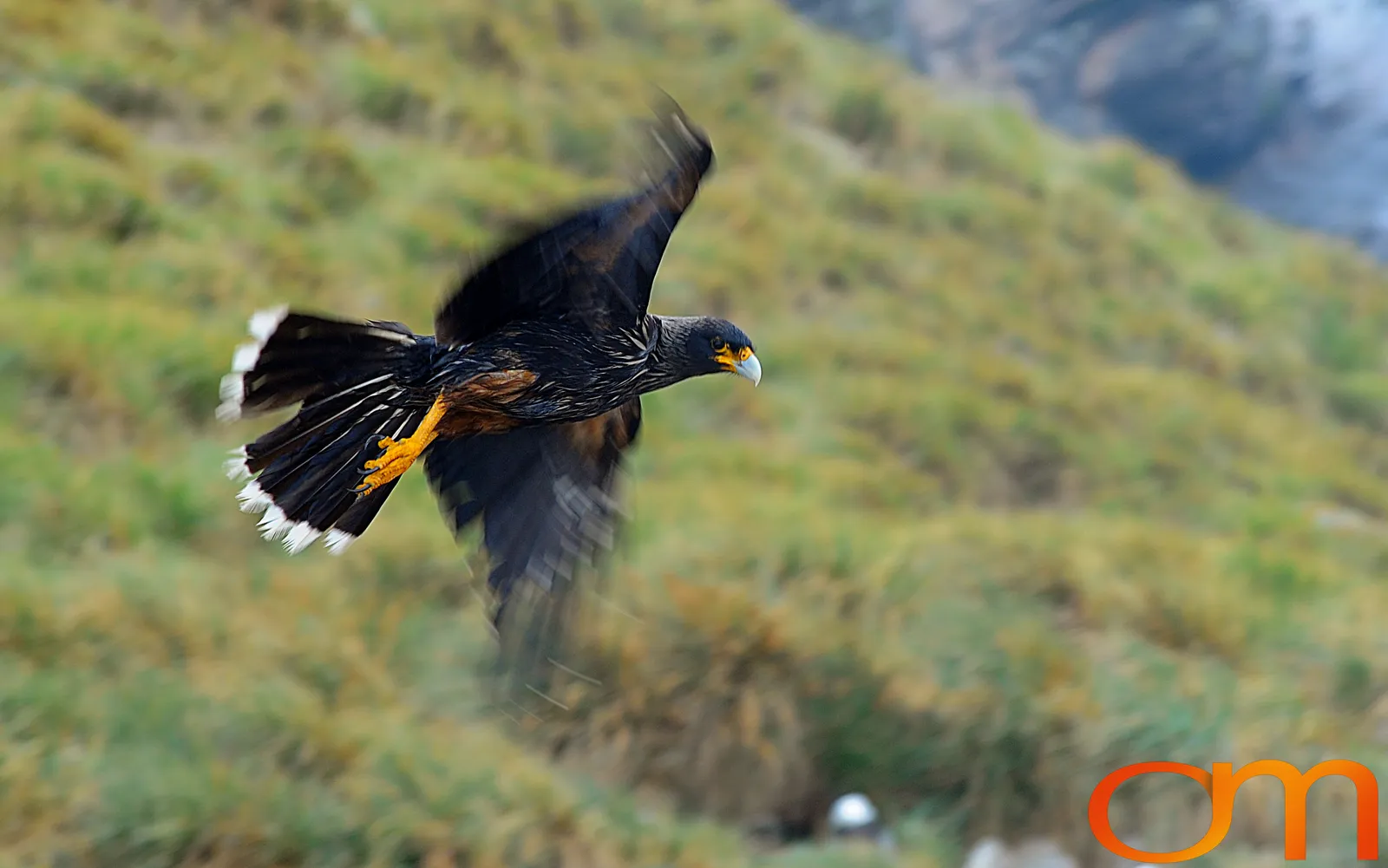
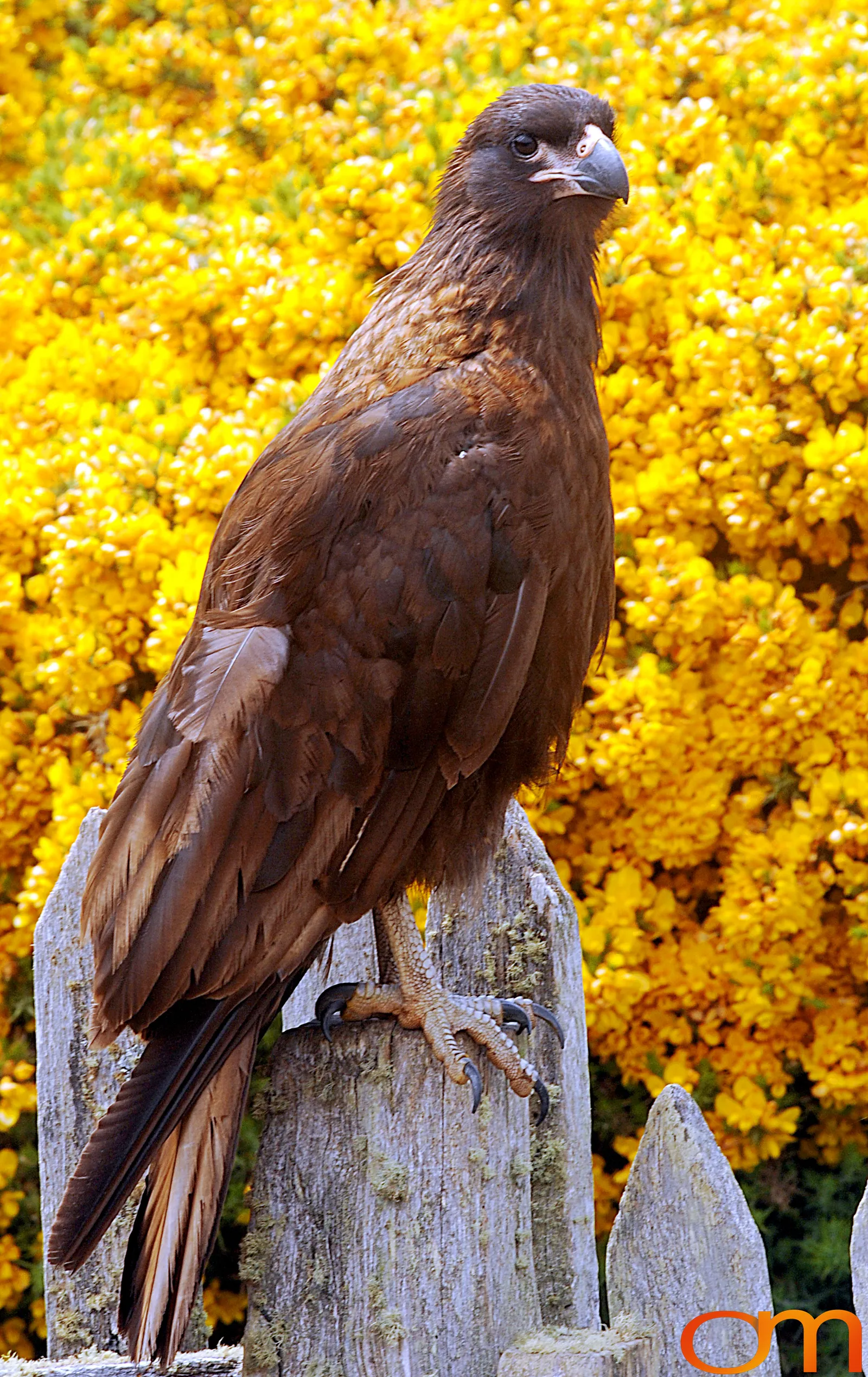
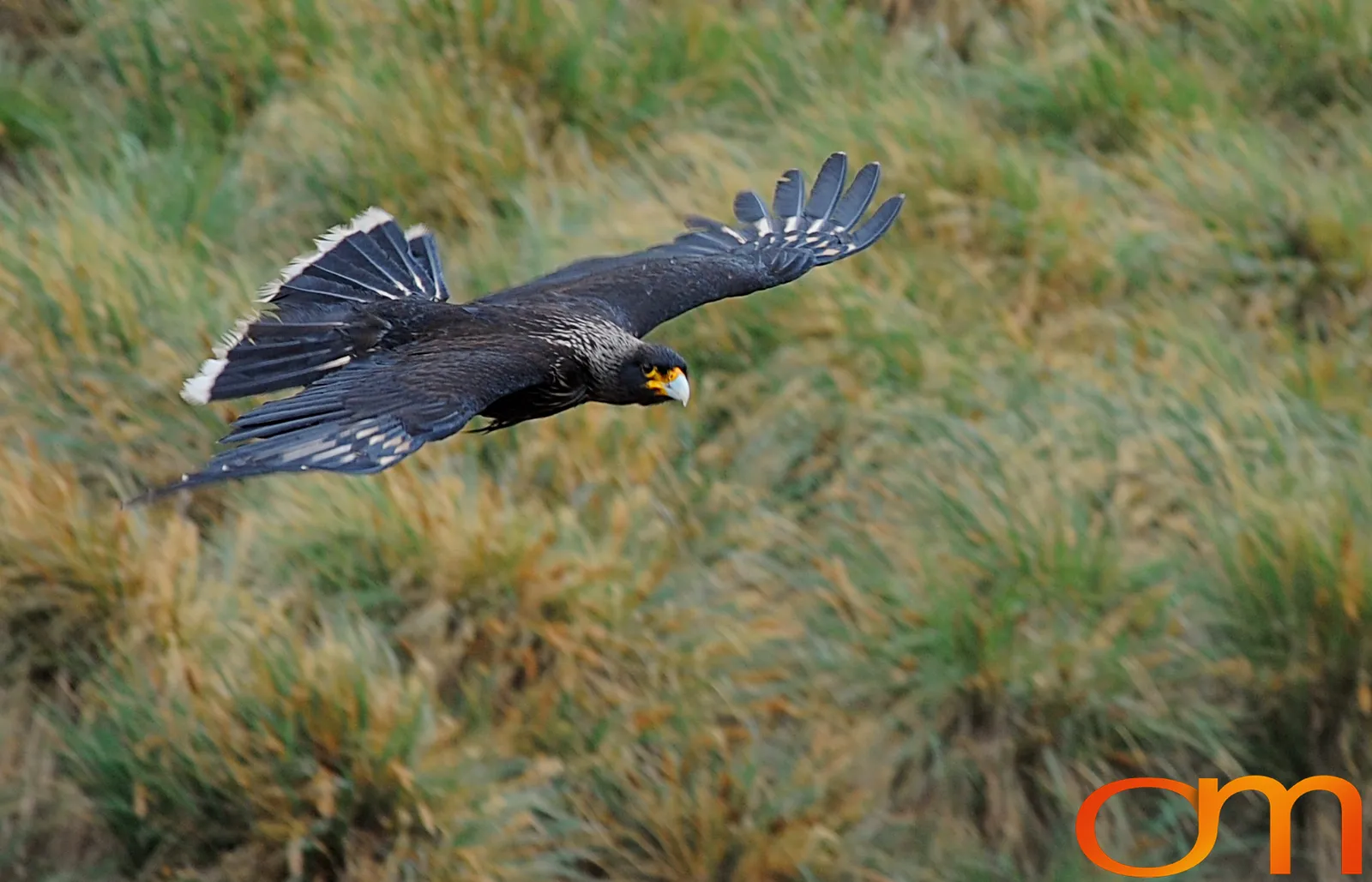
The striated caracara, Daptrius australis, is a member of the falcon family found primarily on the Falkland Islands and on islands off the southernmost coasts of Argentina and Chile, including parts of Tierra del Fuego and the Cape Horn region. Adults measure approximately 21–26 inches (53–65 centimeters) in length, with a wingspan of about 46–49 inches (116–125 centimeters), and weigh around 2.6 pounds (1.2 kilograms).
The species inhabits rocky coastlines, tussac grasslands, seabird colonies, and offshore islands. In the Falkland Islands, nesting generally begins during the austral spring, with most eggs laid from late October through November. Nests are constructed on cliff ledges, rocky slopes, or the ground using twigs, grass, wool, and other vegetation. Clutches usually contain one to three eggs, although four-egg clutches have occasionally been recorded.
Striated caracaras are opportunistic feeders that hunt and scavenge. Their diet includes seabird eggs and chicks, carrion, marine invertebrates, insects, and food obtained around farms or settlements. Some birds move seasonally between seabird colonies and areas where other food sources are available.
Known locally in the Falkland Islands as the Johnny rook, the striated caracara is unusually curious and investigative for a bird of prey. Field experiments have shown that wild individuals can solve several different mechanical puzzle-box tasks and improve their performance through repeated attempts, making the species an important subject in research on avian intelligence and behavioral flexibility.